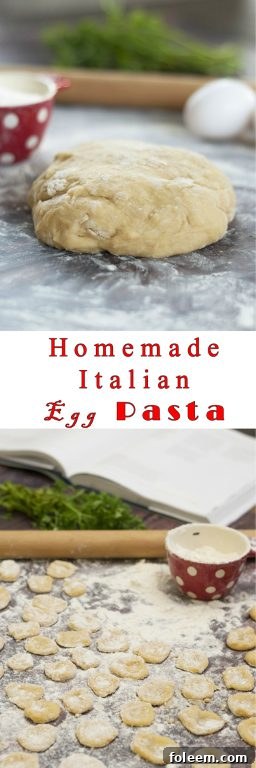
Mastering Homemade Egg Pasta: Your Food Processor Guide to Authentic Italian Flavor
The thought of making fresh pasta from scratch often conjures images of flour-dusted countertops, laborious kneading, and hours spent in the kitchen. For many, it seems like a culinary challenge best left to seasoned Italian nonnas or professional chefs. However, what if we told you that creating exquisite homemade egg pasta is not only achievable but surprisingly easy, especially when you harness the power of your food processor? This comprehensive guide will demystify the process, revealing how simple it is to bring the authentic taste of Italy right to your dining table, transforming your perception of homemade pasta forever.
The Inspiration: Chef Fabio Viviani’s Food Processor Revolution
My journey into effortless homemade pasta began with an unforgettable encounter with the charismatic Chef Fabio Viviani. Last year, I had the distinct pleasure of meeting him at one of his renowned restaurants, Portico by Fabio, and even received a signed copy of his inspiring cookbook, Fabio’s 30 Minute Italian. What truly captivated me, however, was attending one of his live cooking demonstrations where he unveiled his ingenious method for making homemade egg pasta directly in a food processor. This revelation was a game-changer, shattering my preconceived notions of pasta making. The idea that such a traditional and revered dish could be simplified without compromising on quality immediately resonated with me. Within 24 hours, the irresistible craving for fresh pasta, a constant companion in my life, propelled me to attempt his recipe. After all, if I could choose just one meal to enjoy for the rest of my life, it would undoubtedly be pasta.
A Legacy of Flavor: Honoring Family Pasta Traditions
My appreciation for authentic Italian cuisine runs deep, largely thanks to the many Italians who have graced my life and family. Among them was Mr. Wishes’ beloved grandmother, who passed away in 2012. I cherish the memory of a special day when Mr. Wishes and I had the invaluable opportunity to sit with her as she patiently demonstrated her traditional homemade pasta and sauce recipes. At 93 years old, her hands still skillfully crafted pasta on a regular basis, a testament to her enduring passion and culinary mastery. This experience was more than just a cooking lesson; it was a beautiful immersion into a rich cultural heritage. I am immensely grateful to have absorbed her wisdom, particularly learning to recreate her legendary lasagna (Grandma’s Italian Lasagna), ensuring that her culinary traditions would live on. She was, without a doubt, one of the finest cooks I have ever known, and her influence continues to inspire my kitchen adventures.
Why Homemade Pasta Truly Matters: Elevating Every Dish
When I discovered Fabio’s food processor pasta method, which ingeniously bypassed the extensive kneading typically required, I was immediately on board. I am a staunch believer that homemade pasta makes an unparalleled difference in the final taste and texture of any Italian dish. There’s an unmistakable quality to fresh pasta—a delicate chew, a nuanced flavor, and an incredible ability to absorb and cradle sauces—that store-bought varieties simply cannot replicate. It’s not a daunting, time-consuming endeavor; it’s a rewarding culinary art that anyone can master. While it does require a little time, every second spent is an investment in flavor that pays dividends on your plate.
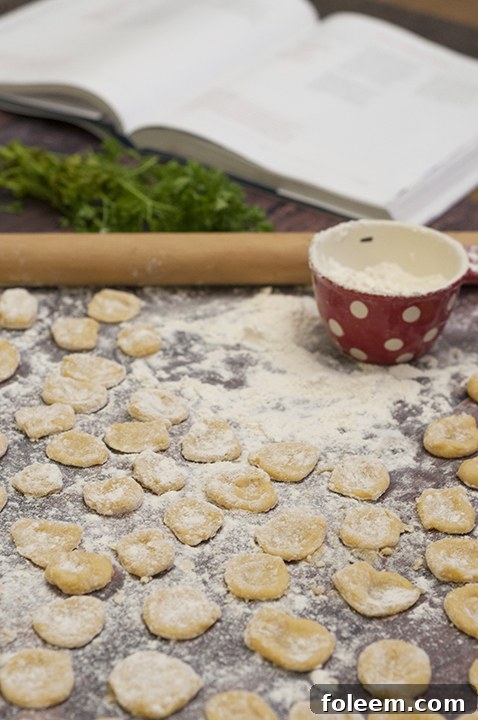
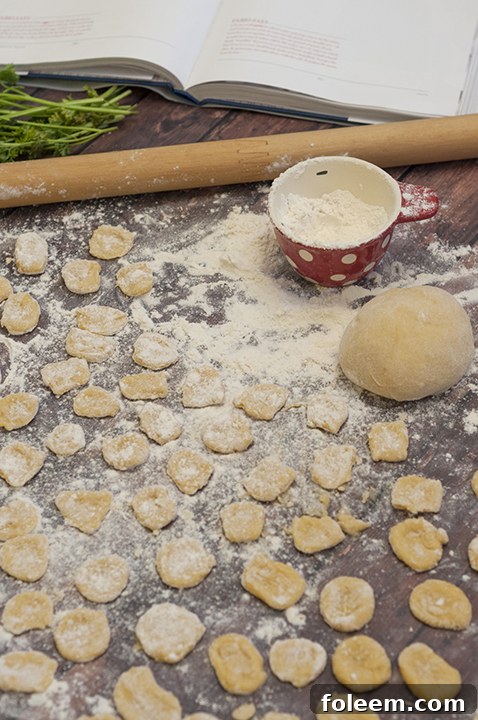
Choosing to shape my homemade egg pasta into orecchiette, or “little ears,” further streamlined the process. This charming shape can be formed by hand, eliminating the need to bring out a pasta machine. However, the beauty of this dough is its versatility. You can transform it into virtually any shape your heart desires—fettuccine, tagliatelle, spaghetti, or even delicate lasagna sheets. Imagine serving perfectly cooked rigatoni, made from your own fresh pasta, in a robust dish like this Spicy Chicken Riggies! The possibilities are endless, and the satisfaction of creating such a foundational ingredient from scratch is immense.
Mastering the Food Processor Method: A Detailed Guide
Embarking on your homemade pasta journey with a food processor is remarkably straightforward. The key lies in understanding the ingredients and the subtle cues the dough provides. For this homemade egg pasta, we primarily use egg yolks, which contribute to a richer, more vibrant yellow pasta with a silkier texture compared to using whole eggs. A pinch of salt enhances the flavor, while a touch of ground black pepper adds a subtle warmth. High-quality olive oil is essential, providing not only flavor but also a supple elasticity to the dough, making it easier to work with. Finally, good quality all-purpose flour works wonderfully, though some purists prefer ’00’ flour for an even finer texture.
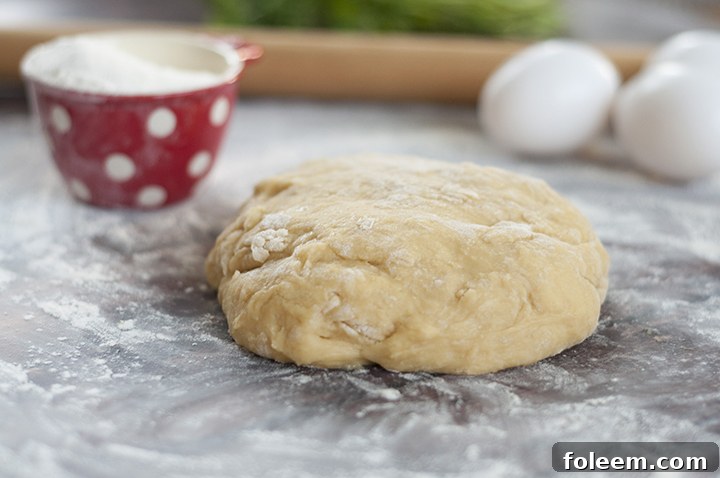
The food processor takes the strenuous work out of kneading, doing the job efficiently and consistently. It quickly brings the ingredients together, creating a perfectly homogenous dough in minutes. The initial mixing creates a thick, almost crumbly paste, which then transforms into a cohesive ball as more flour is incorporated. The trick is to observe the dough’s consistency: it should be firm yet pliable, not excessively sticky or overly dry. If it’s too wet, add flour sparingly, one tablespoon at a time, until the desired texture is achieved. Conversely, if it seems too dry and crumbly, a tiny splash of water can bring it together. This adaptability ensures a perfect dough every time, ready for shaping into your favorite pasta forms.
Shaping Your Homemade Pasta: Unleash Your Creativity
Once your beautiful, golden dough is ready, the real fun begins: shaping! The versatility of this homemade egg pasta dough allows for a myriad of forms. If you’re aiming for simplicity and speed, making orecchiette (meaning “little ears”) by hand is a fantastic option. To do this, simply roll a piece of dough into a thin rope, cut it into small pieces, and then use your thumb or a butter knife to drag and press each piece, creating the characteristic ear shape. This method is incredibly meditative and yields charming, rustic pasta perfect for scooping up chunky sauces.
For those with a pasta machine, the possibilities expand even further. You can effortlessly roll out thin sheets for lasagna or cut them into classic shapes like fettuccine, tagliatelle, or even spaghetti using various attachments. Don’t own a machine? No problem! Beyond orecchiette, you can hand-roll dough into thicker Pici-style strands, create rustic papparadelle by simply cutting wide ribbons, or even form small gnocchetti sardi. The key is to experiment and find shapes that you enjoy making and eating. Regardless of your chosen form, the fresh taste of your handmade pasta will elevate any dish.
Cooking and Serving Your Fresh Pasta: The Perfect Finish
Cooking homemade pasta requires a slightly different approach than store-bought dried pasta. Fresh pasta cooks remarkably quickly, often in just 2-4 minutes, depending on its thickness. Always boil it in a generous pot of heavily salted water, ensuring it has ample space to move. Keep a close eye on it, tasting frequently to achieve that perfect al dente bite – firm to the tooth, yet tender. Overcooked fresh pasta can become mushy, so precision is key!
Once cooked, drain your pasta, reserving a small amount of the starchy pasta water. This water is liquid gold, perfect for emulsifying your sauce and helping it cling beautifully to your fresh pasta. Serve your culinary masterpiece immediately for the best flavor and texture. This pasta is truly at its peak the day it’s made. Imagine these Crock Pot Italian Meatballs nestled over a bed of your freshly made pasta—a complete and utterly satisfying meal. Or, for an even more ambitious endeavor, roll out some lasagna sheets from this very dough and create an unforgettable rendition of Grandma’s Italian Lasagna. The difference in taste and texture will be extraordinary, turning an ordinary dinner into a gourmet experience.
If you have any leftover dough or shaped pasta, wrap it tightly in plastic wrap and refrigerate for up to 6-7 days. For longer storage, fresh pasta can also be frozen. Simply dust the shaped pasta with a little semolina flour to prevent sticking, then freeze in a single layer on a baking sheet before transferring to an airtight container or freezer bag. It can be cooked directly from frozen, adding a minute or two to the cooking time.
- 10 egg yolks (from large eggs)
- Pinch of salt
- ½ tsp. ground black pepper
- 2 tsp. good quality olive oil
- 2 cups flour (all-purpose or ’00’)
- Pour the egg yolks into your food processor fitted with the blade attachment.
- Add the salt, pepper, and olive oil, and pulse a few times to combine thoroughly.
- Dump in HALF of the flour and pulse until the eggs absorb it, which will create somewhat of a thick, coarse paste or crumble.
- Add the remaining flour and have the food processor spin continuously (vs. pulsing) for 1-2 minutes.
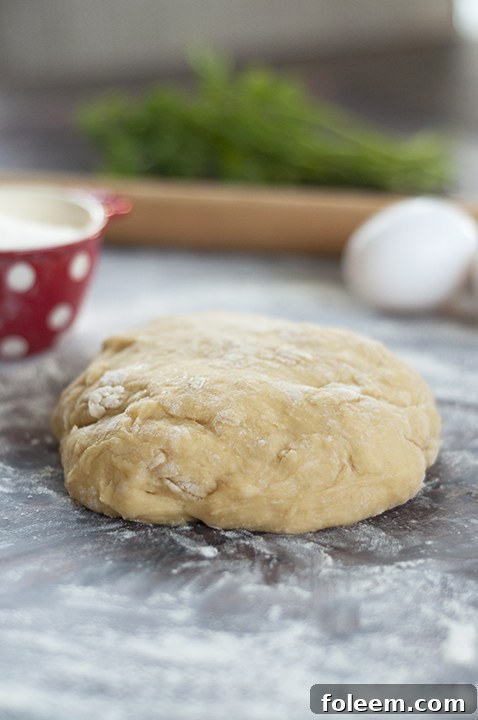
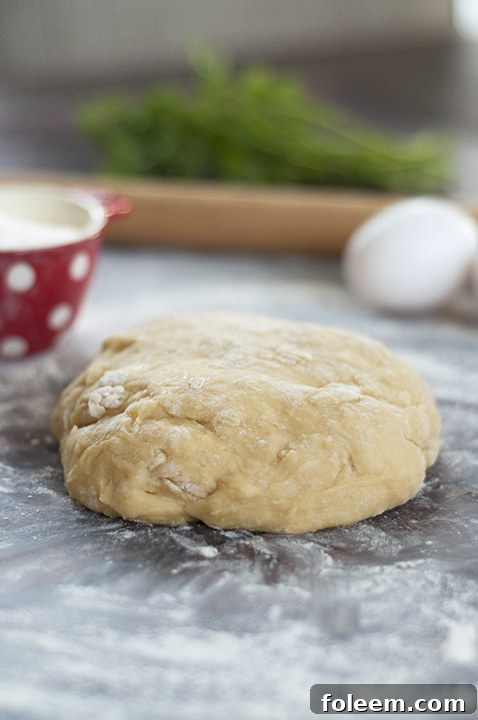
- When the dough is ready, it will form a cohesive ball-shaped mass of flour and eggs, cleaning the sides of the bowl.
- Carefully check the dough consistency. If it’s still too wet to the touch and very sticky, add extra flour – 1 tablespoon at a time, pulsing briefly after each addition, until it’s firm but pliable. If it seems too dry and crumbly, add a small amount of water (½ tsp at a time), as needed, until it comes together.
- Take the pasta dough out, wrap it tightly in plastic wrap, and let it rest on the counter for at least 30 minutes (or in the fridge for up to 60 minutes). This resting period allows the gluten to relax, making the dough much easier to roll/shape according to the type of pasta you desire (e.g., orecchiette, fettuccine, lasagna sheets).
- If you aren’t using the pasta right away, wrap it tightly in plastic wrap and place it in the fridge for up to 6-7 days. For longer storage, shaped pasta can be frozen for up to one month.
So, the next time you plan a pasta dish, I wholeheartedly encourage you to try your hand at making your own fresh pasta. Thanks to the brilliant simplicity shared by Fabio Viviani, the process is far less intimidating than you might imagine, and the results are truly transformative. It had been too long since I embraced the homemade route, and this experience served as a wonderful reminder of the profound difference fresh ingredients make. Get ready to impress your family and friends, and most importantly, treat yourself to the unmatched delight of authentic homemade Italian pasta.