
If you’ve spent any time on Pinterest over the past decade, you’ve likely noticed that graze boards have become a widespread trend. These attractive platters, overflowing with a variety of foods, are designed for sampling, snacking, and sharing.
Graze boards are an easy and elegant way to entertain. I’ve made them for years—conservatively more than a hundred for parties and small gatherings. They’re my go‑to starter: visually appealing, interactive, and a great way to get guests mingling. People can try lots of different flavors as they gather around a board.

Graze boards also work wonderfully as casual, room‑temperature family meals for game nights or movie nights—what my family calls “board meals.” They’re simple for the cook and fun for everyone else. Board meals are a great way to use odds and ends from the fridge and pantry and to avoid turning on the oven when you don’t want to.
How to Make a Graze Board: From cheeses to meats to spreads to pickles—everything you need to create a beautiful grazing board.
How to Make a Grazing Board
Here are ideas for what to include on a graze board and the choices I used for the board pictured. Take inspiration from what you like, then open your fridge and pantry and start pulling out anything that looks tasty. Don’t worry too much about conventional pairings—rice crackers with olives or pickles with fruit can be delightful. Graze boards are casual; guests will nibble and mix as they please rather than follow a formal menu.

Tips for Making the Perfect Grazing Platter for Entertaining
- Choose a board or platter with generous surface area. The goal is abundance—enough room to arrange a variety of items so the board looks full and inviting.
- Start with cheese. Cheese is a reliable centerpiece. Offer contrasts: a hard cheese (cheddar, Parmesan, Manchego), a soft double or triple crème (brie, camembert), a goat cheese, and a blue cheese if you like bold flavors.
- Include cured meats. Salumi and hams (prosciutto, salami, speck, soppressata) add savory interest. Sliced dried sausages like chorizo or a pâté are also excellent choices.
- Add small nibbles. Olives, pickled vegetables, pepperoncini, nuts (check for allergies), marinated artichokes, and sundried tomatoes bring texture and bites between larger items.
- Offer fresh fruits and vegetables. Crunchy vegetables—carrots, celery, cucumbers, peppers—and cherry or grape tomatoes pair well with dips. Fresh fruit like apples, pears, berries, figs, or sliced stone fruit provide sweetness; dried fruits such as apricots, cherries, and figs are great, too.
- Provide spreads and drizzles. Balance savory with sweet: mustards, pestos, flavored mayonnaises and aiolis, jams, jellies, honey, or interesting syrups enhance cheeses and meats.
- Include dips. Hummus, tzatziki, herb dips, or other creamy dressings give people something to scoop with veggies or crackers.
- Don’t forget bread and crackers. Sliced baguette, toasted rounds, and a variety of crackers let guests build bites or snack on their own. Include some gluten‑free options for guests who need them.
On the board pictured, starting from the top and moving clockwise, you’ll find a mix of cheeses, crackers, olives, cured meats, honeycomb, fresh produce, jams and crisps—combinations that create visual variety and a range of flavors and textures.
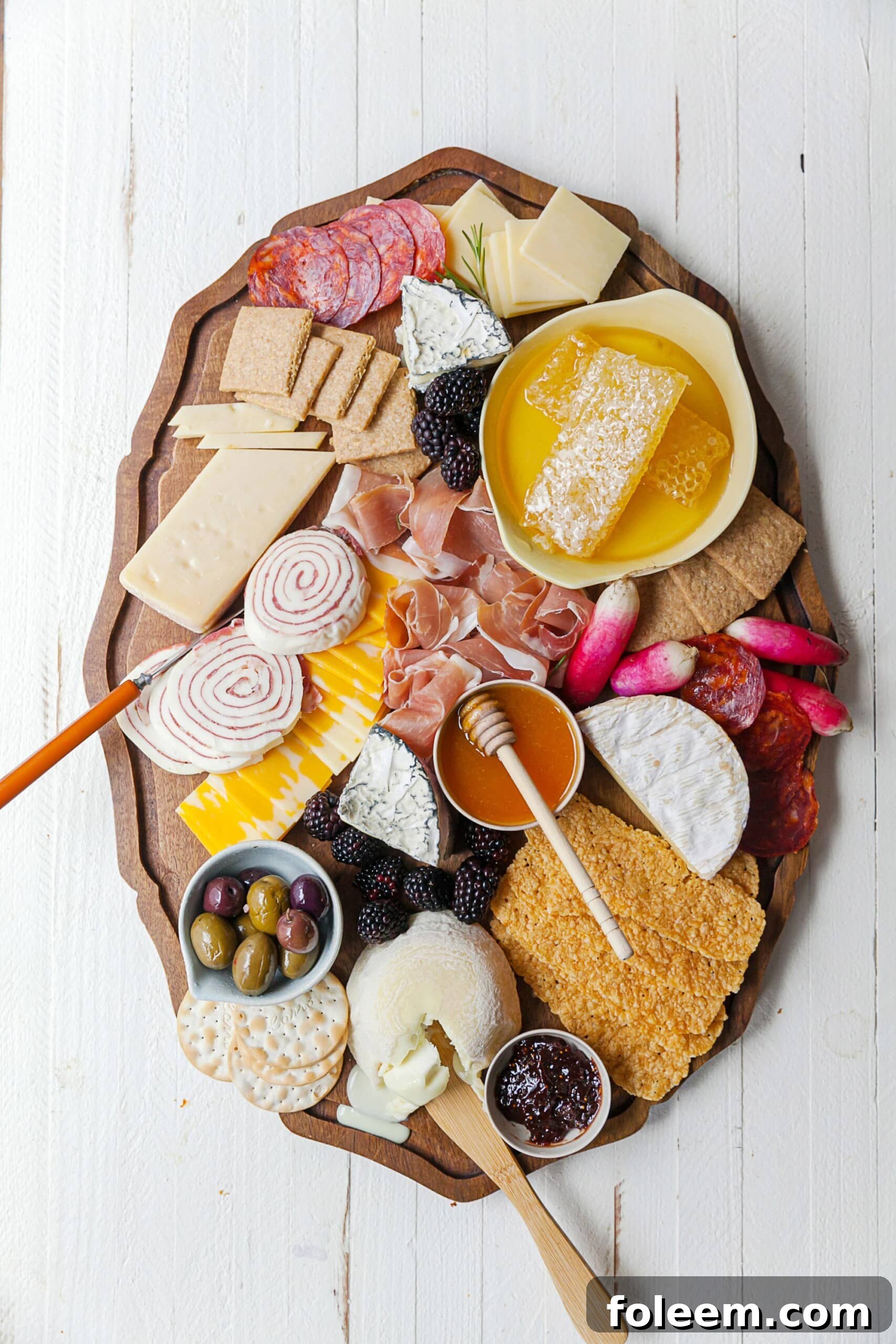
What Can I Use for a Graze Board?
Use whatever large, flat surface you have: a big platter, a cutting board, a cheese tray, or a stone or marble slab. Wooden boards are particularly attractive for grazing presentations. You can find boards at housewares stores, kitchen sections of larger retailers, or secondhand at flea markets and tag sales for unique, budget‑friendly options.
More Great Party Appetizers
- Prosciutto, Asian Pear, and Blue Cheese Crostini
- Smoked Salmon and Crème Fraîche Puff Pastry Tartlets
- Honey Roasted Figs
- Air Fryer Mozzarella Sticks
- Chipotle Deviled Eggs