The scent and flavor of lemongrass are bright, citrusy, and lightly herbal. Many people first meet lemongrass in Thai, Vietnamese, or other Southeast Asian dishes, where it lends a delicate lemony note with a faint mint-like undertone. It enhances soups, curries, stir-fries, salads, marinades, and even teas, pairing well with spicy, savory, and sweet ingredients alike.
- Lemongrass Substitutes
- Where to Find Lemongrass
- How to Cook With Lemongrass
- How to Cut Lemongrass
- How to Store Lemongrass
- FAQs
- Recipes That Use Lemongrass
- How to Cook With Lemongrass Recipe
How to Cook with Lemongrass: Everything you need to know about preparing and cooking this fragrant and citrusy ingredient, so integral to Southeast Asian cooking.
Lemongrass Substitutes
- Lemon zest is the closest everyday substitute for fresh lemongrass. Use about 1/2 teaspoon lemon zest to replace 1 tablespoon minced lemongrass. Lime zest works the same way and can be used if lemon isn’t available.
- Dried lemongrass is sold in jars or packets. It concentrates the flavor, so use about half the amount you would of fresh. Dried lemongrass is best cooked into soups, stews, or curries and should be treated like bay leaves—add while cooking and remove before serving.
- Powdered lemongrass works well in marinades, pastes, and sauces. Start with roughly 1 teaspoon of powder per fresh stalk and adjust to taste.
- If you have fresh herbs like cilantro, basil, or mint, combine a small amount of one of them with lemon or lime zest to better approximate lemongrass’s layered aroma. Kaffir lime leaves are another aromatic alternative where available.
Where to Find Lemongrass
Fresh lemongrass is usually found in the produce section, sometimes near other Asian or specialty greens. Pureed lemongrass or pastes may be stocked near herb pastes or in the spice aisle. Dried and powdered forms are typically in the spice section. Asian grocery stores carry all forms, and you can also buy fresh, dried, or paste versions online.
How to Cook With Lemongrass
Start by removing the tough outer leaves. Trim about an inch from the root end and cut off the top where the stalk turns green; don’t discard the reserved top entirely—it can flavor simple syrup or cocktails. The pale, lower part of the stalk is the tender, flavorful portion you’ll use in cooking.
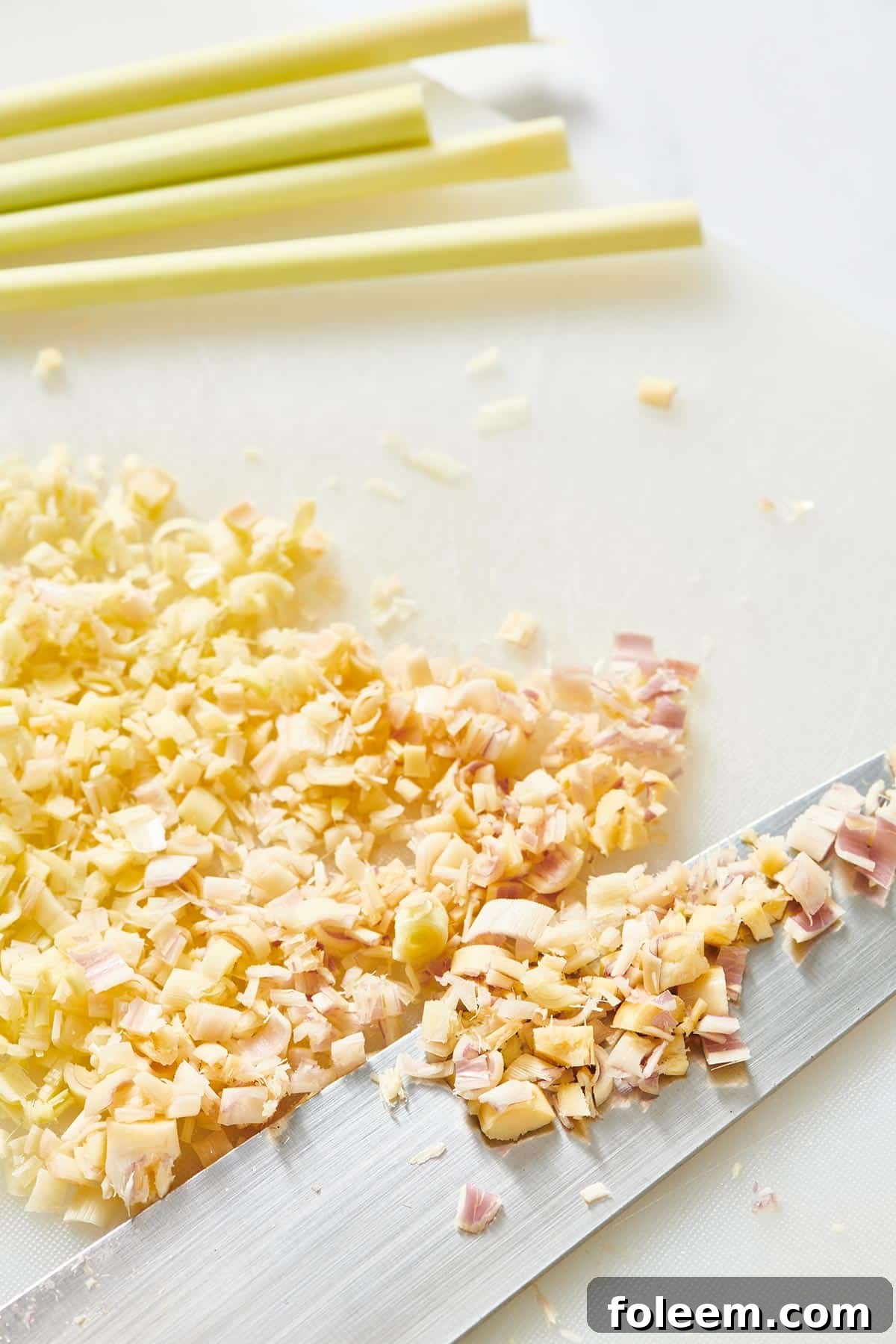
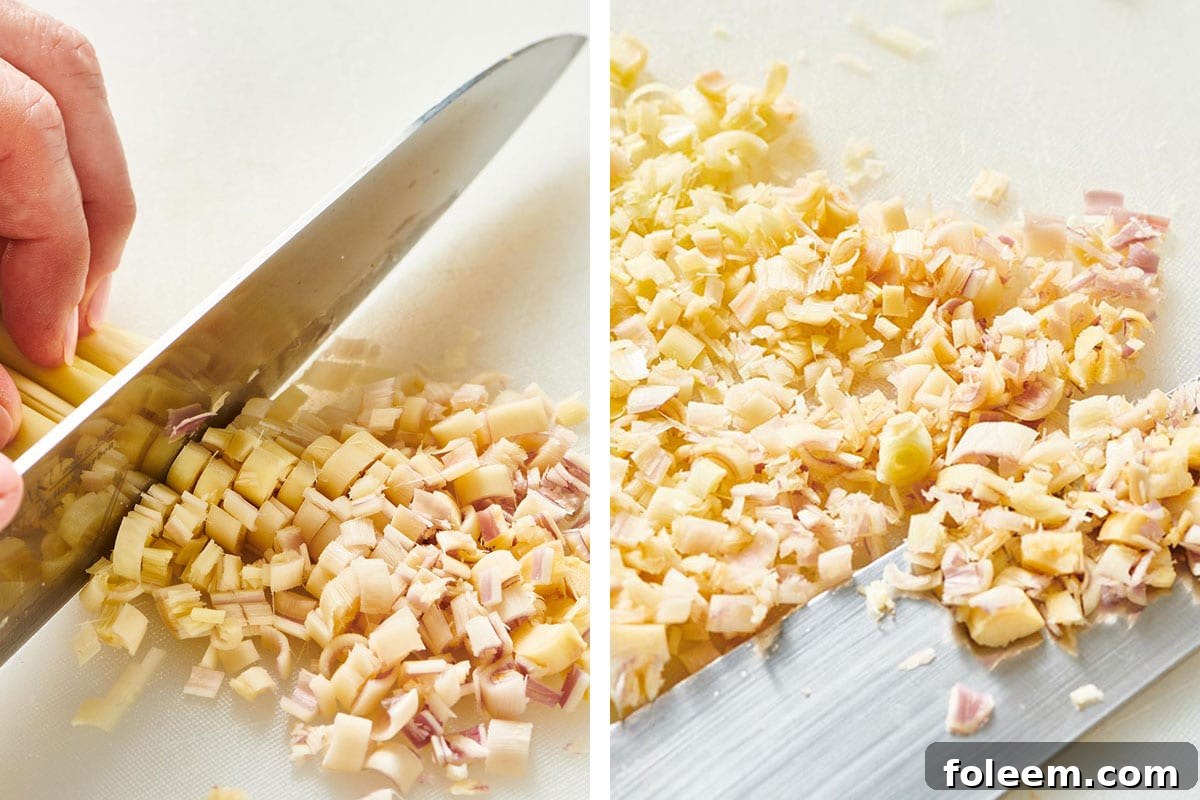
Lemongrass must be minced finely before adding it to most dishes. You can mince by hand, use a box grater, or process it in a food processor. Once minced, fold it into soups, curries, stir-fries, marinades, or sauces as the recipe directs.
How to Cut Lemongrass
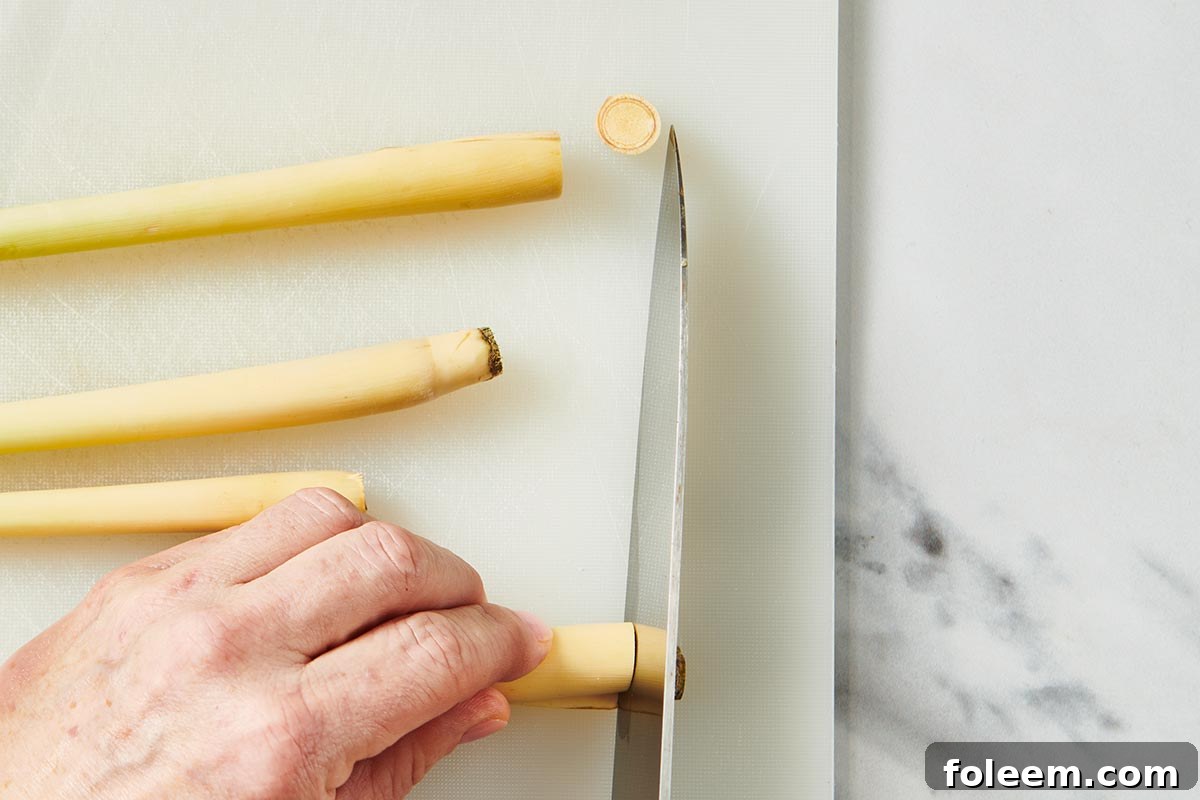
- Slice off the root end of the stalk.
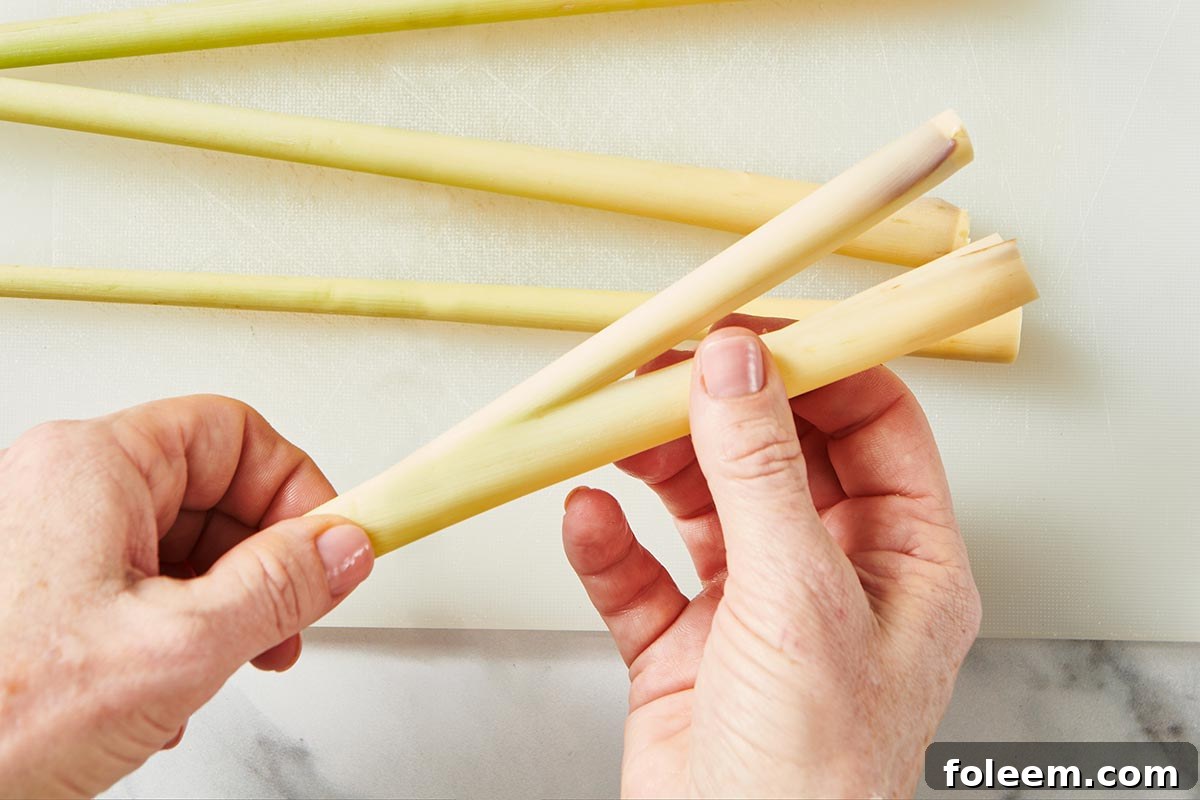
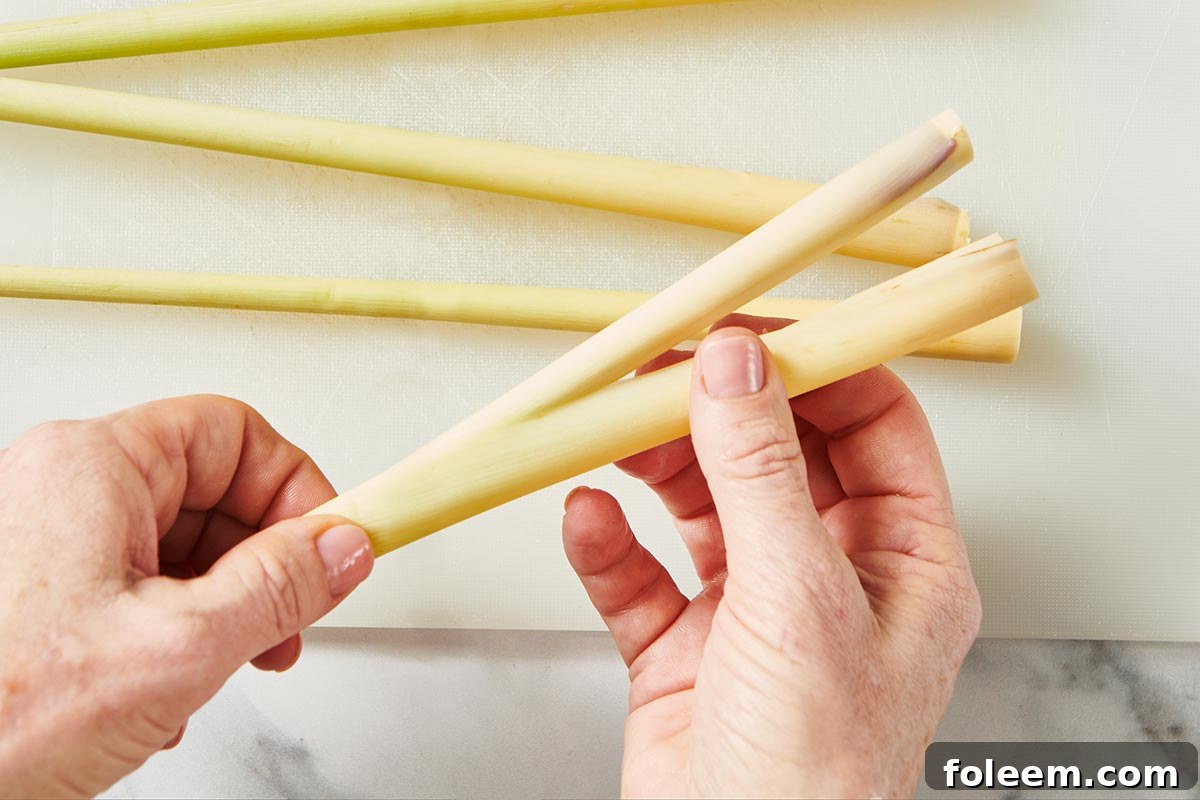
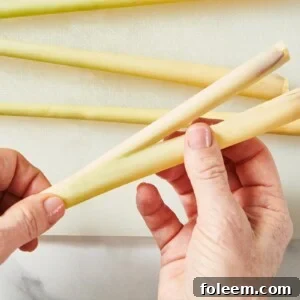
- Peel away one or two of the outer, fibrous layers to reveal the tender inner stalk.
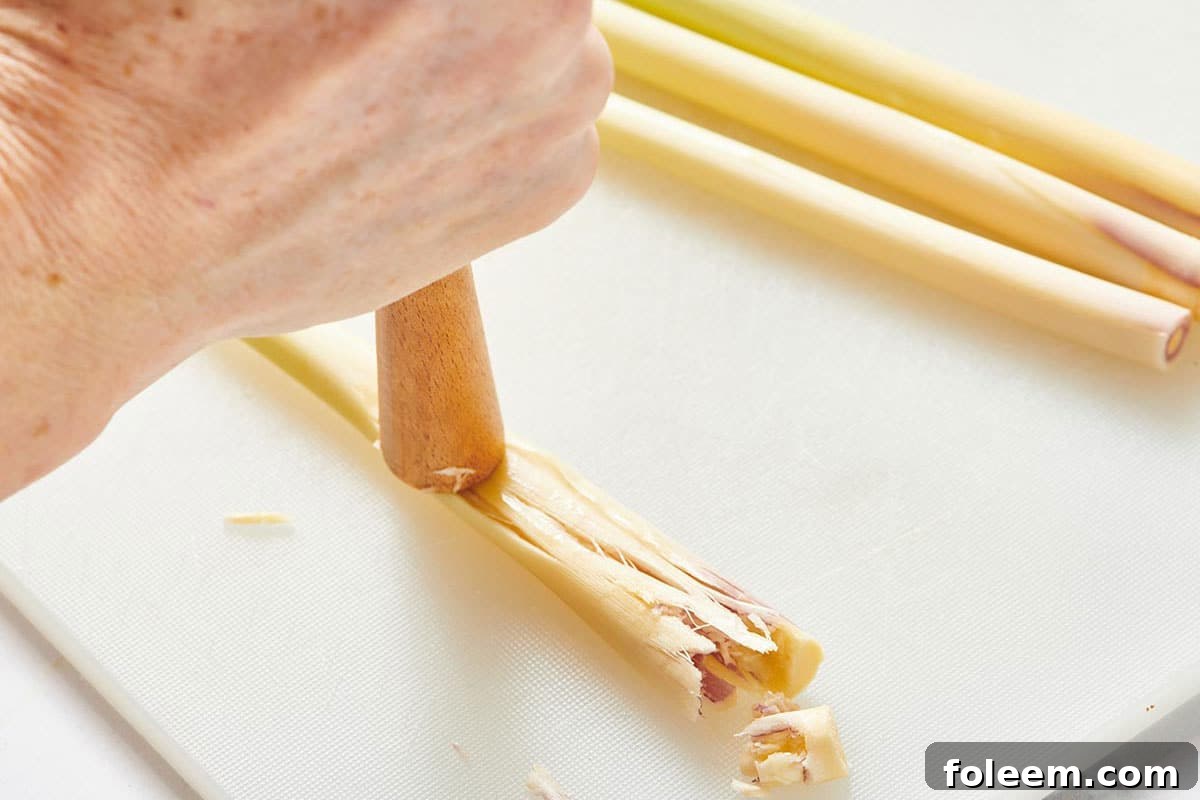
- If you want extra aroma—for a marinade or cocktail—bruise the bottom half of the stalk with a rolling pin or meat mallet to release its oils.
- Slice across the lower portion of the stalk until you reach the thinner, less tender upper section; reserve the upper piece for infusions like simple syrup or tea.
- Chop and mince the inner lower stalk as finely as needed for your dish.
How to Store Lemongrass
Wrapped in a towel or paper and kept in the crisper, fresh lemongrass can last a couple of weeks in the refrigerator. You can also freeze whole stalks or pre-cut pieces for longer storage. Dried and powdered lemongrass should be stored in airtight containers in a cool, dark pantry.
FAQs
Lemongrass contains antioxidants and has been studied for anti-inflammatory properties. However, you typically use small amounts in cooking, so it contributes modestly to overall nutrient intake.
The inner, pale lower portion of the stalk is the most tender and flavorful. Trim the root and peel away the tough outer layers before using. The upper green section can be reserved for infusing liquids but is usually too fibrous to eat.
Recipes That Use Lemongrass
- Thai Chicken Thighs
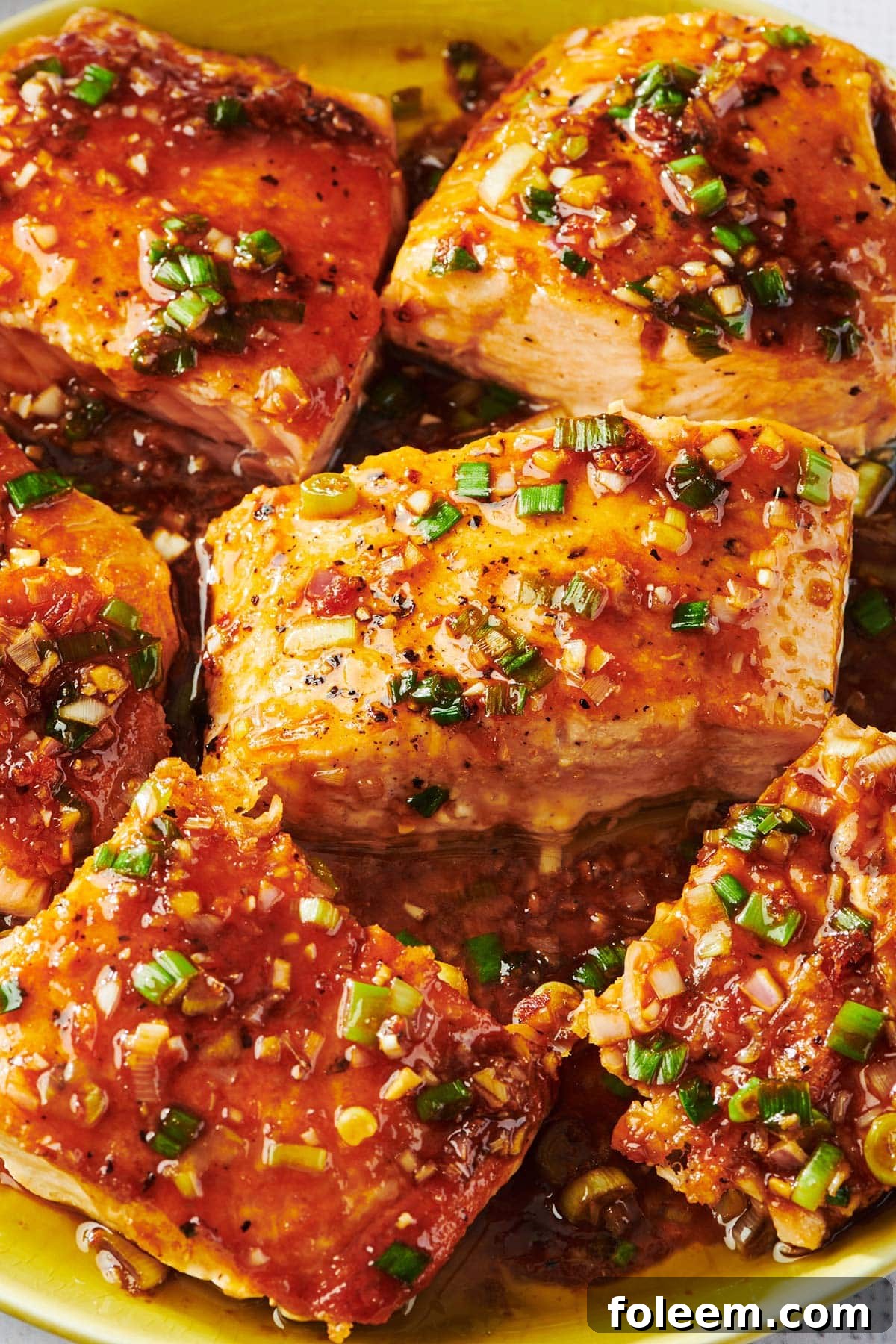
- Thai Salmon
- Lemongrass Cocktail
- Chicken Larb
- Thai Green Chicken Curry
How to Cook With Lemongrass
Equipment
-
Knife
Ingredients
- 1 lemongrass stalk
Instructions
-
Slice off the root end and peel away the tough outer layers.
-
To intensify aroma, bruise the bottom half with a rolling pin or meat mallet when using it in marinades or infusions.
-
Slice across the lower stalk until you reach the thinner upper part; reserve the upper piece for infusions like syrup or tea.
-
Chop and mince the inner lower stalk until it is as fine as the recipe requires, then add to your dish.
Notes
Nutrition
Like this recipe? Rate and comment below!