
Effortlessly Decorate Stunning Sugar Cookies with This Easy Royal Icing Recipe

Transform your homemade sugar cookies into edible works of art with our simple yet spectacular royal icing recipe! Whether it’s for festive holidays, special celebrations, or just a delightful treat, perfectly decorated cut-out cookies are entirely achievable in your own kitchen. This comprehensive guide provides an easy-to-follow royal icing recipe, along with expert instructions, invaluable tips, and clever tricks designed to build your confidence and help you master this beautiful cookie decorating technique.
If you’re a baking enthusiast, you likely appreciate the joy of creating delicious treats from scratch. I’ve previously shared some of my most cherished sugar cookie recipes, like the adorable Christmas Sugar Cookie Bites, my classic Cut-Out Sugar Cookies, and the ever-popular Frosted Swig Sugar Cookies. However, a sugar cookie recipe feels incomplete without the perfect frosting to complement it. That’s why I’m thrilled to finally share this incredibly easy royal icing recipe that will elevate your cookie decorating game. Be sure to explore all my cookie recipes – they’re my absolute favorite to bake because they’re truly straightforward and fun!
Unlock Your Inner Cookie Decorator: The Magic of Royal Icing
For me, sugar cookies hold a special place. If I had to choose one cookie above all others, it would always be a sugar cookie. Cast your mind back to childhood days, baking cookies with your mom or grandmother during the holidays. What was the most magical part of that baking process? Beyond the delightful act of devouring them, I bet it was the decorating! There’s something inherently joyful about transforming a plain cookie into a festive or whimsical creation.
This royal icing recipe has been a game-changer for me. I used to think royal icing was daunting, reserved only for professional bakers or those with innate artistic talent. Let me tell you, that notion is simply not true! This recipe is far more approachable and “doable” than I ever imagined. If I, someone who claims not to have an artistic bone in their body, can create beautifully decorated cookies, then you absolutely can too!
I successfully used this very royal icing recipe for my Minnie Mouse Sugar Cookies, and they turned out absolutely stunning, with a smooth, professional-looking finish. It’s also incredibly versatile – imagine using this royal icing to “glue” together festive gingerbread houses during Christmas, or to add intricate details to any holiday cookie design. The possibilities are truly endless when you have a reliable royal icing recipe at your fingertips.
Royal Icing vs. Buttercream: Understanding the Key Differences
Perhaps you’re wondering what makes royal icing different from a traditional frosting like buttercream. The biggest distinction lies in their texture and how they set. Buttercream frosting is renowned for its creamy, soft, and easily spreadable consistency. It remains soft, offering a rich, melt-in-your-mouth experience.
Royal icing, on the other hand, undergoes a magical transformation as it dries. It hardens to form a smooth, edible, candy-like shell. This firm set is what gives decorated sugar cookies that flawless, polished, and sometimes almost “too perfect” appearance, as if they were purchased from a high-end bakery. This unique property makes royal icing ideal for intricate designs, stacking cookies, and packaging without smudging the decorations.

The ability of royal icing to dry completely hard means your meticulously crafted designs are preserved. It also contributes to the shelf life of the cookies, as the icing acts as a protective layer, helping to keep the cookies fresh for longer.
Essential Tips for Royal Icing Consistency
Achieving the perfect royal icing consistency is arguably the most crucial step for beautiful cookie decorating. Too thick, and it will be difficult to pipe smoothly; too thin, and it will run off the cookies. You’re aiming for different consistencies for outlining and flooding, which are the foundational techniques in royal icing decoration.
- Outline Consistency: This should be similar to toothpaste or very soft cream cheese. When lifted with a spoon, it should hold a soft peak, not flow freely. This thicker consistency is used to create a barrier around the edge of the cookie.
- Flood Consistency: This should be thinner, like honey or shampoo. When you drizzle a spoonful of icing back into the bowl, it should disappear and become smooth within about 10-15 seconds. This thinner consistency is used to fill in (flood) the outlined areas.
Remember, it’s easier to add a little more water to thin out thick icing than to thicken runny icing (though you can add a tiny bit more powdered sugar if absolutely necessary). Adjust your icing carefully, adding water a mere drop at a time until you reach your desired consistency.
Beginner-Friendly Decorating Instructions
Once you’ve mastered your royal icing consistency, the fun begins! Here’s a breakdown of basic decorating steps and some easy techniques:
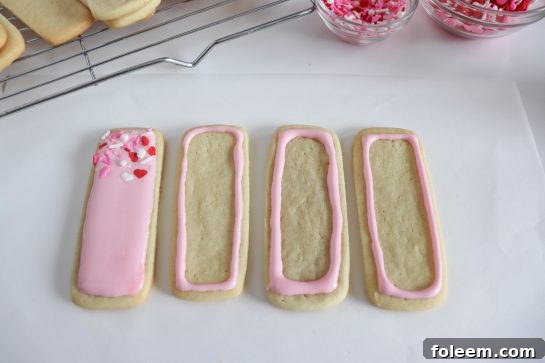
- Outline and Flood: Using your outline consistency icing, pipe a border around the edge of your cookie. Let it set for a few minutes (just enough so it doesn’t merge with the flood). Then, using your flood consistency icing, fill in the middle area.
- Smooth and Pop Bubbles: Use a toothpick or a clean scribe tool to gently guide the icing to the edges and fill in any gaps. You can also use it to pop any air bubbles that rise to the surface, ensuring a smooth finish.
- Allow to Dry: This step is critical! Allow each flooded area to dry completely before adding further details or different colors that touch. The icing needs to set at room temperature for at least four hours, or even overnight, to fully harden. Humidity can significantly affect drying time, so be patient.
Easy Decorating Techniques:
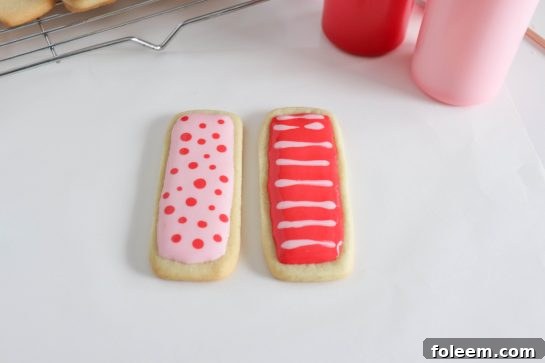
- Polka Dots: While the flooded area is still wet (before it dries), add dots of different colored icing directly onto the wet surface. The dots will sink slightly into the base color, creating a seamless, smooth finish. This is a “wet-on-wet” technique.
- Hearts: Similar to polka dots, add dots of different colored icing onto a wet flooded area. Immediately, drag a toothpick through the center of each dot, pulling it downwards to create a charming heart shape.
- Zigzag Design / Marbling: On a wet flooded surface, pipe thin stripes of different colored icing. Then, drag a toothpick perpendicularly through the stripes, alternating direction for each pass, to create a beautiful zigzag or marbled effect.
- Sprinkles: For a touch of sparkle, add sprinkles onto the flooded area before it completely dries. The icing will act as an adhesive.
- Candy “Glue”: To attach edible pearls, candies, or other sugar decorations, use a tiny drop of royal icing as edible “glue” after the base layer has dried.
- Edible Markers: If you wish to draw fine details or write messages, ensure your royal icing has completely hardened for at least four hours (preferably longer) before using an edible marker.

My family has enjoyed beautifully decorated cookies using this royal icing recipe for years, and I am genuinely thrilled to finally share it with all of you. Decorating cookies with royal icing is not just a culinary task; it’s a creative outlet, offering immense fun for everyone – from little kids to big kids and adults alike! It’s an activity that brings smiles and delicious rewards.

Troubleshooting Common Royal Icing Issues
Even with an easy royal icing recipe, you might encounter a few hiccups. Don’t worry, these are common and easily fixable:
- Cratering: This happens when the center of your flooded area sinks in. It’s often caused by too much water in the icing, insufficient drying time between layers, or sometimes a very humid environment. Ensure your flood icing isn’t too thin, and allow ample drying time.
- Bleeding Colors: If colors bleed into each other, it’s usually because the underlying layer wasn’t fully dry before a new, wet layer was applied. Patience is key! Use gel food colorings, as liquid ones add too much moisture.
- Icing is Too Hard: If your mixed icing becomes too stiff over time, add water one drop at a time and mix thoroughly until the desired consistency returns.
- Icing is Too Runny: If you’ve added too much water, slowly mix in more powdered sugar, a tablespoon at a time, until it thickens.
Storage Tips for Royal Icing and Decorated Cookies
- Storing Leftover Royal Icing: Royal icing can be stored at room temperature in an airtight container for up to two weeks, or in the refrigerator for up to a month. Before storing, place a piece of plastic wrap directly on the surface of the icing to prevent a crust from forming. When ready to use, simply stir or re-mix until smooth, adding a tiny bit of water if needed to adjust consistency.
- Storing Decorated Cookies: Once your royal icing is completely dry and hardened (give it at least 24 hours to be safe), stack your decorated sugar cookies in an airtight container at room temperature. They will stay fresh and beautiful for several days, thanks to the protective shell of the royal icing. Avoid refrigerating decorated cookies as it can introduce moisture and affect the icing.

Sugar Cookie Royal Icing Recipe
By Ashley
Beautifully decorated cut-out cookies for every celebration and holiday are totally attainable at home with this easy sugar cookie royal icing recipe and a few instructions, tips & tricks to give you the confidence you need to try this technique yourself!
Print Recipe
Pin Recipe
Prep Time: 30 mins
Cook Time: 15 mins
Total Time: 45 mins
Yields: 10 Servings
Ingredients
For the Sugar Cookies:
- 1/4 cup all-purpose flour
- 1 package refrigerated sugar cookie dough such as Pillsbury
- Gel food coloring (for cookies if desired, or for icing later)
For the Royal Icing:
- 4 cups powdered sugar
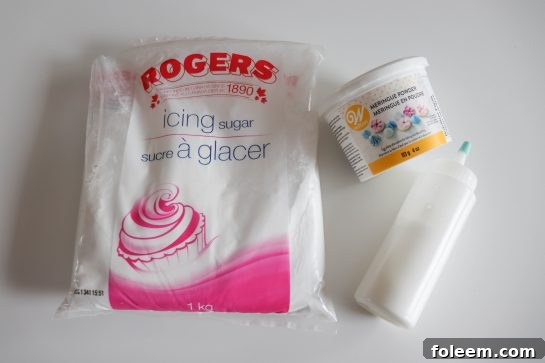
- 3 TBSP meringue powder
- 8-12 TBSP room temperature water
- Gel food coloring (for coloring the icing)
Instructions
For the Sugar Cookies:
-
Combine dough and flour. Roll to ¼” thickness. Cut out ½” x 3” rectangles or any desired shapes.
-
Bake at 350°F (175°C) on a baking sheet for 8 minutes or until the edges begin to turn light golden brown. Let cool completely before icing.
Royal Icing Recipe:
-
In a stand mixer fitted with the whisk attachment (a hand mixer works fine too), combine the powdered sugar and meringue powder. Add 8 tablespoons of room temperature water. Beat on low speed for 1 minute.
-
Gradually add more water, one tablespoon at a time, beating after each addition, until the icing reaches a good consistency for piping (like thick toothpaste for outlining, or flowing slowly like honey for flooding). Be cautious not to add too much water too quickly.
-
If the icing becomes too hard or stiff, add a tiny bit more water until it’s workable. If it becomes too runny, add a small amount of powdered sugar to thicken it.
-
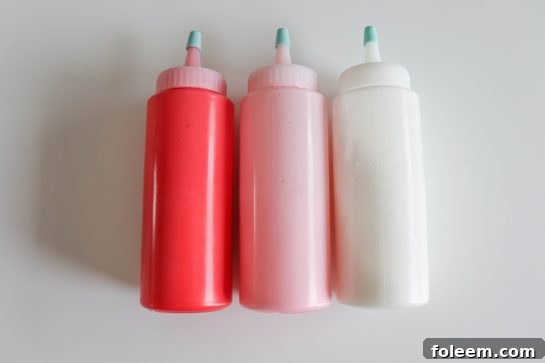
Separate the icing into small mixing bowls. Add gel food coloring to each bowl until you achieve your desired colors. Mix thoroughly. Scoop the colored icing into piping bags fitted with small tips or into plastic icing bottles.
Notes
Decorating instructions:
Line around the edge of the cookie with thicker icing (outline consistency) and fill in the middle with thinner icing (flood consistency). Use a toothpick or scribe tool to poke bubbles or direct icing into holes, ensuring an even spread. Allow each colored or flooded area to dry completely before adding new piping details or adjacent colors. The icing should air-dry at room temperature for AT LEAST four hours, or preferably overnight, to harden properly.
For Polka Dots: Before the flooded area dries, add dots of different colored icing onto the wet surface.
For Hearts: Before the flooded area dries, add dots of different colored icing, then drag a toothpick through each dot, pulling it to create a heart shape.
For Zigzag or Marbled Design: Before the flooded area dries, add stripes of different colored icing, then drag a toothpick perpendicularly through the stripes to create the desired pattern.
Sprinkles: Add sprinkles before the flooded area completely dries so they adhere.
Candy Adornments: “Glue” small candies or other decorations to the cookie with a tiny drop of royal icing after the base layer is dry.
Using Edible Markers: If planning to draw details with an edible marker, allow the icing to completely harden for at least four hours before applying.
Tried this recipe?
Let us know how it was!