Thawing Shrimp Safely: Step-by-Step Guide for Perfect Texture
Frozen shrimp are a kitchen lifesaver because they thaw quickly and allow you to prepare a tasty meal in very little time—perfect for busy weeknights. Below are safe, simple methods for thawing shrimp. The refrigerator method takes about a day; the cold-water method takes under 30 minutes.
Most shrimp sold in stores have already been frozen at some point. Between catching, processing, and transporting seafood from waters around the world to retail counters, freezing preserves freshness. Even shrimp displayed on ice at a fish counter were likely frozen earlier. Buying frozen shrimp is a practical option that often results in excellent flavor and texture.
- Buying Frozen Shrimp Is OK!
- How to Thaw Shrimp In the Refrigerator
- How to Quickly Defrost Shrimp
- FAQs
- What to Avoid
- How to Peel and Devein Shrimp
- Recipes With Shrimp
- How to Thaw Shrimp (Recipe)
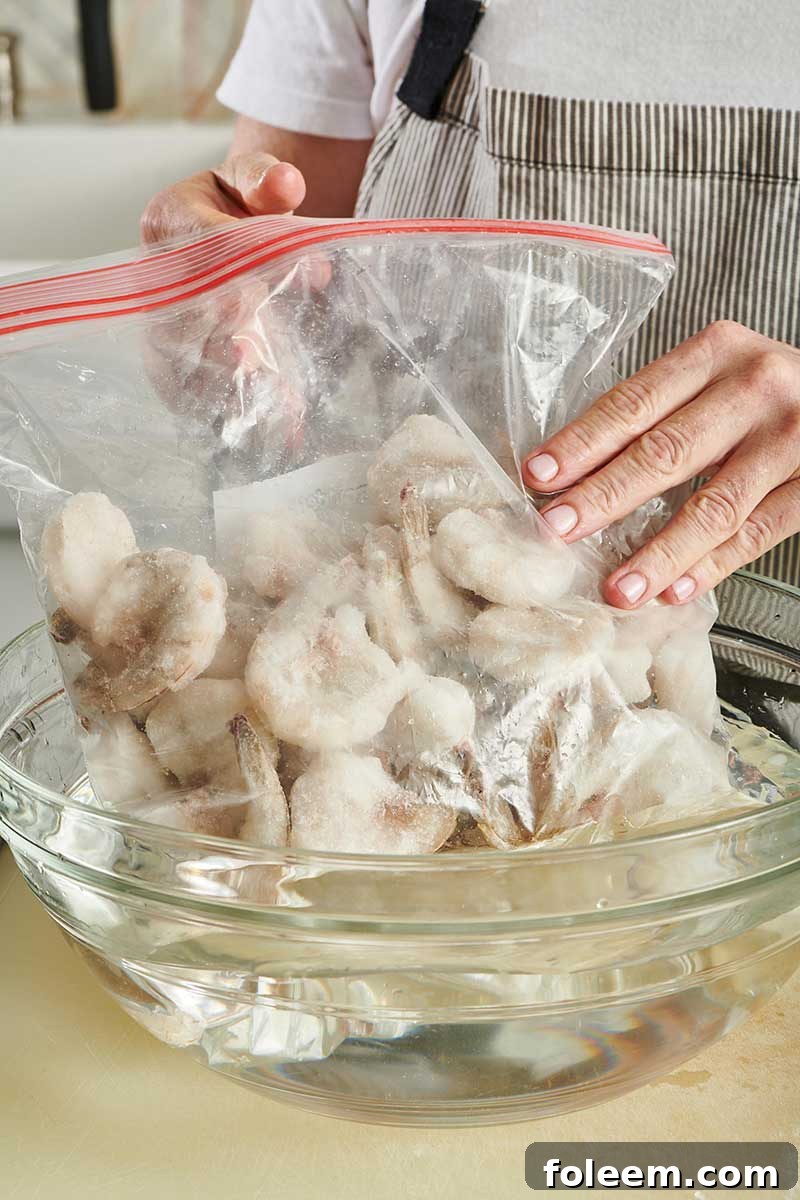
How to Thaw Shrimp: Frozen shrimp are perfect for fast weeknight dinners. Here are the safest, quickest, and easiest ways to defrost shrimp!
Buying Frozen Shrimp Is OK!
Don’t shy away from frozen shrimp. When you buy them frozen, you can thaw them just before cooking, ensuring maximum freshness and flexibility. Frozen shrimp often keep a firmer texture and better flavor than shrimp that have been stored thawed for a while. In many cases “fresh” shrimp at the market were frozen earlier, so frozen shrimp are a reliable choice.
Frozen shrimp give you options: keep them in the freezer until you’re ready to cook. When you need them, choose the thawing method that fits your timeline.
How to Thaw Shrimp In the Refrigerator
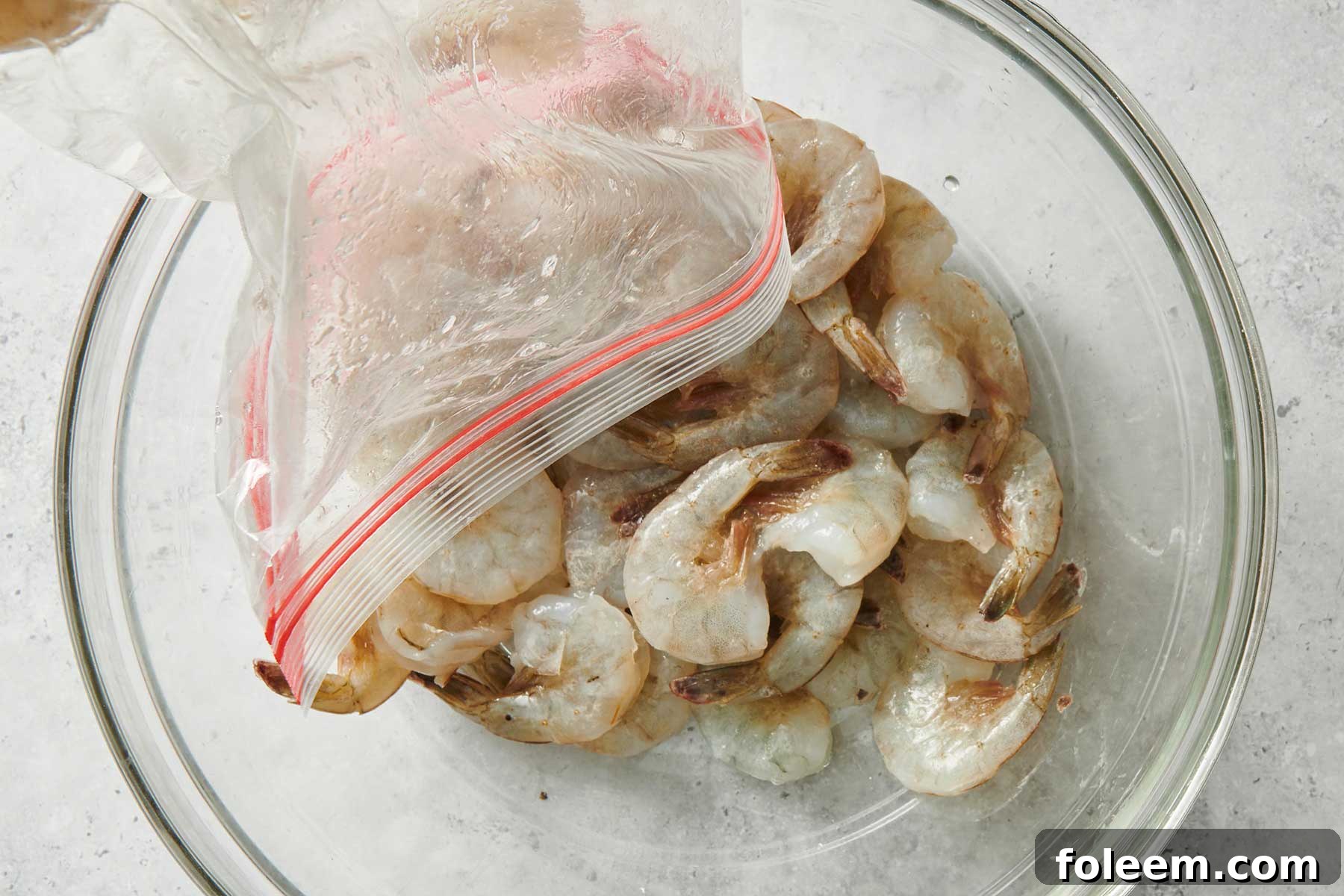
Thawing shrimp in the refrigerator overnight is the safest and gentlest method. For most packages or blocks, 24 hours is sufficient. Larger blocks may need a bit longer. Thawed shrimp should be pliable and cold to the touch.
- Keep the shrimp in their sealed packaging: If they’re in an unopened, airtight bag, place the package on a rimmed baking sheet or in a shallow bowl to catch any drips.
- Separate pieces as they thaw: As the shrimp soften, break up any large blocks so they thaw evenly and more quickly.
- Dry before cooking: If you plan to sauté or bake the shrimp, pat them dry to encourage browning. Peel them if your recipe calls for peeled shrimp, then spread them on a clean towel or paper towels and blot to remove excess moisture.
How to Quickly Defrost Shrimp
If you need shrimp quickly, the cold-water method thaws them safely in about 25–30 minutes.
- Fill a large bowl with cold water.
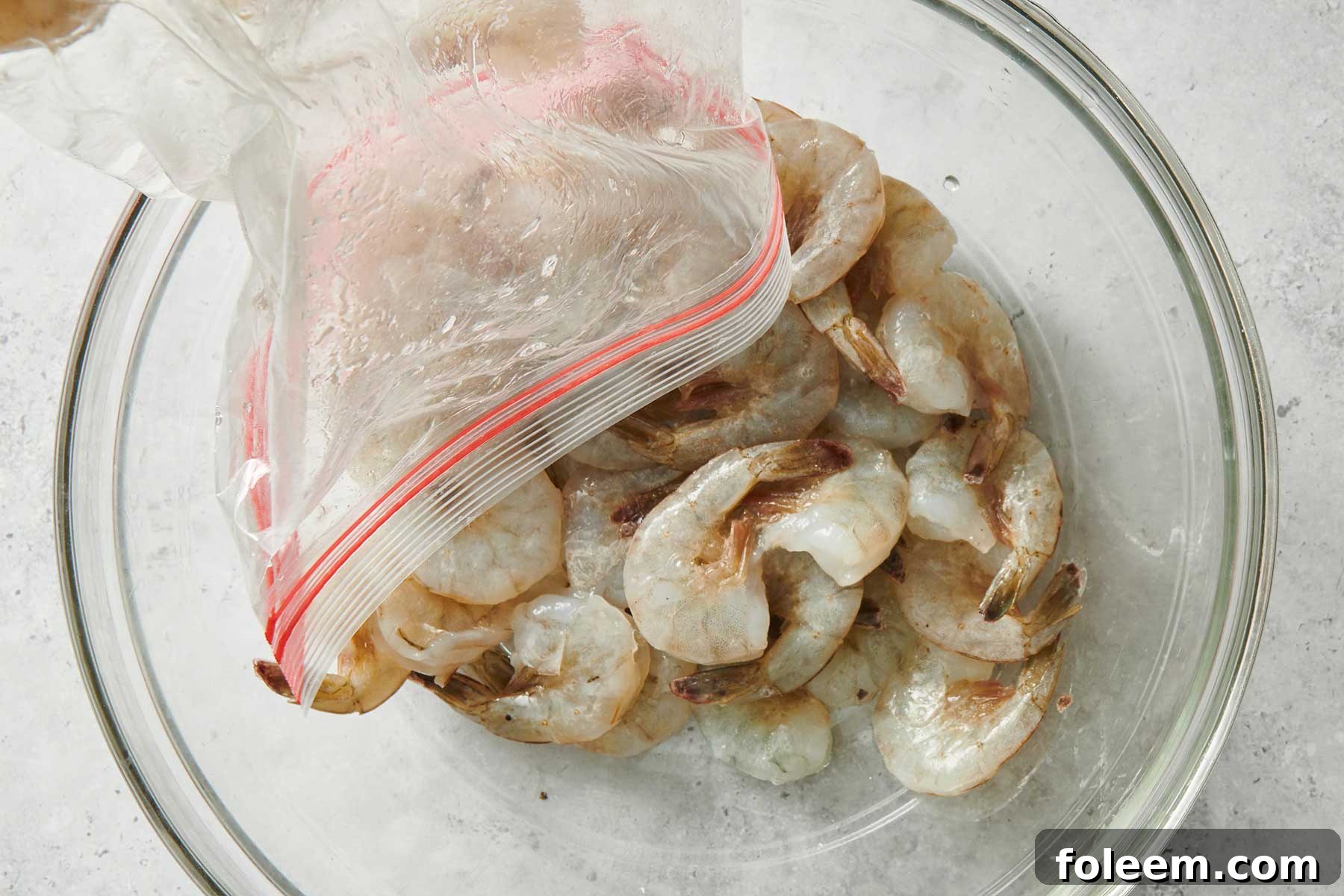
- Seal the shrimp in a bag: If the shrimp aren’t already in an airtight bag, transfer them to a sturdy zipper-top bag and close it securely.
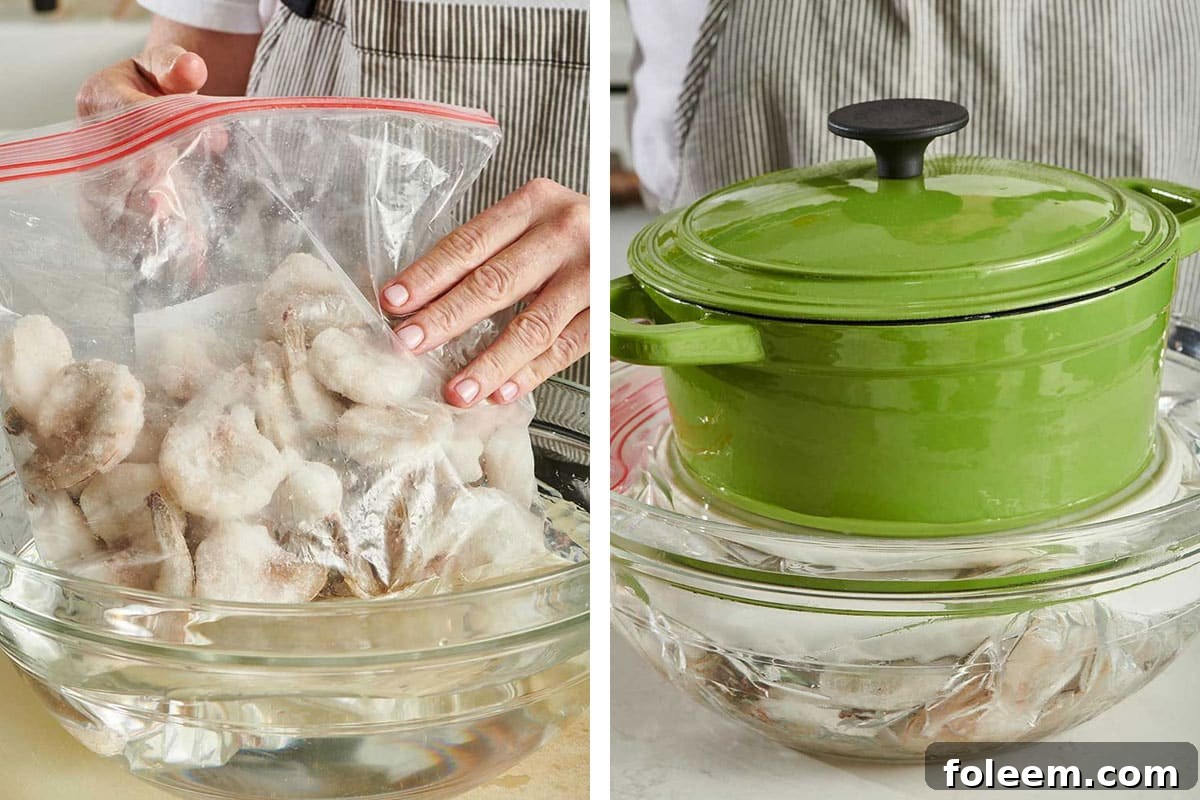
- Submerge the bag: Place the sealed bag in the bowl of cold water. Put a weighted bowl or plate on top to keep it fully submerged.
- Let them thaw: Keep the bag in the water for about 25–30 minutes. Periodically squeeze or shift the bag to separate pieces without opening it so the shrimp thaw evenly. When pliable, remove and proceed.
- Dry the shrimp: Unless adding to soup or poaching, pat the shrimp dry between clean towels before cooking to promote browning and better texture.
FAQs
Frozen shrimp are best used within three months for optimal flavor and texture, though they can be kept frozen up to nine months. Buying raw shrimp with the shell on is preferable because pre-peeled shrimp sometimes include additives and can lose texture when frozen.
How long can thawed shrimp last?
Thawed shrimp should be refrigerated and used within 1–2 days.
What to Avoid
- Thawing at room temperature: Leaving shrimp out allows them to reach the “danger zone” (40–140°F) where bacteria multiply.
- Using hot water: Hot water can encourage bacterial growth and begin cooking the shrimp unevenly.
- Running cold water constantly: This works but wastes a lot of water.
- Using the microwave: Microwaves defrost unevenly and can start cooking the shrimp, resulting in rubbery texture.
- Avoid shrimp with dark spots: Dark spots may indicate the shrimp were not fresh when frozen.
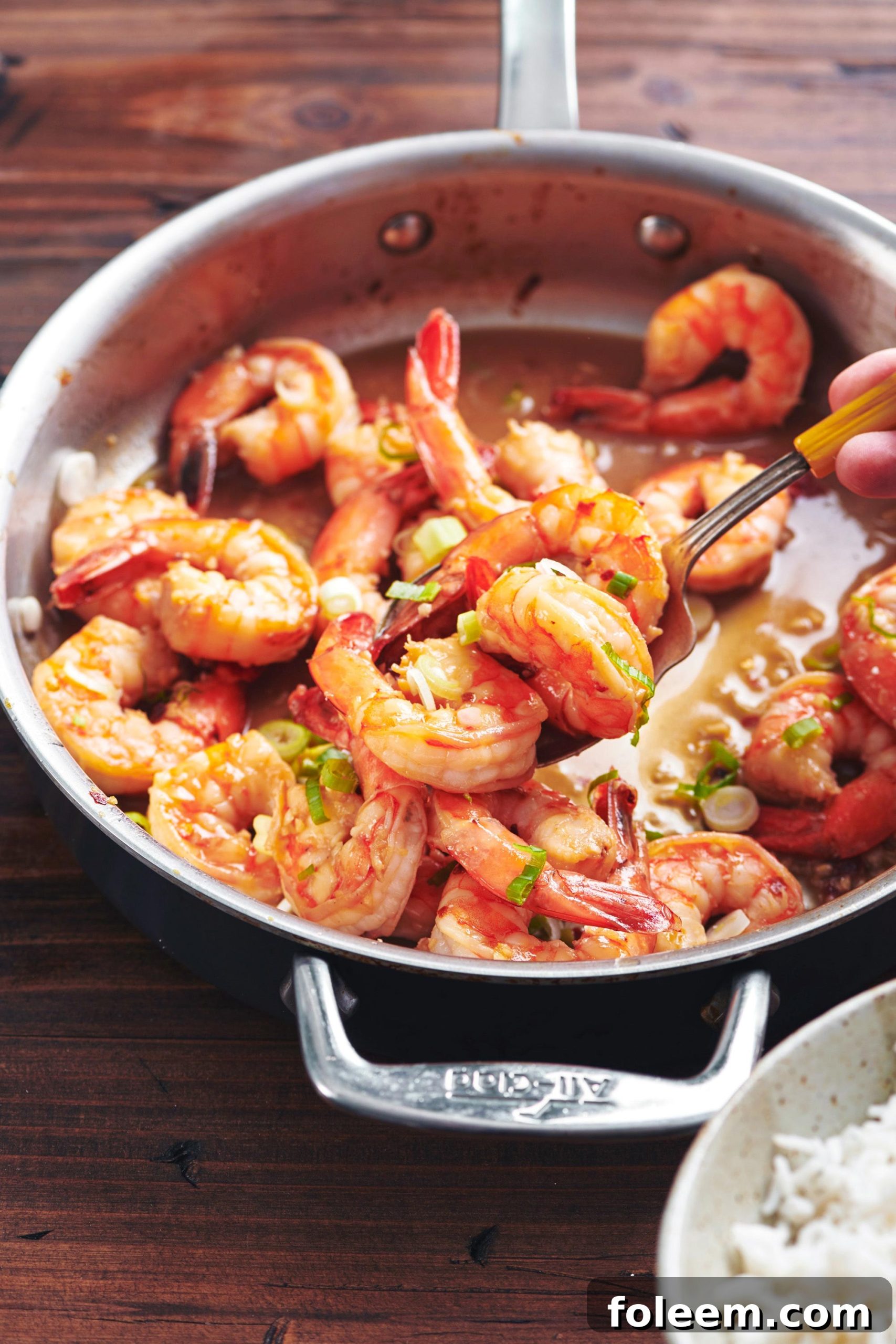
How to Peel and Devein Shrimp
The visible “vein” running along the shrimp’s back is its digestive tract and can be gritty or unattractive. You can devein shrimp before or after cooking depending on your recipe and presentation.
To devein: peel the shrimp if desired, leave the tail on or off according to how you’ll serve it, and use a small paring knife to cut a shallow slit along the back about 1/4 inch deep. Lift out the vein with your fingers or the knife and discard it. Rinse and pat dry before cooking.
Recipes With Shrimp

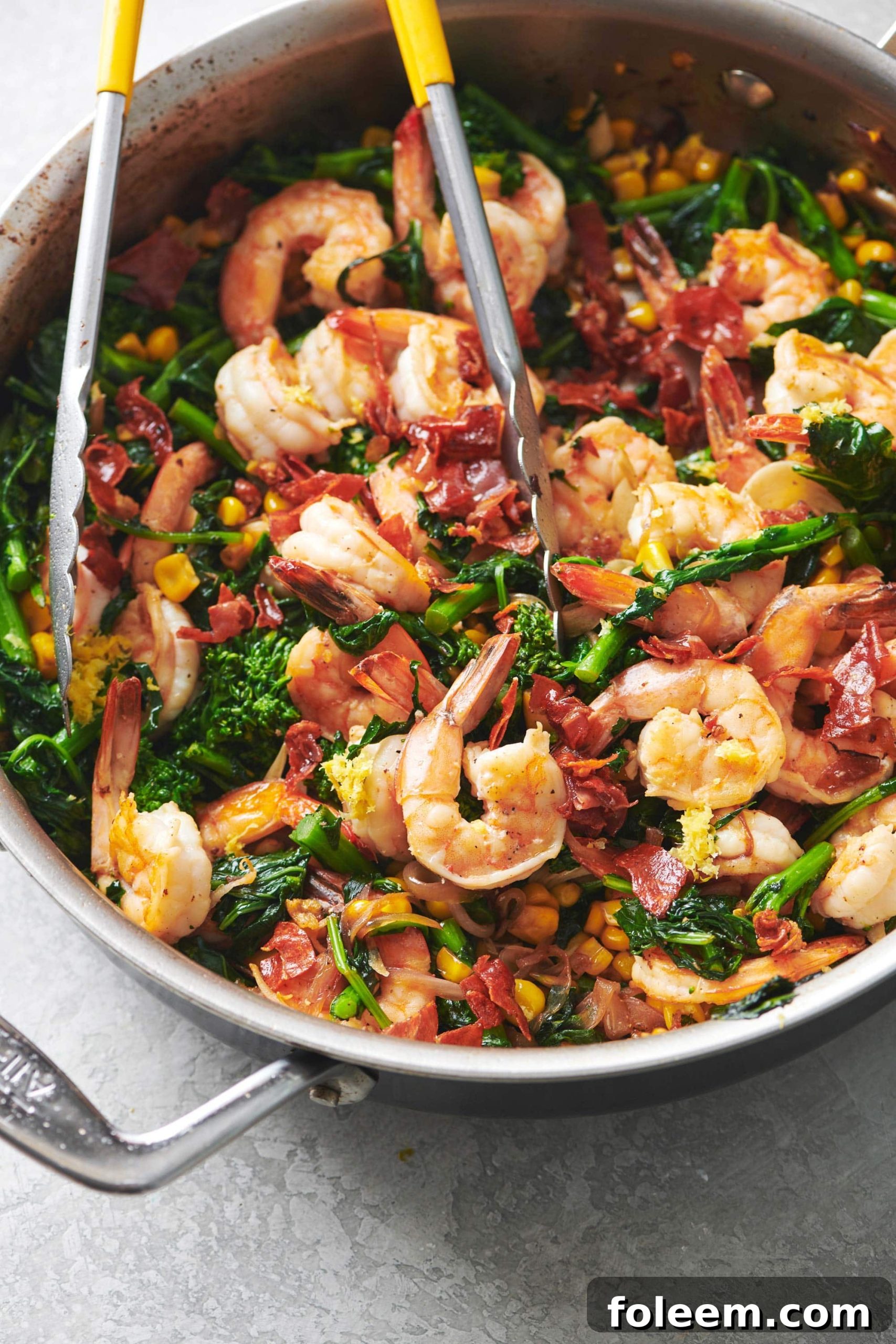
Shrimp and Vegetables Skillet

Shrimp Ceviche

Shrimp Po’Boy
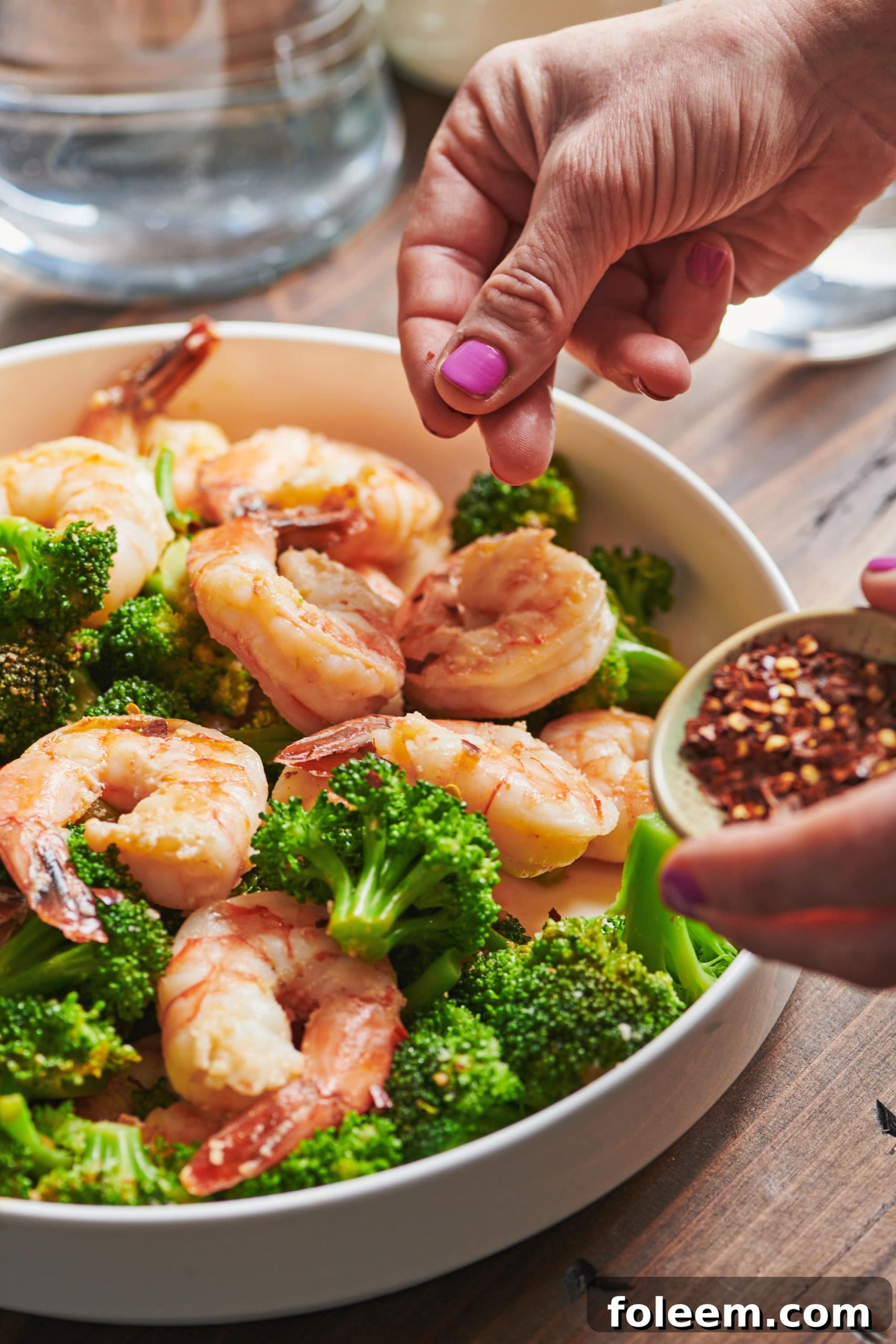
How to Thaw Shrimp (Recipe)
Defrosting shrimp in cold or iced water yields ready-to-cook shrimp in about half an hour.
Ingredients
- 1 pound frozen shrimp (shell on or off; any size)
Equipment
- Large bowl
- Sturdy zipper-top bag (if original packaging is not airtight)
- Weight to keep the bag submerged (a bowl or plate)
Instructions
- Fill a large bowl with cold water and add ice if desired to keep the temperature low.
- If the shrimp aren’t in an airtight bag, transfer them to a sturdy zipper-top bag and seal it.
- Submerge the sealed bag in the cold water and place a weighted object on top so the shrimp stay beneath the surface.
- Let the shrimp sit in the water for about 25–30 minutes. Occasionally move the bag to help separate pieces so they thaw evenly.
- When pliable, remove the shrimp from the bag. Pat them dry between clean towels before sautéing, baking, or grilling so they will brown properly. If your recipe calls for peeled shrimp, peel and devein as needed before cooking.
Notes
- Frozen shrimp are best within three months for top flavor and texture, though they remain safe up to nine months.
- Use thawed shrimp within 1–2 days and keep them refrigerated until you cook them.