How to Cook Leeks Perfectly: Sauté, Roast, and Braise Techniques
Leeks, along with shallots, are among my favorite members of the onion family. Milder than regular onions—especially once cooked—these cylindrical white-and-green alliums are wonderfully versatile. Once you start cooking with leeks, you’ll want to keep them in your fridge for soups, sautés, roasts, and more.
- What Are Leeks?
- What Do Leeks Look Like?
- What Do Leeks Taste Like?
- FAQs
- How to Clean Leeks
- How to Cut Leeks
- How to Use Leeks
- How to Store Leeks
- 9 Leek Recipes
- How to Prepare and Cut Leeks Recipe
What Are Leeks?
Leeks belong to the Allium family—the same family as onions, garlic, and shallots. They can be used in most of the same ways as onions, acting as a mild aromatic base or a featured vegetable in a range of dishes.
What Do Leeks Look Like?
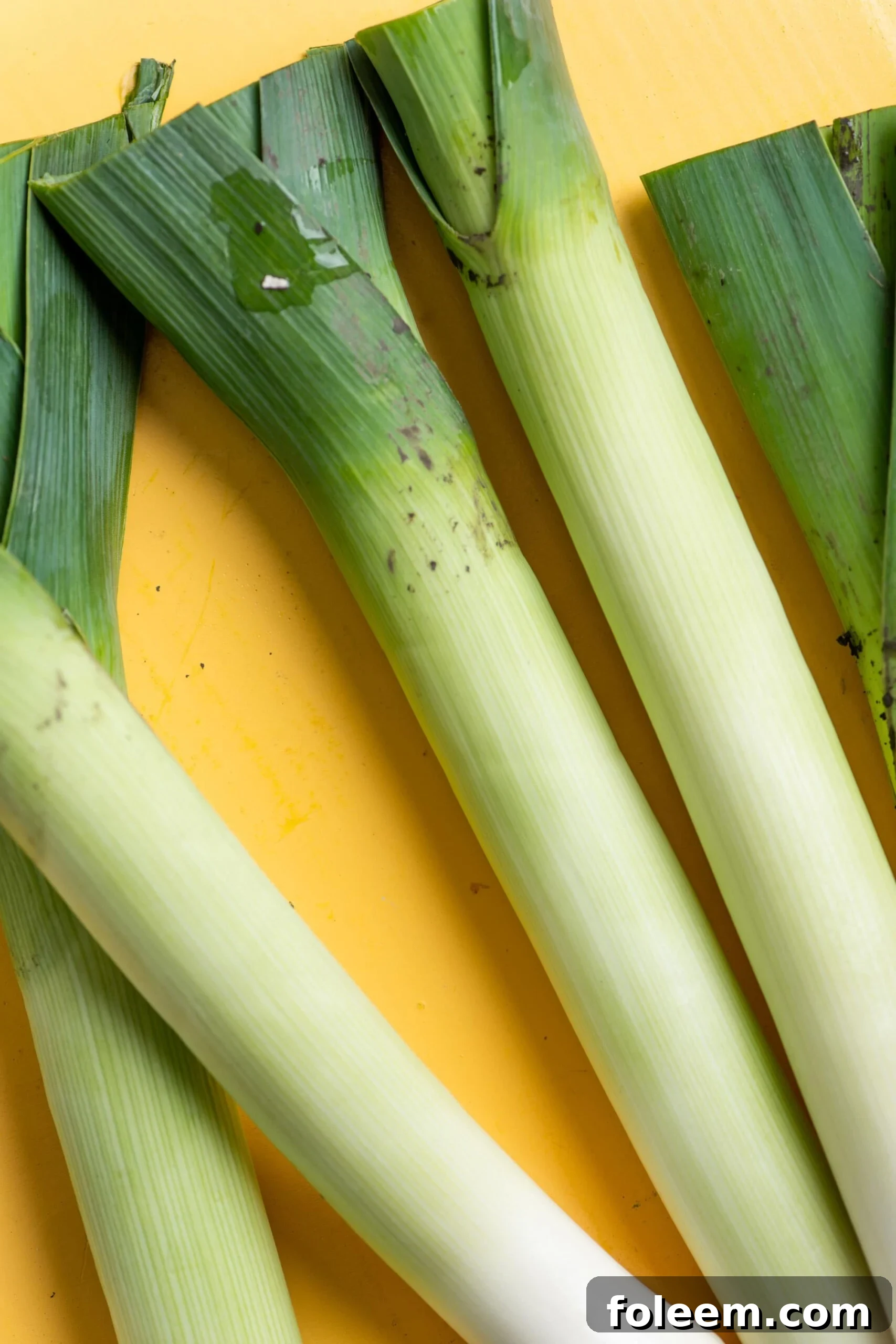
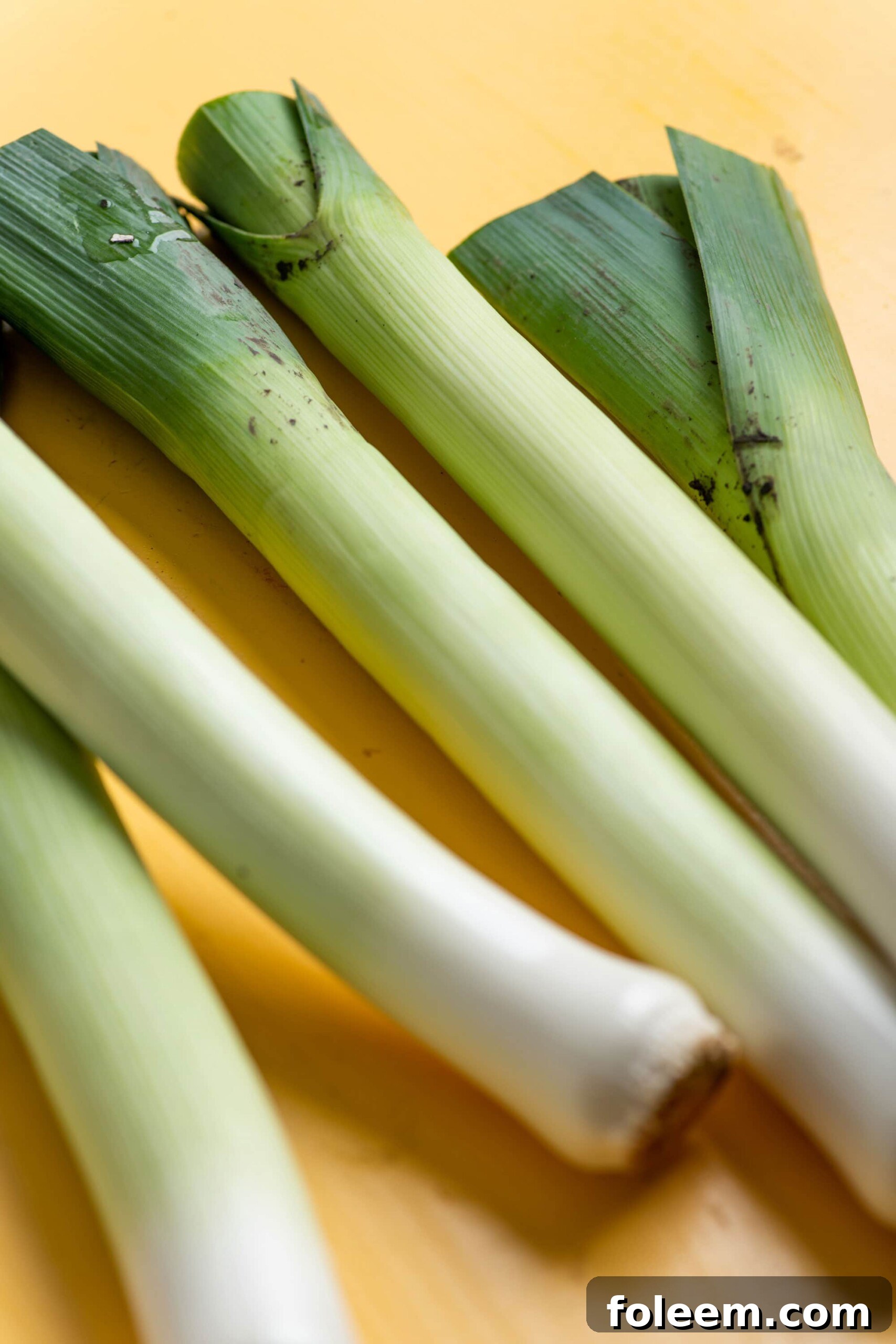
Leeks resemble oversized scallions or green onions: long, cylindrical stalks with a white base that transitions to light green and then to dark green leaves at the top.
What Do Leeks Taste Like?
Leeks have a gentler, sweeter onion flavor than common onions. The taste softens further when cooked, becoming mellow and slightly sweet. Raw leeks are more pungent and can be quite sharp, so thin slicing or mincing is best if you plan to eat them uncooked.
How to Cook Leeks: Answers to all of those questions about how to buy, store, cut, prepare, and cook with leeks!
FAQs
Look for firm leeks with tight layers and avoid those that are very thick—about 1 to 1 1/2 inches in diameter is ideal. Larger leeks can be fibrous or have a woody core. Remove any soft outer layers; they can be tossed or saved to make stock.
Use the tender white and light green parts for eating. The dark green tops are tough and are better reserved for flavoring stocks or simmering with other foods to add subtle allium flavor.
Clean the dark green tops well and add them to stocks or simmer them with potatoes, shellfish, or other vegetables for extra flavor. They can also be used to line a steamer or to create a makeshift roasting rack that will absorb pan juices.
Leeks are typically available in fall and spring. Spring leeks are generally smaller and milder in flavor.
How to Clean Leeks
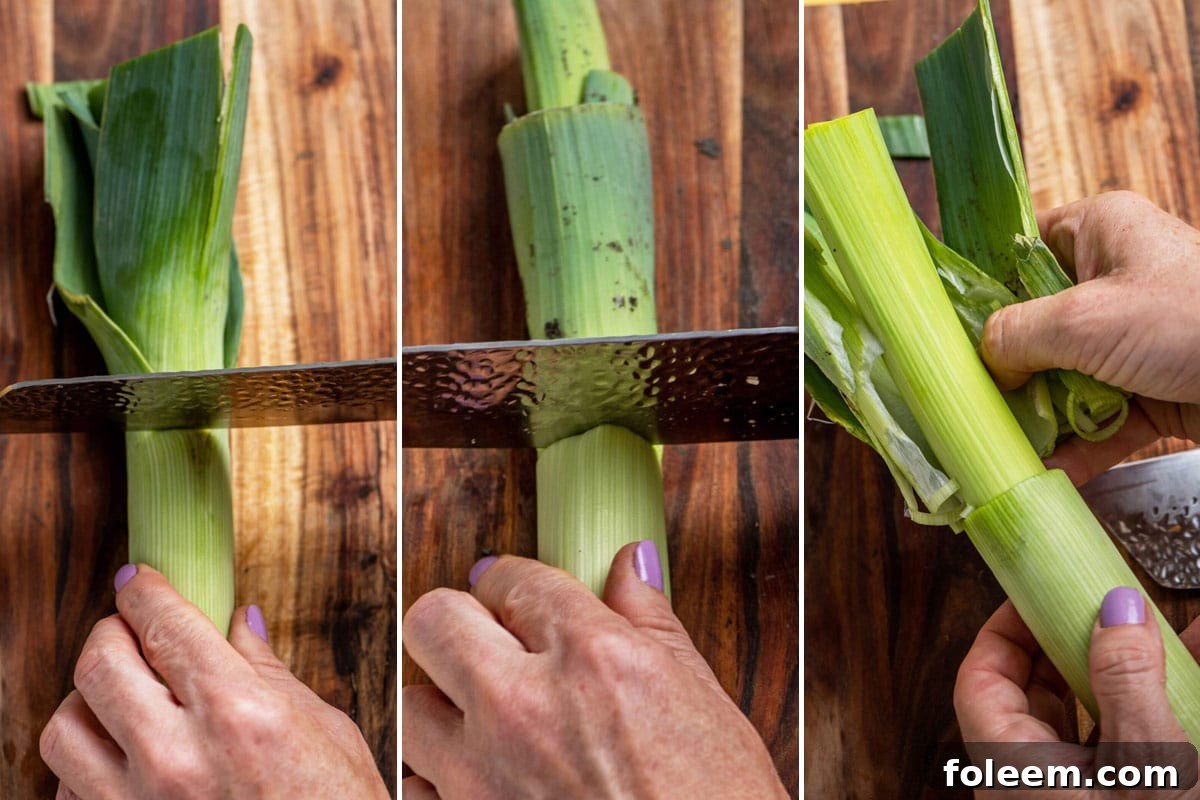
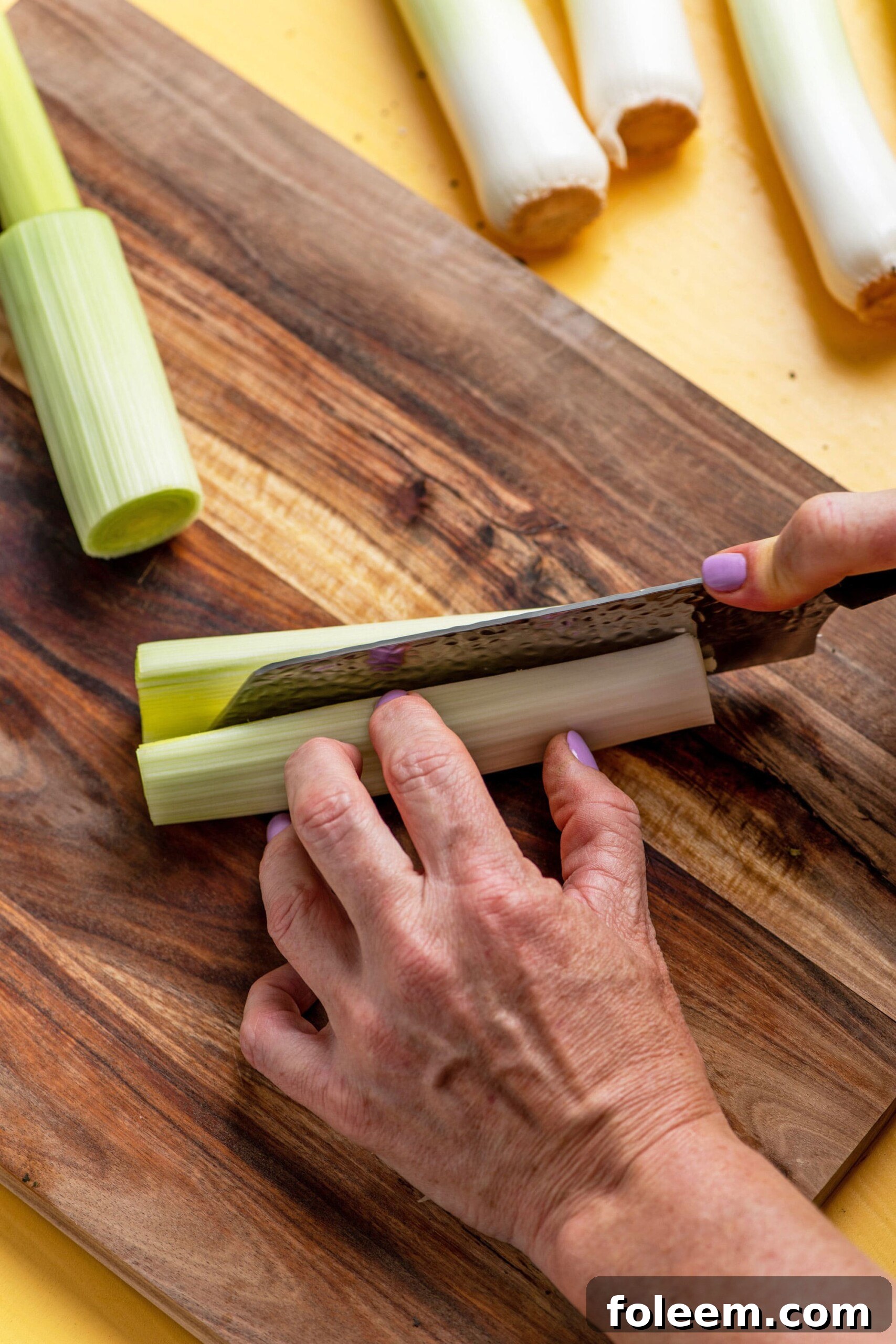
Because leeks grow through the soil, dirt often gets trapped between their layers. Trim the root end and remove the dark green tops. If inner light green layers are surrounded by tough outer leaves, peel away the tough layers to reveal the tender core.
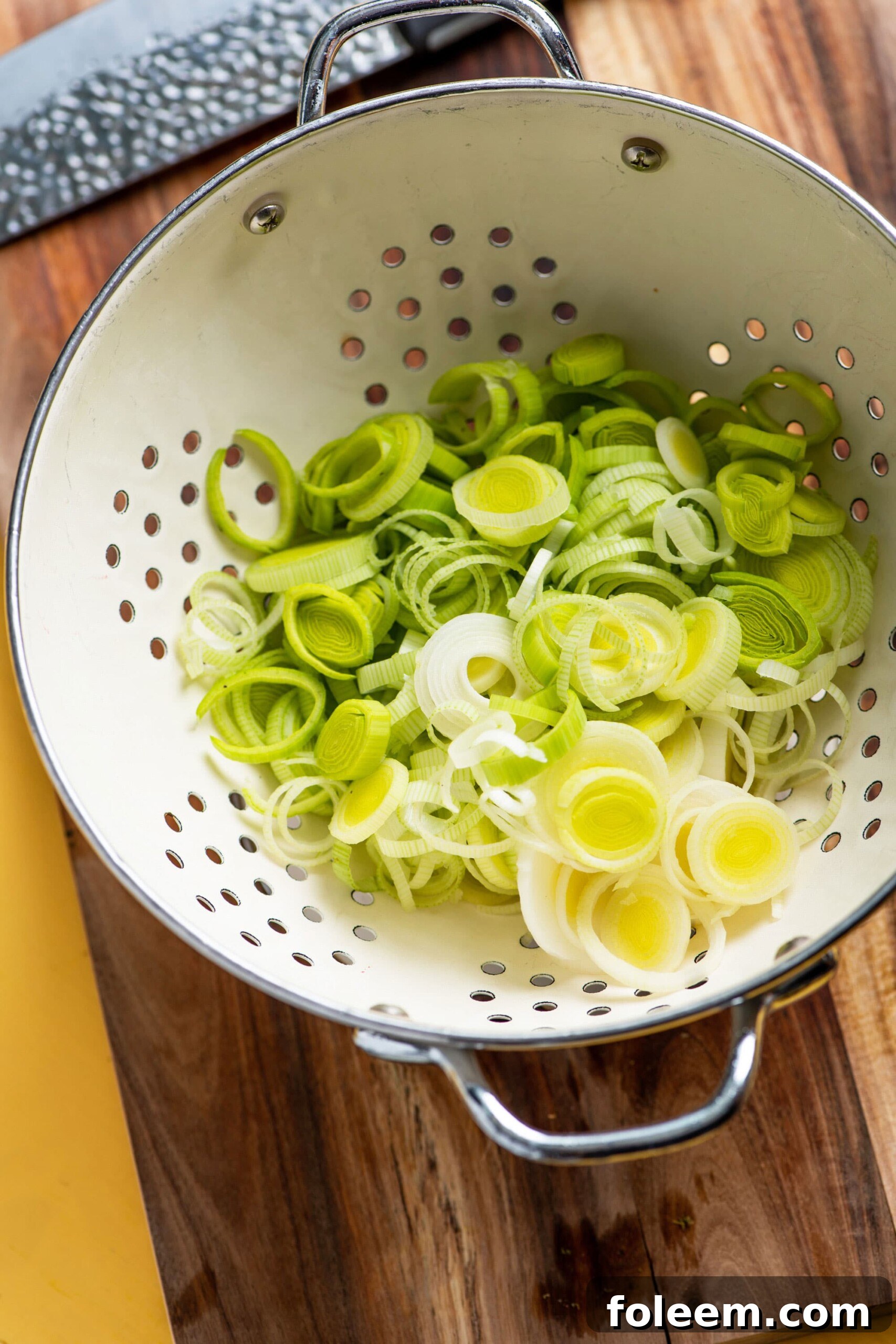
Rinse trimmed or cut leeks thoroughly under cold running water right before using. Halving them lengthwise helps expose trapped dirt; you can also slice them first and rinse the pieces to remove grit more easily.
How to Cut Leeks
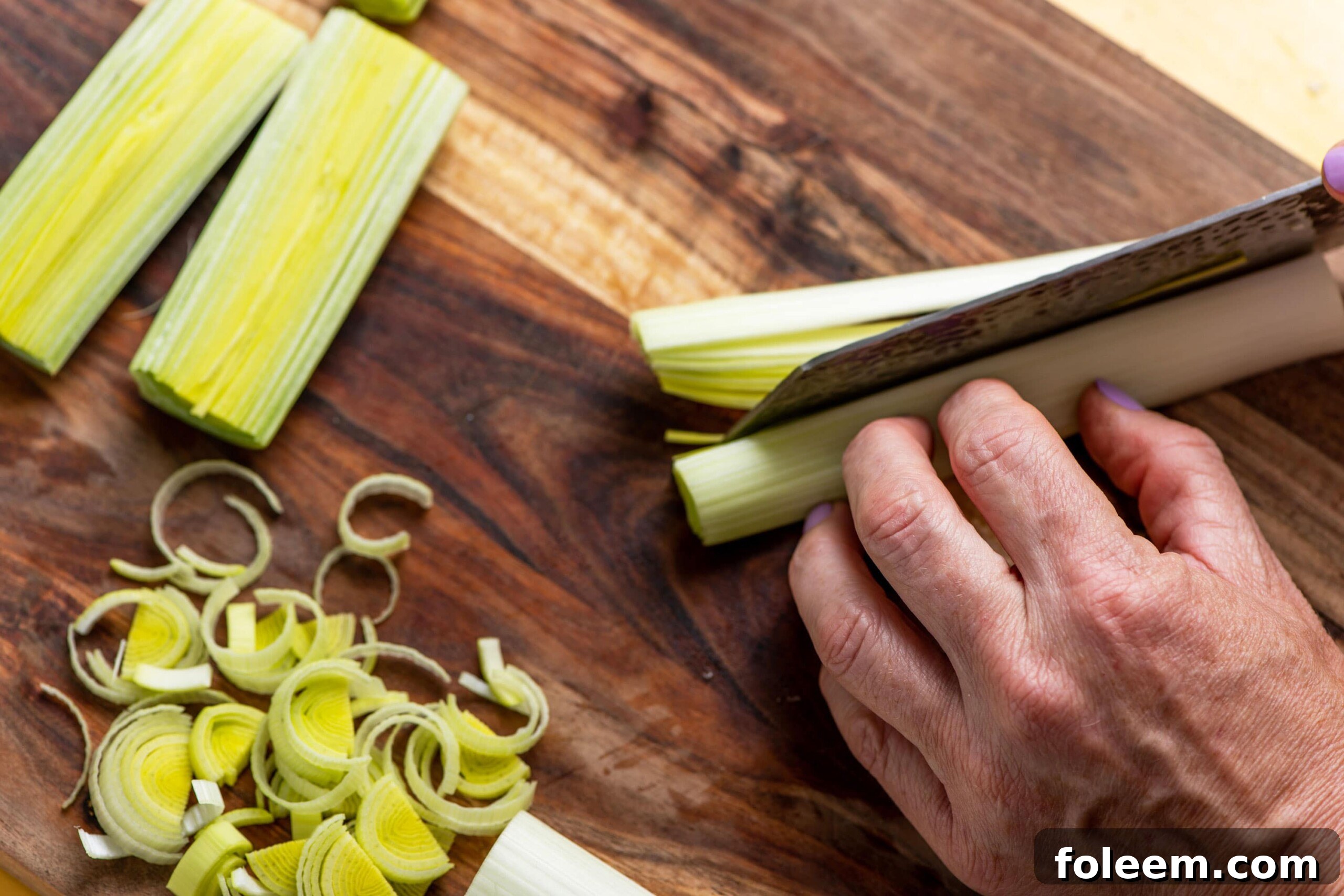
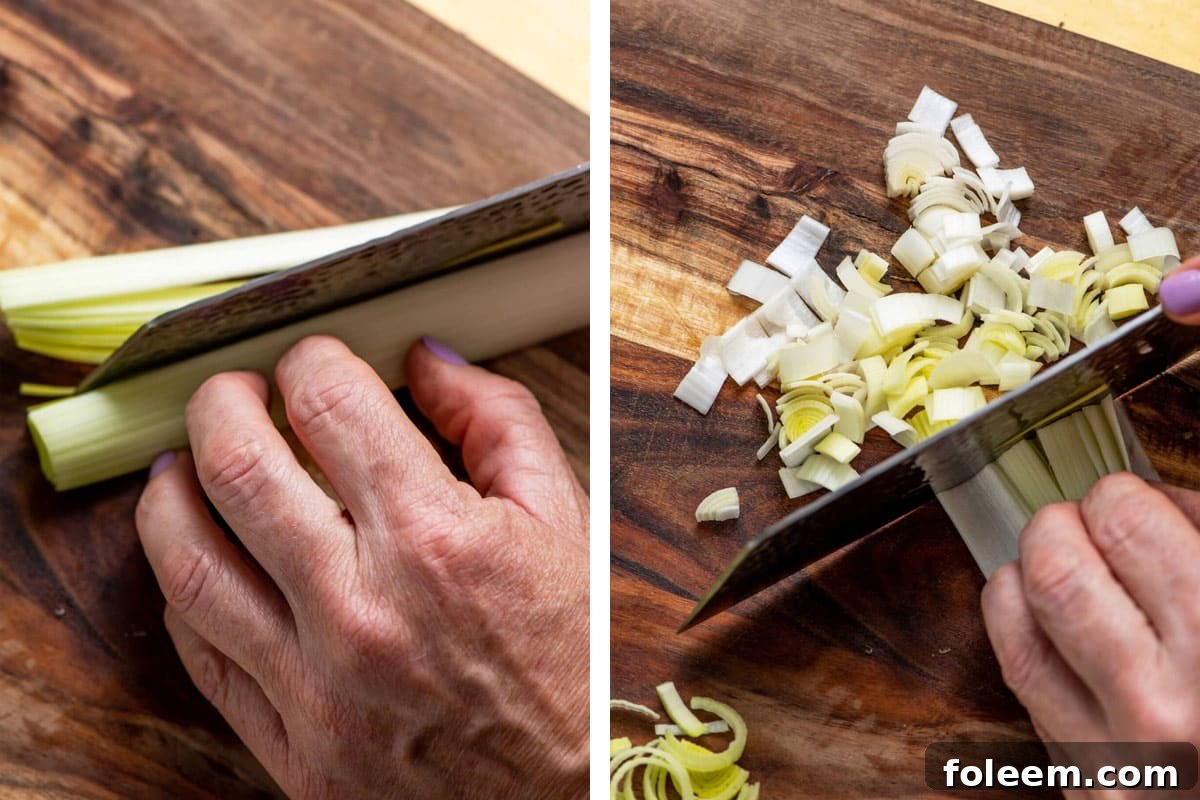
Keep the white and pale green parts for cooking. You can slice leeks crosswise into rounds, cut them lengthwise and slice into half-moons, or slice lengthwise into strips and then chop crosswise for diced leeks. All these cuts work well depending on the recipe.
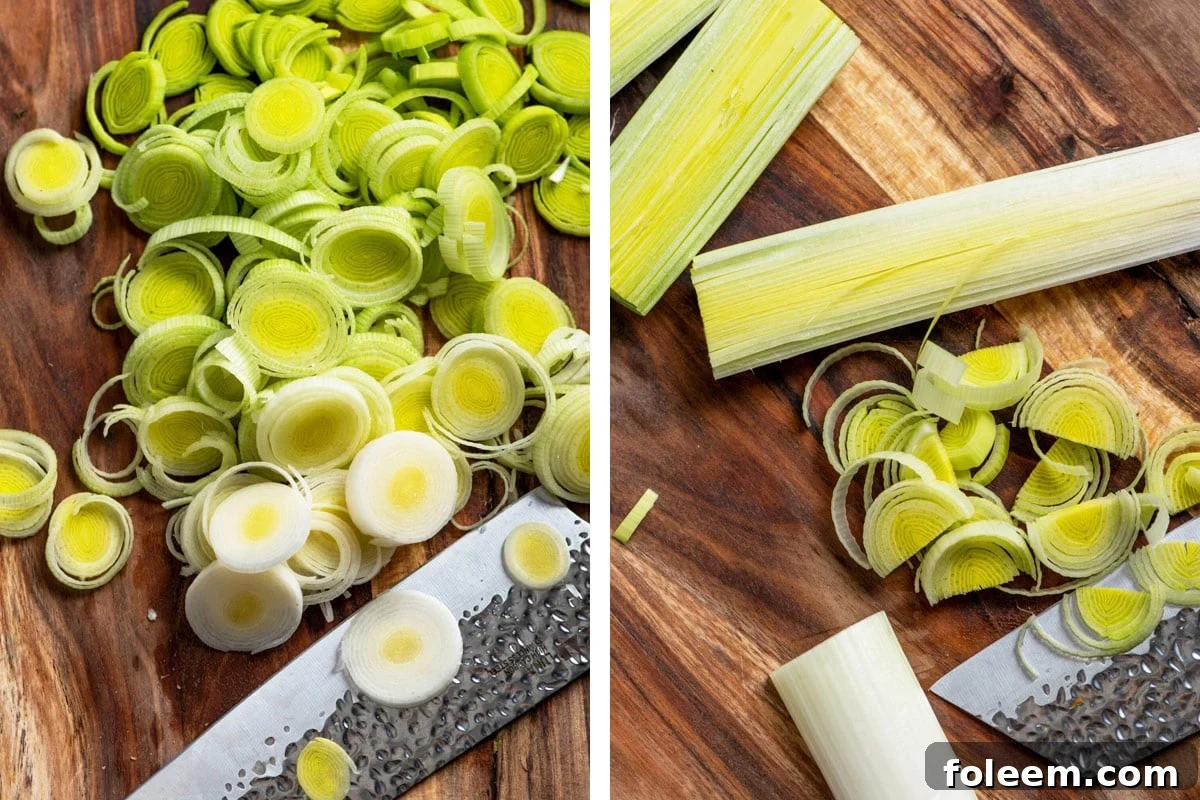
Chopped leeks are useful in soups, stews, quiches, and sauces; sliced rounds are great for braises and roasts.
How to Use Leeks
Leeks work much like onions. Raw, they’re more pungent and are best when thinly sliced or minced. Cooked, they become gentle and sweet. Use leeks as an aromatic base in braises, pan sauces, soups, and sautés, or prepare them as a main vegetable by roasting or braising.
Leeks can be sautéed, roasted, steamed, stir-fried, or fried until crisp for a crunchy garnish. In European cooking they’re often prepared and served as a featured side—roasted or braised leeks are especially delicious.
Substituting Leeks for Onions
You can swap leeks for onions in nearly any recipe. Use only the tender white and light green parts. Substitute on a one-to-one basis (for example, 1 cup chopped leeks equals 1 cup chopped onions). If your leeks are especially mild, you might use 1 1/2 cups leeks for every cup of onion called for.

How to Store Leeks
To maximize shelf life, don’t trim or wash leeks until you’re ready to use them. With roots and tops intact, leeks can last up to two weeks in the refrigerator. If you do cut them for a recipe, try to do so within a couple of days of cooking. Store loosely wrapped in a plastic bag in the fridge.
9 Leek Recipes
Leeks can replace onions in many dishes. Here are several recipes that showcase their flavor:

Orange Salmon with Leeks and Mushrooms

Spring Vegetable Soup

Braised Baby Artichokes with Leeks and Capers {Vegetarian}

Milk-Braised Pork

Dutch Oven Idaho Potatoes

Chicken with Leek White Wine Pan Sauce

Stovetop Pork Chops with Creamy Madeira Sauce

Hearty Chicken Sausage and Split Pea Soup

Leek, Mushroom, and Goat Cheese Quiche

How to Prepare and Cut Leeks
Equipment
- Knife
Ingredients
- Leeks
- Water (as needed for cleaning)
Instructions
- Trim off the root end and remove the dark green tops. If inner light green layers are surrounded by tough outer leaves, peel those away to reveal the tender core.
- Wash the trimmed or cut leeks thoroughly under cold water just before using. Halve them lengthwise or slice them first and then rinse to remove dirt caught between layers.
- Use only the white and light green parts for most recipes. Slice crosswise into rounds, slice lengthwise and cut into half-moons, or chop by cutting lengthwise into strips and then across for diced leeks.