How to Prepare and Eat Passion Fruit: Tips and Serving Ideas
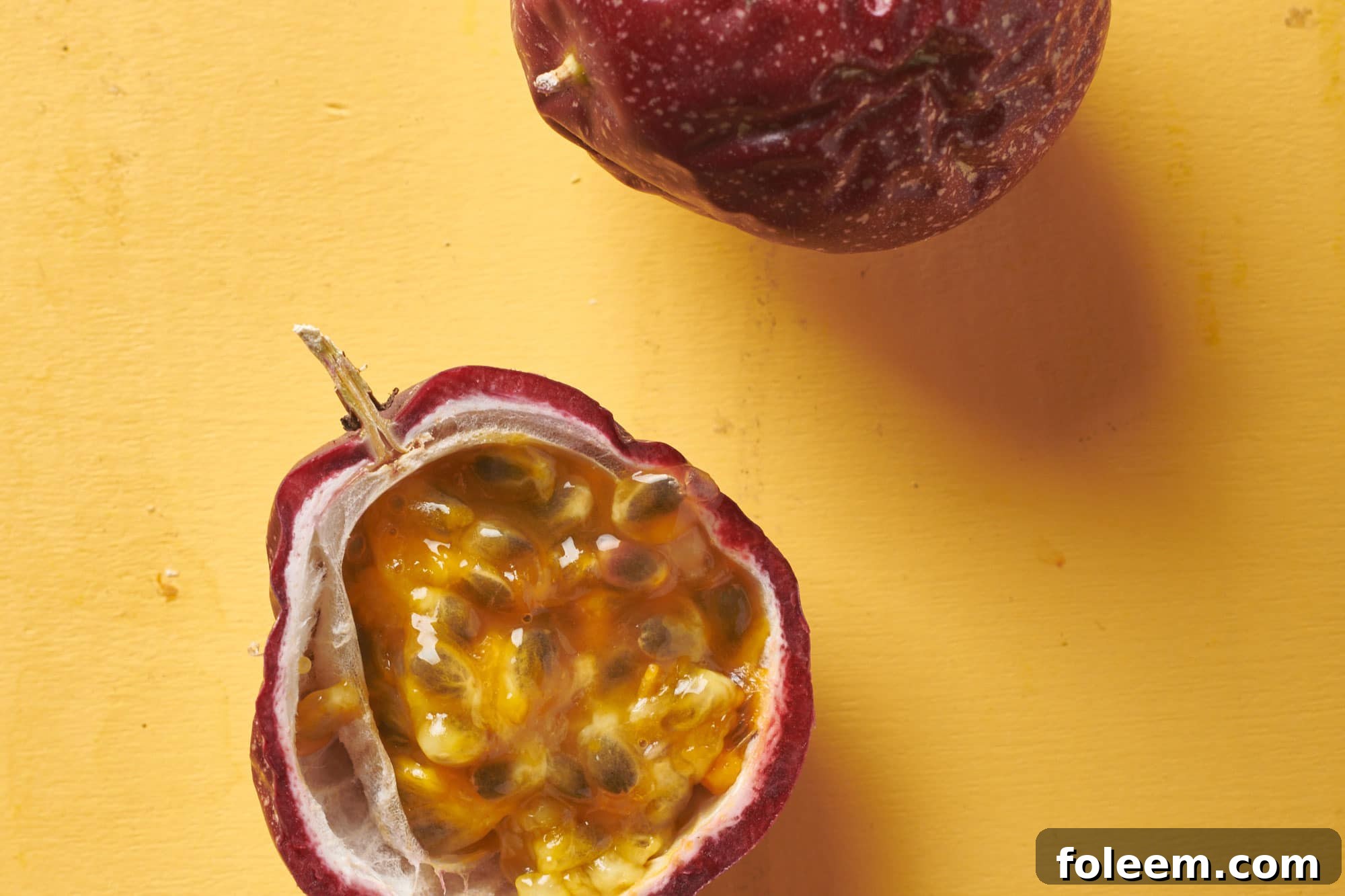
Lore says that eating passion fruit will make you fall in love with the next person you see. Fun as that sounds, the real magic of passion fruit is its versatile, bright flavor. Beyond eating it fresh or sipping the juice, passion fruit works beautifully in many culinary applications.
Use passion fruit in marinades and sauces for fish, seafood, or chicken to give them a tropical lift. Stir passion fruit purée into sparkling water for a simple, refreshing mocktail, or blend it into fruit smoothies for tang and fragrance.
For cocktails, combine passion fruit pulp with spirits and mixers: coconut rum, ginger ale, and pineapple juice make a tasty tropical mix, or add passion fruit to vodka with a generous squeeze of lime for a crisp, citrusy drink.
Passion fruit is also excellent in baking and frozen desserts. The pulp brightens cakes, tarts, ice creams, sorbets, and granitas, and it enriches curds, custards, mousses, fruit butters, and puddings.
- What Is Passion Fruit?
- What Does Passion Fruit Look Like?
- What Does Passion Fruit Taste Like?
- Where Can I Find Passion Fruit?
- How Do I Know if Passion Fruit Is Ripe?
- How to Prepare and Eat Passion Fruit
- How to Make Passion Fruit Juice or Puree
- How to Store Passion Fruit
- FAQs
- Add Passion Fruit Juice to Drinks
- How to Cook More Exotic and Tropical Fruits
- How to Prepare Passion Fruit Juice or Puree Recipe
What Is Passion Fruit?
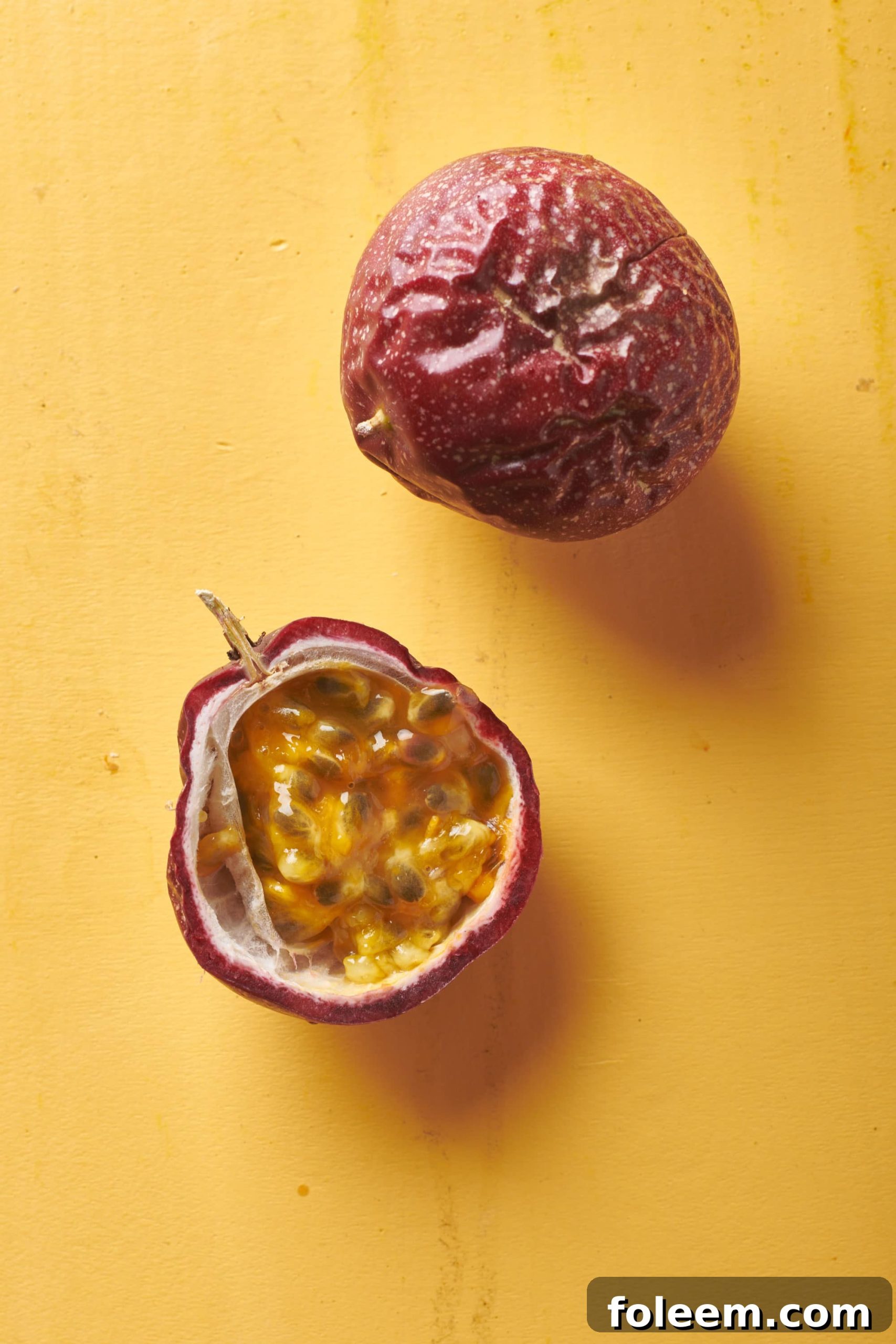
Passion fruit grows from the passion flower. It’s a tropical fruit common in South America and Australia and also cultivated in subtropical areas such as Florida and California. The fruit has a firm outer rind and a juicy, seed-filled interior. Though the texture can be unusual—gelatinous pulp studded with crunchy seeds—the aroma and flavor are bright and delightful.
What Does Passion Fruit Look Like?
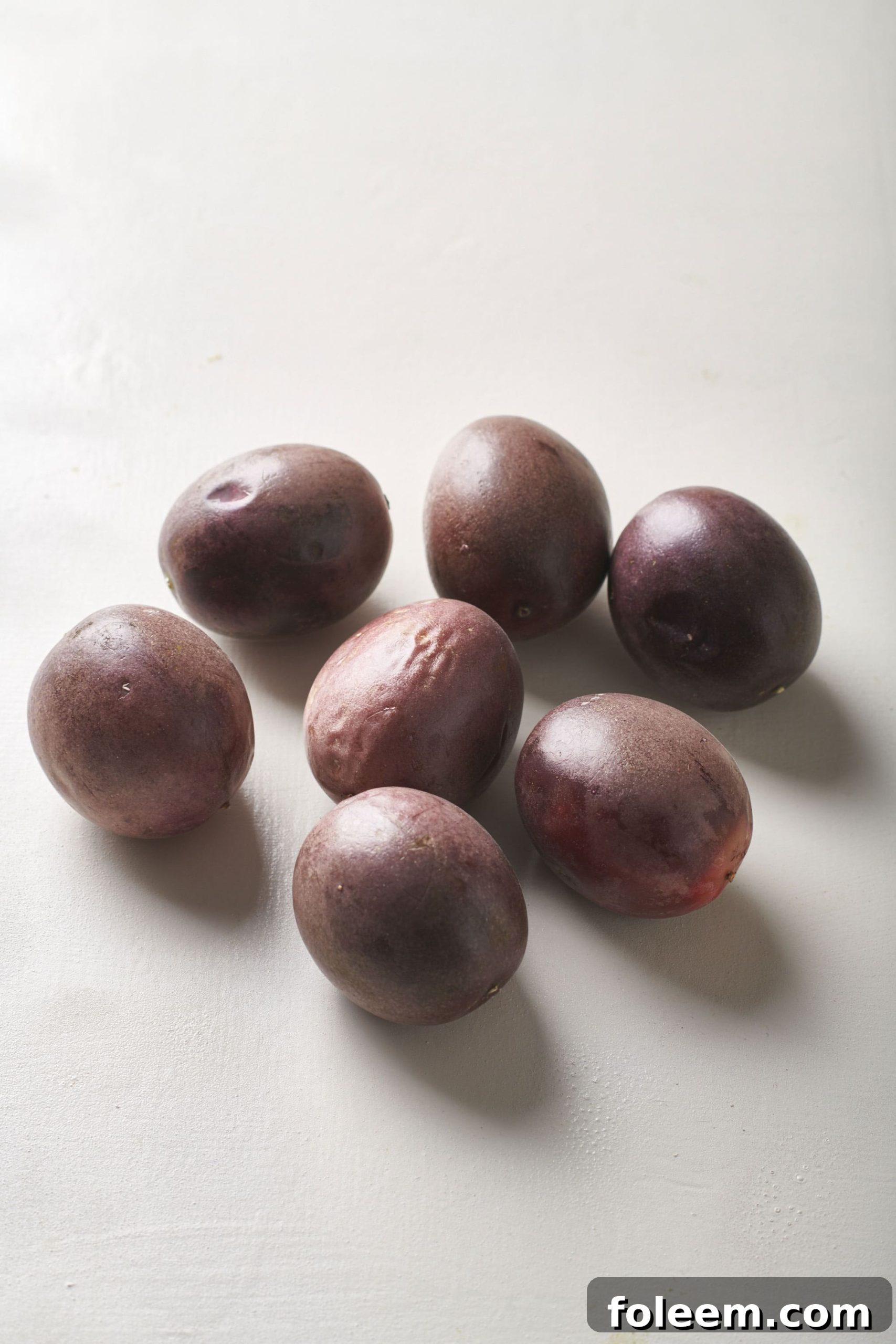
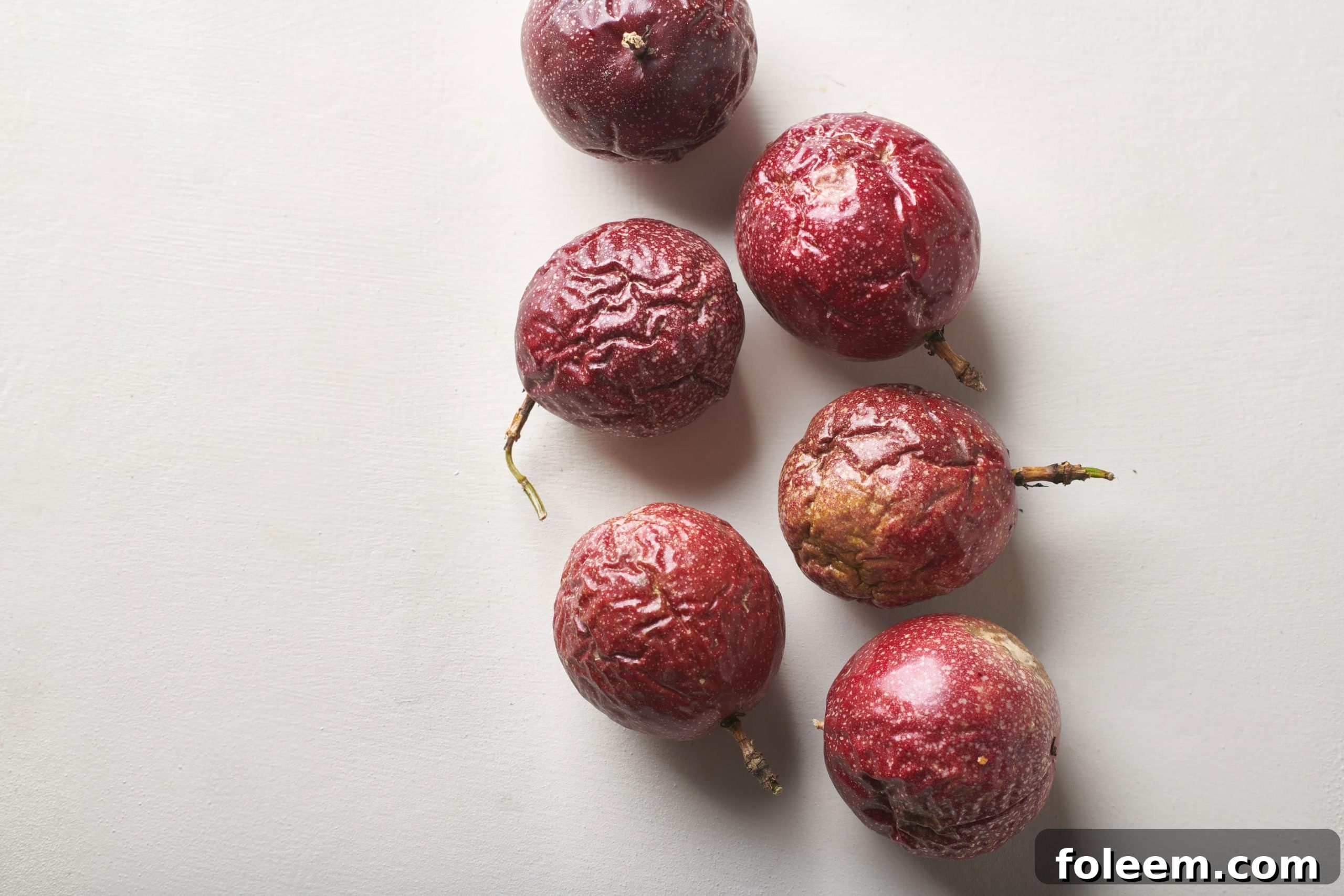
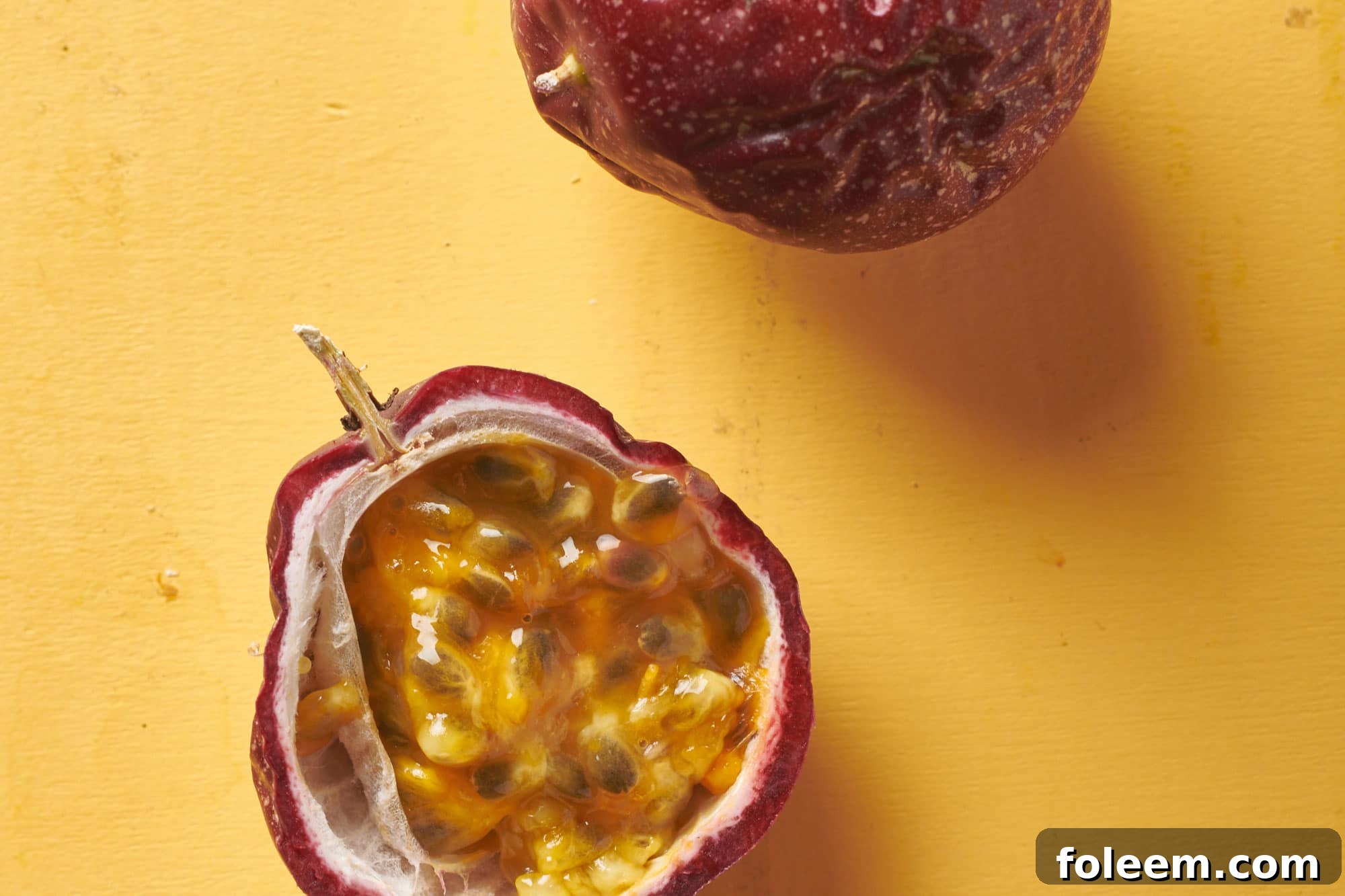
Most passion fruits are purple and round or oval, though some varieties are yellow and larger. Green fruit is unripe; a ripe passion fruit often develops a wrinkled rind. Inside, the pulp is orange and contains small, edible seeds that add crunch.
What Does Passion Fruit Taste Like?
The flavor is sweet and tart with a fragrant, tropical aroma. Passion fruit has a unique taste often compared to a mix of kiwi and pineapple, but it stands on its own.
Where Can I Find Passion Fruit?
Passion fruit sometimes appears in supermarkets but is more reliably available at specialty markets, Latin or Caribbean grocers. There it may be labeled “parcha” or “maracuyá.” If fresh fruit is unavailable, check the freezer section for frozen pulp or the juice aisle for passion fruit juice or concentrate—watch for products with added juices or sweeteners.
How Do I Know if Passion Fruit Is Ripe?
A ripe passion fruit is often wrinkled and deep purple or dark yellow-red. Green fruit is unripe and will ripen on the counter in 3–7 days. Heavier fruits usually contain more juice. A quick shake can tell you if there’s liquid inside. Avoid fruits with mold, major bruises, or discoloration. If the fruit feels very light, it may be past its prime.
How to Prepare and Eat Passion Fruit
- Clean the fruit: Rinse and dry to remove any residue.
- Slice and scoop: Cut the fruit in half and scoop out the pulp. Sprinkle a little sugar if you find it too tart, but many prefer it as is. Avoid scraping the white inner rind; it’s bitter.
How to Make Passion Fruit Juice or Puree
To make juice: Press the pulp through a sieve to separate seeds from liquid. You’ll get a small amount of juice, but it’s ideal for baking or recipes that require seed-free liquid.
To make purée: Blend seeds and pulp together, then strain if you prefer a smoother texture. Leaving the seeds in the purée gives a little crunch and saves time.
Everything you need to know about how to buy, store, prepare, cook and eat passion fruit.
How to Store Passion Fruit
If unripe, leave fruit on the counter for 3–5 days to ripen. Store ripe passion fruit in the refrigerator crisper for up to about one week. Juice, purée, or pulp freeze well—make batches and freeze for longer storage.
FAQs
Yes. The seeds are edible and provide texture and fiber. Some people chew them; others swallow them whole. They can be blended into purée as well.
Yes. Passion fruit is rich in antioxidants and provides fiber, vitamin C, and vitamin A while being low in fat.
Passion fruit can be found year-round but is more abundant in warmer months. Peak availability is generally from early summer through winter in many growing regions.
Passion fruit plants can be slow to establish and sensitive to growing conditions. Many fruits are imported, and those factors contribute to higher prices.
Add Passion Fruit Juice to Drinks
Pisco Sour
Hibiscus Cocktail
Mojito Cocktail
How to Cook More Exotic and Tropical Fruits
- Pomegranates
- Jackfruit
- Persimmons
- Dragon Fruit
Pin this now to find it later
Pin It
How to Prepare Passion Fruit Juice or Puree
Equipment
-
Knife
-
Sieve
Ingredients
- 12 ripe passion fruits
Instructions
-
Wash and dry the fruit to remove any dirt or residues.
-
Cut each fruit in half and scoop out the pulp, avoiding the bitter white inner rind.
-
For juice, press the pulp through a sieve to separate seeds from liquid.
-
For purée, blend seeds and pulp together. Strain if you want a smoother texture, or keep the seeds for added crunch.
Notes
Like this recipe? Rate and comment below!