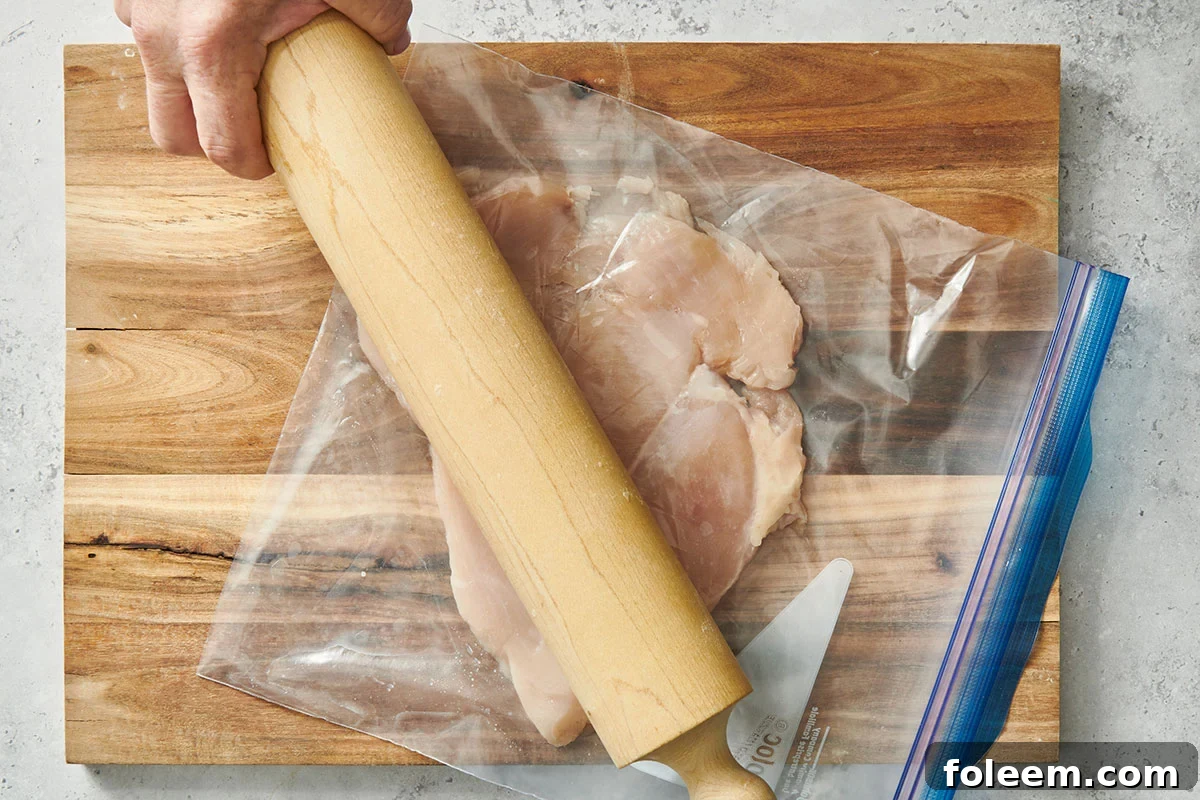
When a recipe says to “pound chicken breasts,” it simply means flattening thick breasts into thinner, even cutlets by gently striking them with a heavy, sturdy tool. Common tools include a meat mallet, a rolling pin, or a small heavy skillet. Pounded chicken cooks faster and more evenly than thick breasts and often has a more tender texture.
You can buy pre-sliced cutlets, but they’re often pricier. Learning to pound your own chicken lets you save money and control thickness. This method is useful for dishes like Chicken Francese, Chicken Piccata, or Parmesan Garlic Mushroom Chicken, and it’s the standard first step before breading cutlets.
- The Best Kitchen Tools for Pounding Chicken Breasts
- How to Pound Chicken Breasts
- FAQs
- More Essential Cooking Tips
- How to Pound Chicken Breasts Recipe
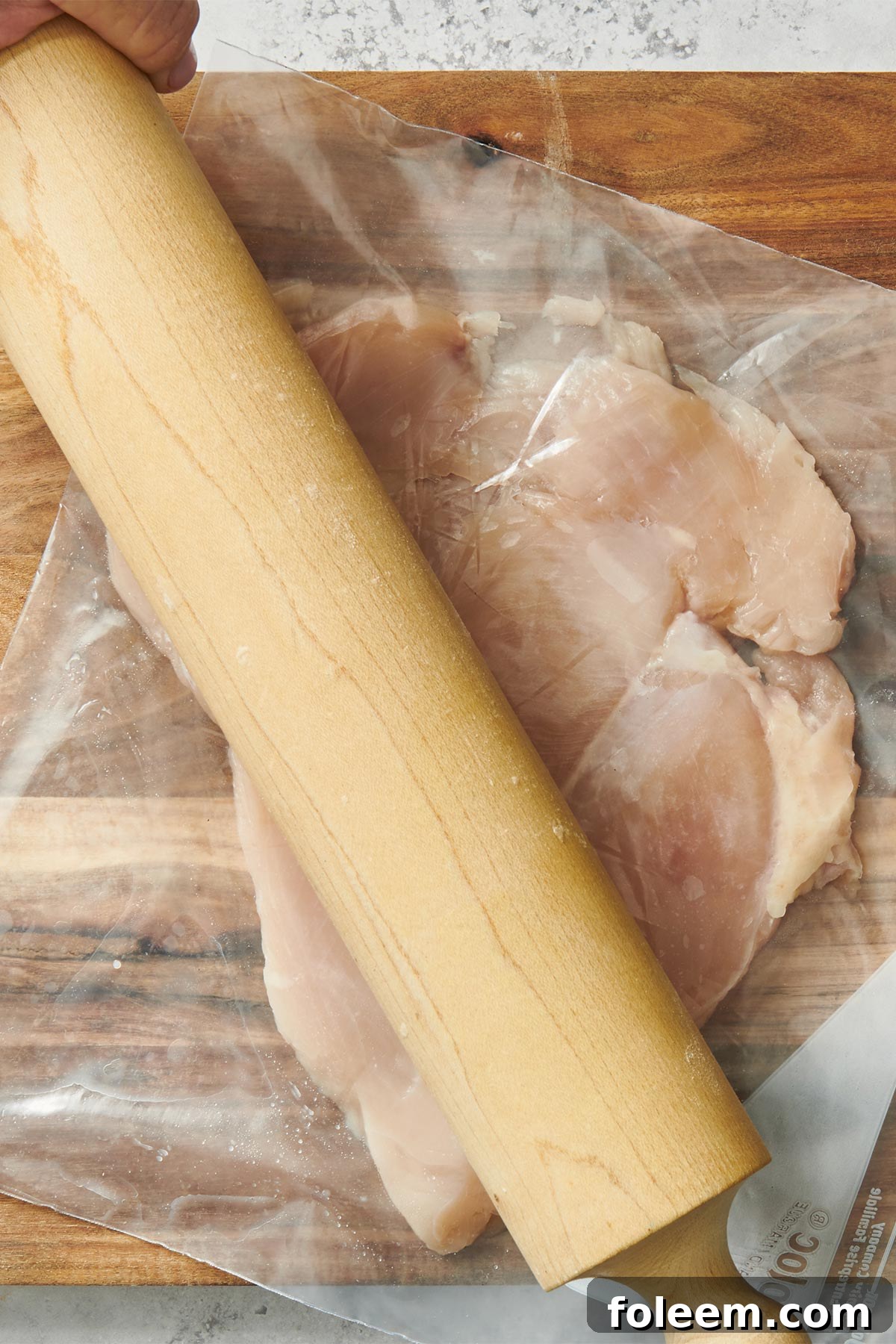
How to Pound Chicken Breasts: Pounding chicken breast into thinner cutlets is very easy to do at home.
The Best Kitchen Tools for Pounding Chicken Breasts
Any solid, unbreakable kitchen tool will work. A meat mallet is purpose-built for this task; use the flat side rather than the textured side to avoid a bumpy surface. A rolling pin or a small heavy skillet are excellent alternatives. Even a sturdy bottle can work if you pound gently.
Kitchen Smarts
This technique applies to other boneless cuts as well: boneless chicken thighs, pork cutlets for schnitzel, and certain cuts of beef (for example, chicken-fried steak) can all be tenderized and flattened the same way.
How to Pound Chicken Breasts
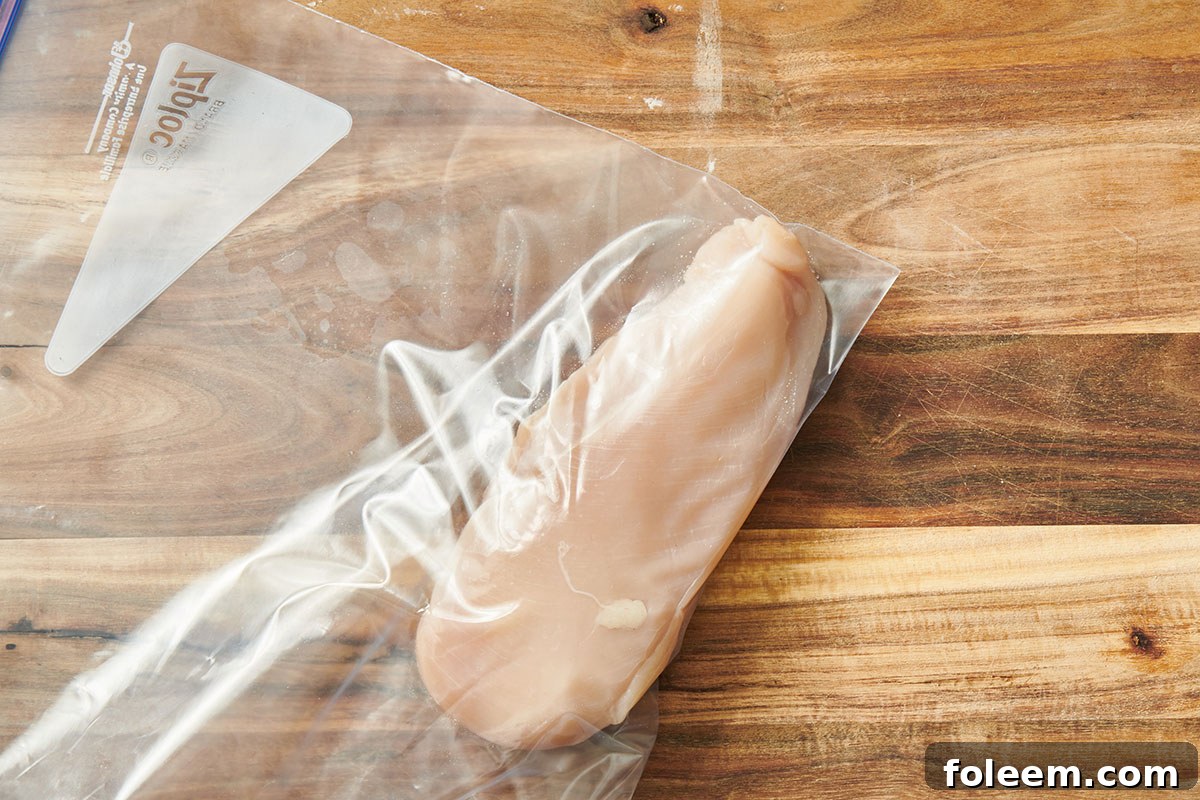
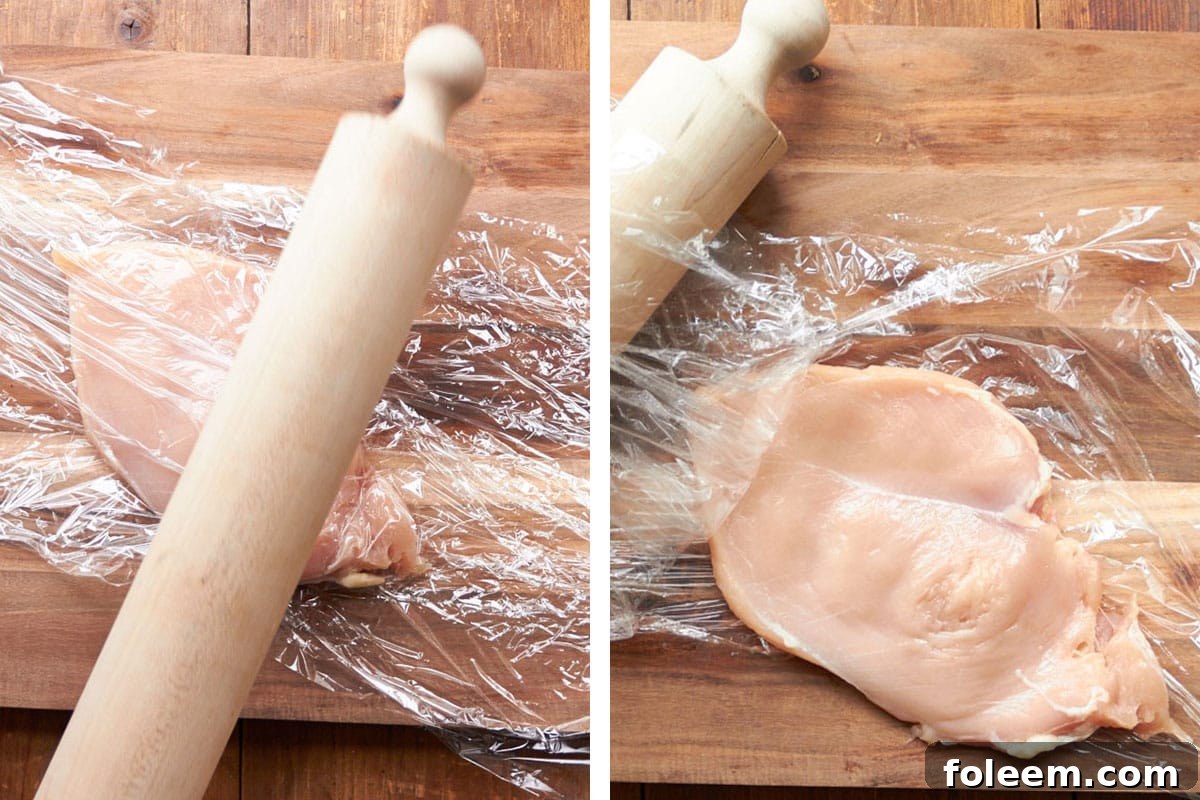
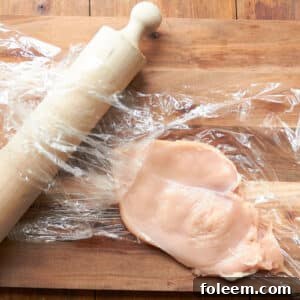
- Wrap the chicken: Place each breast between two sheets of plastic wrap, parchment paper, or slide it into a large, sturdy plastic bag. This keeps the meat contained and prevents splatter.
- Pound to even thickness: Using a rolling pin, small skillet, or meat mallet, gently and evenly pound the breast until it reaches a uniform thickness, about 1/2 inch. Work slowly from the center outward for an even result.
Kitchen Smarts
Pound gradually and lightly to avoid tearing the meat. If a breast becomes too large to handle, cutting it crosswise in half before or after pounding makes it easier to manage.
FAQs
Yes. For very thick breasts it’s easier to slice them horizontally first into cutlets, then pound to the desired thickness.
If you hit too hard or too quickly you can create thin spots and ridges. Pace yourself, pound gently, and finish with light, even taps across the surface to flatten bumps.
Absolutely. Store-bought cutlets are already thin, so you may not need to pound them. If you do, take care not to make them paper-thin, which can dry out while cooking.
After pounding, cut the pieces in half to create more manageable portions for cooking and plating.
See related techniques such as how to cube chicken, how to slice and flour cutlets, or how to shred chicken for more recipe ideas.
For saucy cutlets, try finishing with a simple pan sauce once the chicken is cooked.
More Essential Cooking Tips
- How to Cube Chicken Breast
- How Long to Marinate Chicken, Meat, Fish, and Veggies
- How to Safely Thaw Frozen Meat
- How to Brine Turkey Breast
- How to Make Hamburger Patties
How to Pound Chicken Breasts
Equipment
-
Meat mallet (or rolling pin or another sturdy pounding utensil)
Ingredients
- 4 chicken breasts (about 6 ounces each)
- Kosher salt and freshly ground black pepper (to taste; optional)
Instructions
-
Place the chicken breasts, one at a time, between two large sheets of plastic wrap or parchment paper, or put a breast into a large sturdy plastic bag.
-
Firmly but gently pound the breasts with a rolling pin, small skillet, or meat mallet until they are about 1/2-inch thick and even throughout.
-
Season with salt and pepper if desired, then proceed with your chosen recipe.
Notes
Like this recipe? Rate and comment below!