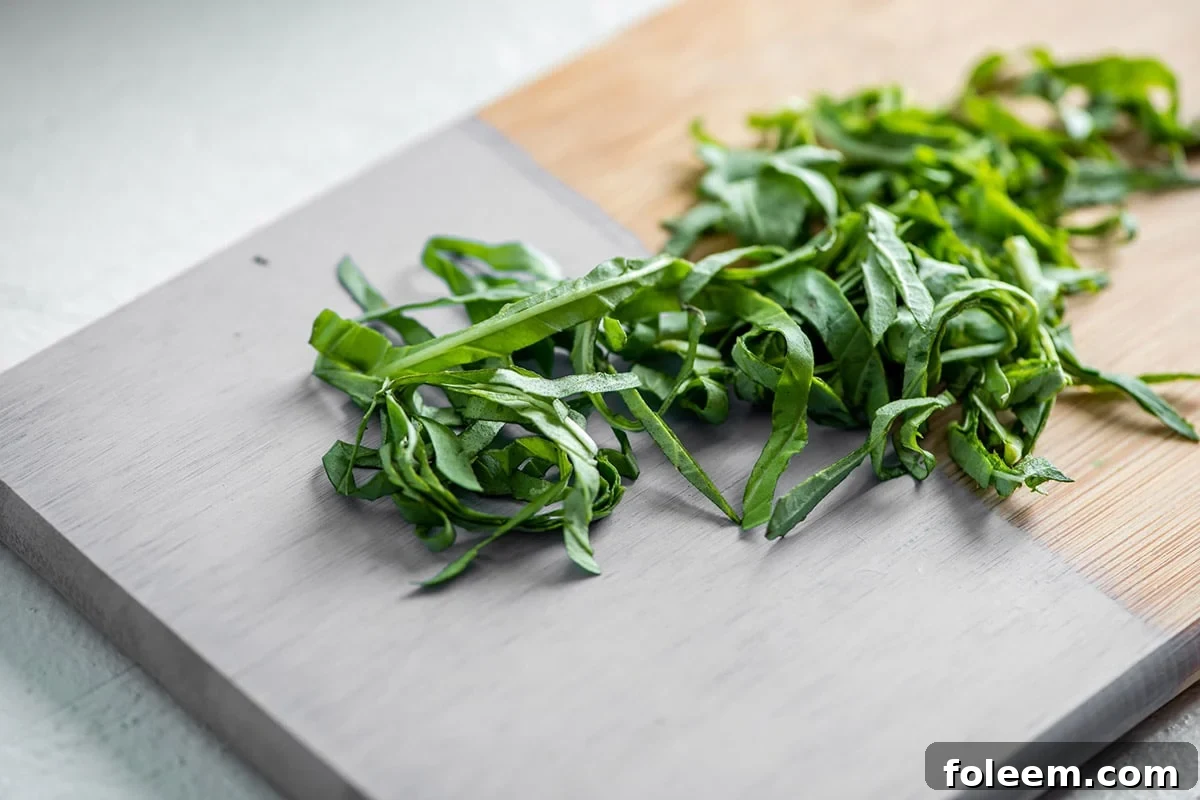
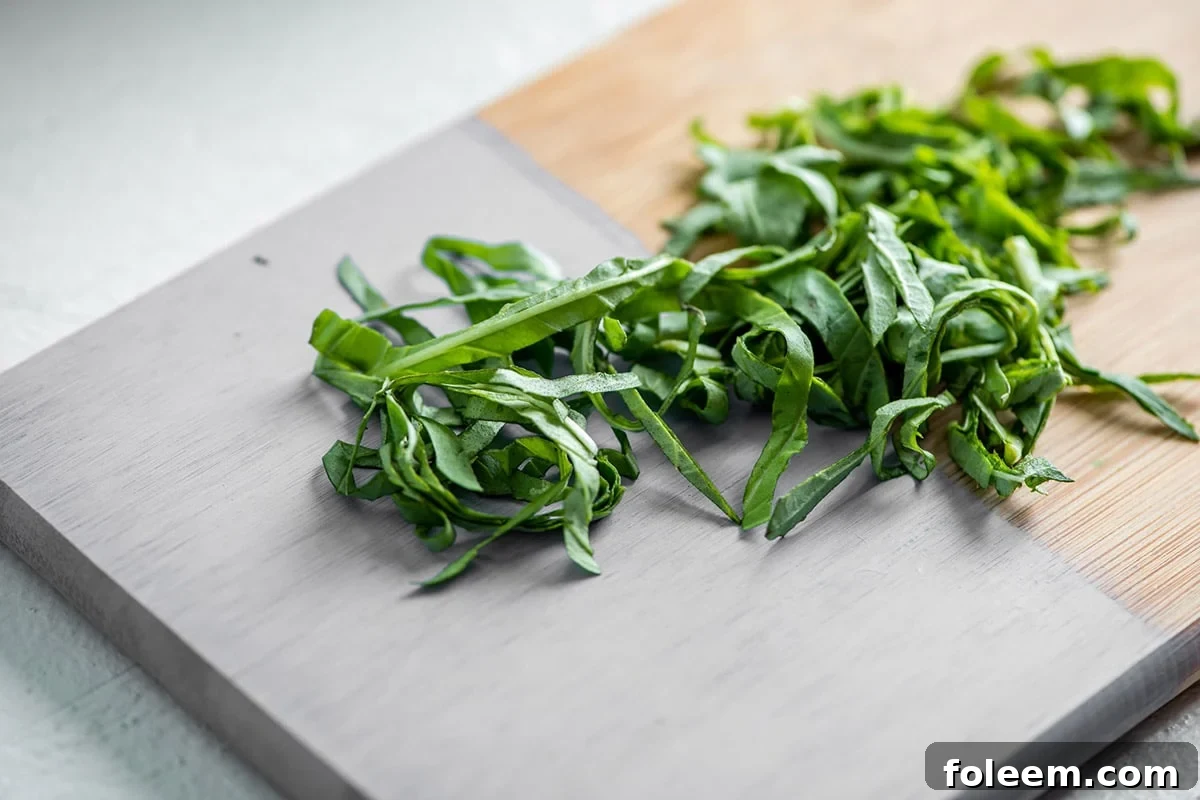
A shower of thin basil ribbons can elevate a recipe or add a finishing flourish to a plate. That is exactly what a basil chiffonade produces: delicate, attractive slivers of basil that look prettier than a rough chop while being just as simple to prepare.
Use chiffonaded basil anywhere you would use chopped basil when you want a more elegant presentation, particularly as a garnish. I like to scatter it over dishes such as Tomato Bruschetta, Pasta with Fresh Heirloom Tomato Sauce, Mediterranean Couscous with Swiss Chard and Peppers, Salmon Corn Chowder, soups, stews, crostini, and plated mains like Chicken Milanese.
Table of contents
- What Does “Chiffonade” Mean?
- How Do You Chiffonade?
- FAQs
- Chiffonading Tips
- How to Use Chiffonaded Basil
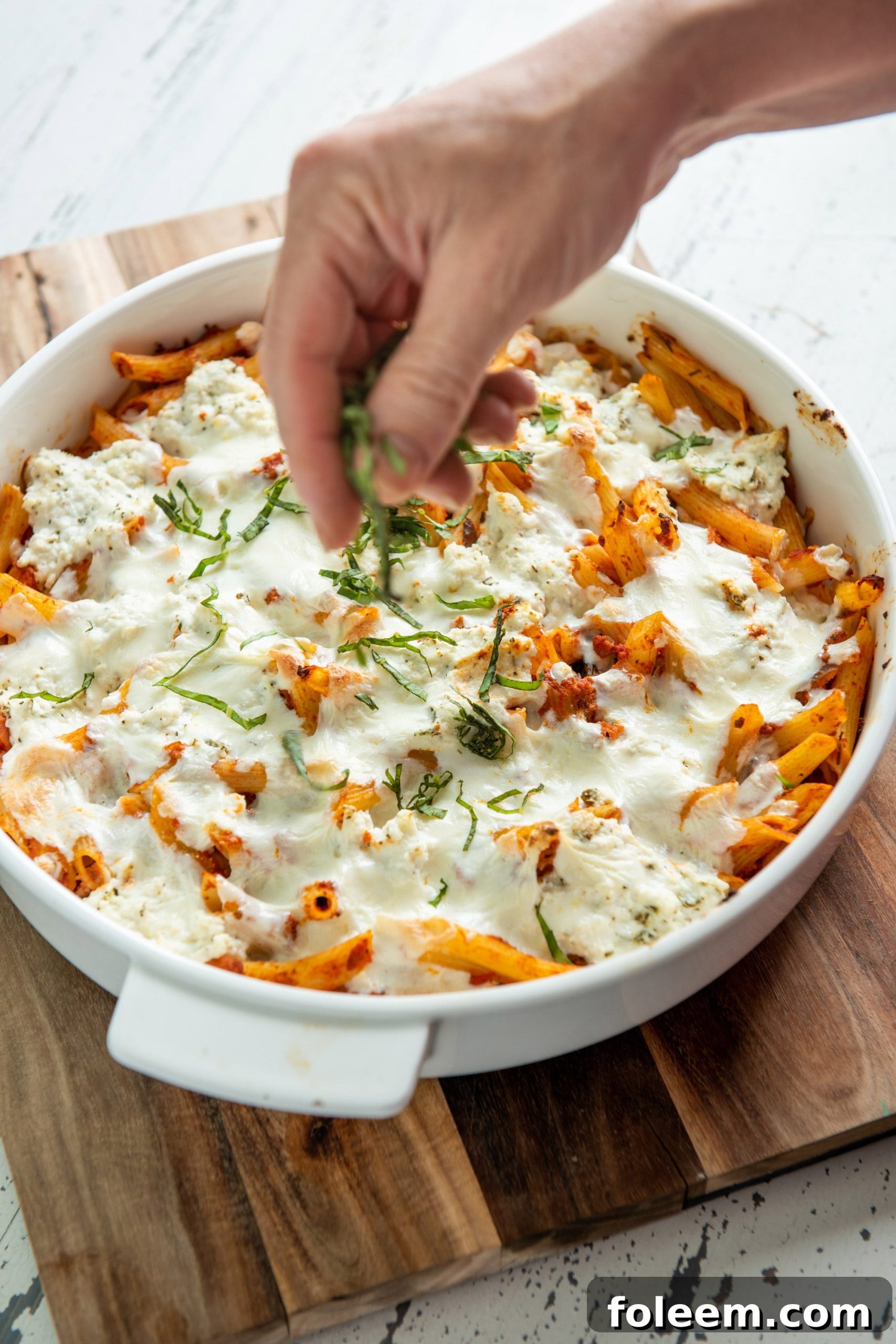
How to Chiffonade Basil: Everything you need to know about chiffonading basil and other herbs and lettuces — including what chiffonade means!
What Does “Chiffonade” Mean?
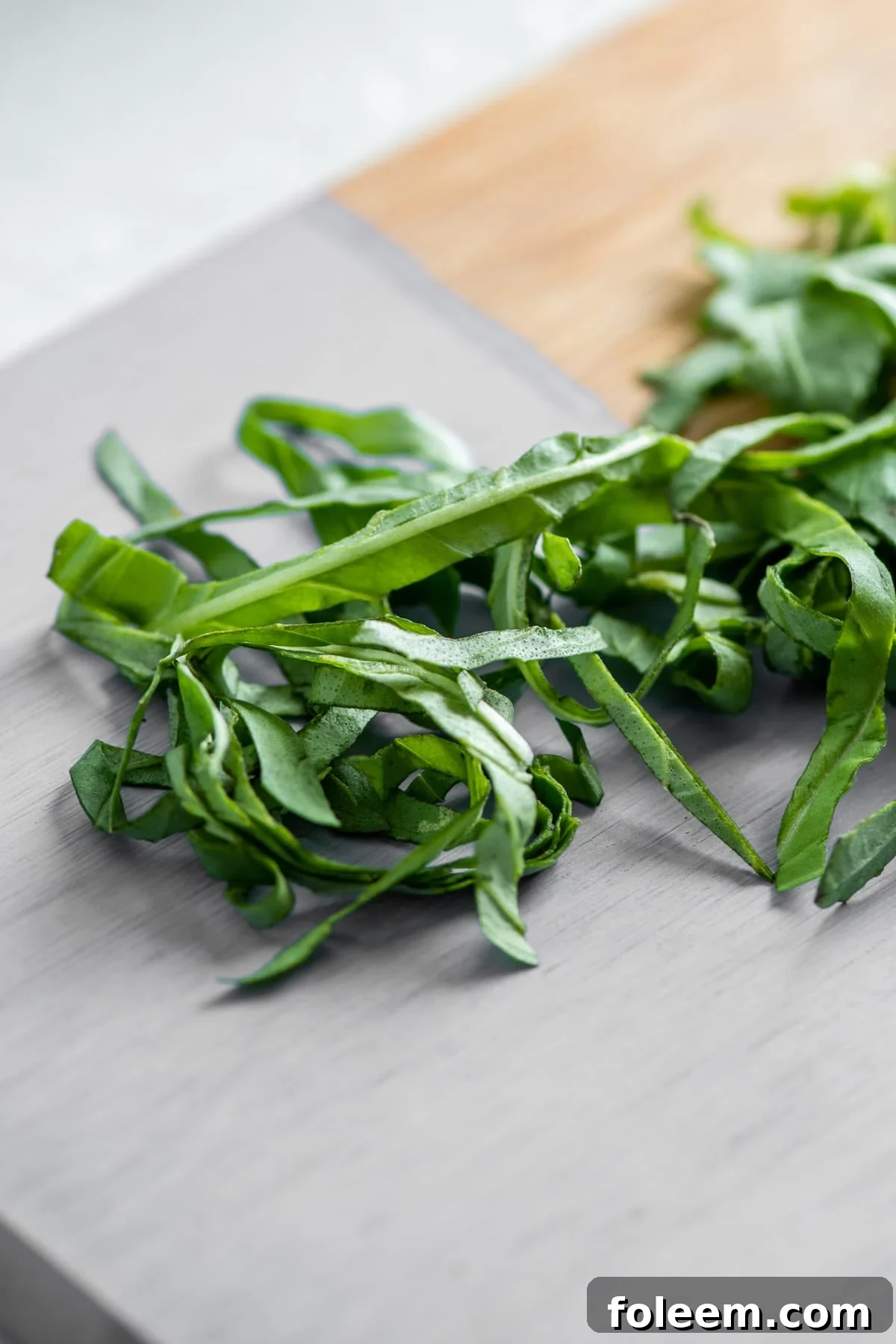
Chiffonade is a knife technique for cutting flat leafy herbs and lettuces into thin ribbons. The leaves are stacked, rolled, and sliced across the roll to produce slender, curled strips that look elegant when sprinkled over or mixed into a dish. The French root of the word suggests “little rags” or “crumpled,” but the result is a neat, refined finish that’s far from ragged.
How Do You Chiffonade?
- Stack a few leaves: Lay several basil leaves on top of one another in a neat stack.
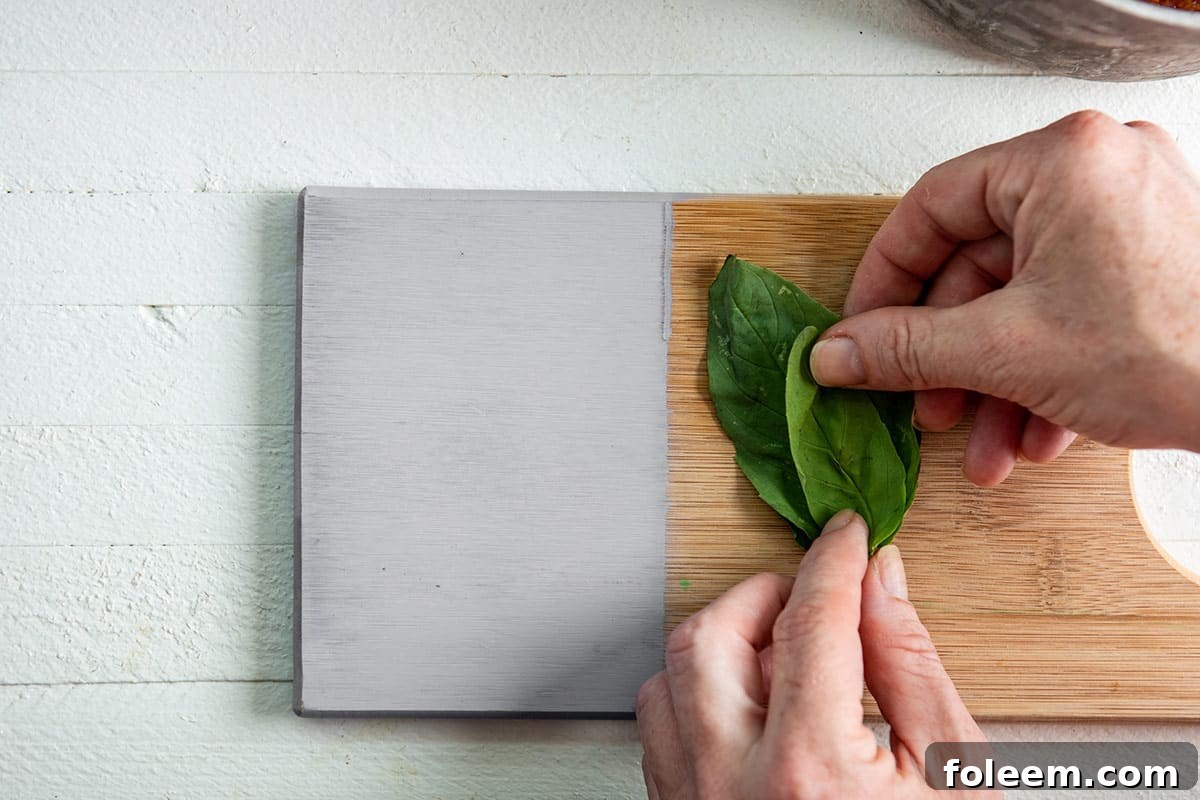
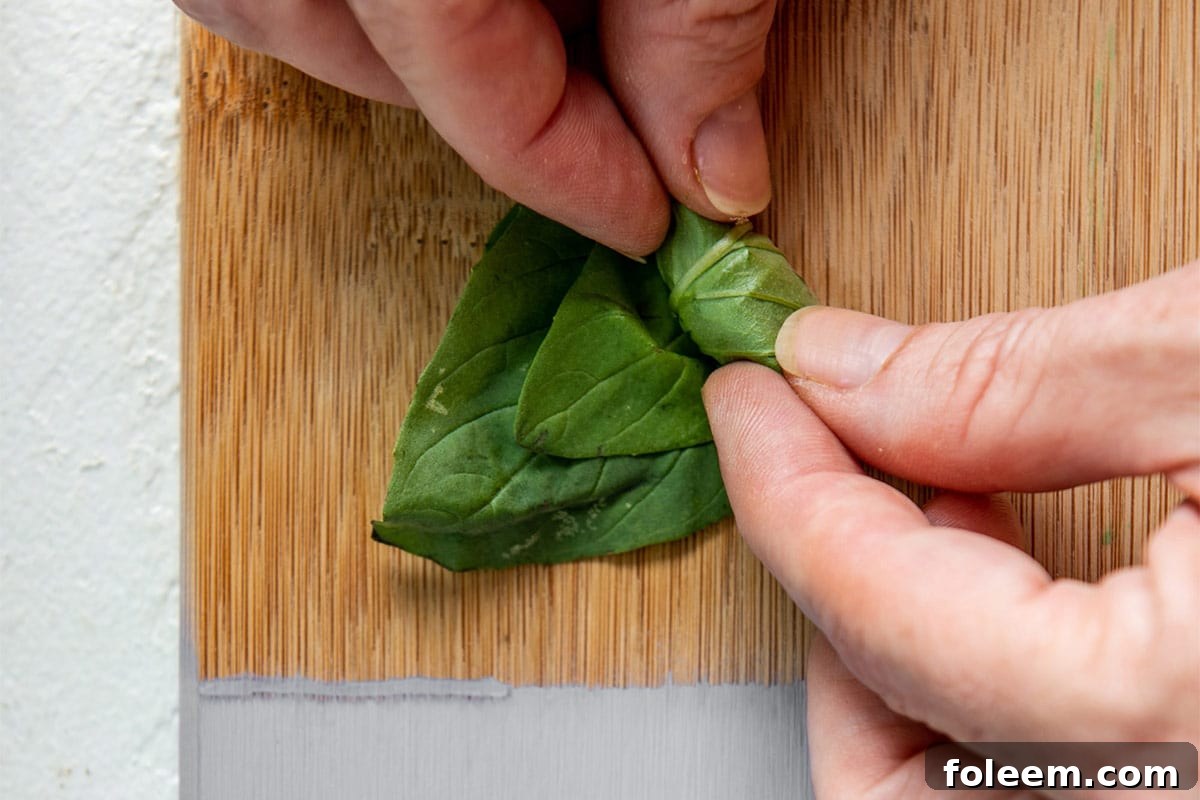
- Roll into a tight cylinder: Roll the stacked leaves snugly into a cylinder. Rolling top-to-bottom gives longer ribbons; side-to-side yields shorter, thinner strips.
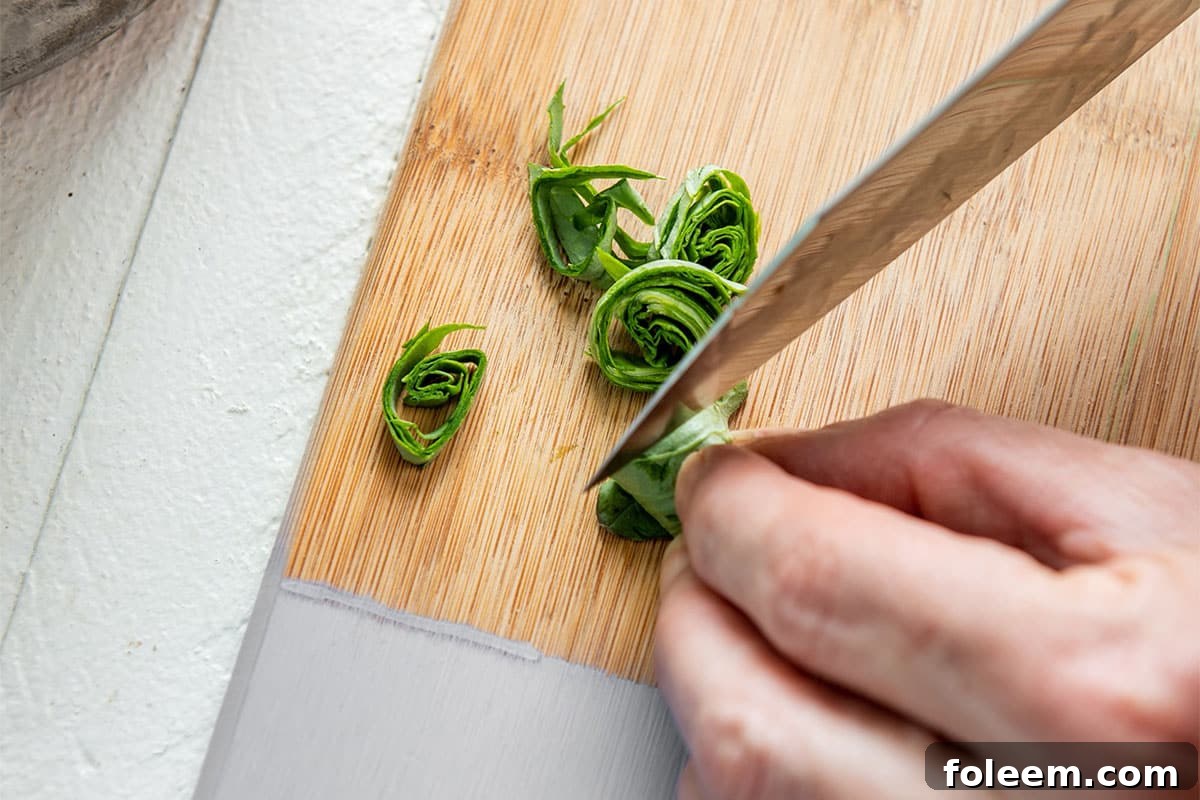
- Slice thinly with a sharp knife: Hold the roll with your non-cutting hand (fingertips curled away) and slice very thin crosswise pieces with a sharp blade.
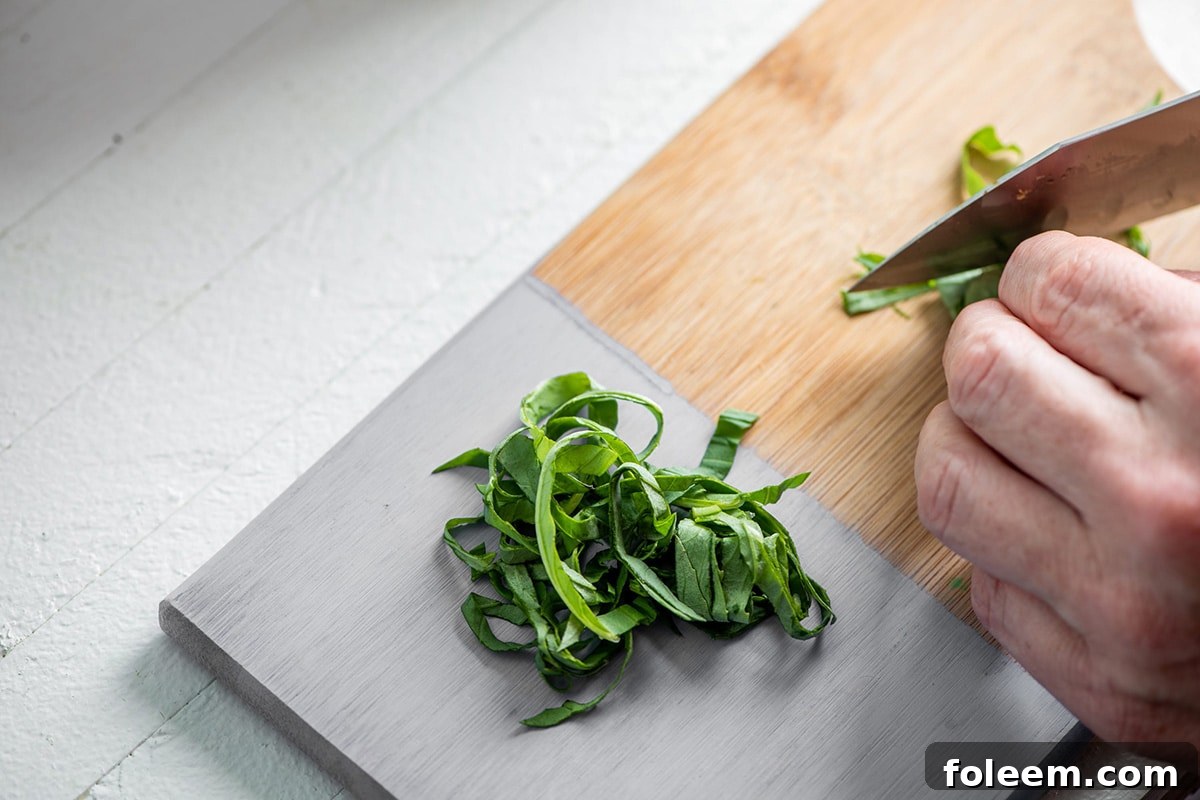
- Unfurl the ribbons: Gently separate and fluff the cut strips with your fingers so they open into delicate ribbons.
FAQs
Julienne refers to cutting firmer vegetables into very thin matchstick-like strips. Chiffonade applies to leafy greens and herbs, producing thin slivers from stacked and rolled leaves. When a recipe calls for julienned basil, it usually means chiffonaded basil.
Large, flat herbs like basil and mint are ideal for chiffonade. You can try it with sage or other broader herbs, though flavor intensity matters. Delicate greens such as spinach, Swiss chard, sorrel, and arugula can also be cut this way.
Chiffonaded basil browns and wilts quickly, so cut it just before serving. Heartier greens like chard tolerate being cut a little earlier, especially if they will be cooked.
Pronounced roughly “shif-uh-nod” — “chiff” sounds like “sniff” but with an initial “sh.”
Chiffonading Tips
- Use a very sharp knife. A dull blade will bruise and crush the leaves, affecting appearance and flavor.
- Keep your fingers safe by holding the roll with your fingertips tucked and curled away from the blade as you slice thin pieces.
How to Use Chiffonaded Basil
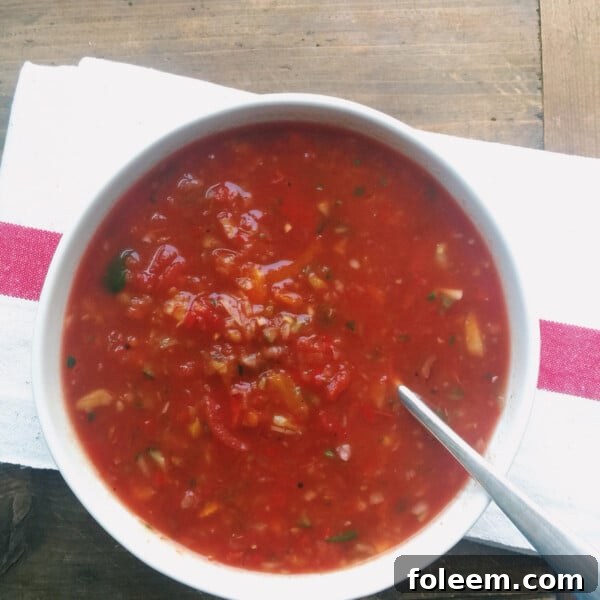
Roasted Tomato Gazpacho
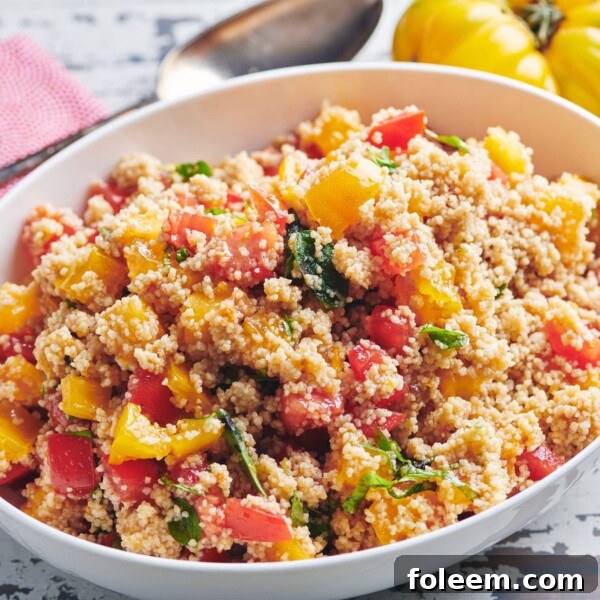
Tomato Bruschetta Couscous

Cast Iron Pizza
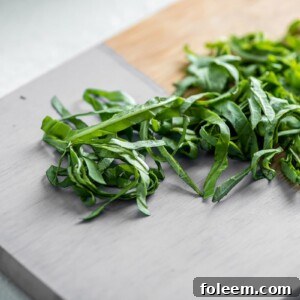
How to Chiffonade Basil
Equipment
-
Knife
Ingredients
- 1 bunch fresh basil leaves
Instructions
-
Place a few basil leaves on top of each other in a neat stack.
-
Roll the stack into a tight cylinder. Rolling top-to-bottom yields longer ribbons; side-to-side gives shorter strips.
-
Hold the roll steady and use a sharp knife to cut very thin slices across the roll. A sharp blade prevents bruising and keeps clean edges.
-
Gently separate and fluff the cut ribbons with your fingers so they unfurl into delicate chiffonade.
Notes
- Use the sharpest knife available to avoid crushing the leaves.
- Hold the roll with your fingertips curled away from the blade to protect your fingers while cutting thin slices.
Like this recipe? Rate and comment below!