Grilling the Perfect Ribeye Steak: Your Ultimate Guide to Restaurant-Quality Flavor at Home
Dreaming of a succulent, perfectly cooked ribeye steak without the hefty restaurant bill? You’re in luck! Grilling a truly exceptional steak at home is not only achievable but also surprisingly straightforward. Forget what you think you know about complex culinary techniques; mastering the grill for a ribeye is an art form that anyone can learn and enjoy. This comprehensive guide will walk you through every step, ensuring you achieve maximum flavor and optimal tenderness every single time.
For many years, the thought of cooking a magnificent piece of beef intimidated me. It wasn’t until a fantastic educational trip with Certified Angus Beef in Wooster, Ohio, that my perception completely changed. While that experience focused more on holiday roasts, it opened my eyes to the incredible resources available for beef preparation. Their website, which I frequently reference, is a treasure trove of information for cooking any cut imaginable.
Grilling, in particular, has become my absolute favorite way to prepare beef. There’s something undeniably primal and satisfying about cooking over an open flame, and the flavors it imparts are simply unmatched. I’m utterly obsessed with grilling during the warmer months; if I didn’t constantly run out of propane (a subtle hint to my wonderful husband!), I’d be grilling every night! Whether you’re using a gas grill in your backyard or a charcoal setup for a tailgate party, the principles for achieving a flawless ribeye remain the same.
Why Choose Ribeye for Grilling?
Among the many fantastic cuts of beef suitable for grilling—such as strip steaks and flank—the ribeye often stands out as a true champion. It’s not just a steak; it’s an experience. The ribeye is celebrated for its rich, buttery flavor and incredibly tender texture. This cut comes from the rib section of the cow, known for its generous marbling – those beautiful streaks of fat woven throughout the muscle. This intramuscular fat is the secret to a juicy, flavorful steak, as it renders during cooking, basting the meat from within and contributing to its melt-in-your-mouth quality.
Unlike leaner cuts that can dry out quickly, the ribeye’s marbling makes it quite forgiving, especially for those new to grilling. It ensures a flavorful and juicy result without requiring excessive effort or complex marinades. Simplicity truly shines with a great ribeye.
Selecting Your Perfect Ribeye Steak
Before you even fire up the grill, the journey to a perfect ribeye begins at the butcher counter. Here’s what to look for:
- Thickness: Aim for steaks that are at least 1 to 1.5 inches thick. Thicker steaks are easier to cook to your desired doneness without overcooking the exterior.
- Marbling: As discussed, marbling is key. Look for even distribution of fine, white streaks of fat throughout the red meat. This indicates a flavorful and tender steak.
- Color: The meat should have a vibrant, cherry-red color. Avoid steaks that look dull or brownish.
- Grade: USDA Prime or Choice grades offer superior marbling and tenderness compared to Select. While Prime is the highest quality, Choice ribeyes are still excellent and more widely available.
Essential Preparation Steps for Grilling Ribeye
Success on the grill is largely determined by what you do before the flame even touches the meat. These crucial steps ensure your ribeye cooks evenly and develops a fantastic crust:
1. Bring Steaks to Room Temperature
One of the most overlooked steps is allowing your steaks to come to room temperature before grilling. Take your ribeyes out of the refrigerator at least 30-60 minutes before you plan to cook them. This allows the meat to cook more evenly from edge to center. A cold steak will cook slower in the middle, meaning the outside might be overcooked by the time the center reaches your desired doneness.
2. Season Liberally
For a cut as flavorful as ribeye, simple seasoning is often best. A generous application of coarse salt (like kosher or sea salt) and freshly ground black pepper is paramount. I also love to add a touch of garlic powder to enhance the savory notes. Don’t be shy with the seasoning; a thick steak can handle a good amount. The salt will help draw out moisture and create a beautiful crust.
3. Pat Dry
After seasoning, ensure the surface of your steaks is as dry as possible using paper towels. Moisture on the surface inhibits the Maillard reaction – the chemical process responsible for that delicious, savory brown crust. A dry surface allows for a quicker, more effective sear.
Setting Up Your Grill for Perfection
Whether you’re a charcoal purist or a gas grill enthusiast, achieving high heat is non-negotiable for a perfect sear.
- High Heat is Key: Preheat your grill to a very high temperature, around 500-550°F (260-290°C). This intense heat is vital for searing the exterior quickly, locking in juices, and developing that coveted crust.
- Clean Grates: Always start with clean grill grates. Use a sturdy wire brush to remove any leftover bits from previous cooks. Clean grates prevent sticking and help create those desirable grill marks.
- Oil the Grates (Optional but Recommended): Once hot and clean, you can lightly oil the grates by dipping a paper towel in a high smoke point oil (like avocado or grapeseed oil) and carefully wiping it across the grates using tongs.
The Grilling Process: Achieving Steakhouse Quality at Home
Now for the main event! With your grill piping hot and your steaks perfectly prepped, it’s time to cook.
1. The Initial Sear and Diamond Marks
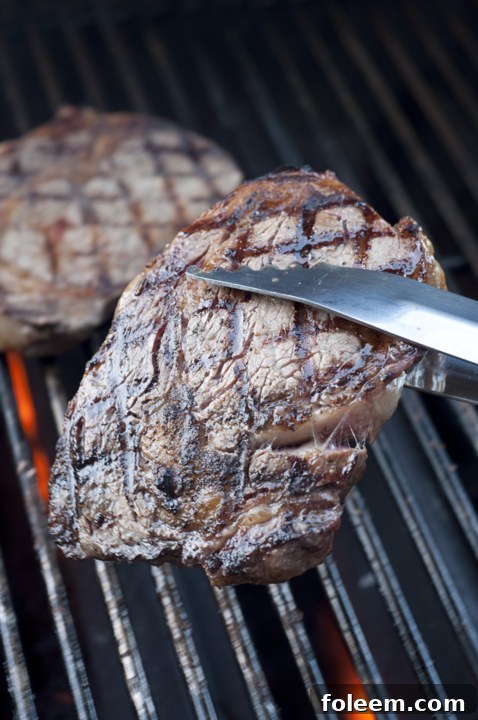
Carefully place your seasoned ribeye steaks on the preheated grill. You should hear a satisfying sizzle immediately. To create those professional-looking diamond grill marks, position the steaks with the ends pointing towards 10 and 4 o’clock. Let them sear undisturbed for 2-3 minutes. Once a crust has formed and the meat has seared, gently turn the steaks clockwise so the ends are at 2 and 8 o’clock. Sear for another 2-3 minutes. This technique ensures a beautiful crosshatch pattern.
2. Flip and Finish Cooking
After achieving the desired marks on the first side, flip the steaks over using tongs (never a fork, as piercing the meat allows precious juices to escape). Continue grilling until they reach your desired doneness.
3. Knowing When It’s Done: The Importance of a Thermometer
The biggest secret to perfectly cooked steak is knowing when to take it off the grill. Guessing can lead to disappointment. An instant-read meat thermometer is your best friend here. Insert it into the thickest part of the steak, avoiding bone.
Remember this crucial tip: you can always put a steak back on the grill if it’s undercooked, but you can never undo an overcooked one. When in doubt, err on the side of rare!
Target Internal Temperatures (Remove steak 5°F before desired doneness, as it will continue to cook while resting):
- Rare: 120-125°F (49-52°C) – Cool red center
- Medium-Rare (Recommended): 130-135°F (54-57°C) – Warm red center
- Medium: 135-140°F (57-60°C) – Warm pink center
- Medium-Well: 145-150°F (63-66°C) – Slightly pink center
- Well-Done: 150°F+ (66°C+) – Little to no pink
For a perfect medium-rare, I typically grill my ribeyes for about 4 to 6 minutes per side, depending on thickness and grill heat. Always rely on your thermometer, not just time.
The Crucial Resting Period
Once your steaks reach the desired internal temperature, remove them from the grill and place them on a clean plate or cutting board. Let them rest for at least 5-10 minutes before slicing. This step is non-negotiable! Resting allows the muscle fibers to relax and the juices, which have been pushed to the center during cooking, to redistribute throughout the steak. If you cut into it too soon, those precious juices will flood your plate instead of staying in the meat, resulting in a drier steak.
Serving Your Masterpiece
After resting, your perfectly grilled ribeye is ready to be enjoyed. Slice it against the grain to maximize tenderness. A simple sprinkle of flaky sea salt can be a wonderful finishing touch. Serve with your favorite side dishes – perhaps some grilled asparagus, a crisp salad, or creamy mashed potatoes.
If you’re a true red meat aficionado like me, you’ll also adore these Philly Cheesesteak Baked Egg Rolls – they make an incredible appetizer or a fun dinner! And for a lighter, yet equally delicious, steak experience, my friend Lisa’s Southwestern Steak Salad is an absolute must-try. I’m definitely adding that to my cooking list soon!
Recipe: Grilling the Perfect Ribeye Steak
This simple yet effective recipe will guide you to a restaurant-quality ribeye every time. It’s perfect for impressing guests at a summer BBQ, Fourth of July celebration, Memorial Day picnic, or just a fantastic weeknight meal.
Yields: 4 Servings
Prep time: 5 minutes
Cook time: 8-12 minutes
Total time: 13-17 minutes
Ingredients:
- 4 choice rib-eye steaks, 1 to 1.5 inches thick
- Salt, to taste (preferably coarse kosher or sea salt)
- Freshly ground black pepper, to taste
- Garlic powder, to taste (optional, but highly recommended)
Instructions:
- Prepare your grill (gas or charcoal) by preheating it to very high heat, about 500-550°F (260-290°C), according to manufacturer’s instructions. Ensure grates are clean.
- Place rib-eye steaks on a large platter or baking sheet. Season generously on all sides with salt, pepper, and garlic powder (if using). Don’t be shy with the seasoning!
- Let the seasoned steaks rest at room temperature for 10-15 minutes while the grill finishes preheating. This helps them cook more evenly.
- Carefully transfer the seasoned steaks to the preheated grill. They should sizzle loudly upon contact.
- For diamond grill marks, place steaks with ends at 10 and 4 o’clock. After 2-3 minutes, turn them clockwise so the ends are at 2 and 8 o’clock for another 2-3 minutes.
- Flip steaks over using tongs. Continue grilling for another 4-6 minutes, or until desired doneness is reached. Use an instant-read thermometer for accuracy (refer to internal temperature guide above). For medium-rare, aim for 130-135°F before resting.
- Remove steaks to a clean plate or cutting board.
- Let the steaks rest for 5-10 minutes before slicing and serving. This crucial step allows the juices to redistribute, ensuring a tender and moist steak. Be patient – it’s worth it! Enjoy!
Conclusion
Grilling the perfect ribeye steak is an incredibly rewarding culinary endeavor. It combines the thrill of outdoor cooking with the satisfaction of creating a meal that rivals any high-end restaurant. With careful attention to selection, preparation, grill temperature, and the all-important resting period, you’ll be consistently turning out steaks that are rich, juicy, and utterly unforgettable. So fire up your grill, embrace the sizzle, and prepare to delight your taste buds. Happy grilling!