The Art of Thai Sticky Rice
Mastering Authentic Thai Sticky Rice: Your Essential Guide to Traditional Steaming
Unlock the Secrets to Perfect Thai Sticky Rice, Cooked the Traditional Way
There’s a distinct culinary magic to authentic Thai sticky rice. Known also as “sweet rice” or “glutinous rice,” this staple transcends a mere side dish; it’s an integral part of countless Thai meals, offering a unique texture and flavor profile that complements everything from spicy curries to savory grilled meats. For many, the true experience of Thai cuisine isn’t complete without it. While numerous methods exist for cooking rice, achieving that perfectly tender yet firm, delightfully sticky texture truly requires a traditional approach, specifically using a steaming basket.
If you’ve ever savored sticky rice at a Thai restaurant and wondered how to replicate that experience at home, you’re in the right place. This guide is dedicated to demystifying the process, ensuring your homemade Thai sticky rice rivals the best you’ve tasted. We’ll delve into the traditional steaming method, share essential tips, and provide a comprehensive recipe to help you master this beloved dish.
My Journey to Authentic Thai Sticky Rice: A Gift That Transformed My Kitchen
My personal quest for perfect Thai sticky rice began with a thoughtful Christmas present from my husband a few years ago: an authentic Thai sticky rice steaming kit. This wasn’t just any kitchen gadget; it was a promise of culinary adventure, a direct link to the flavors I cherished from my favorite Thai restaurants. Admittedly, it took me an entire year to finally unbox and utilize this incredible gift. Life, counter space, and the sheer newness of a specialized cooking method meant it sat tucked away, a victim of the “out of sight, out of mind” phenomenon.
It wasn’t a lack of appreciation; quite the contrary, I absolutely adored the idea of the kit! It was more about finding the right moment to dive into a new technique. That moment finally arrived the following December, and once I experienced the unparalleled results this traditional steamer could deliver, there was no turning back. This kit, which includes a high-quality aluminum steaming pot imported directly from Thailand, a traditional bamboo steaming basket, and essential cheesecloth, alongside five pounds of premium sticky rice, became an indispensable part of my kitchen repertoire. It truly made all the difference.
What Makes Thai Sticky Rice So Special? Understanding Glutinous Rice
The term “sticky” is not just a descriptor; it’s the defining characteristic of this rice. Unlike long-grain or jasmine rice, glutinous rice (which, despite its name, is gluten-free) contains a much higher percentage of amylopectin starch and very little amylose. This chemical composition is what gives it its distinct opaque appearance when raw and its incredibly cohesive, sticky texture when cooked. It’s designed to be pinched off in firm, yet tender, clumps, making it perfect for eating with your fingers – a common and enjoyable practice in Thailand. While dining out, I often find myself disregarding typical etiquette to savor it traditionally, and honestly, I wouldn’t have it any other way.
The Essential Tools for Authentic Sticky Rice: A Closer Look at the Steamer Kit
To truly achieve the coveted texture of authentic Thai sticky rice, specialized equipment is key. While some attempt shortcuts with rice cookers or stovetop pots, these methods rarely yield the fluffy yet chewy consistency that makes traditional sticky rice so beloved. The traditional Thai sticky rice kit is designed specifically for this purpose and consists of a few crucial components:
- Aluminum Steaming Pot: This deep, narrow pot is designed to hold water for steaming. Its specific dimensions allow the bamboo basket to sit above the water level, ensuring indirect heat from steam.
- Bamboo Steaming Basket (Kratip Khao Niao): This conical or cylindrical basket is where the rice cooks. Its woven bamboo structure allows steam to circulate evenly around the rice, cooking it gently and preventing it from becoming soggy.
- Cheesecloth: A fine-mesh cheesecloth lines the bamboo basket, preventing individual grains of rice from falling through and ensuring easy removal of the cooked rice. It also helps the rice maintain its shape during steaming.
- Thai Sticky Rice (Glutinous Rice): Not all rice is created equal. For authentic results, you must use genuine Thai sticky rice, specifically the long-grain variety. Substitutions will simply not yield the same texture.
Investing in these tools is a game-changer. The even, gentle steaming provided by the traditional setup is what produces that perfectly tender, yet resilient texture that defines authentic sticky rice.
From Restaurant Favorite to Home Kitchen Staple: My Quest for Perfection
My love affair with Thai food runs deep. For years, when we lived in our old apartment, we were blessed with Phuket Thai, an incredible restaurant just across the street. It was there that I truly fell head over heels for sticky rice, often ordering it multiple times a week (a confession I now make with slight embarrassment!). The thought of replicating that perfection at home became a culinary obsession. I tried various techniques, attempting to force my regular kitchen setup to produce the same results, but time and again, I was met with disappointment. The texture was never quite right – too wet, too dry, never that ideal balance of tender and chewy.
Moving to a new house, now over a half-hour away from my beloved Phuket Thai, only intensified the need to master this dish. And thankfully, the traditional steaming kit changed everything. It transformed my frustrating attempts into consistent successes. Now, I can effortlessly conjure up perfect Thai sticky rice anytime I desire, right in my own kitchen.
Mastering the Art of Thai Sticky Rice: A Step-by-Step Guide
While the traditional method might seem intimidating at first, it’s surprisingly simple and incredibly rewarding. The key is patience, particularly during the crucial soaking stage. Here’s a detailed breakdown of the process:
The Critical Soaking Stage
This is the most important step for achieving the right texture. Sticky rice needs a significant amount of hydration before steaming.
- Rinsing: Start by thoroughly rinsing your sticky rice 2-3 times under cool running water. Continue until the water runs clear, which removes excess starch and prevents stickiness in a bad way.
- Soaking: Place the rinsed rice in a large bowl and cover it with cool water. The water level should be approximately 2-3 inches above the rice. This allows the grains to fully absorb moisture.
- Duration: Let the rice soak for a minimum of 6-8 hours. I often soak it overnight, or set it out in the morning if I plan to make it for dinner. Longer soaking times (up to 12 hours) can yield even more tender results, but avoid soaking for excessively long periods (e.g., more than 24 hours) as the rice can begin to ferment.
Preparing Your Steamer and the Steaming Process
Once the rice has had its long bath, the rest of the process is straightforward.
- Drain: Carefully drain the soaked rice, shaking off any excess water.
- Prepare Basket: Line your bamboo steaming basket with cheesecloth, making sure there’s enough overhang to completely wrap the rice.
- Load Rice: Transfer the drained sticky rice into the cheesecloth-lined basket. Gently gather the cheesecloth around the rice to form a neat package.
- Set Up Steamer: Fill the aluminum steaming pot with 6-8 cups of water. Place the bamboo steamer containing the wrapped rice inside the steaming pot. Crucially, ensure that the bottom of the bamboo steamer does not touch the boiling water; it should sit above it, allowing only steam to cook the rice.
- Lid: Place a standard 8-inch lid loosely over the top of the bamboo steamer. A loose fit is important to allow some steam to escape while still trapping enough heat.
- Steam: Turn the heat to medium-high. Once the water boils vigorously and steam is steadily rising, steam the rice for 45 minutes, or until the grains are uniformly tender and slightly translucent. You can gently unwrap a corner of the cheesecloth to check for doneness.
- Serve Promptly: As soon as the rice is cooked, immediately remove it from the cheesecloth and transfer it to a serving dish. This prevents it from overcooking or becoming overly dense.
Perfect Pairings: What to Serve with Your Homemade Sticky Rice
The beauty of homemade Thai sticky rice lies in its versatility. It’s the ultimate companion to almost any Thai dish, soaking up rich sauces and balancing spicy flavors. Here are some ideal pairings:
- Thai Curries: From Red Curry to Green Curry, the sticky rice is perfect for scooping up every last drop of the flavorful sauce.
- Grilled Meats: Enjoy it with Peanut Chicken Tacos or any grilled pork or beef marinated in Thai spices.
- Stir-fries: A classic like Pad Thai or a simple chicken and basil stir-fry benefits immensely from a side of sticky rice.
- Dipping Sauces: It’s absolutely divine dipped in a rich peanut sauce or a savory chili sauce.
- Salads: For a lighter meal, pair it with a refreshing salad like this Thai Cashew Chicken Salad.
- Dessert: While this recipe is for savory sticky rice, a common Thai dessert is Mango Sticky Rice (Khao Niao Mamuang), where the cooked sticky rice is sweetened with coconut milk and served with fresh mango.
Troubleshooting Common Sticky Rice Issues
Even with the right tools, a few issues can arise. Here’s how to address them:
- Rice is Too Hard/Undercooked: This usually means insufficient soaking time or not enough steaming time. If it’s still hard after the recommended steaming, add a bit more water to the steaming pot and steam for an additional 10-15 minutes. Ensure your lid is creating enough steam circulation.
- Rice is Too Mushy/Wet: This can happen if the rice was soaked for too long (though rare for up to 12 hours) or if water from the boiling pot splashed into the bamboo steamer. Ensure the bamboo basket sits well above the water line. There’s not much to fix once it’s mushy, so prevention is key.
- Uneven Cooking: If some parts are cooked and others aren’t, it might be due to uneven rice distribution in the basket or insufficient steam circulation. Ensure the rice is spread somewhat evenly, and the lid allows steam to build effectively.
- 2 cups Authentic Thai Sticky Rice (Long Grain Glutinous Rice) – absolutely essential for proper texture, do not substitute with other rice varieties.
- Cool water for rinsing and soaking
- 6-8 cups water for steaming
- Equipment: Traditional Thai Sticky Rice Steamer (aluminum pot and bamboo basket)
- 1 large piece of Chef-Grade Cheesecloth
- Rinse the Rice: Place the sticky rice in a large bowl. Rinse the rice 2-3 times under cool running water, gently agitating it with your hands. Continue rinsing until the water runs mostly clear. This removes excess surface starch and ensures better texture.
- Soak the Rice: After rinsing, leave the rice in the bowl and fill it with cool water. The water should cover the rice by approximately 2-3 inches. Allow the rice to soak for a minimum of 6 hours, and ideally 8 hours. You can even soak it overnight (up to 12 hours) if preparing for the next day. This prolonged soaking is crucial for the rice to cook evenly and achieve its characteristic tender stickiness.
- Prepare for Steaming: Once the soaking period is complete, carefully drain the rice completely using a fine-mesh sieve. While the rice drains, line your bamboo steaming basket with a large piece of cheesecloth, ensuring there’s enough overhang to completely wrap the rice. Transfer the drained sticky rice onto the center of the cheesecloth.
- Set up the Steamer: Pour 6-8 cups of water into the bottom aluminum pot of your Thai sticky rice steamer. Carefully place the bamboo steamer, containing the wrapped rice, inside the aluminum pot. It is essential that the bottom of the bamboo steamer does not touch the boiling water; it should rest above the water level, allowing only steam to cook the rice. Place a standard 8-inch lid loosely over the top of the bamboo steamer.
- Steam the Rice: Turn the heat on your stovetop to medium-high. Bring the water in the pot to a vigorous boil, then maintain a steady steam. Steam the rice for a full 45 minutes. The rice should become tender and slightly translucent. To check for doneness, carefully lift a corner of the cheesecloth and taste a few grains. If it’s still firm or hard, continue steaming for another 5-10 minutes.
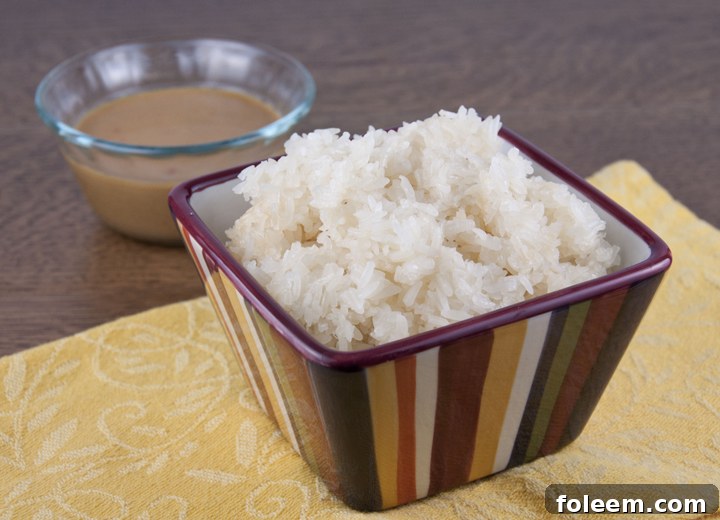
- Serve Immediately: As soon as the sticky rice is perfectly cooked and tender, remove the bamboo steamer from the heat. Promptly remove the cooked rice from the cheesecloth and transfer it to a serving bowl. This prevents it from becoming too dense or cooling unevenly. Serve warm with your favorite Thai dishes.
Your Culinary Journey Begins Now!
Embarking on the journey to make authentic Thai sticky rice at home is a truly rewarding experience. It connects you to a rich culinary tradition and brings the vibrant flavors of Thailand directly to your dining table. With the right tools and a little patience, you’ll be amazed at how simple it is to achieve restaurant-quality results. No more longing for your favorite Thai spot; you’ll be creating that perfect, tender, and delightfully sticky rice whenever the craving strikes.
So, gather your ingredients, set aside time for soaking, and prepare to elevate your home cooking. This recipe isn’t just about making rice; it’s about mastering a technique that unlocks a world of authentic Thai flavors. Enjoy every single bite!