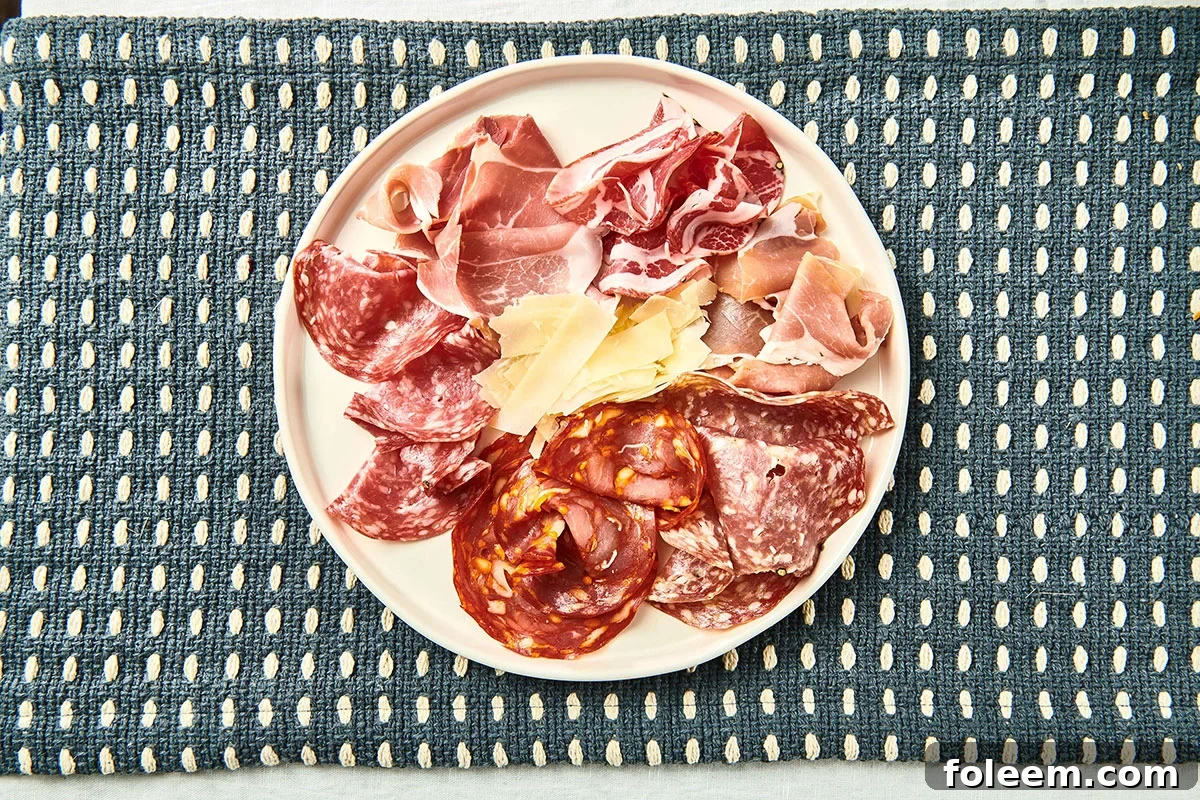
Salumi refers to high-quality cured meats such as salami, prosciutto, and many other varieties, most traditionally pork-based. Purists restrict the term to cured Italian meats, while others apply it more broadly to preserved or cooked meats made worldwide.
Emilia-Romagna is especially famous for its salumi—prosciutto in particular—but excellent cured meats are produced across Italy and beyond.
- FAQs
- Quick tips for buying and serving salumi
- Types of Salumi
- How to Store Salumi
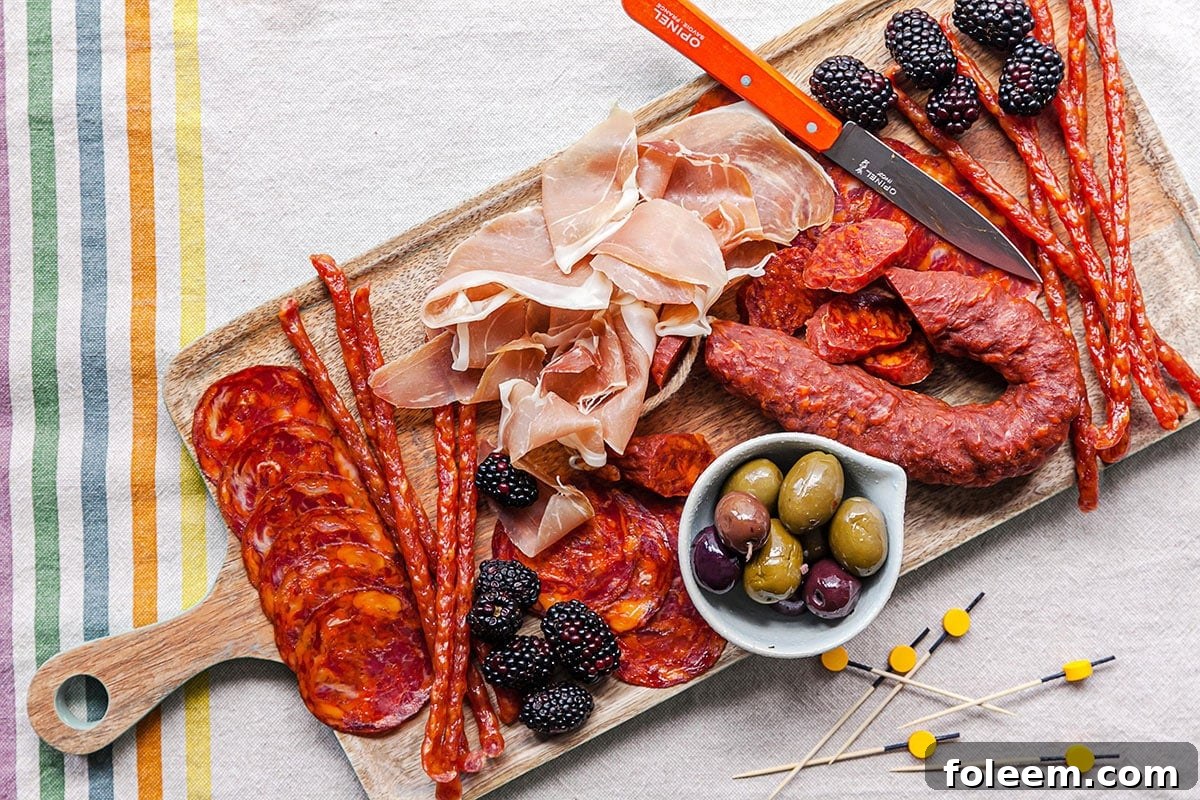
Salumi originated as a way to preserve meat before refrigeration and to use every part of the pig without waste. Today, many brands produce packaged salumi for supermarkets—examples you might find include Olli, Gusto, Coro, Creminelli, and Daniele—alongside numerous artisanal producers throughout Italy, the United States, and other countries.
FAQs
Salu is the Italian word for cured meats and serves as an umbrella term. Under salumi you’ll find salami, prosciutto, coppa, pancetta, mortadella, and many others—meats that have been salted, seasoned, and aged.
Salami is a specific type of salumi. Think of salumi as the category and salami as one example within it. Salami is typically a fermented, cured sausage that you slice to serve.
Charcuterie is the French term for prepared meats—pâtés, terrines, cured sausages, and hams. Salumi is the Italian equivalent. Both cover cured, preserved, or cooked meats intended for slicing and serving.
Not at all. Start with a few favorites—prosciutto on sandwiches, mortadella as a snack, or salami on a cheese board—and learn the rest as you taste them.
In summary:
- Salumi = the range of Italian cured meats
- Salami = one type of salumi
- Charcuterie = the French counterpart
With that, you can approach a deli or restaurant with confidence and a basic understanding of terms.

Quick tips for buying and serving salumi
- Choose high-quality, minimally processed options when possible.
- Serve slices thinly for the best texture; pair with crusty bread, cheeses, olives, or fruit to balance flavors.
Types of Salumi
The world of salumi is broad and varied. Below are some of the most common and distinctive types you’ll encounter.
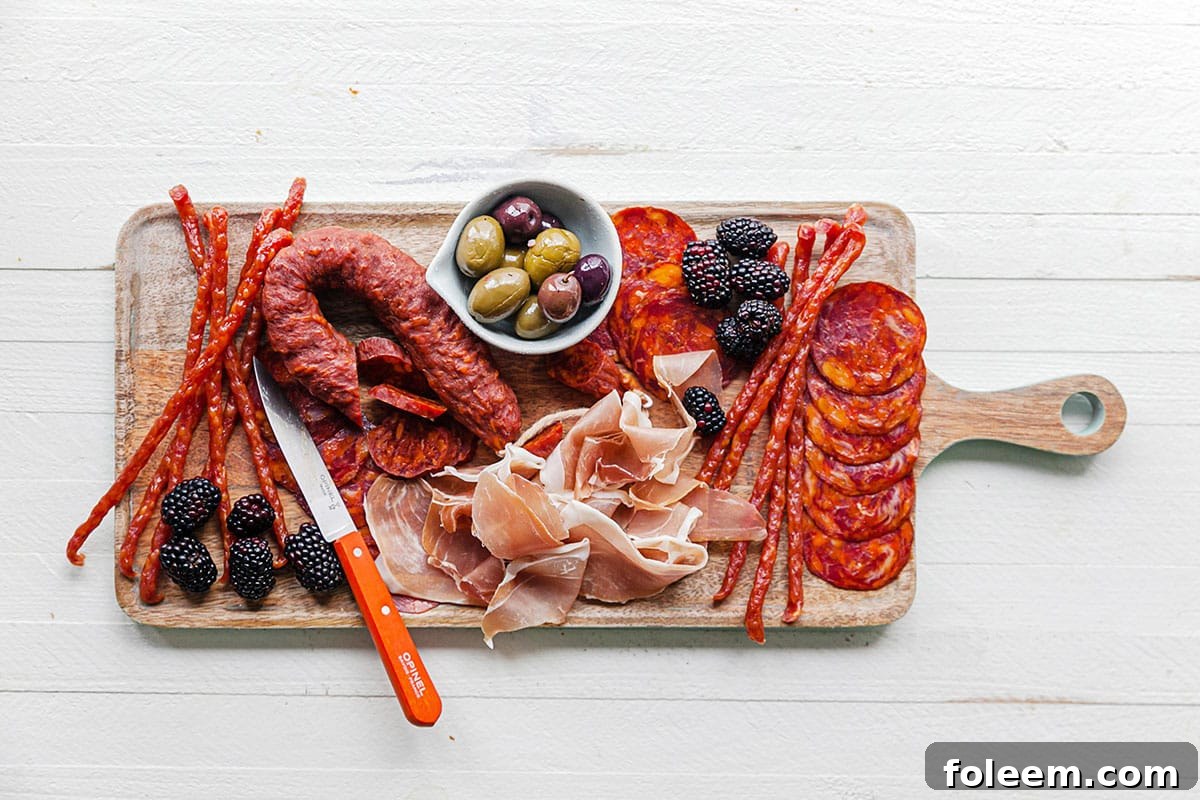
Salami
Salami is one of the most familiar forms of salumi. It typically consists of chopped or ground meat seasoned, salted, stuffed into a casing, and dried or cured. In the U.S., dry-cured, firm-textured salamis are common and sold whole or pre-sliced. Within the salami category there are countless regional variations, plus cooked and soft-cured versions. Often you’ll remove the casing before serving, though you can check a slice first to decide.
Sopressata
Sopressata is a dry-cured pork salami, traditionally shaped long and slightly flattened. It often carries black pepper, chili, or other spices that give it a noticeable kick. Slice it thick or thin according to your preference.
Mortadella
Mortadella is a smooth, pink, lightly cured and cooked sausage enjoyed throughout Italy. Regional recipes vary and sometimes include pistachios. It’s typically served in thin slices and has a mild, delicate flavor.
Nduja
Nduja (pronounced en-DFOO-ya) originates from Calabria and is notable for its spreadable texture and spicy heat from local peppers. It’s commonly spread on bread as an appetizer or incorporated into recipes for a bold flavor.
Whole-Muscle Salumi
Whole-muscle salumi are cuts like prosciutto, speck, guanciale, and coppa. These are typically dry-cured with salt and various seasonings—sometimes wine—and are mostly eaten thinly sliced and uncooked, though they also appear cooked in dishes. For the freshest experience, buy slices cut to order at a high-turnover deli, but reliable packaged options are also available at specialty counters.
Prosciutto
Prosciutto is perhaps the most widely recognized salumi. It’s made from a whole pork leg rubbed with salt and cured for many months—often over a year—in cool, dark conditions. Prosciutto is usually sold in paper-thin slices with a silky texture, delicate chew, and savory, slightly sweet umami character.

Speck
Speck resembles prosciutto but typically includes smokier notes and more pronounced seasoning. It’s slightly denser and can be enjoyed on its own or used to add depth to recipes.
Pancetta
Pancetta is the Italian equivalent of cured pork belly—similar to bacon but not smoked in the same way. It is often sold rolled into a cylinder and can be served thinly sliced or cooked and diced for use in pastas, braises, and salads.
Guanciale
Guanciale is made from pork jowls and seasoned with ingredients such as bay leaves, pepper, and juniper. Sold in chunks or sliced, it’s a key ingredient in classic pasta dishes like carbonara and amatriciana.
Coppa
Coppa, also known as capicola, comes from the top of the pig’s shoulder. Regional recipes impart varied seasonings—sometimes wine—resulting in a richly flavored, tender salumi with a pleasing balance of fat and meat.
The best way to explore salumi is to taste it. Visit a quality deli or Italian market, ask for recommendations, and sample small amounts. Many counters will sell quarter-pound portions so you can try several varieties without committing to large quantities.
How to Store Salumi
Store salumi in the refrigerator. For the best flavor and texture, let slices sit at a cool room temperature (around 60°F) for a short time before serving so their aromas and textures come through.