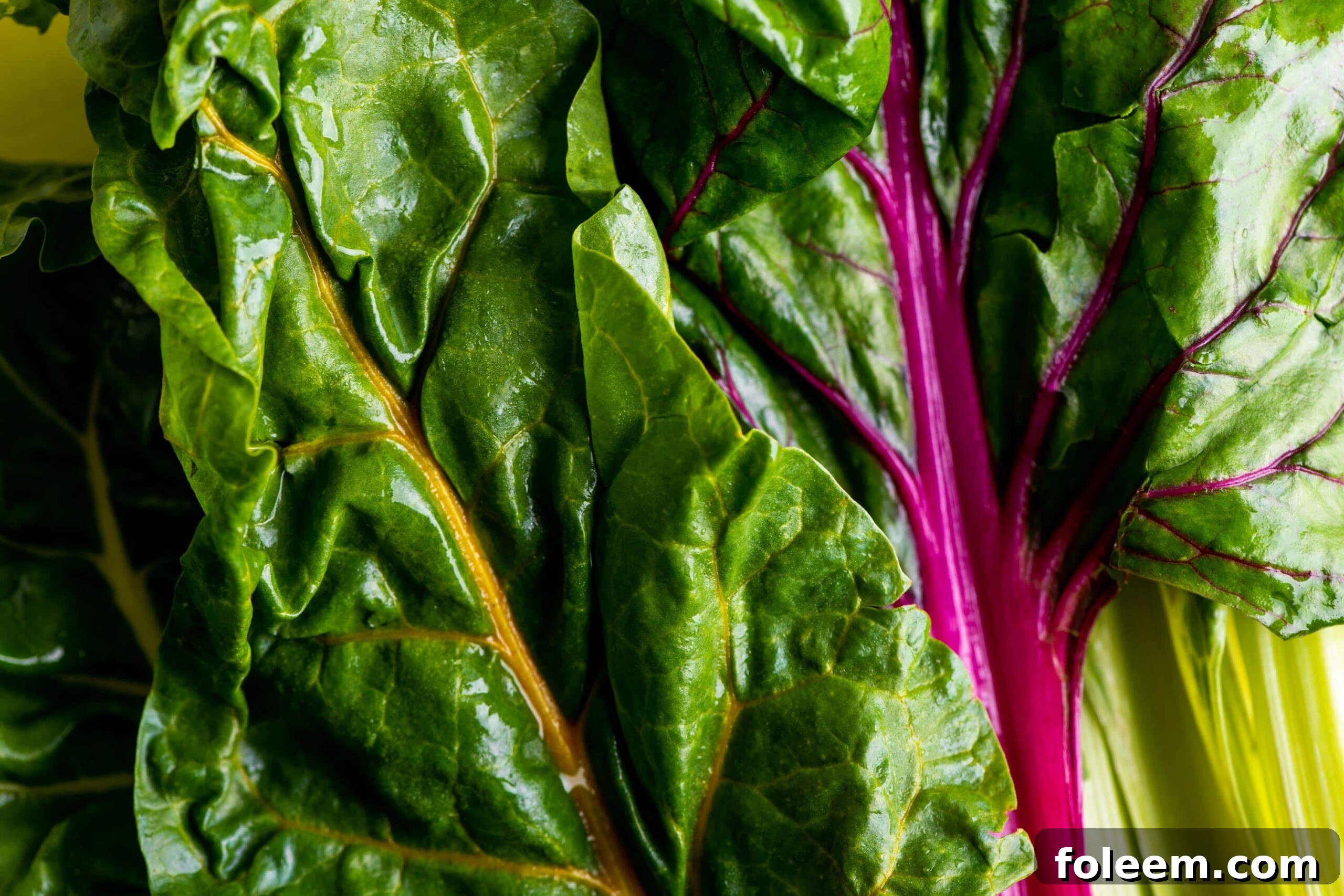
Swiss chard often sits in the shadow of other leafy greens like kale and spinach, but it deserves more attention. With its hearty texture, vivid stems, and mild, slightly earthy flavor, chard is both nutritious and versatile. It cooks as easily as other greens and its colorful stalks—ranging from white to bright reds, oranges, and yellows—make dishes more visually appealing.
Below you’ll find a simple Sautéed Swiss Chard recipe to get started. Once you’re comfortable with this preparation, try using chard in soups, stews, casseroles, frittatas, salads, and side dishes. Sautéed chard pairs well with grilled or pan-seared meats and seafood, and it’s a ready-made complement to many main courses.
- What Is Swiss Chard?
- What Does Swiss Chard Look Like?
- Buying and Selecting Swiss Chard
- How to Prepare and Cook Swiss Chard
- How to Store Swiss Chard
- FAQs
- Recipes With Swiss Chard
- Sautéed Swiss Chard Recipe
What Is Swiss Chard?
Swiss chard, commonly called chard, is a leafy green in the beet family and is closely related to spinach. It’s a staple in Mediterranean cooking but appears in cuisines worldwide under various names. Despite the name, it has no specific connection to Switzerland.
What Does Swiss Chard Look Like?
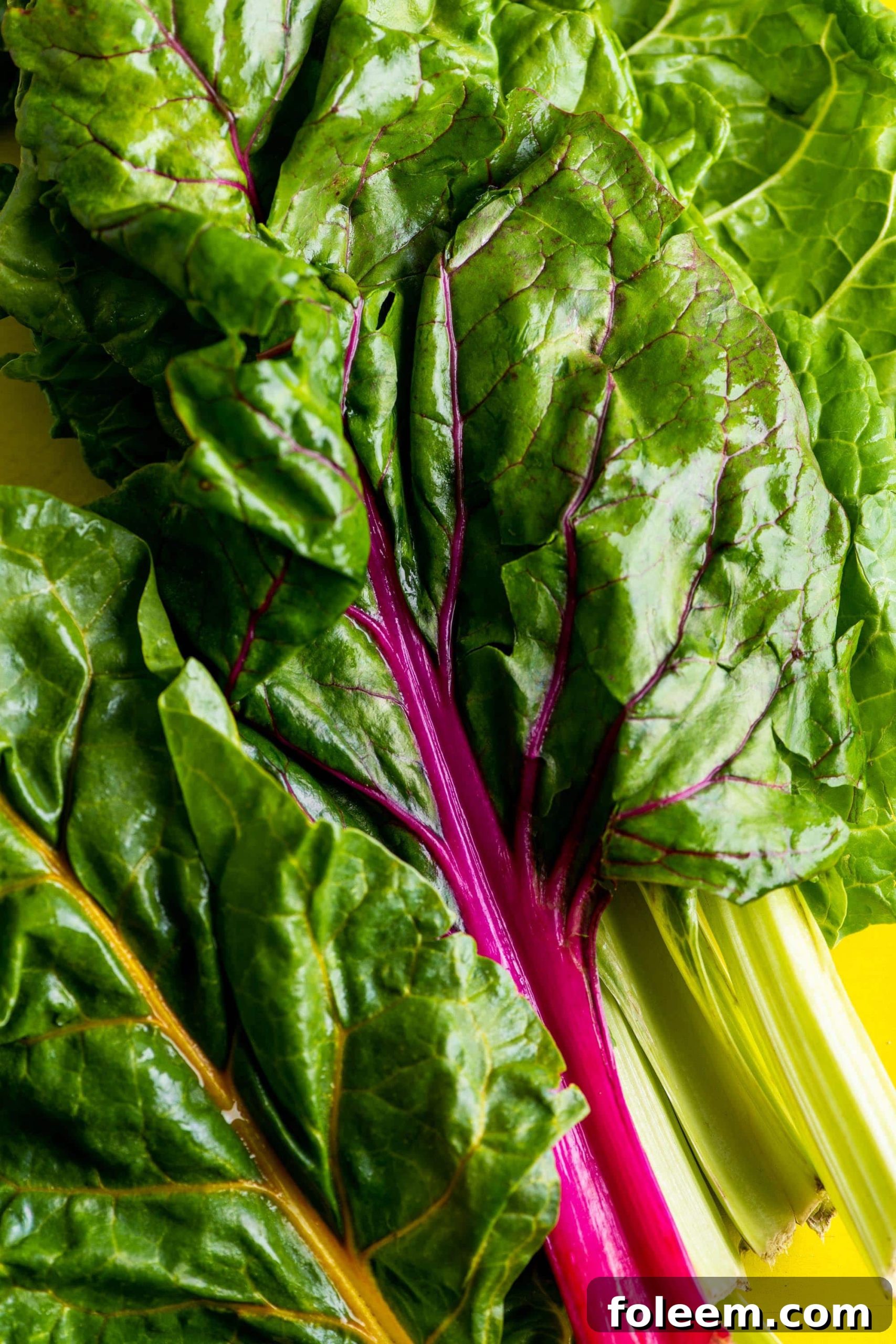
Chard has large, dark green leaves with prominent ribs and stems. The stems can be solid-colored—usually white or red—or multi-hued in shades of red, pink, orange, yellow, and white. The colorful varieties are often called Rainbow Chard or Bright Lights. Colors tend to soften with cooking but are striking when raw.
Buying and Selecting Swiss Chard
Find Swiss chard in the produce section, often near kale or collards. It’s usually sold in bunches—choose stems that are firm and brightly colored and leaves that look glossy and free of brown or yellow spots. Fresher chard has a crisp texture and vibrant color.
How to Prepare and Cook Swiss Chard
You can eat both the leaves and the stems. Stems are slightly sweet with a celery-like note and take a bit longer to become tender than the leaves. If stems are thick, you can slice them and cook them a little before adding the greens; otherwise, cooking them together is fine. Chard works well steamed, sautéed, added to soups and stews, incorporated into casseroles, or folded into frittatas and quiches. Young leaves are also pleasant raw in salads.
How to Store Swiss Chard
Wrap chard in slightly damp paper towels and place it inside an open plastic bag in the refrigerator. Stored this way, it will keep for up to three days.
Swiss chard is a versatile leafy green related to beets and spinach. Here’s how to cook it and enjoy it in many dishes.
FAQs
You can eat the whole plant. Leaves cook quickly while stems need a bit more time. For raw preparations, choose young, tender leaves; thicker stems may be too fibrous raw and are best cooked.
Chard’s primary season begins in May and continues through summer, but it’s commonly available year-round.
Yes. Chard is rich in vitamins A, C, and K and provides minerals like magnesium, iron, and potassium.
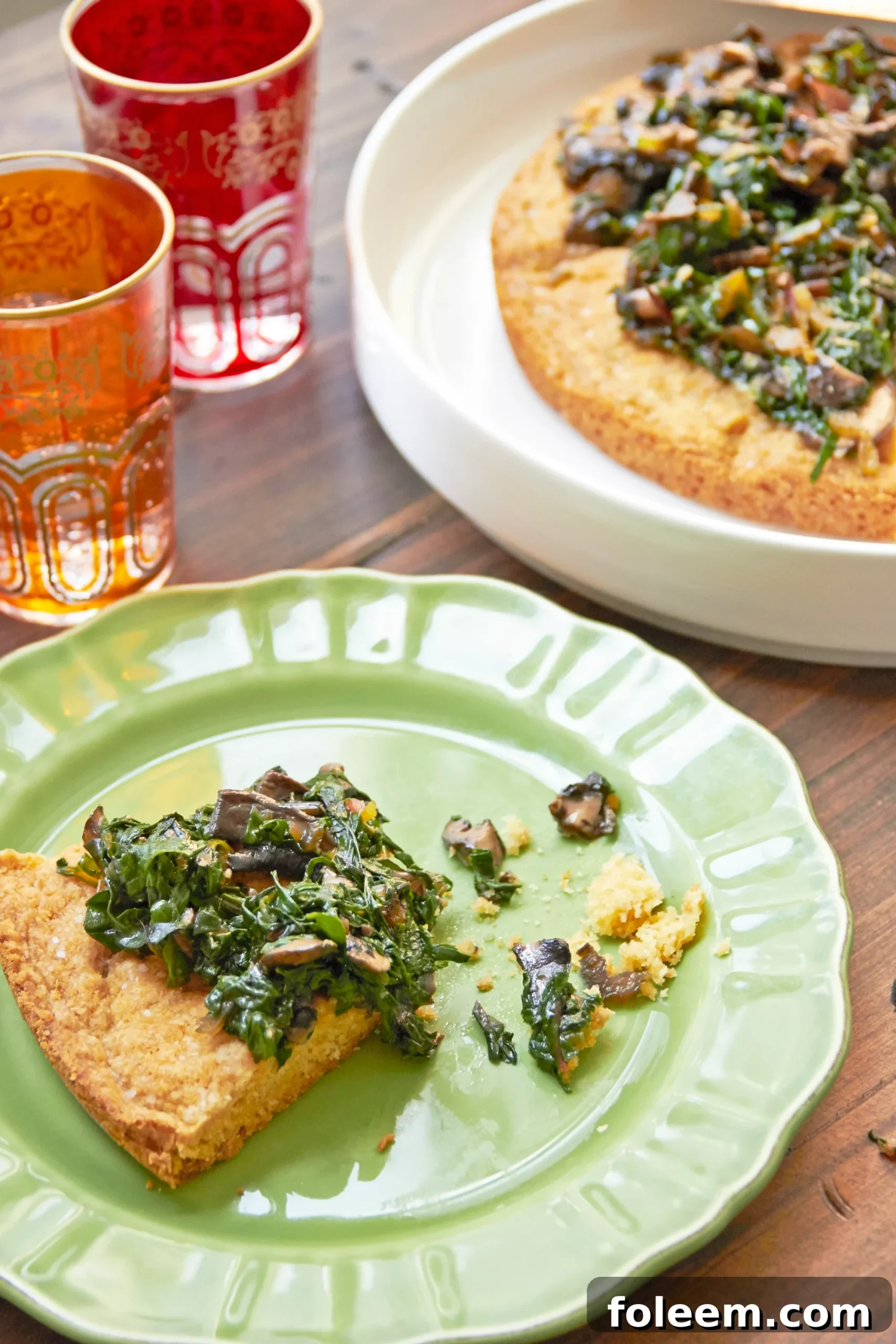
Recipes With Swiss Chard
Swiss Chard Frittata
Shakshuka with Swiss Chard
Mediterranean Couscous with Swiss Chard and Peppers
Sautéed Swiss Chard Recipe
Sautéing is a fast and reliable way to cook Swiss chard. This method preserves texture and flavor while using only a little fat and a touch of aromatics like onion and garlic. Slicing the stems and cooking them with the leaves gives a pleasing contrast of tender greens and slightly crisp stems.
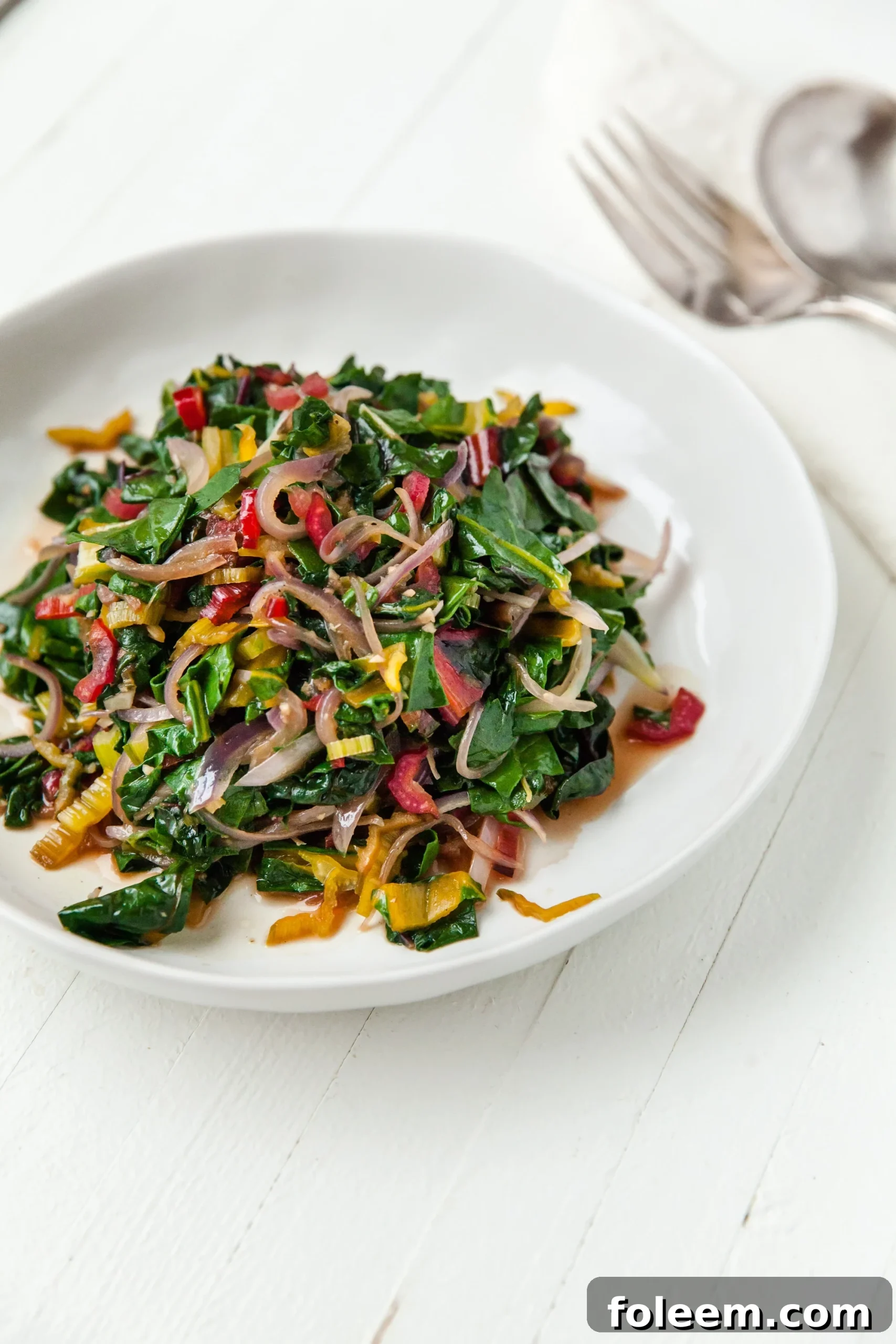
Sautéing chard is the quickest, most flavorful way to enjoy these beautiful greens.
Seasoning Sautéed Swiss Chard
Start with onions and garlic, then customize with preserved lemon, olives, red pepper flakes, or citrus zest. Finish with a sprinkle of Parmesan or crumbled feta, or add pickled onions for brightness. Use whatever flavors you enjoy with other sautéed greens.
How to Cook Swiss Chard on the Stove
- Prepare the chard: Slice the stems and roughly chop the leaves. Rinse well and shake off excess water.
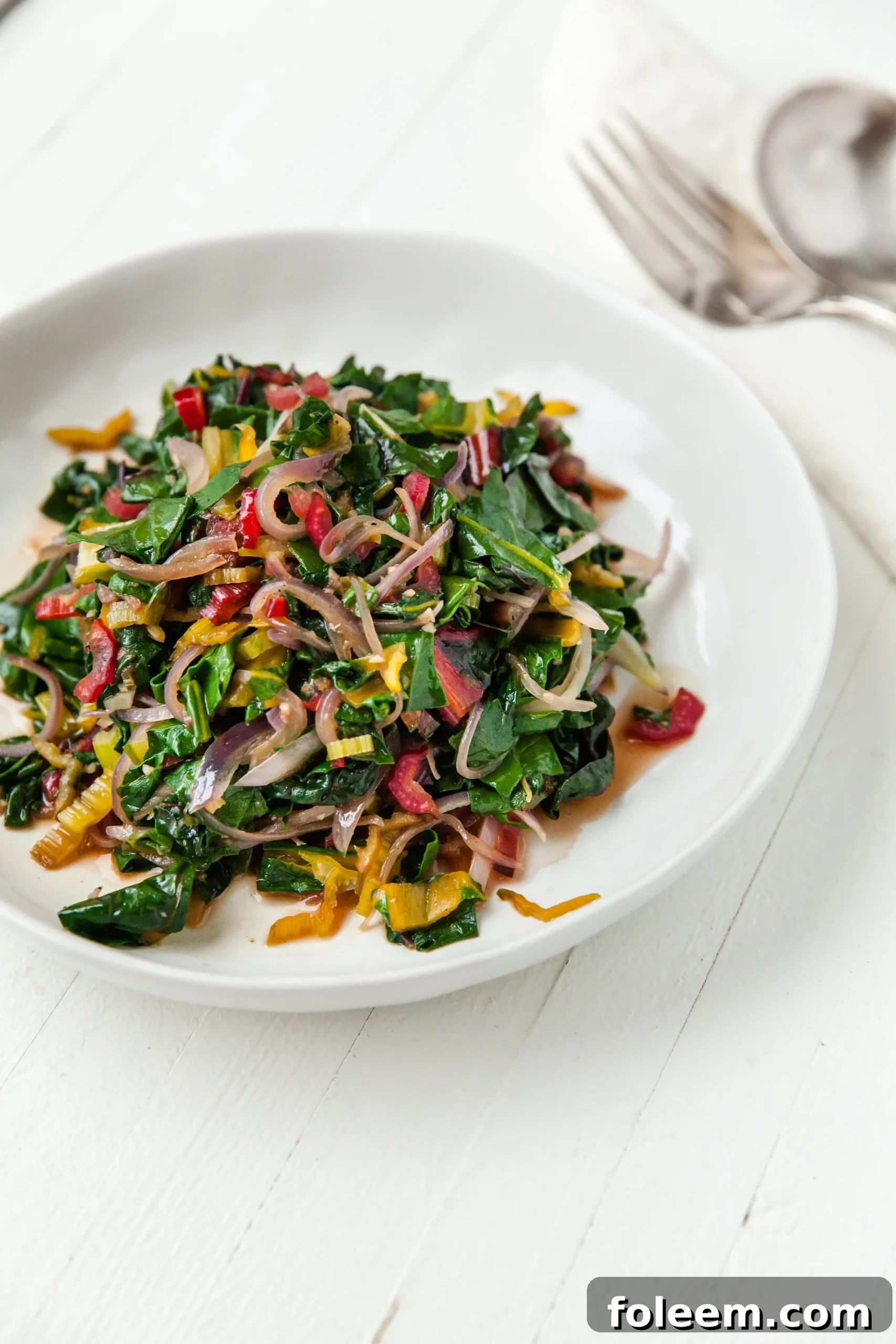
- Cook the chard: Heat a large skillet over medium-high heat. Add olive oil, then sauté sliced onion for about 4 minutes. Stir in minced garlic for about 1 minute. Add the chard, season with salt and pepper, and sauté for about 5 minutes until crisp-tender. Cook longer if you prefer softer greens. Serve hot.
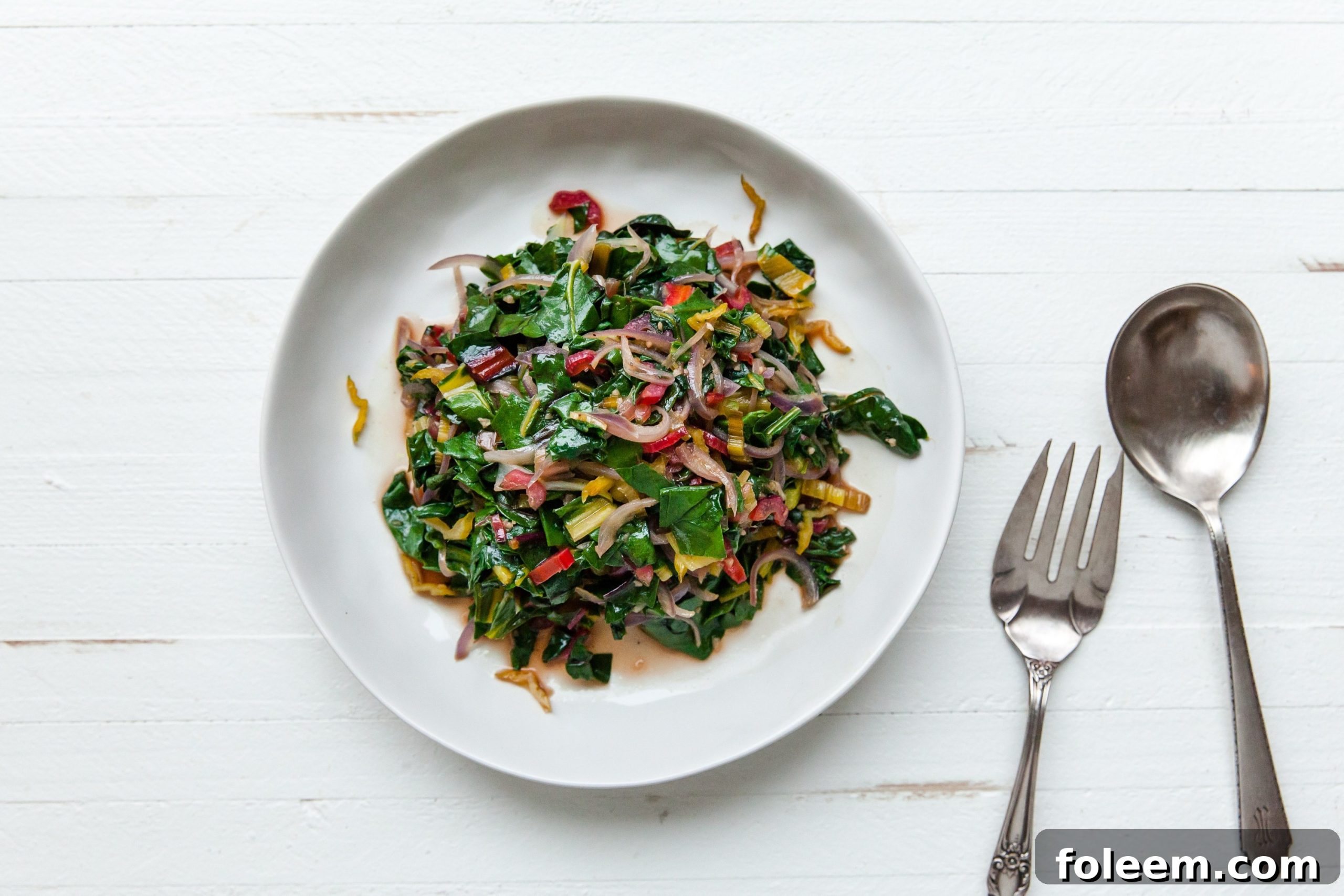
How to Use Sautéed Swiss Chard
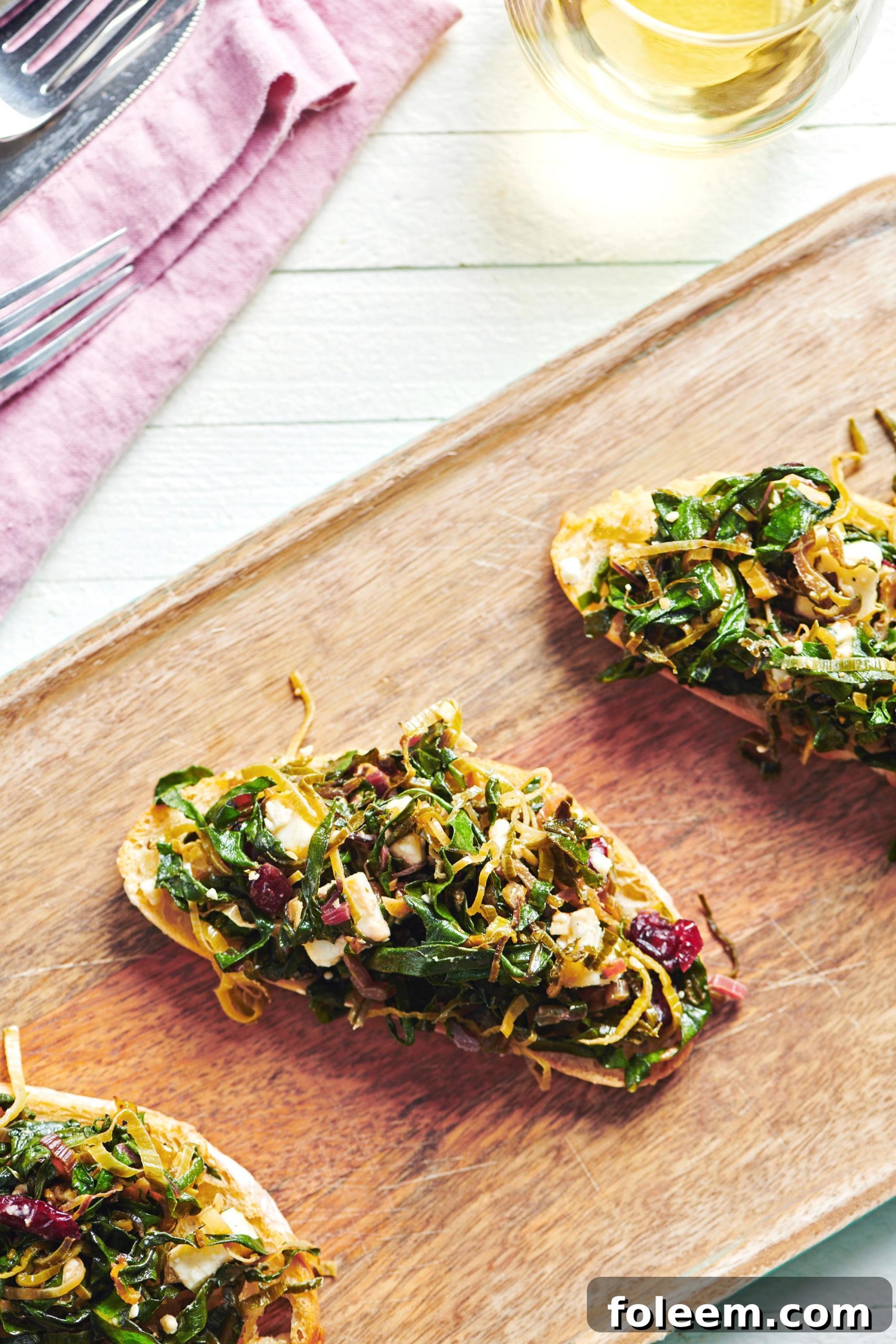
Sautéed chard works beautifully as a simple side dish, and it also enhances frittatas, pizzas, crostini, grain bowls, and more. Once you make a batch, you’ll find many ways to include it in meals—toss it with pasta, fold it into eggs, or pile it onto toasted bread with cheese.
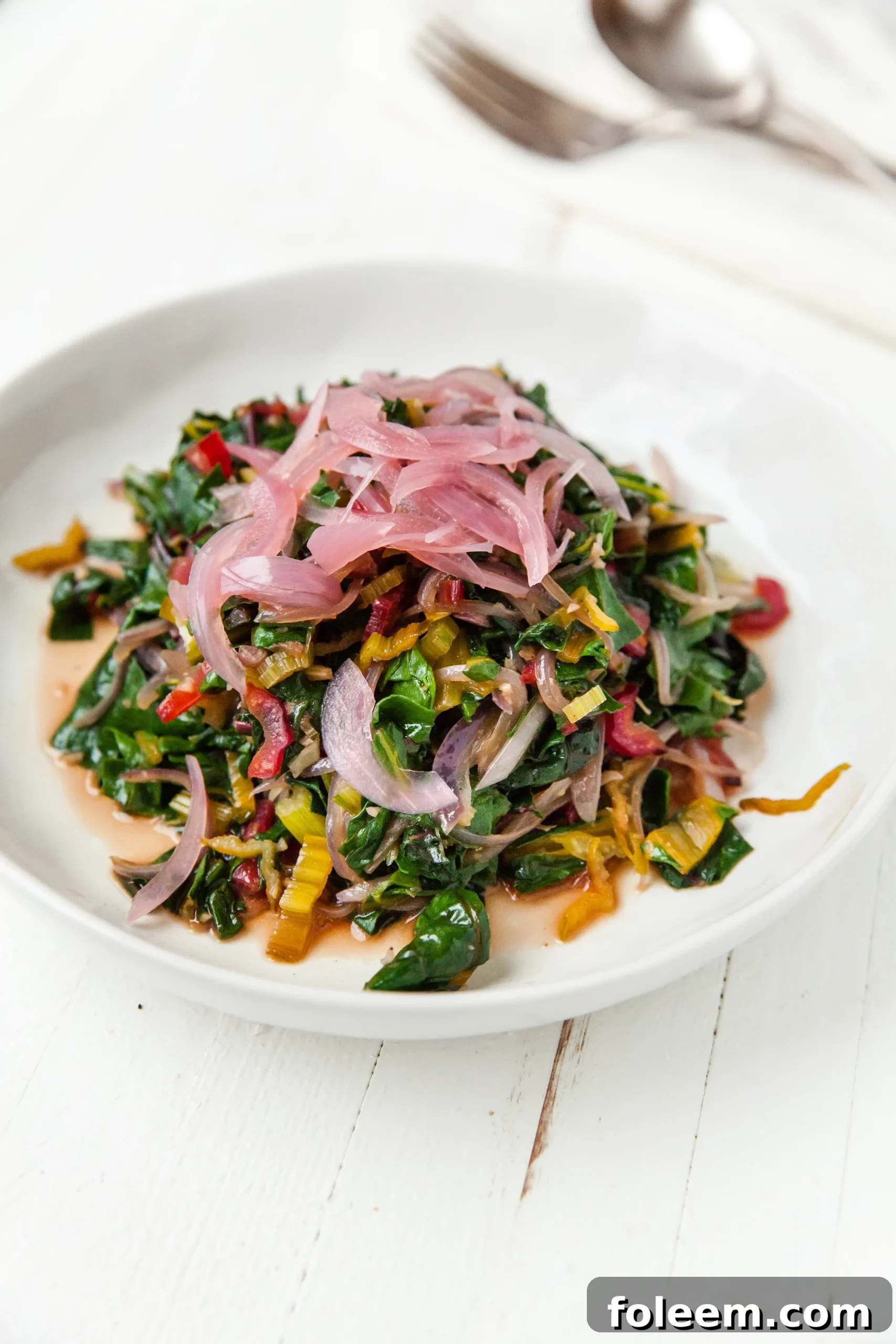
What to Serve With Sautéed Swiss Chard
- Grilled pork chops and peaches
- Pork carnitas
- Steak au poivre
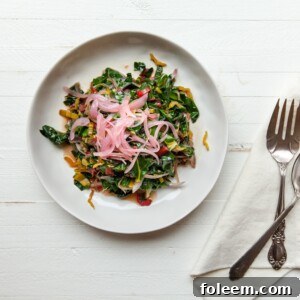
Sautéed Swiss Chard
Ingredients
- 1 large bunch Swiss chard
- 1 tablespoon olive oil
- 1 red onion, sliced
- 1 teaspoon minced garlic
- Kosher salt and ground black pepper, to taste
Instructions
- Chop the chard: slice the stems and roughly chop the leaves. Rinse well in a colander and shake off excess moisture.
- Heat a large skillet over medium-high heat. Add the olive oil and sauté the sliced onion for about 4 minutes. Add the garlic and cook for about 1 minute. Add the chard, season with salt and pepper, and sauté about 5 minutes until crisp-tender; cook longer if you prefer softer greens. Serve hot.
Notes
- Store chard wrapped in slightly damp paper towels inside an open plastic bag for up to three days.
- Slicing and sautéing the stems with the leaves gives a pleasant mix of textures: slightly crisp stems and tender leaves.