Master Celeriac: Simple Cooking Techniques and Flavorful Recipes
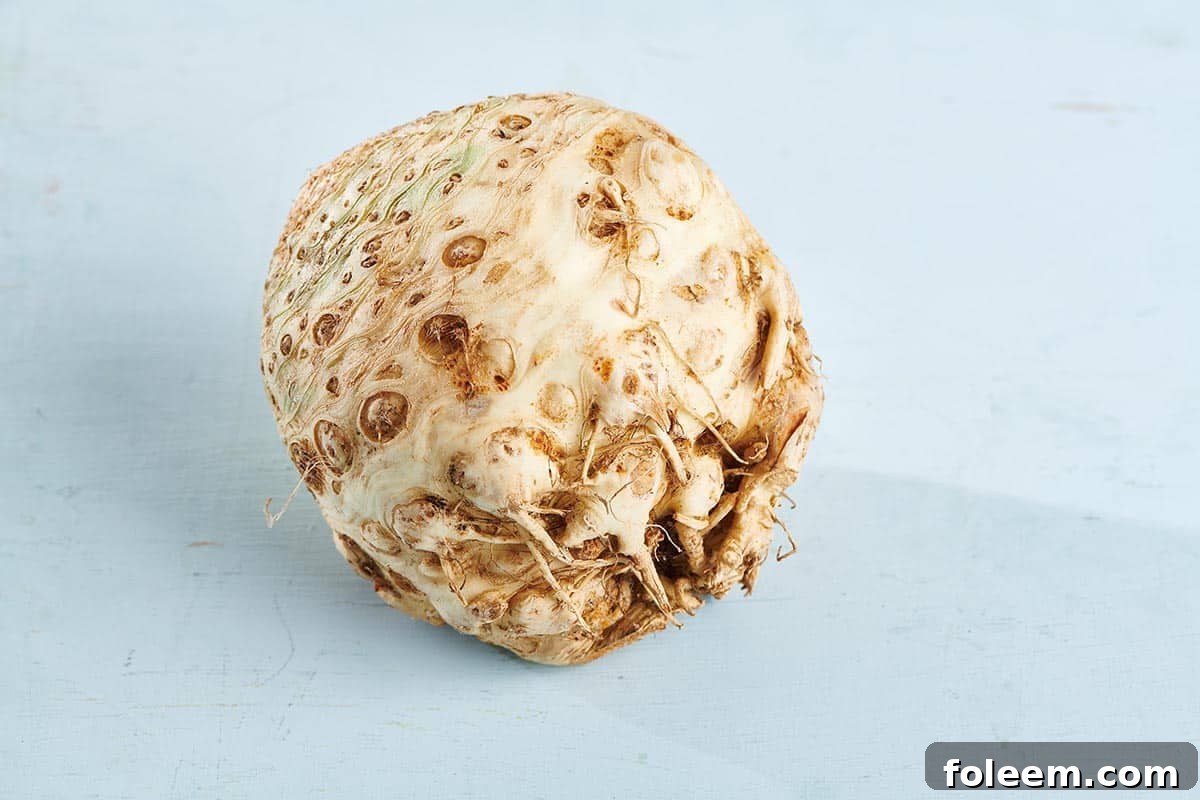
Celeriac is finally getting the attention it deserves. This knobby root, sometimes called celery root, looks like a miniature, cratered planet, but its flavor and versatility make it worth seeking out. Below you’ll find everything you need to know about identifying, buying, preparing, storing, and cooking celeriac, plus a simple French-style Carrot Celeriac Remoulade recipe that pairs beautifully with grilled salmon or as a bright side salad.
- What Is Celeriac?
- What Does Celeriac Look Like?
- What Does Celeriac Taste Like?
- Substitutes
- Where to Find Celeriac
- How to Prepare and Cook With Celeriac
- How to Store Celeriac
- FAQs
- Recipes With Celeriac
- Carrot Celeriac Remoulade Salad
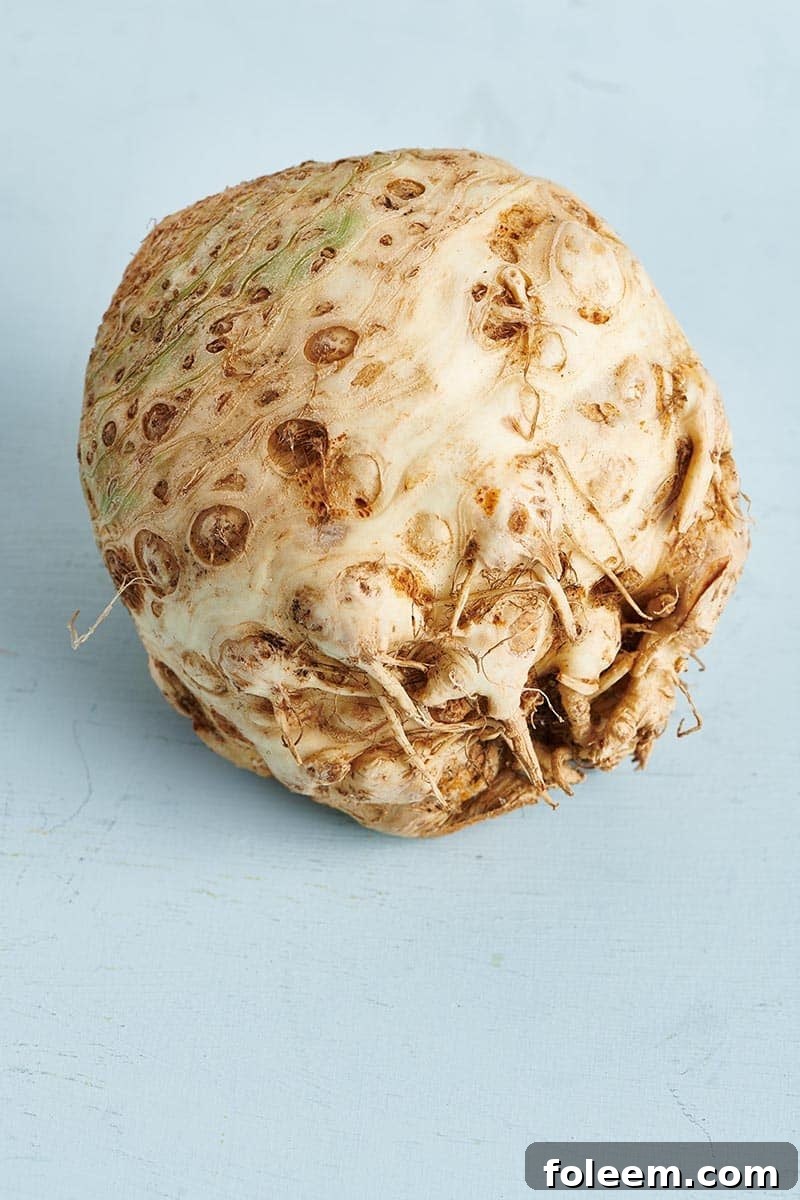
What Is Celeriac?
Celeriac is the swollen root of the celery plant, commonly called celery root. It can be eaten raw or cooked and has a relatively mild, celery-like flavor that blends well in many dishes. Because it’s more nutrient-dense than potatoes, celeriac is often used as a flavorful alternative in mashes, purees, soups, and gratins. It’s widely used in Northern and Eastern European cuisine but is grown in many regions, making it easy to find seasonally.
What Does Celeriac Look Like?
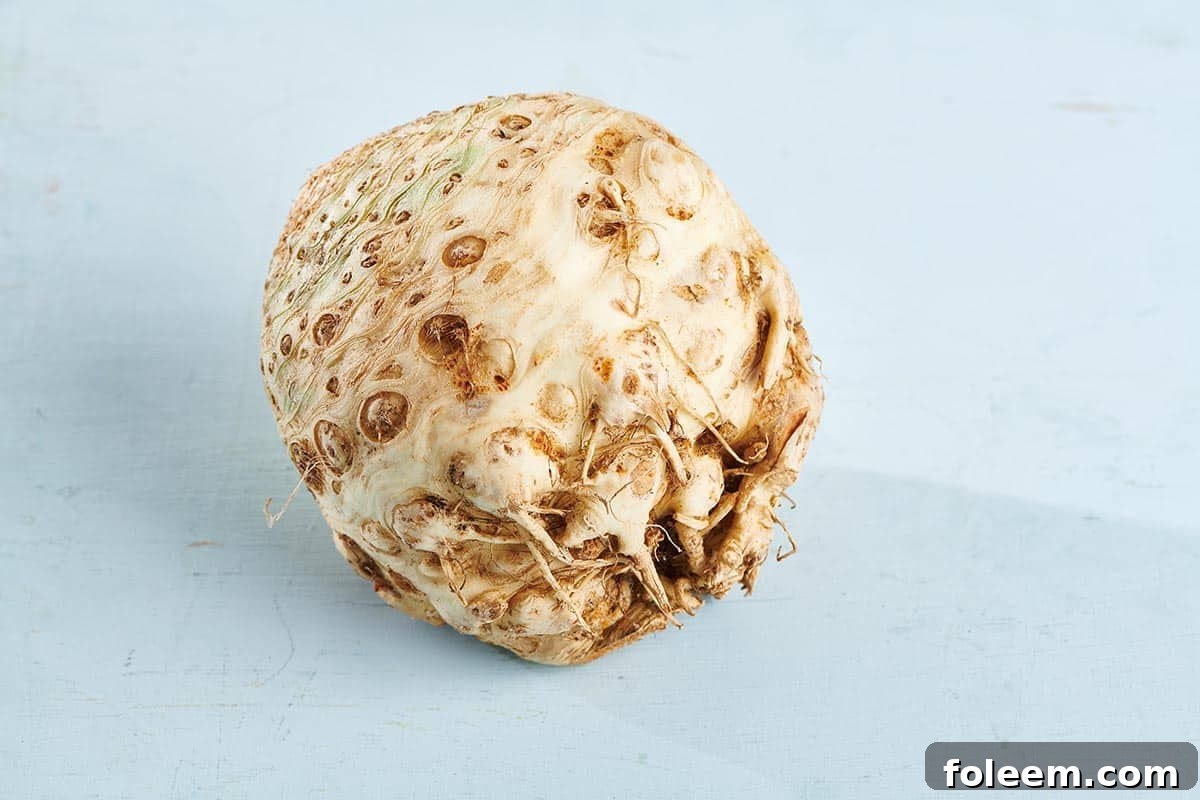
Celeriac is round and irregular, roughly the size of a grapefruit or softball and roughly the same weight. When sold with stalks attached it’s easy to recognize; alone at the market it appears as a brown, rugged bulb with small stringy roots. The exterior is often dirty from growing in the soil — that’s normal. Inside the flesh is pale, smooth, and uniform, similar in appearance to jicama.
Avoid bulbs that are soft, slimy, or spongy inside. If only part of the interior shows deterioration, you can trim off the bad sections and use the remaining firm flesh.
Celeriac is a root vegetable that deserves more love! Here’s how to buy, prepare, and cook celeriac (plus a recipe for Celeriac Remoulade).
What Does Celeriac Taste Like?
Celeriac has an earthy, nutty flavor with a subtle celery note. Some compare it to a milder turnip, but it tastes fresher and cleaner. Raw, it’s crisp and crunchy, making it ideal for salads and slaws. Cooked, the texture softens and the flavor sweetens, so celeriac makes an excellent mash or roasted side dish.
Substitutes
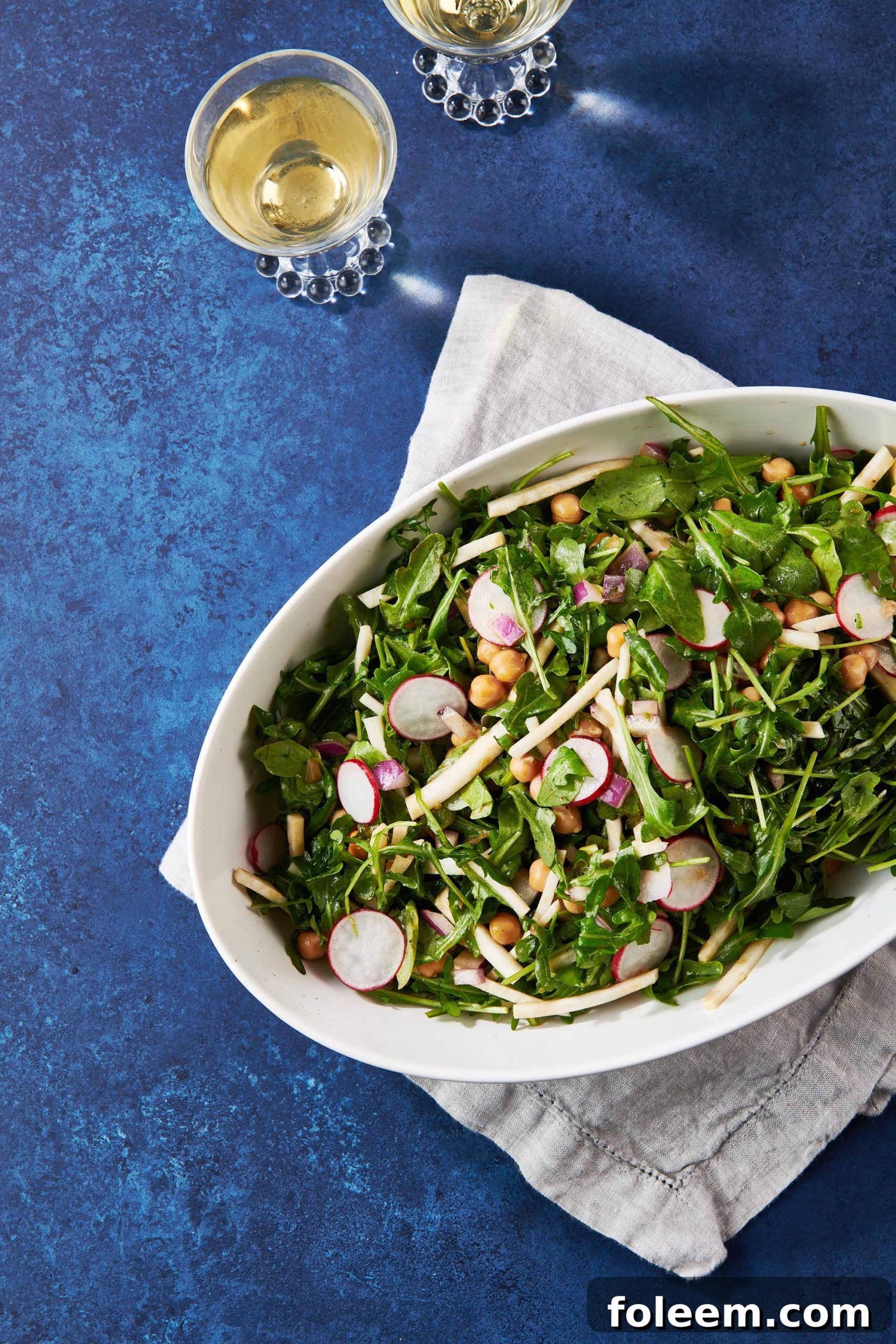
If you don’t have celeriac, potatoes can work in cooked dishes, though celeriac offers more nutrients. Parsley root is a closer flavor substitute, used in equal amounts but with a slightly stronger taste. For raw preparations, jicama or celery can replace celeriac for texture: jicama provides a similar crunch (with a fruitier flavor), while celery is suitable for cold dishes but won’t become tender like celeriac when cooked.
Where to Find Celeriac
Celeriac is grown widely, so look for it at farmers markets and in the produce section of supermarkets. Its peak season runs from fall through early spring, which is when it’s most plentiful and affordable. You’ll usually find it with other root vegetables, either attached to celery stalks or sold as individual bulbs.
How to Prepare and Cook With Celeriac
- Remove the ends: Trim off the top and bottom of the root with a sharp knife.
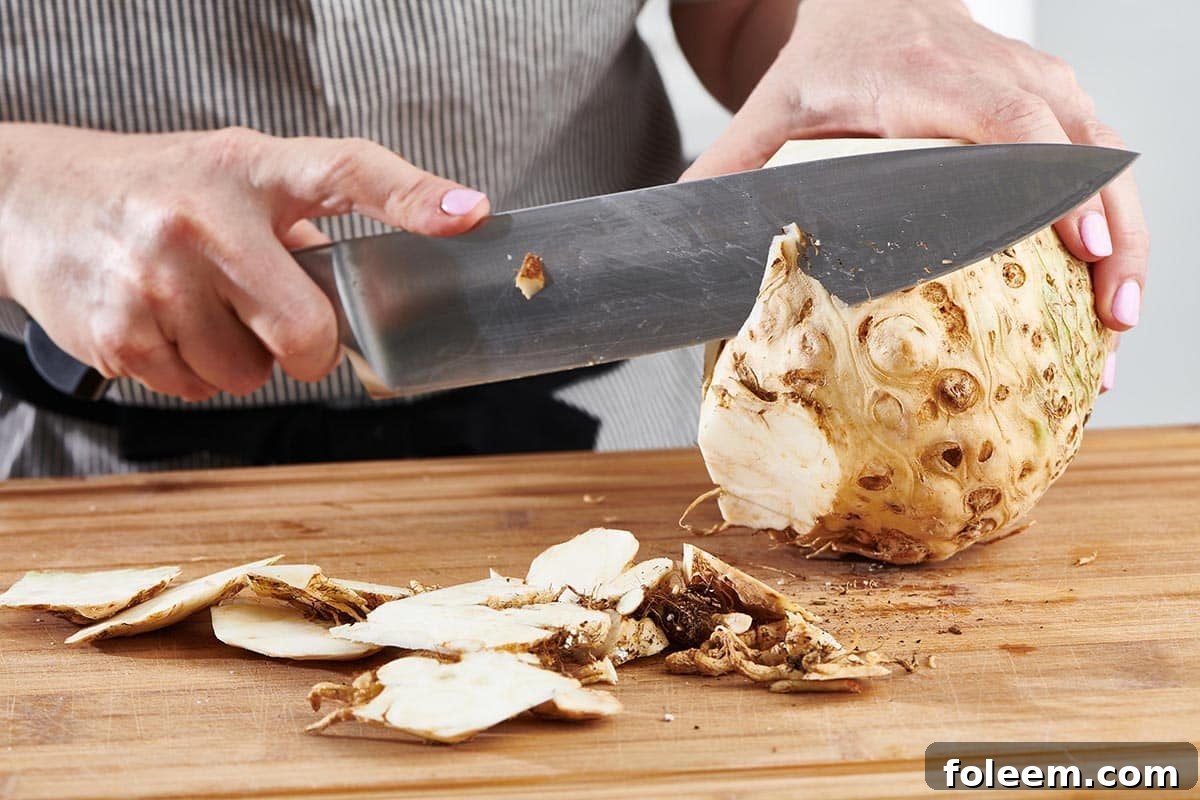
- Peel: Use a sturdy vegetable peeler or a paring knife to remove the tough, knobbly skin. A knife often gives better control over the irregular surface.
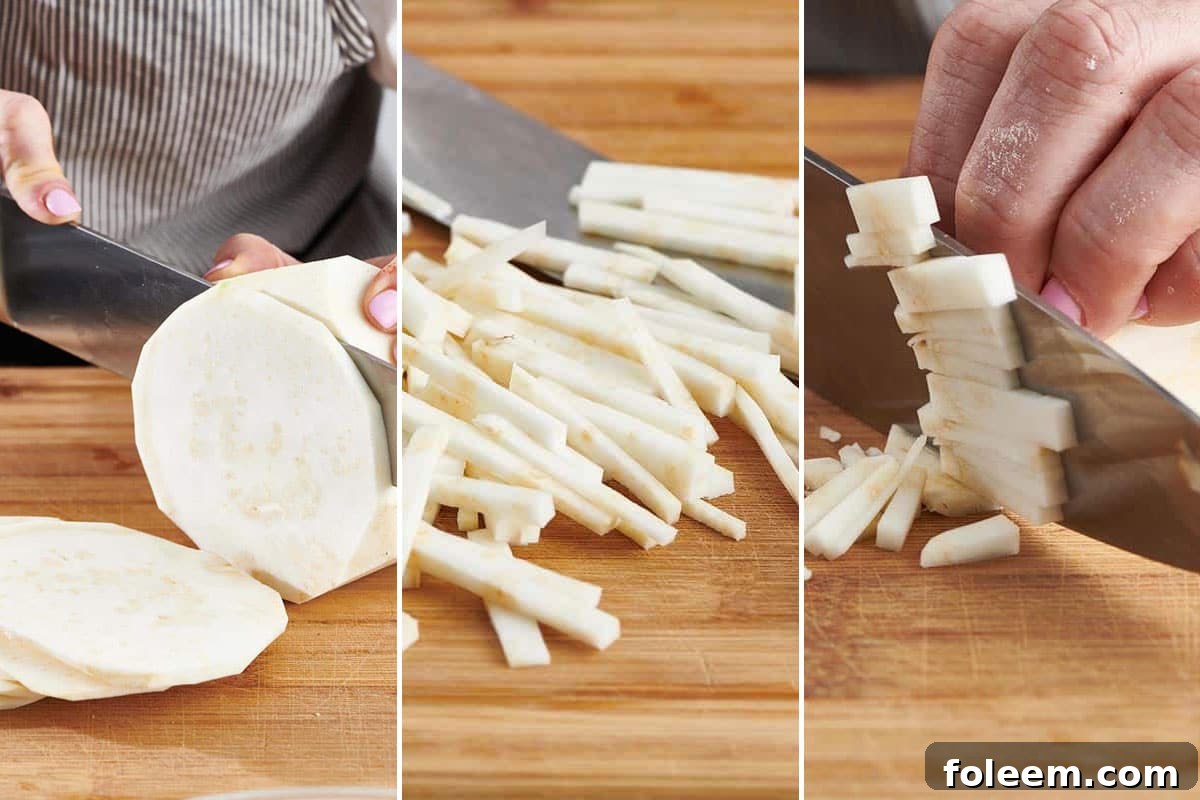
- Chop: Slice, dice, or julienne the peeled celeriac as your recipe requires.
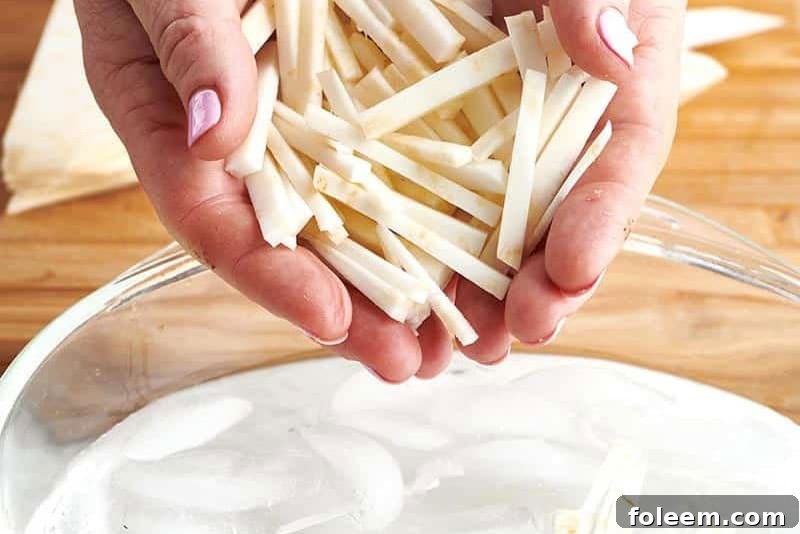
- Prevent browning: Celeriac oxidizes quickly once peeled. If you need to hold it, submerge the pieces in cold water with a few tablespoons of lemon juice to keep them pale.
How to Store Celeriac
Uncut celeriac will keep about three weeks in the refrigerator. Store it in the crisper drawer in a plastic bag or airtight container and don’t wash it before refrigerating. If you want to freeze celeriac, blanch slices in salted boiling water for two minutes, chill them in an ice bath, dry, then pack in freezer-safe bags with the air pressed out. Blanching helps preserve texture and color.
FAQs
Cut the celeriac into chunks, boil until tender, then drain and mash. Add salt, pepper, and any combination of milk, cream, butter, or olive oil until you reach your preferred creaminess. Fresh herbs like parsley or chives brighten the mash.
Peeling improves texture and appearance, but the outer rind is technically edible if cleaned well. Most recipes call for peeling because the skin is tough and knobbly.
Recipes With Celeriac
Cooking Tips
How to Cut a Tomato (Slices and Dice)
What to Cook
15 Easy Rotisserie Chicken Recipes
Cooking Tips
How to Use Vanilla Beans (And Why They’re Worth It)
Carrot Celeriac Remoulade Salad
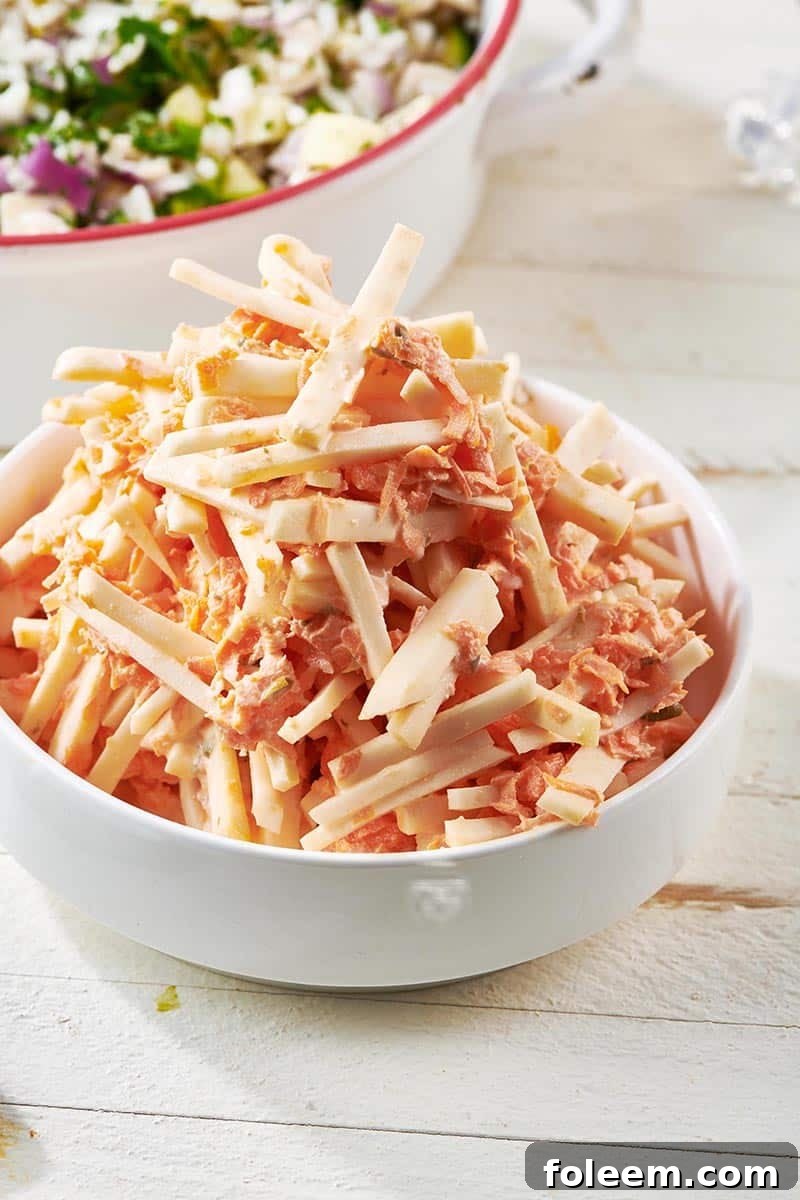
Remoulade is a classic French condiment based on mayonnaise and mustard, often accented with capers, herbs, and pickles. For this salad the dressing is lightened into a tangy remoulade-style vinaigrette with vinegar, a touch of hot sauce, and scallions. It dresses shredded celeriac and carrots for a crisp, refreshing salad that stands up to rich mains.
Ingredients
For the dressing:
- Mayonnaise — the creamy base.
- Dijon mustard — adds texture and a mild bite.
- Red wine vinegar — brightens and thins the dressing into a vinaigrette.
- Hot sauce — a little for heat, more to taste.
- Capers — drained and chopped for briny flavor.
- Flat-leaf parsley — finely chopped for freshness.
- Scallions — minced, white and green parts.
- Salt and pepper — to taste.
For the salad:
- Celeriac — peeled and cut into thin matchsticks.
- Carrots — peeled and shredded.
- Fresh lemon juice — a splash to brighten flavors and help prevent browning.

Carrot Celeriac Remoulade
Ingredients
For the Remoulade Dressing
- 1 cup mayonnaise
- 1 tablespoon coarse Dijon mustard
- 1 teaspoon red wine vinegar
- 1/4 teaspoon hot sauce (or more to taste)
- 2 teaspoons capers, drained and chopped
- 1/4 cup finely chopped flat-leaf parsley
- 1 scallion, trimmed and minced (white and green parts)
- Kosher salt and freshly ground black pepper, to taste
For the Salad
- 2 celeriac roots (about 1 pound each)
- 6 large carrots, peeled and shredded
- 1 tablespoon fresh lemon juice
Instructions
- Make the dressing: In a medium bowl, whisk together mayonnaise, Dijon, red wine vinegar, hot sauce, capers, parsley, scallion, salt, and pepper.
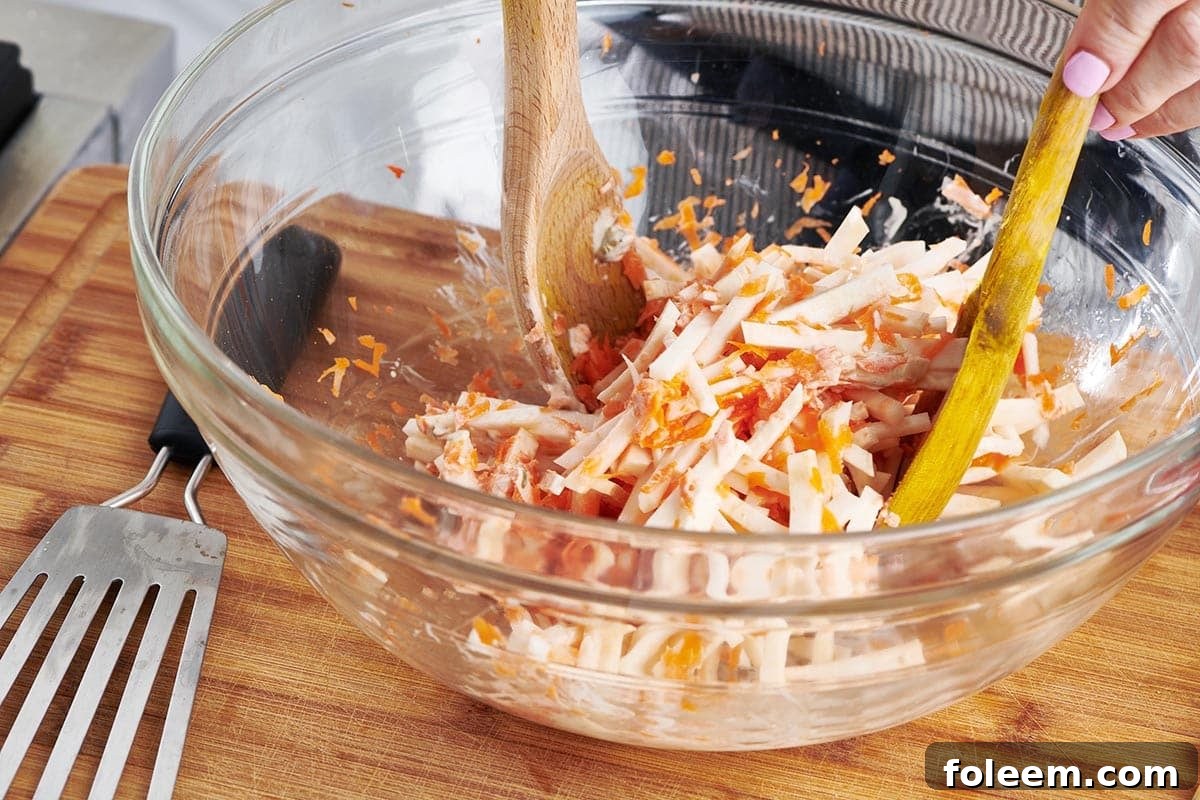
- Prepare the salad: Fill a large bowl with cold water. Peel the celeriac and cut it into thin matchsticks; add the cut celeriac to the cold water as you work to prevent discoloration. Toss with a little lemon juice if desired.
- Drain and dry the celeriac. In a large bowl, combine the celeriac and shredded carrots with the remoulade dressing. Toss until evenly coated. Taste and adjust seasoning, then serve chilled or at room temperature.