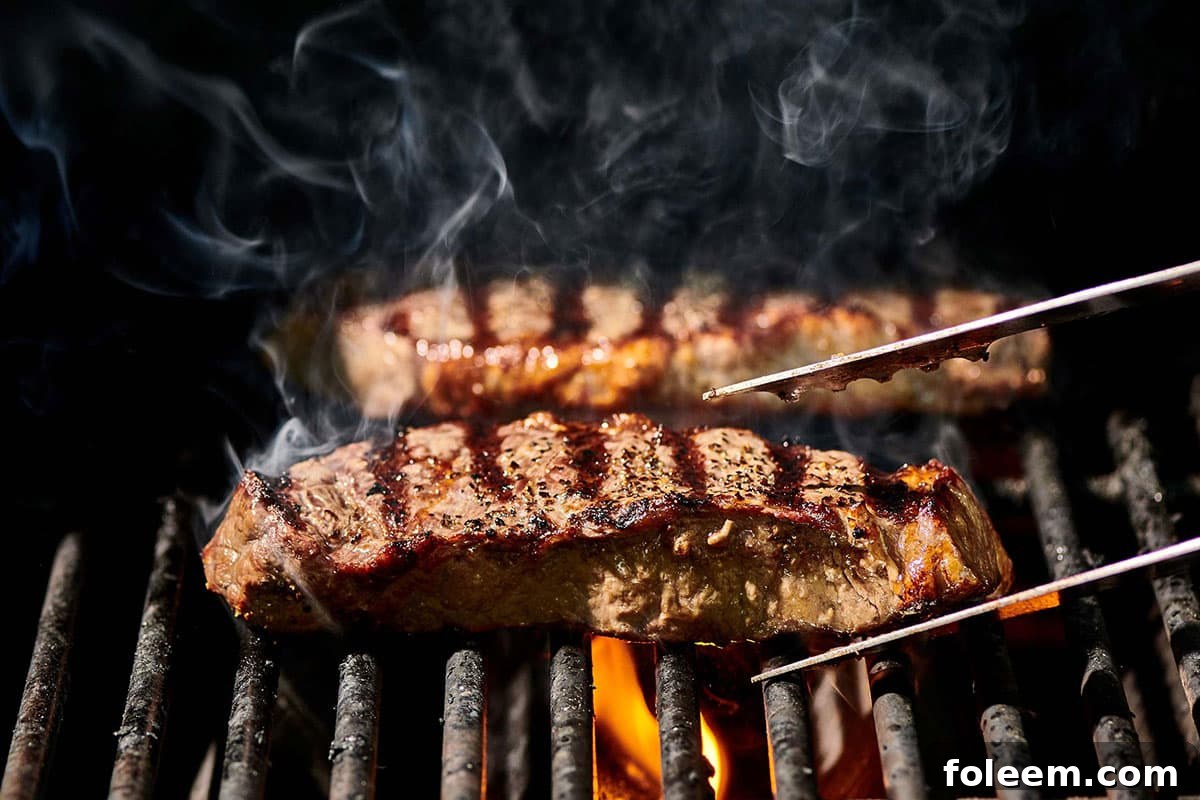
I recommend using an instant-read meat thermometer to ensure your steak reaches the exact temperature you want. If you don’t have one, you can still estimate doneness using touch — a useful skill once you practice it enough to avoid cutting into the steak and losing juices.
Testing doneness by touch takes some practice, but it will help you determine rare, medium, or well-done without piercing the meat. Below are reliable touch methods that many cooks use to judge steak doneness.
- How to Test Steaks for Doneness without an Internal Thermometer
- Remember Carryover Cooking!
- Must-Try Steak Recipes
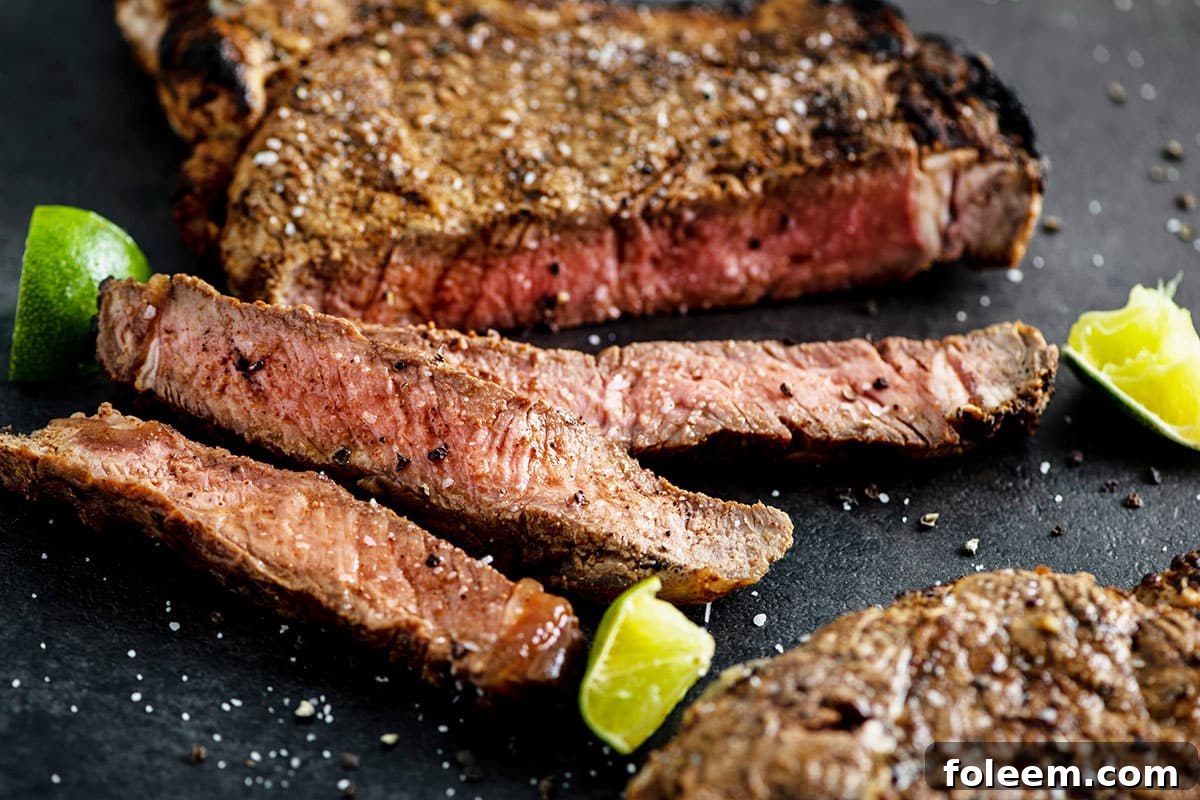
How to Test Steaks for Doneness without an Internal Thermometer
The touch test helps you estimate doneness, but it isn’t as precise as a thermometer — which is still the best tool for valuable cuts. Use these descriptions to get in the right range.
The Poke Test
- Rare (about 120–125°F): The center is red and just warm. When poked, the meat feels very soft and squishy.
- Medium-Rare (about 125–130°F): The center remains red but the steak is hot through. It yields to pressure without feeling squishy.
- Medium (about 130–135°F): The center is pink rather than red. The steak yields gently but is noticeably firmer than medium-rare.
- Medium-Well (about 135–145°F): The center may be slightly grayish with a hint of pink. The steak feels fairly firm when poked, though not rock hard.
- Well-Done (over 145°F): The meat is uniformly brownish-gray with no pink and feels very firm. Most steak enthusiasts avoid this level, but it’s the indicator for well-done.
The Hand Test
A common tactile method compares steak firmness to the flesh at the base of your thumb. With practice this “hand test” becomes a quick guide to doneness.
- Rare: Let one hand hang loose. With the other hand’s index finger, press the soft triangle of flesh between the thumb and index finger. It should feel very soft and spongy, similar to a rare steak.
- Medium-Rare: Spread your fingers and press the same spot. The flesh will feel firmer but still give slightly. That springy resistance matches medium-rare.
- Medium: Make a loose fist and press the spot. It will feel noticeably firmer and spring back quickly, resembling the firmness of a medium steak.
Remember Carryover Cooking!
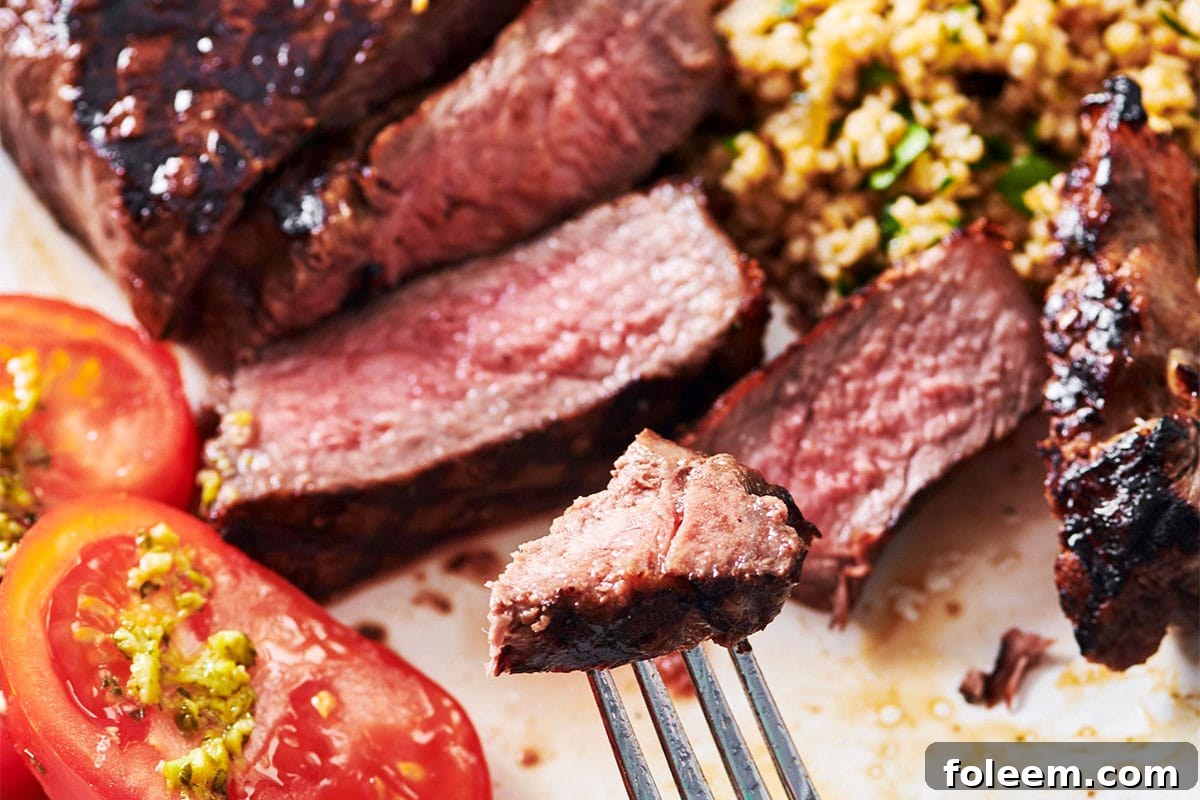
Always rest steaks for about 5 minutes before slicing. Carryover cooking raises the internal temperature a few degrees after the steak leaves the heat, so factor that into your desired final doneness.
Resting also lets the juices redistribute so they stay in the meat instead of spilling out on the cutting board, keeping your steak juicy rather than dry.