How to Prepare and Enjoy Cactus Pears (Prickly Pear)
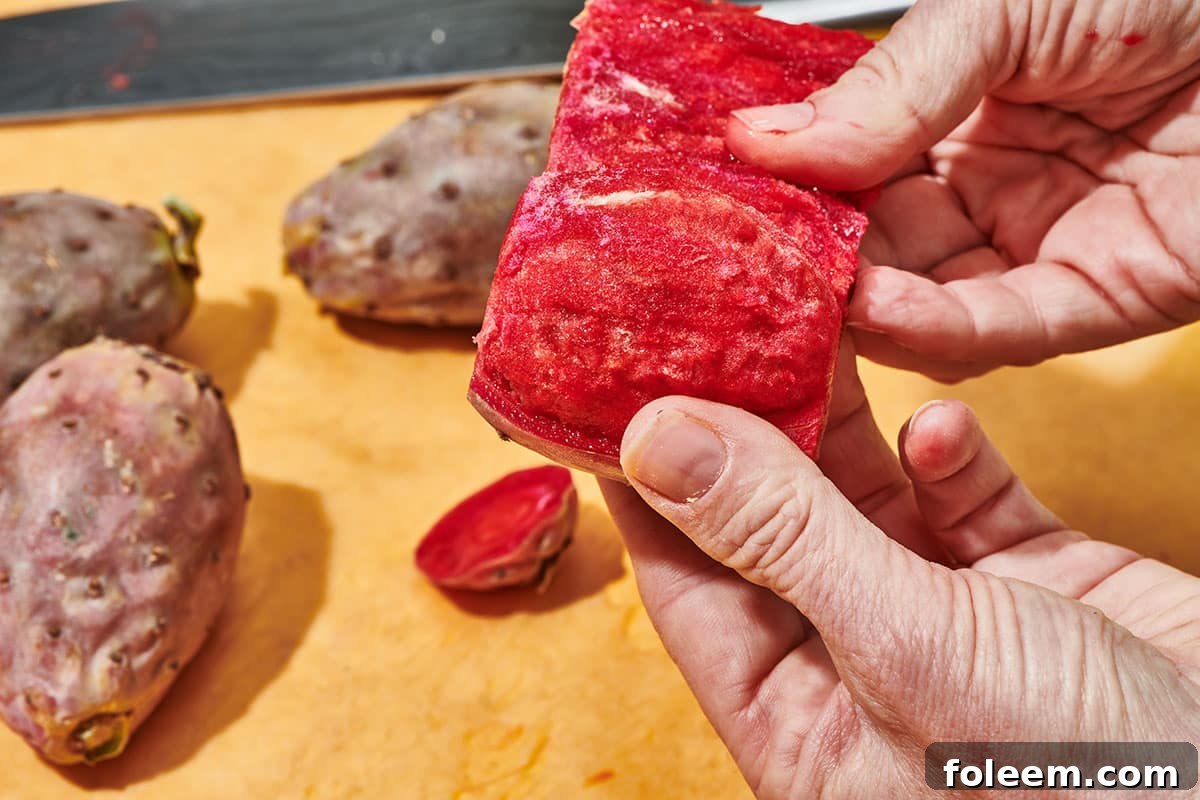
Cactus pears, also known as prickly pears, are a lesser-known tropical fruit that taste delightful and look striking. Their deep red flesh is ideal for purees and gives cocktails and mocktails a vivid crimson color. The fruit’s vibrant hue and sweet flavor make it a favorite for sherbets, jams, and refreshing drinks.
- What Are Cactus Pears?
- What Do Cactus Pears Look Like?
- What Do Cactus Pears Taste Like?
- Where to Buy Cactus Pears
- What Are the Benefits of Eating Cactus Pears?
- How To Cut Cactus Pears
- How to Use and Eat Cactus Pears
- Storing Cactus Pears
- Fun Facts About Cactus Pears
- Try Using Cactus Pear in These Recipes
How to Prepare and Eat Cactus Pears: Everything you need to know about storing and preparing deep red, exotic cactus pears.
What Are Cactus Pears?
Cactus pears, also called prickly pears or nopales, grow on low-lying cacti with flat, rounded pads. In Spanish the fruit is often called tuna because its deep red color resembles raw tuna. The most commonly cultivated variety is the Indian fig, the type you’ll typically find in markets. These fruit are used in jams, sorbets, drinks, and desserts for their lovely color and gentle sweetness.
Originally native to the Americas, cactus pears are now cultivated in warm, arid regions worldwide. They thrive in Southwestern climates such as parts of Mexico and the U.S. Southwest. Some species, like the Eastern prickly pear, are hardier and can withstand cooler winters.
What Do Cactus Pears Look Like?
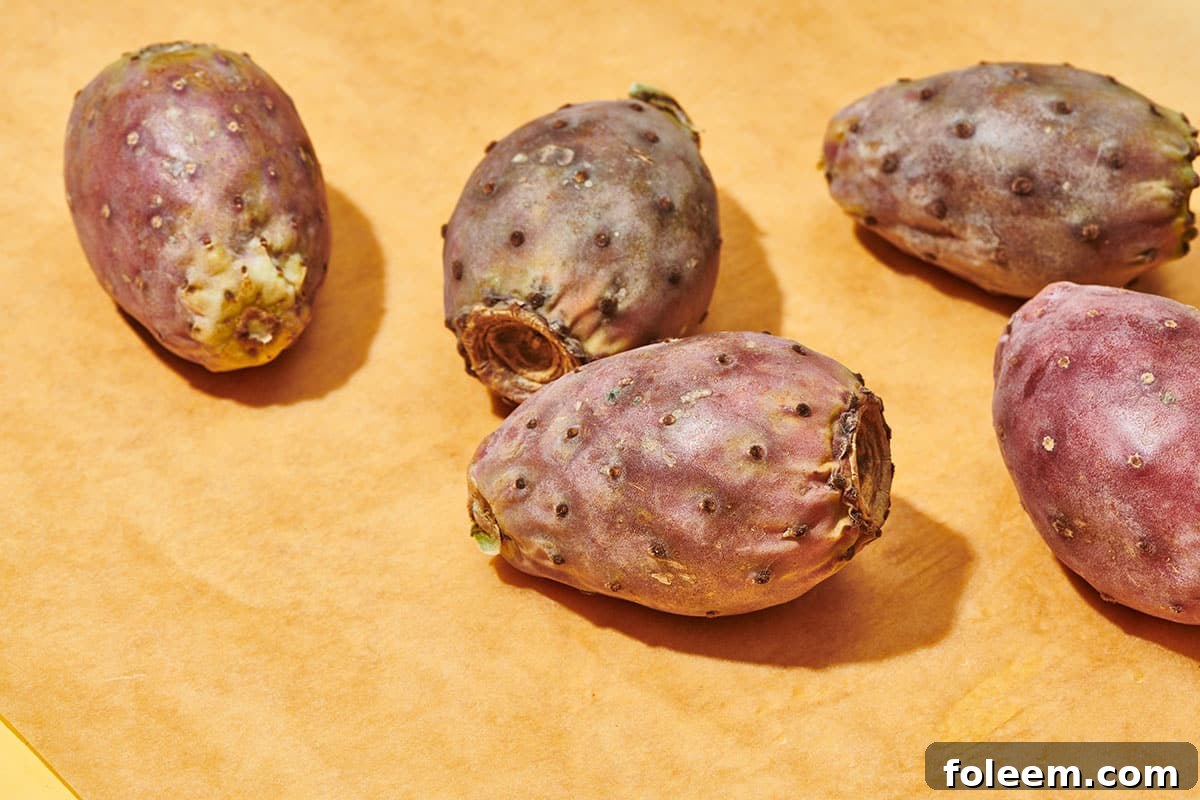
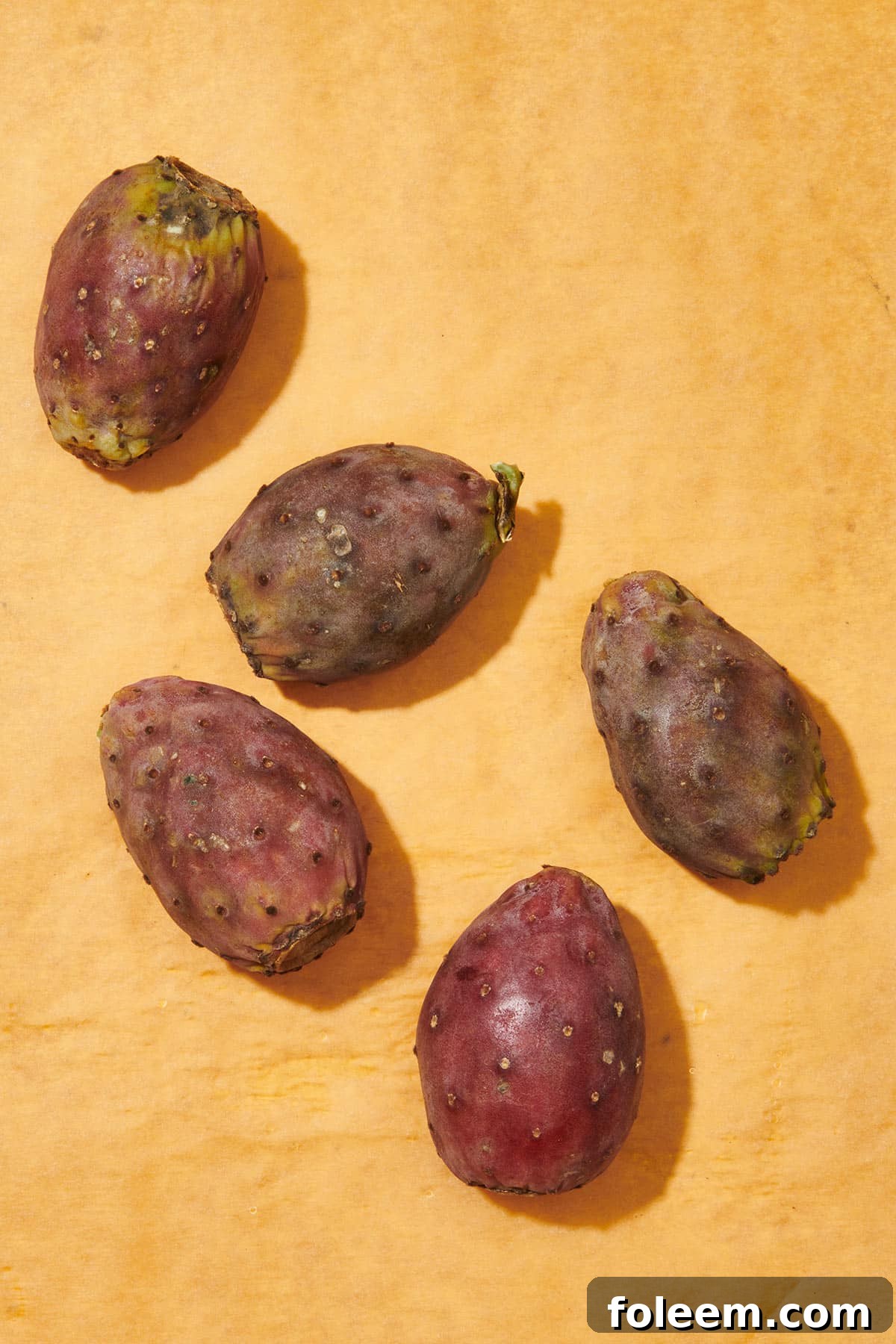
Cactus pears grow clustered near the top of cactus pads, oriented toward the sun. They begin pale green and develop a red hue as they ripen. Oval like a large egg, the fruit has a thorny exterior in the wild; commercially sold fruit usually have the larger spines removed for safety.
What Do Cactus Pears Taste Like?
Cactus pears have a mildly sweet, slightly citrusy flavor with melon-like notes. Once peeled, their texture is similar to kiwi, though the seeds are firmer and crunchier. The balance of mild sweetness and a subtle acidic edge makes them versatile in both sweet and savory applications.
Where to Buy Cactus Pears
Fresh cactus pears are typically in season from July through October, and they appear in well-stocked grocery stores and specialty produce markets during that period. Some stores also carry frozen cactus pear puree year-round, especially markets that stock a variety of Hispanic ingredients. In regions without local availability, frozen or pureed products are a reliable option.
What Are the Benefits of Eating Cactus Pears?
Cactus pears are rich in antioxidants, which help fight inflammation. They also provide vitamin C and dietary fiber and are low in calories—about 40 calories per fruit—making them a nutritious, low-calorie snack or ingredient.
How To Cut Cactus Pears
Cactus pears sold in stores usually have their outer spines removed. To access the flesh:
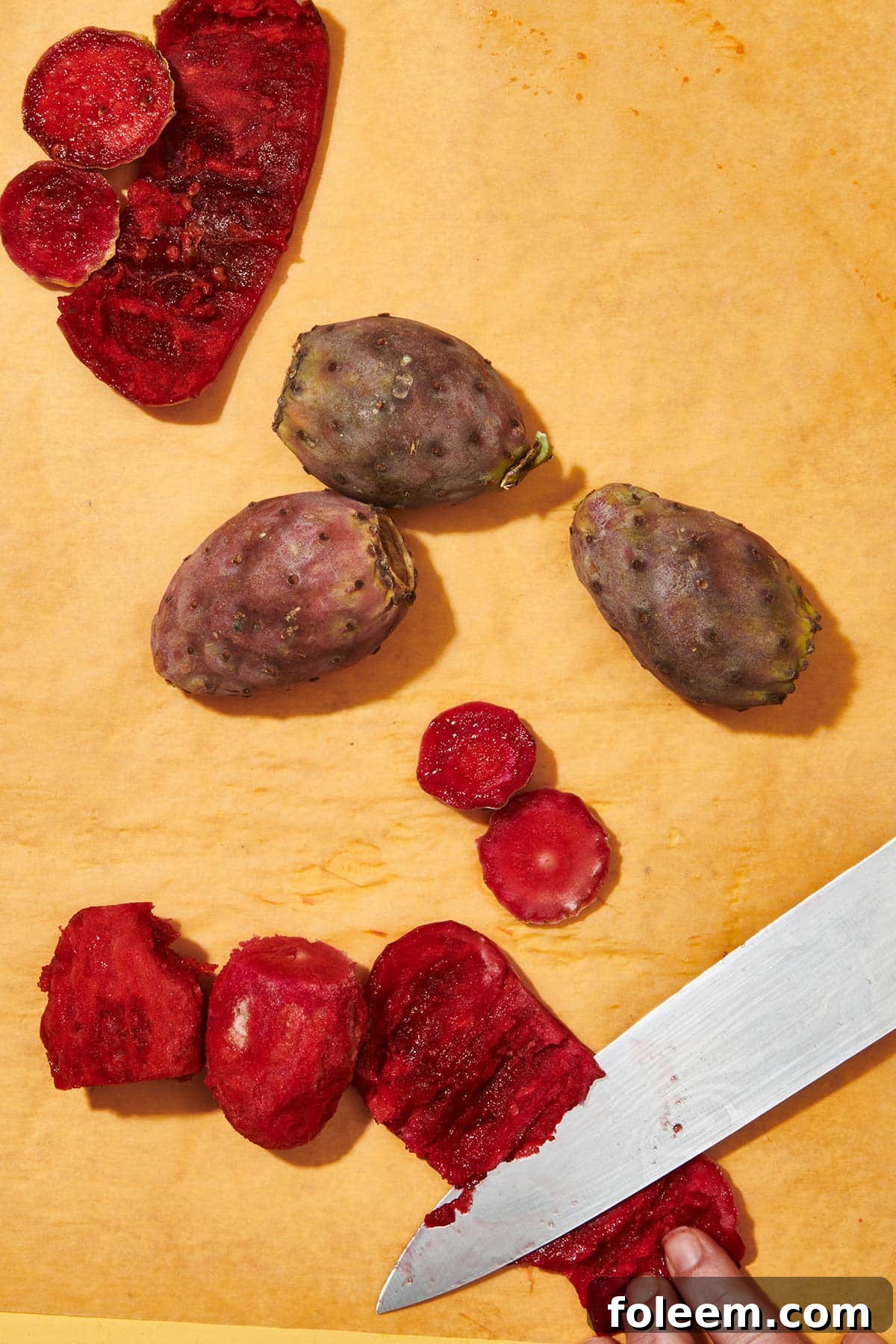
- Use a sharp knife to slice off the top and bottom of the fruit. For easier handling, stand the fruit on one of the cut ends and make a lengthwise cut through the skin on one side.
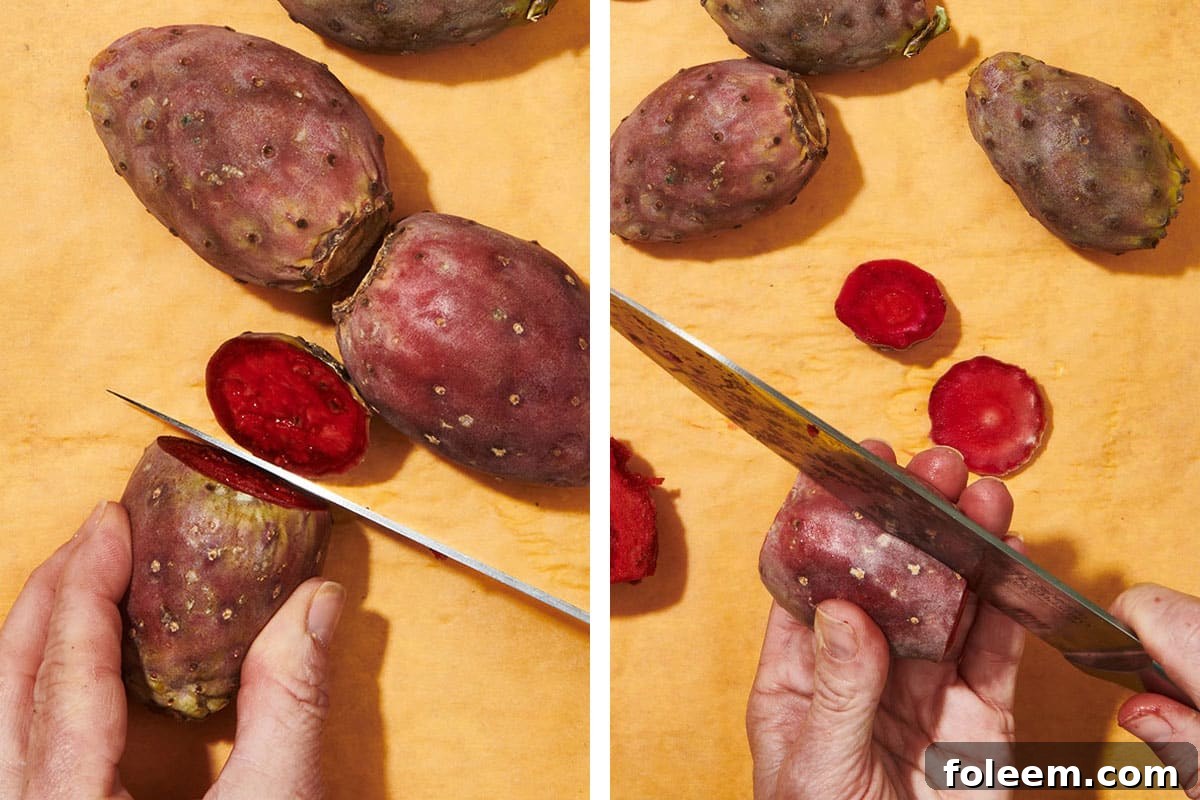
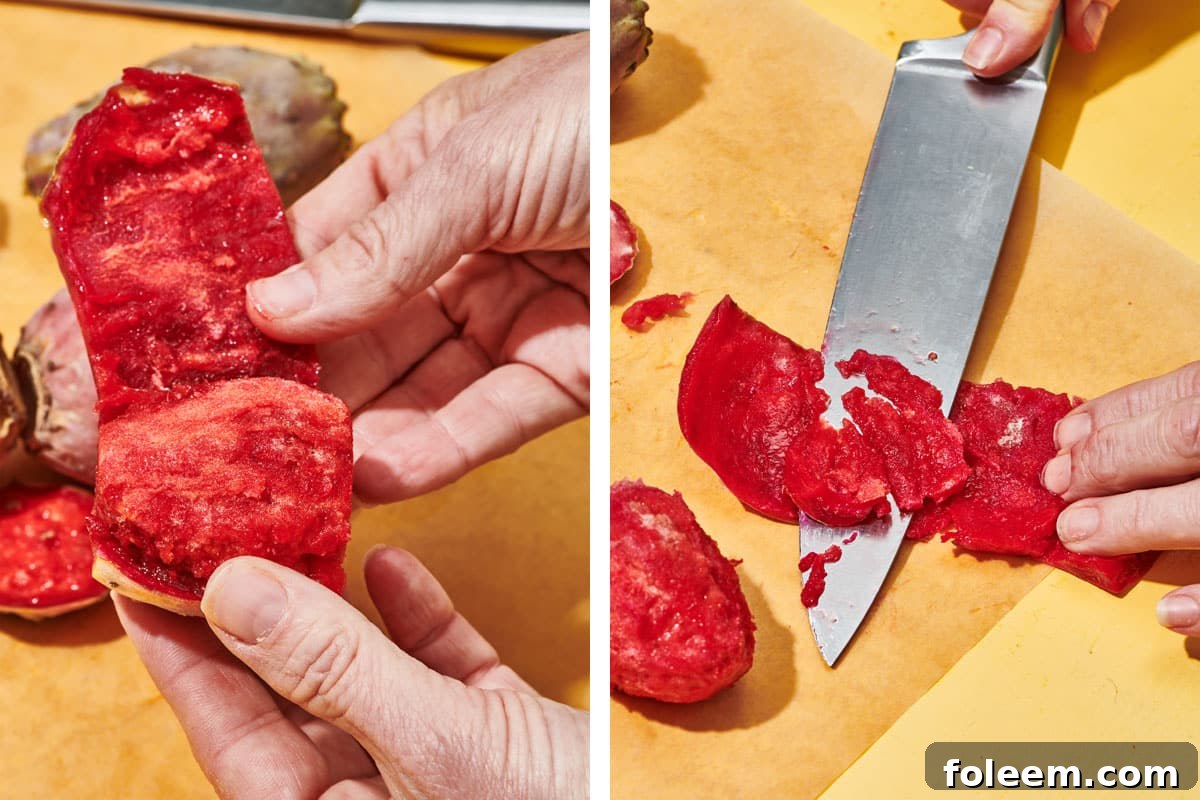
- The thick skin should peel away in a single piece. Discard the skin. If you plan to puree the fruit, scrape the pulpy flesh that clings to the skin to minimize waste.
How to Use and Eat Cactus Pears
After peeling, you’ll find the edible flesh is smaller than the whole fruit suggests. The seeds are edible but quite crunchy; many people juice and strain the fruit to remove seeds, especially when using the juice in cocktails or smooth purées. Straining reduces yield but yields a smoother texture.
Cactus pear flesh can be eaten raw, added to smoothies, or incorporated into jams, jellies, and sorbets. In Mexican cuisine, it’s used to make queso de tuna, a traditional fruit paste served as a dessert, and it’s the base for fermented beverages such as colonche and chiquito, which highlight the fruit’s distinct flavor and color.
Storing Cactus Pears
Unpeeled cactus pears can sit at room temperature for up to a week. Once they begin to soften, store them in the refrigerator for another four to five days. Peeled or sliced fruit should be kept in an airtight container in the fridge for a few days. Strained puree can be refrigerated briefly or frozen for up to two months.
Fun Facts About Cactus Pears
Cactus pears have earned colorful nicknames like “the devil’s tongue” because of their red skin and spines. Other interesting notes:
- The prickly pear is the state cactus of Texas.
- Introduced to places like Australia and southern Africa in the late 18th century, some prickly pear species became invasive and difficult to control.
- Prickly pears are mentioned in the song “The Bare Necessities” from the 1967 Disney film The Jungle Book: “When you pick a paw-paw, or a prickly pear, and you prick a raw paw, next time beware!”
Try Using Cactus Pear in These Recipes
- Frozen Prickly Pear Margaritas
- Fruit Salad
- Red Sangria
- Pisco Sour
- Watermelon Strawberry Smoothie
- Graze Board