Kiwano Horned Melons
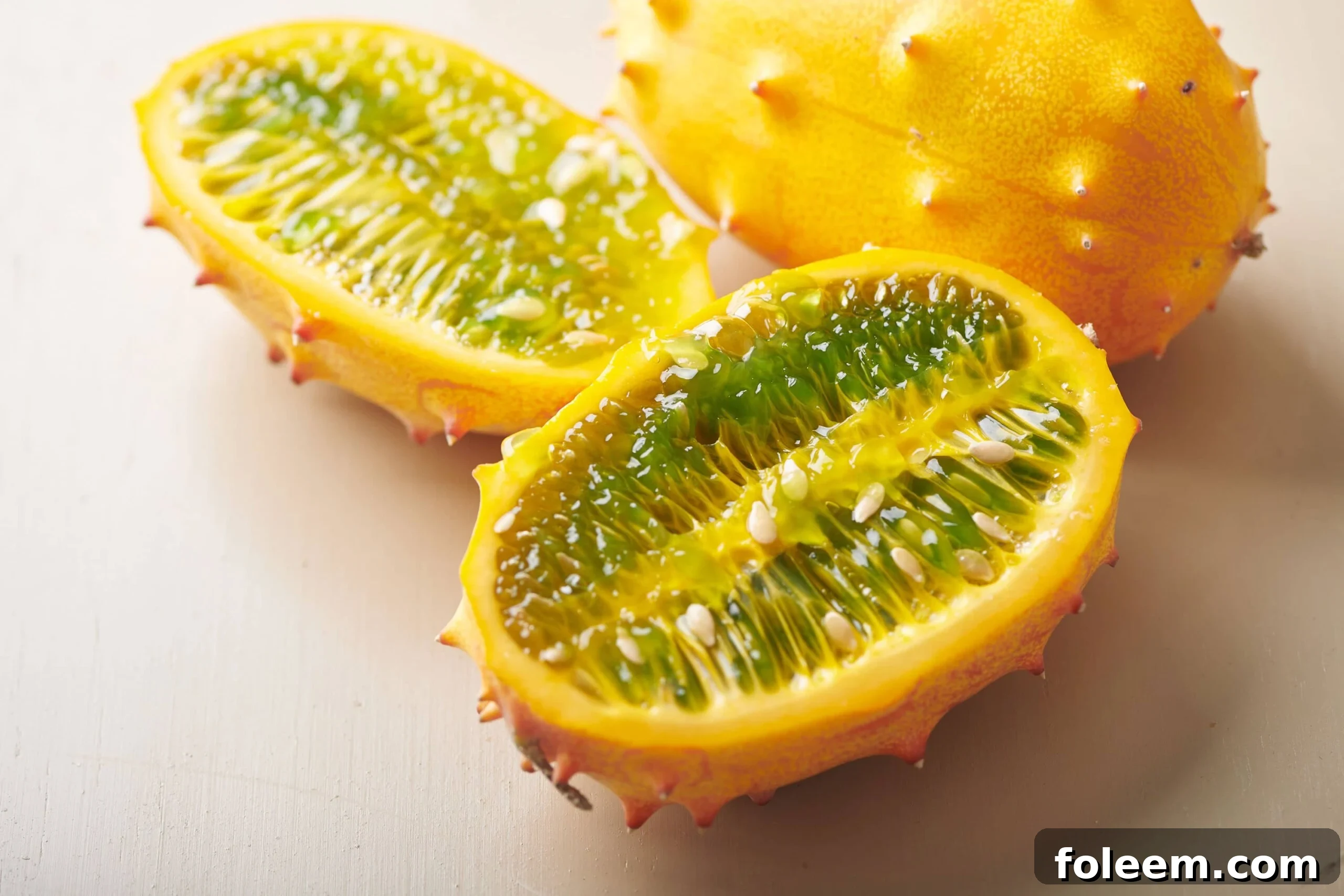
Kiwano, commonly called horned melon, is a strikingly unusual fruit. Both its exterior and interior set it apart from more familiar fruits, offering a memorable look and a refreshing, mildly tart flavor.
What Do Kiwano Look Like?
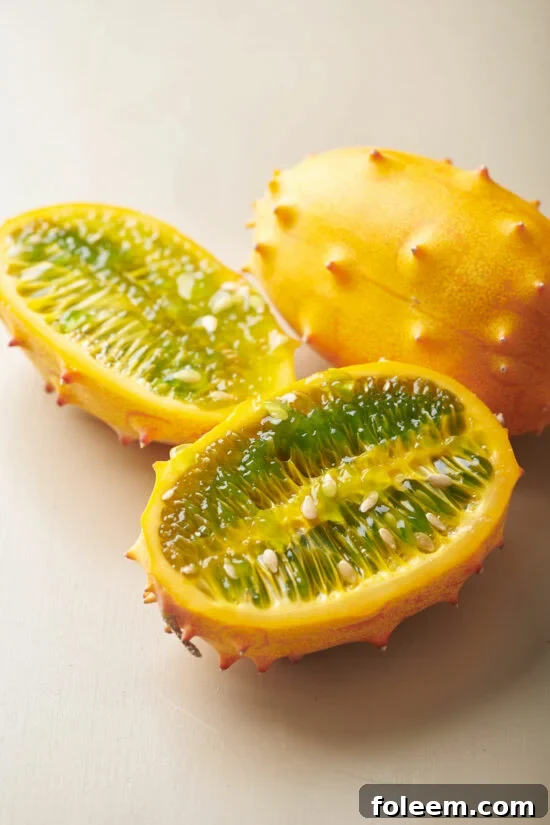
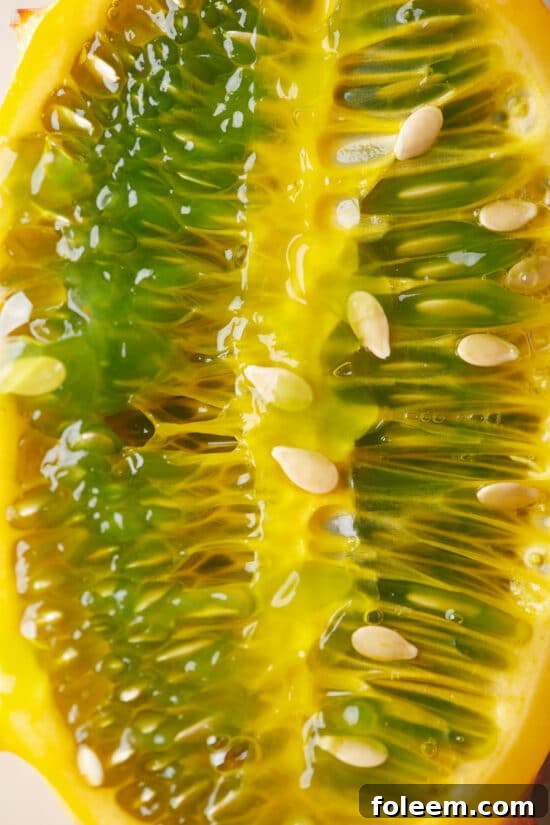
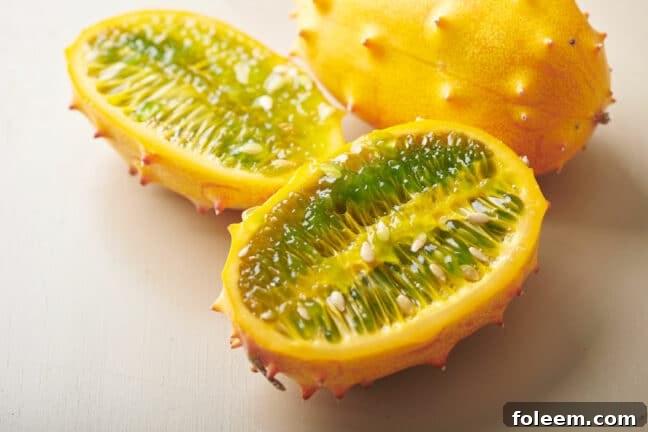
Kiwano are oval fruits covered in pronounced, horn-like spikes. Their skin turns yellow to orange as they ripen, and they typically measure around four to five inches long. The interior is filled with many seeds surrounded by a bright emerald-green, jelly-like pulp that has a high moisture content.
Where Are Kiwanos From?
Kiwanos are native to parts of Africa, where they have adapted to dry, sunny conditions. Today they are also grown and enjoyed in countries such as New Zealand and Australia, and in some regions of the United States.
How to Choose Kiwano
When selecting kiwano, look for fruit that feels firm with a slight give. A deeper orange color generally indicates better flavor. Check that most of the horns are intact and avoid any fruit with soft spots, cuts, or bruises. Handle with care—the horns can be surprisingly sharp.
How to Ripen Kiwanos
Ripen kiwano at room temperature. They are ready to eat when the skin turns orange. Avoid refrigerating uncut fruit, as cold temperatures can negatively affect the texture.
How to Prepare Kiwanos
To prepare, slice the fruit lengthwise and scoop out the green jelly-like pulp and seeds with a spoon. Avoid the firmer central core if present. The pulp and seeds can be eaten as-is—many people swallow the seeds—or you can strain the pulp to remove seeds and use the juice in beverages and desserts. Kiwanos work well tossed into fruit salads, blended into drinks, or served fresh in small bowls.
The skin is technically edible but is leathery and covered in sharp horns, so most people discard it.
What is the Texture of Kiwano?
The interior texture is loose and jelly-like. Seeds are firm and somewhat crunchy, similar to passion fruit seeds. Some people chew the seeds; others prefer to swallow them or strain them out after extracting the pulp. The contrast between soft pulp and crunchy seeds is a key part of the eating experience.
What Do Kiwanos Taste Like?
Kiwano flavor is subtle and refreshing, with a mild tartness. Tasting notes often include hints of kiwi, cucumber, passionfruit, banana, and lime. Flavor intensity shifts as the fruit ripens, and both slightly underripe and fully ripe fruit are eaten depending on personal preference.
What Are Some Other Names for Kiwanos?
Kiwanos are known by several names, including horned melon, spiked melon, African horned cucumber, jelly melon, and sometimes hedged gourd or melano. These names reflect the fruit’s appearance and origins.
Are Kiwanos Nutritious?
Kiwanos provide useful amounts of vitamins such as A and C, along with minerals like iron and calcium. They can be a colorful, hydrating addition to a balanced diet.
How to Eat Other Unusual Fruits:
- How to Cook Jackfruit
- How to Cook Persimmons
- How to Prepare and Eat Dragon Fruit