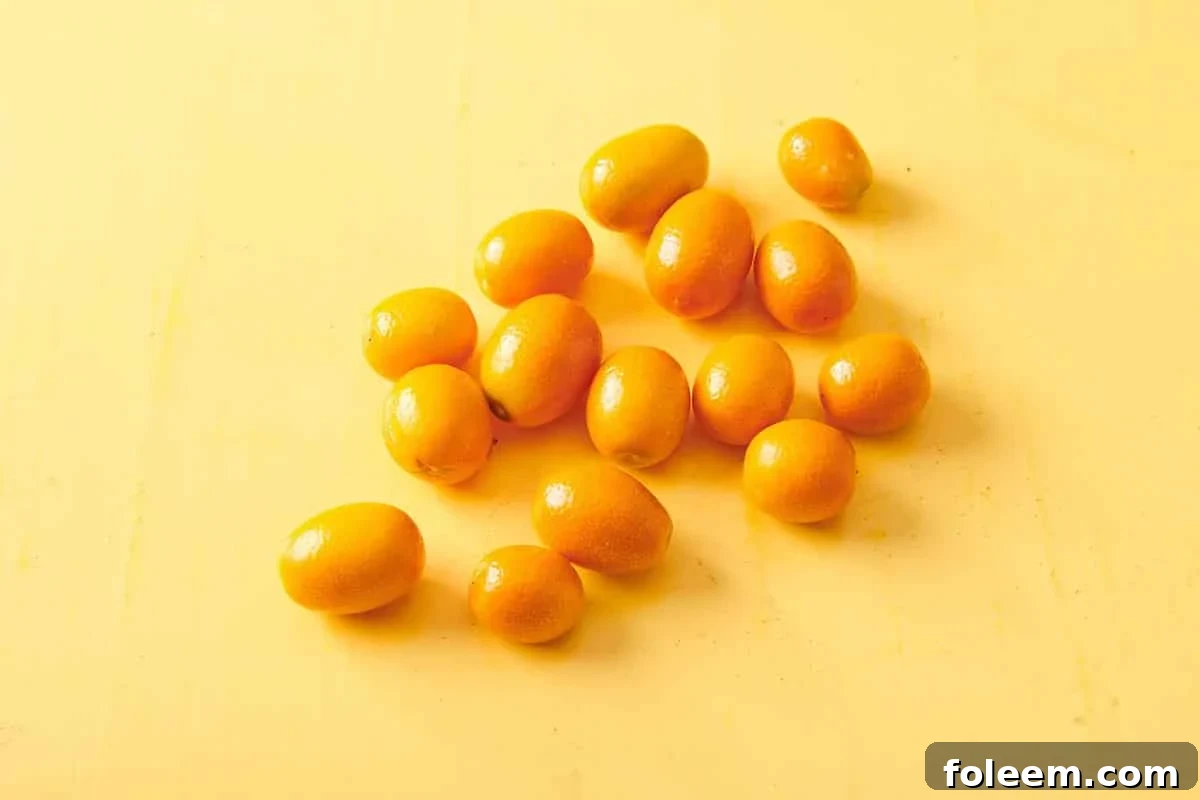
If you’ve ever stood in the produce aisle wondering how to eat a kumquat, you’re not alone. These small citrus fruits are typically eaten whole—the sweet peel balanced by a tart center. With thin, flavorful skin and a compact, zesty interior, kumquats are versatile in both sweet and savory dishes. This guide explains how to choose, prepare, and enjoy kumquats, whether you’re snacking on them raw or adding them to salads, sauces, or cocktails.
- What Are Kumquats?
- Bring Out the Kumquat’s Sweetness
- How to Eat a Kumquat
- What Goes Well With Kumquats
- More Fruit Cooking Tips

What Are Kumquats?
Kumquats belong to the citrus family and have a bright, citrus aroma with a distinctive sweet-and-tart flavor. They are usually a vivid orange and have skin that looks similar in texture to larger oranges but are much smaller and typically oval—about the size and shape of a large olive.
Native to Southeast Asia, kumquats were introduced to Europe in the 1800s and later to the United States, where they are now grown in warm regions like Florida and California. The name “kumquat” comes from Cantonese and means “golden orange” or “golden tangerine.” In the U.S., Nagami and Meiwa are the most common varieties, with Nagami being the more tart and widely available type.
The peak season for kumquats runs from November through March, similar to many other citrus fruits.
Kumquats are nutritious: they provide vitamin C and antioxidants, are low in calories, fat-free, and contain a good amount of fiber.
Kumquats deliver a burst of flavor—tangy and sour with a touch of sweetness. Some varieties are noticeably more tart than others.
Bring Out the Kumquat’s Sweetness

Before using kumquats, roll them gently under your palm on the counter. This releases juices and softens the tart edge of the fruit, improving the overall flavor with a simple, quick step.
How to Eat a Kumquat
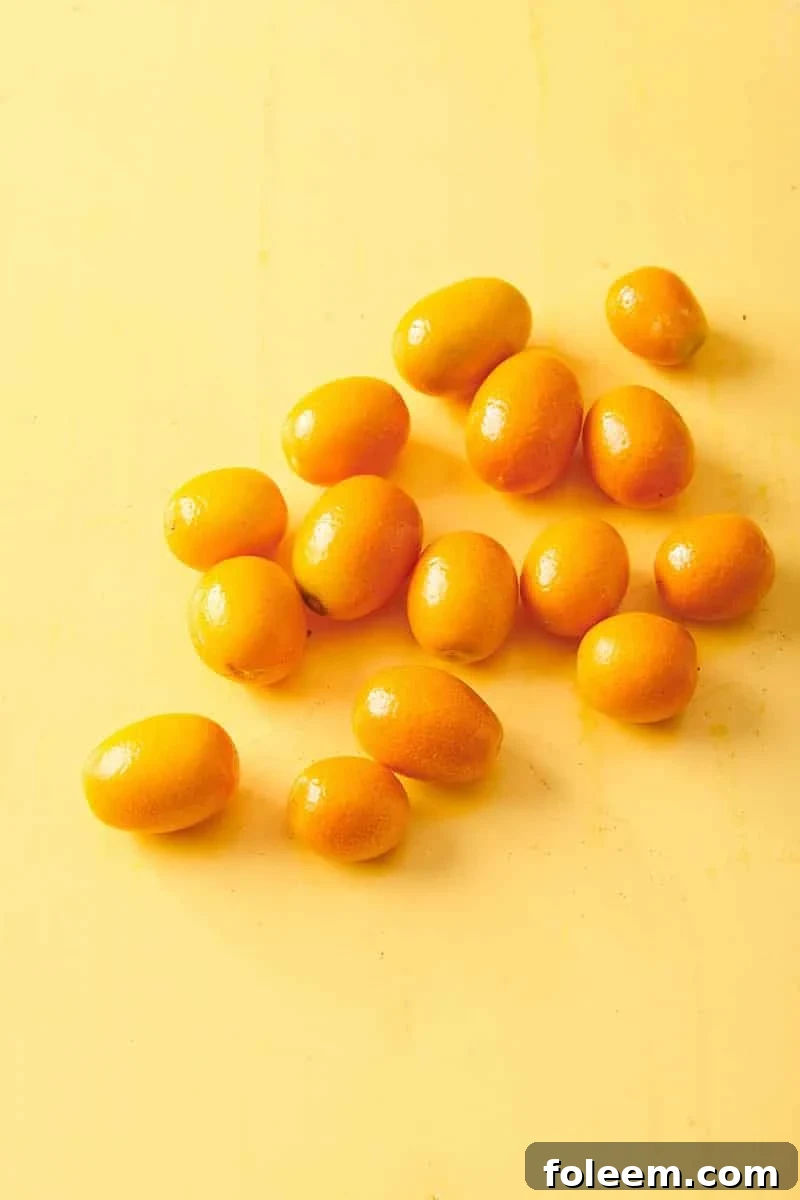
The simplest way to enjoy a kumquat is to bite into it whole: the peel is sweet and the flesh inside is tart, creating a pleasant contrast. If you prefer, you can peel them or slice them thinly for salads, salsas, or garnishes.
Kumquats work well in fruit salads and cocktails—muddled kumquats add bright citrus notes to drinks. They are commonly made into marmalades, preserved as candied fruit, or pickled. Because kumquats are small, juicing them can be time-consuming; when you juice them, consider using the rinds in recipes like marmalade or candied peels to avoid waste.

What Goes Well With Kumquats
The sweet-tart and slightly bitter profile of kumquats pairs beautifully with a wide range of ingredients. They can be used whole, sliced, or chopped, and they complement both savory and sweet dishes.
- Meat & Fish: chicken, pork, duck, shrimp, salmon
- Cheese: goat cheese, ricotta, cream cheese
- Vegetables: fennel, carrots, Brussels sprouts
- Herbs & Flavors: thyme, mint, fresh ginger, honey
- Sweet Uses: almonds, dark chocolate, vanilla
Easy rule: Kumquats brighten rich foods and add zip to mild ones. Use them raw in salads, cook them into glazes and sauces, or fold them into desserts for a lively citrus note.
Choose kumquats with a consistent, bright orange color. They should feel firm and slightly heavy for their size. Avoid wrinkled fruit or any signs of mold.
Store kumquats in the refrigerator in a plastic bag or their original container. They typically keep for about a week; because of their thin skins, they don’t store as long as larger citrus like oranges, lemons, or limes.
Yes. Bite into the whole fruit—the rind is thinner and sweeter than most citrus peels, and its combination with the tart interior creates kumquats’ distinctive layered flavor.
More Fruit Cooking Tips
- How to Cook Rhubarb
- How to Eat Passion Fruit
- How to Cook with Tamarind
- How to Cut a Mango