How and Why to Salt Eggplant for Better Texture and Flavor
Salting eggplant is a frequently debated step in cooking: is it necessary, does it change the result, and is it worth the time? The short answer is: it depends on the dish. For preparations where texture and oil absorption matter — frying, pan-searing, or making Eggplant Parmesan — salting can transform the vegetable. Kosher or coarse salt draws out excess moisture, concentrates flavor, and helps the eggplant cook up silky and tender rather than watery and limp. It also encourages better browning and caramelization when desired.
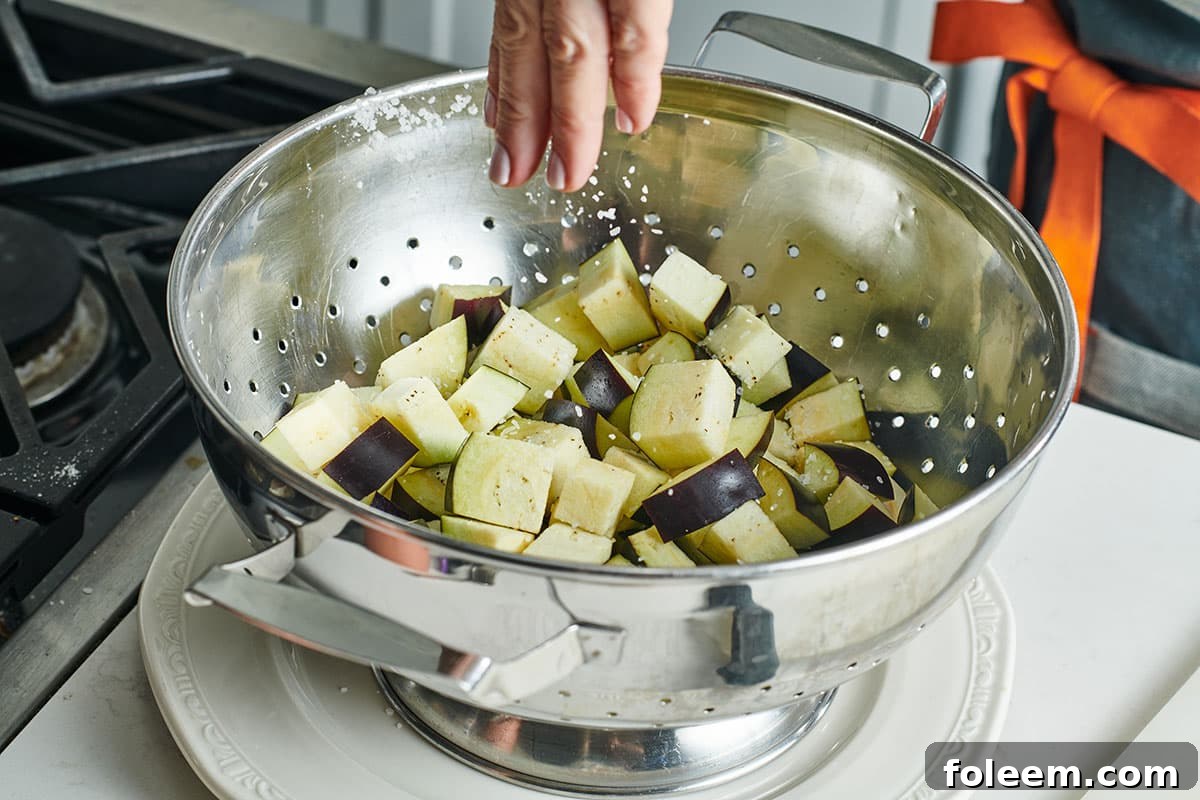
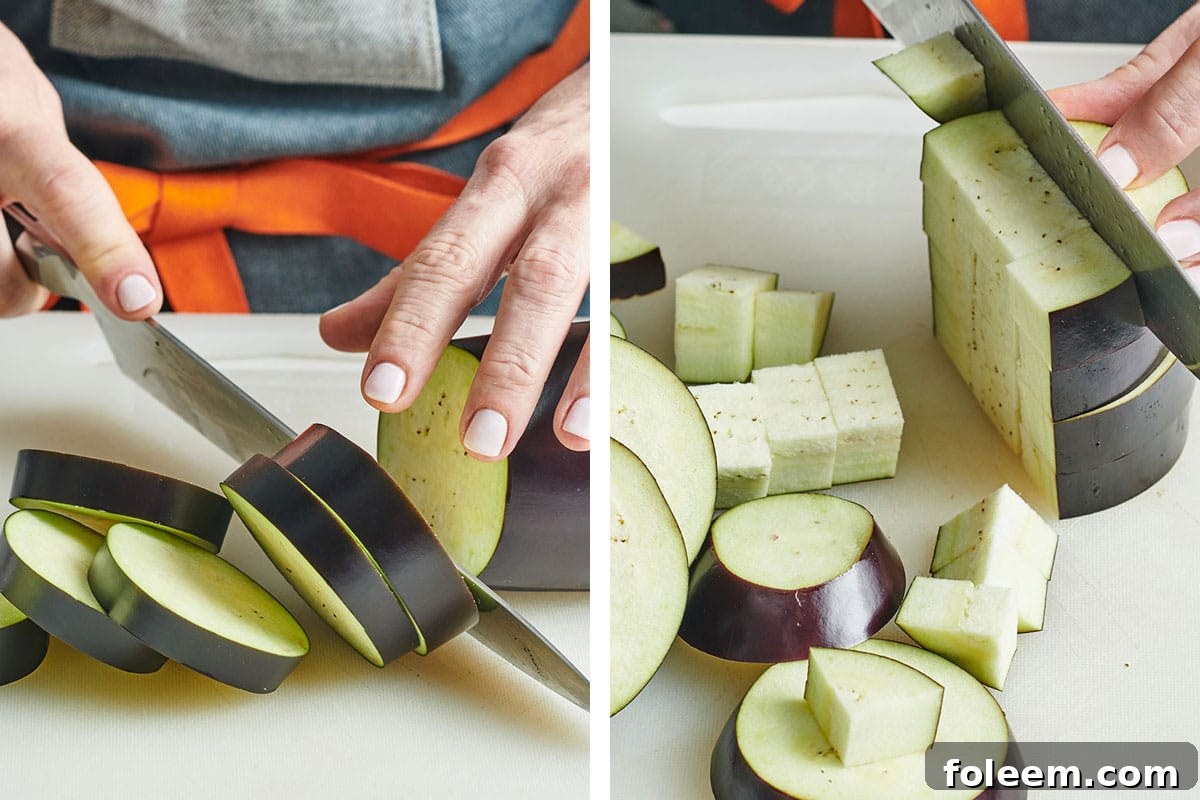
The method is straightforward. The photos in this post demonstrate how to salt rounds, slices, and cubes, and the steps below explain the technique.
- Why Salt Eggplant?
- How to Salt Eggplant Slices or Rounds
- How to Salt Eggplant Cubes
- Tips
- Recipes That Benefit Most From Salted Eggplant
- FAQs
- How to Salt Eggplant in a Colander Recipe
- More Kitchen Hacks
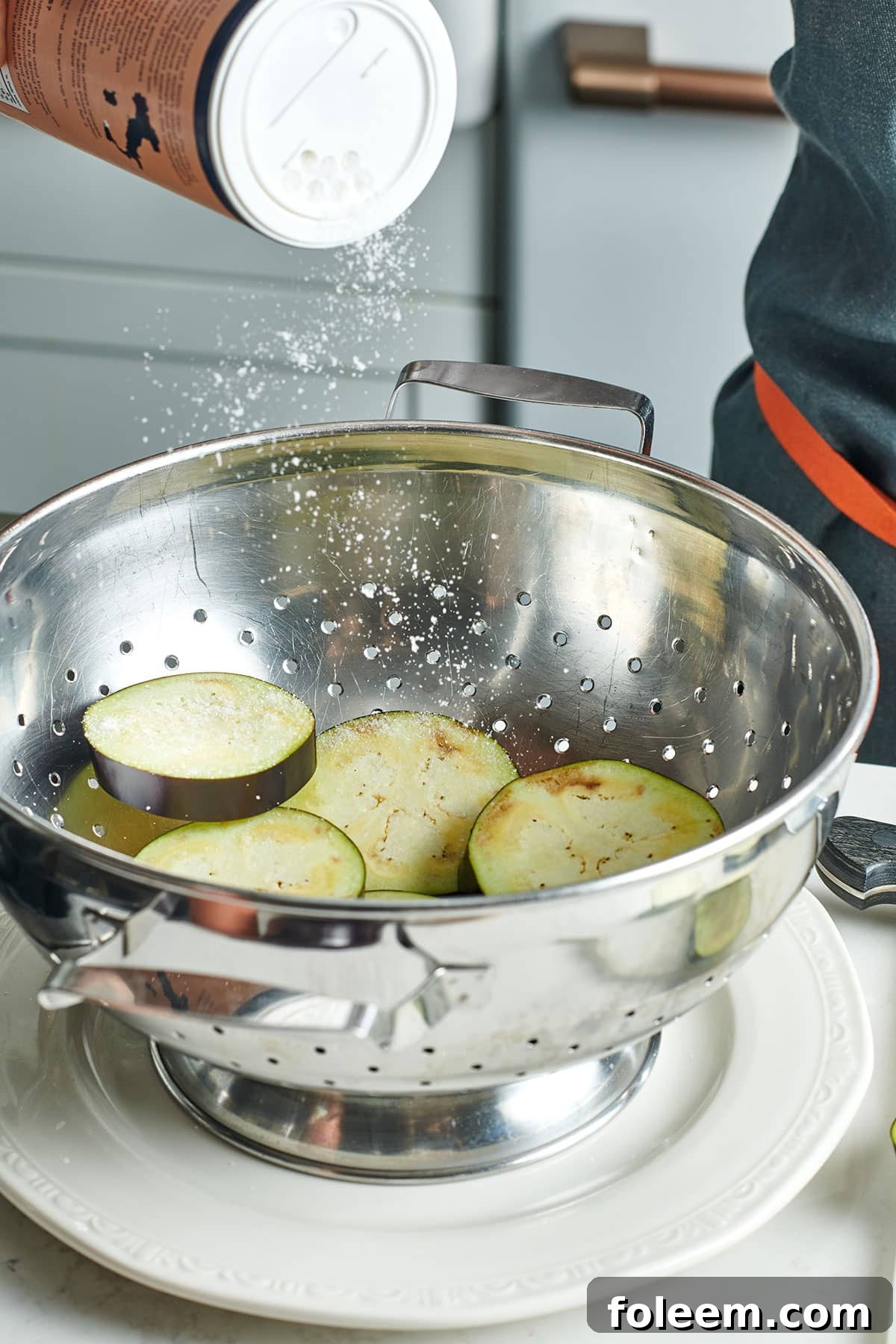
Why Salt Eggplant?
Eggplant has a spongy structure filled with air pockets and moisture. When placed in a hot pan, that moisture can cause the vegetable to steam and become mushy, and it will absorb oil readily. Salting triggers osmosis, drawing water out from the flesh. You’ll notice liquid bead up on the surface as it drains away. Removing moisture improves browning, reduces oil absorption, and concentrates flavor. As the moisture leaves, some salt penetrates the flesh, seasoning the eggplant throughout instead of just on the surface.
Regarding bitterness: modern eggplant varieties are far less bitter than older ones, so salting strictly to remove bitterness is not as crucial as it used to be. However, larger or older eggplants can still benefit from salting. When unsure, it’s a safe step to take.
When You Actually Need to Salt Eggplant

Salt it when: Frying, pan-searing, making Eggplant Parmesan or Moussaka, or any recipe that requires the eggplant to brown well and not turn greasy.
You can skip it when: Roasting at high heat — the dry heat removes moisture effectively. Grilling over high heat — liquid drips away and heat evaporates moisture. Making soups, stews, or braises where the eggplant will soften and extra moisture won’t hurt the final dish.
How to Salt Eggplant Slices or Rounds
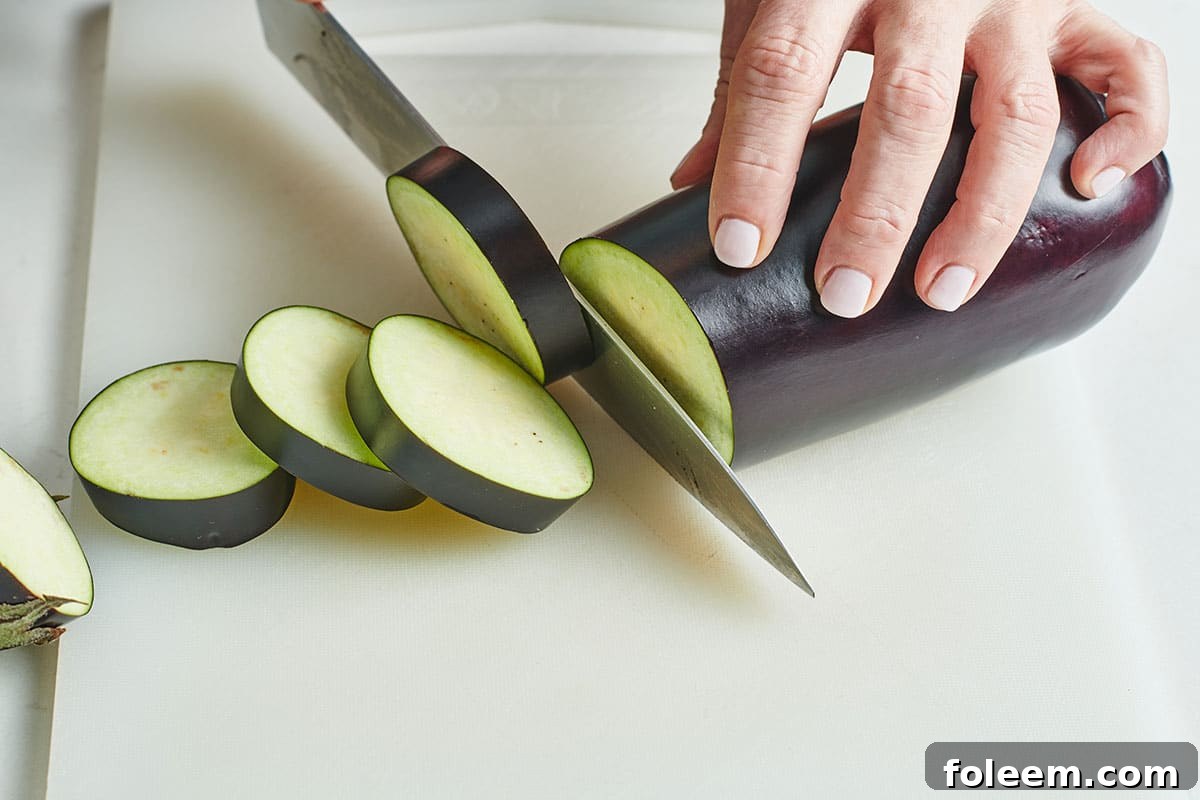
- Slice the eggplant: Cut crosswise into rounds about 1/2-inch thick. This thickness holds together during cooking while still cooking through quickly. Remove the stem end but leave the skin unless your recipe calls for peeling; the skin helps the rounds keep their shape. Thicker pieces need a longer salting time.
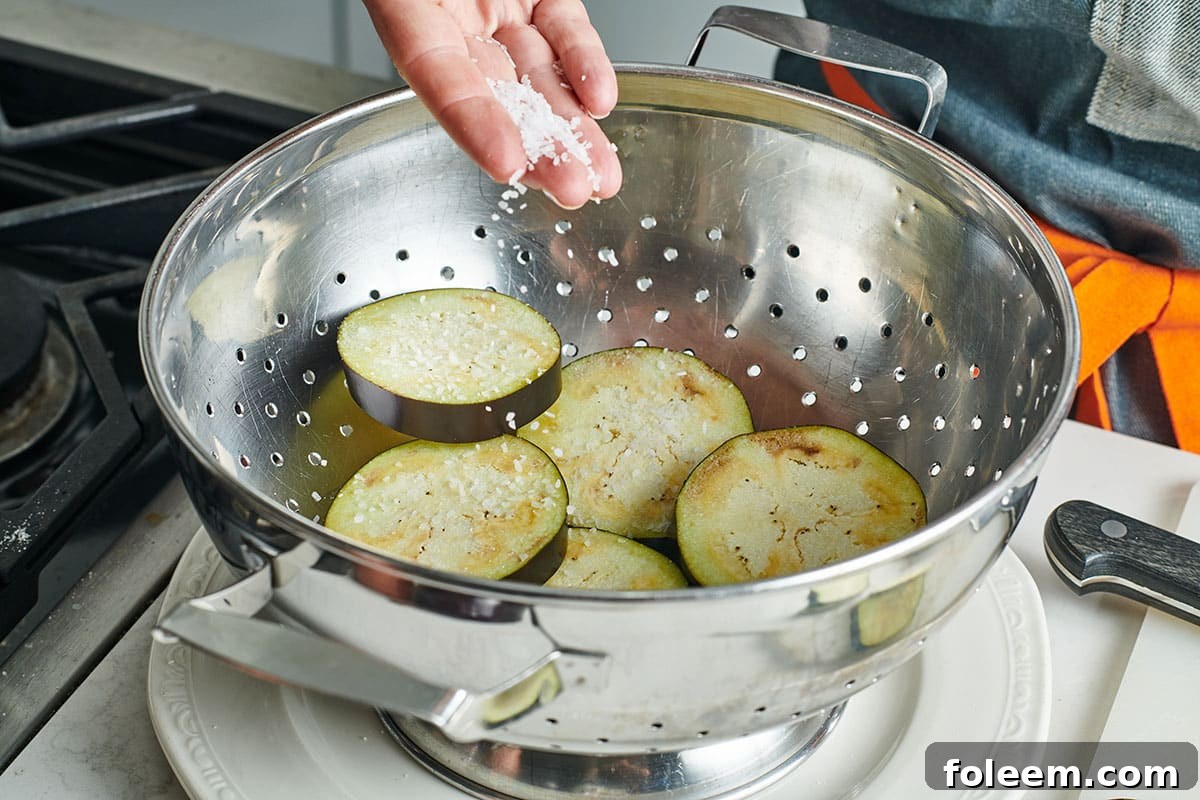
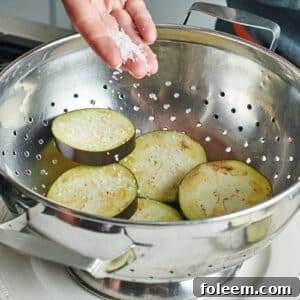
- Set up your colander: Place a colander over a plate or bowl to catch the drained liquid. This keeps the eggplant elevated above the fluid so it doesn’t reabsorb the water. You can also leave the colander in the sink.
- Salt generously: Use kosher or coarse salt, not fine table salt. Sprinkle salt over both sides of each round so each surface is covered. For a medium eggplant, roughly a tablespoon of kosher salt total is typical; adjust for size. The goal is extraction, not final seasoning.
Kitchen Smarts
Don’t worry about the eggplant tasting too salty after salting — most of the salt will be rinsed off before cooking.
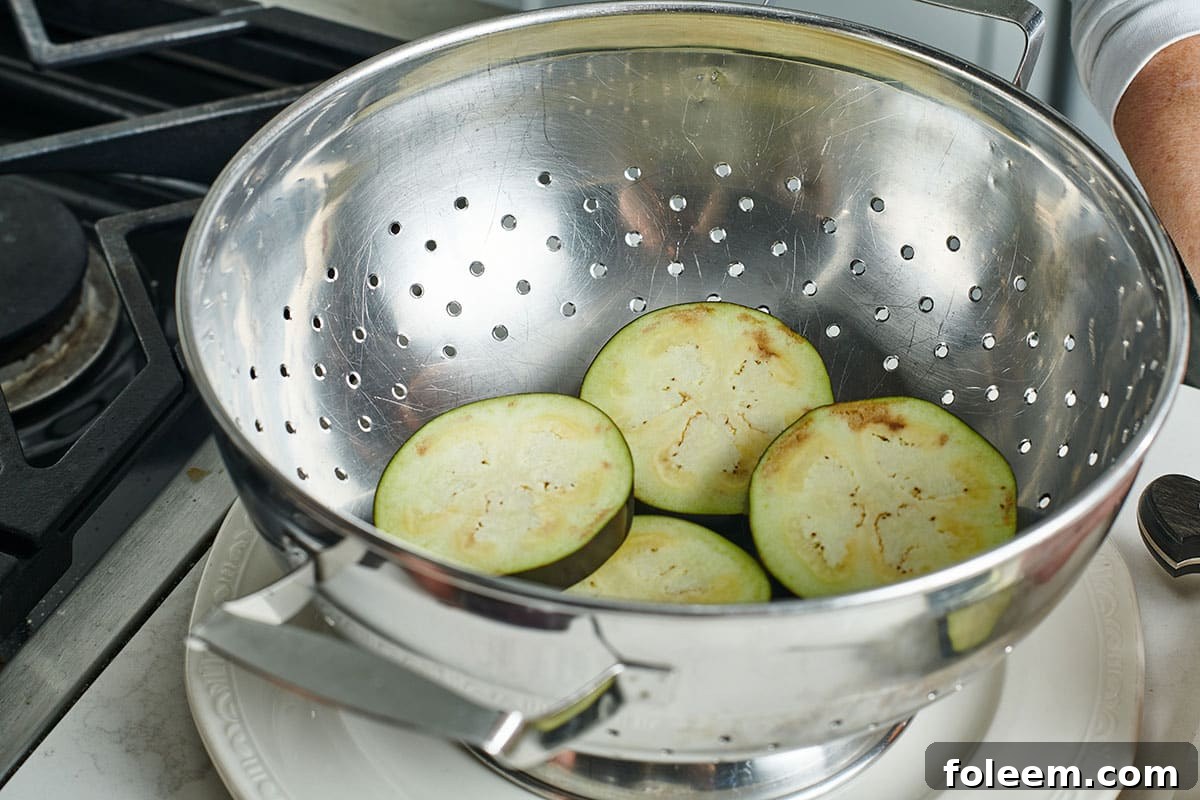
- Rest: Let the eggplant sit for at least 30 minutes; 45–60 minutes is better. You’ll see beads of liquid form on the surface.
- Rinse and blot: Quickly rinse the rounds under cold water to remove excess salt, then press firmly between paper towels or a clean kitchen towel. The pieces should be as dry as possible before cooking to ensure browning rather than steaming.
How to Salt Eggplant Cubes
Cubed eggplant is the right cut for ratatouille, caponata, and many stews.
- Cut the eggplant: Slice crosswise into thicker rounds, about 3/4–1 inch, then cut each round into cubes. Aim for uniform pieces so they drain and cook evenly.
- Into the colander: Transfer cubes to a colander set over a plate. Cubes can be piled; they don’t need to be single-layered like rounds.
- Salt and toss: Sprinkle kosher salt generously over the cubes and toss to coat every surface. You’ll rinse most of this salt off later.
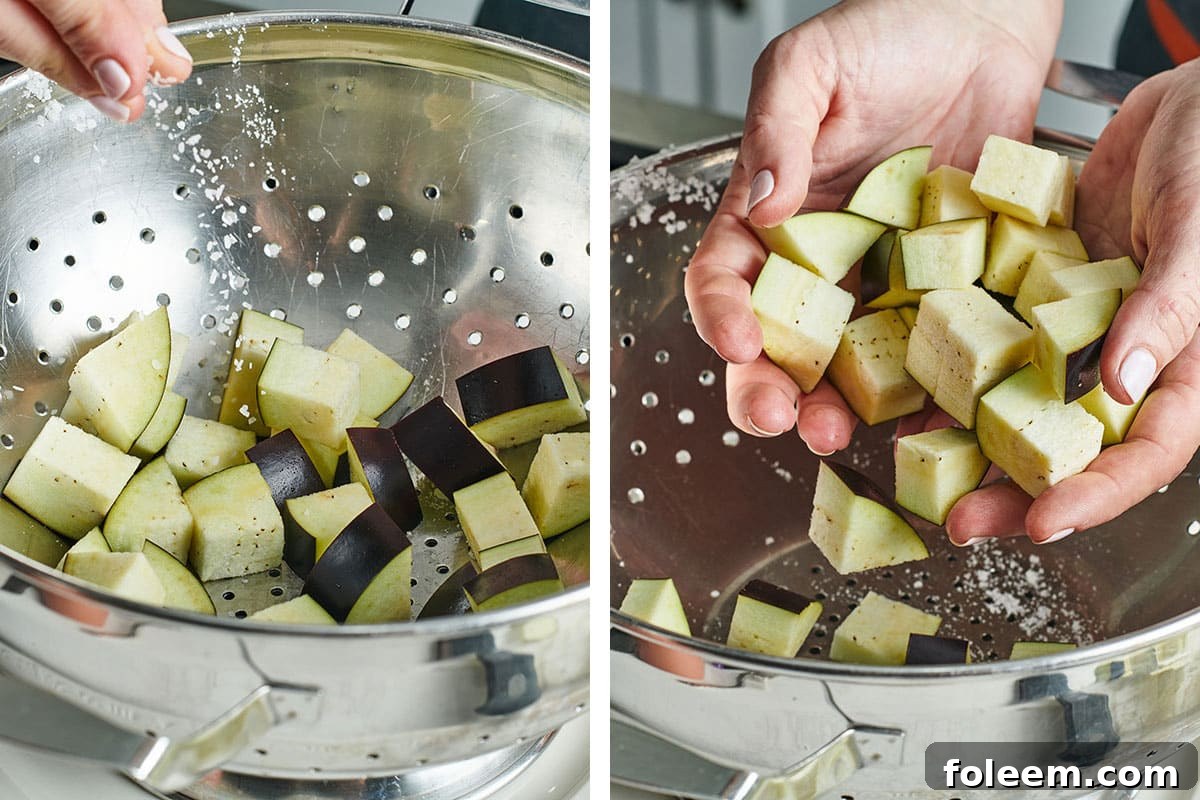
- Wait: Allow 30–60 minutes for moisture to be drawn out. The cubes will shrink slightly as they release liquid.
- Rinse, then blot or squeeze: Rinse under cold water and spread the cubes on paper towels, blotting firmly. Alternatively, wrap the cubes in a clean kitchen towel and squeeze gently to remove excess moisture without pulverizing them. You want dry, slightly reduced pieces ready for cooking.
Tips
- Use kosher salt, not table salt: Coarse grains pull moisture more effectively. Table salt dissolves too quickly and can be hard to rinse away, leaving an overly salty result.
- Don’t rush it: Thirty minutes is the minimum; an hour is preferable. If you exceed an hour, move the colander to the refrigerator.
- Dry thoroughly before cooking: The salting step only helps if you dry the pieces well. Wet eggplant steams instead of browning.
- Size matters: Large, older eggplants benefit most from salting. Small, young varieties need it less but can still gain from the process.
- Optional setup: Place the colander over a plate rather than in the sink so the eggplant stays elevated above the drained liquid — it’s a handy visual confirmation that the process is working.
Recipes That Benefit Most From Salted Eggplant
- Eggplant Parmesan: Essential for preventing soggy breading and watery layers. Salt, rinse, dry, then bread.
- Moussaka: Layers need eggplant that won’t release liquid into the béchamel.
- Caponata: The Sicilian sweet-and-sour dish works best with concentrated, tender eggplant.
- Ratatouille: Properly salted cubes hold shape better and absorb sauce instead of diluting it.
- Fried eggplant of any kind: Non-negotiable — unsalted eggplant soaks up oil like a sponge.
- Grilled eggplant rounds: Optional but recommended for larger fruit to improve texture.
FAQs
Yes — especially if you salted generously. A quick rinse under cold water removes excess surface salt so the finished dish doesn’t taste too salty. Rinse quickly, then dry thoroughly. If you only used a light sprinkle, you can sometimes blot instead, but rinsing is safest.
Thirty minutes is the minimum. Forty-five to sixty minutes is ideal. If you go beyond an hour, refrigerate the colander. Avoid salting for more than two hours, as texture can begin to break down.
It used to be the main reason, and it still helps with large or older eggplants. Modern varieties are less bitter, so the main benefits today are moisture control and improved texture rather than bitterness removal.
Yes. Salting collapses some of the air pockets in the spongy flesh and reduces the amount of oil the eggplant will absorb during frying. Unsalted eggplant can act like a heavy oil sponge.
Yes. Rinse and pat dry within an hour of salting, then refrigerate in an airtight container for up to two days. If you salt more than three hours before cooking, keep the colander covered or move it to the fridge to maintain texture and flavor.
Usually not. Smaller, younger varieties have less moisture and bitterness, so you can often skip the salting step. It won’t harm them to salt, but it’s often unnecessary.
Kosher or coarse sea salt is best. Larger crystals draw moisture out effectively and rinse off more easily. Table salt dissolves too quickly and can be harder to rinse away, risking an overly salty result.
How to Salt Eggplant in a Colander
Equipment
- Colander
- Plate or bowl (to catch the liquid)
- Paper towels or a clean kitchen towel
Ingredients
- 1 eggplant (or more)
- Kosher salt (or coarse sea salt)
Instructions
- Slice or cube the eggplant according to your recipe.
- Place a colander over a plate or in the sink to catch drips. Layer the eggplant in the colander and generously sprinkle salt over each layer — about 1 teaspoon kosher salt per pound of eggplant.
- Let the eggplant sit 30 to 60 minutes. Beads of liquid will form on the surface.
- Quickly rinse the eggplant under cold water and pat dry with a clean dish towel or paper towels. Proceed with your recipe.
Notes
More Kitchen Hacks
- Homemade Brown Sugar Substitute
- Easy Cream of Tartar Substitutes
- Everything You Need to Know About Cooking With Miso
- How to Make Hard-Boiled Eggs in the Oven
- Quick Tips for Reheating Rice