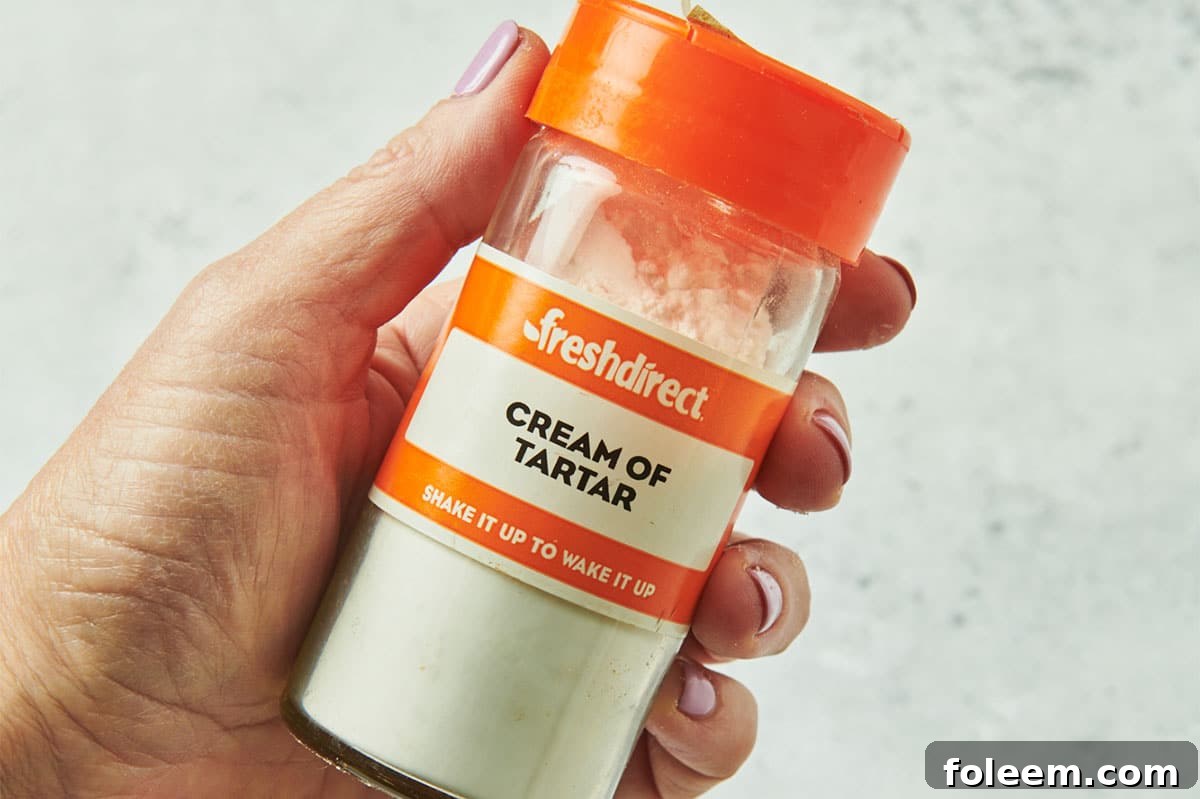
If you’ve run out of cream of tartar or never keep it on hand, don’t worry. There are simple, reliable substitutes you can use so your recipe doesn’t skip a beat.
In baking, cream of tartar adds a mild tang and helps create a tender texture. It’s also commonly added to egg whites to stabilize them when making meringues, soufflés, and other whipped preparations. Any mild acid can usually replace cream of tartar to achieve the same stabilizing effect.
As a general rule, replace 1/2 teaspoon of cream of tartar with 1 teaspoon of lemon juice or white wine vinegar (distilled white vinegar also works). The table below shows common conversion amounts for easy reference.
- What Is Cream of Tartar?
- Cream of Tartar Substitutes
- FAQs
- Recipes That Use Cream of Tartar
- More Baking Substitutions
- Cream of Tartar Substitute Recipe

How to Make Your Own Cream of Tartar: Use one of these simple substitutes for cream of tartar and keep your baking on track.
What Is Cream of Tartar?
Cream of tartar (potassium acid tartrate) is a fine, odorless white powder that forms naturally during the winemaking process. In cooking and baking it’s used to stabilize whipped egg whites, prevent sugar crystallization in candies and frostings, and provide a subtle tang in some recipes. Its primary culinary role is to help egg whites hold their peaks and to improve texture in confections.
The flavor is faintly tart and slightly saline, but it’s largely used for its chemical properties rather than flavor impact.
Cream of Tartar Substitutes

For most recipes, lemon juice, white wine vinegar, or distilled white vinegar are effective substitutes. Use twice the volume of the acid as the amount of cream of tartar called for in the recipe.
| Cream of Tartar Amount in Recipe | Substitute |
|---|---|
| 1/4 teaspoon | 1/2 teaspoon lemon juice, white wine vinegar, or distilled white vinegar |
| 1/2 teaspoon | 1 teaspoon lemon juice, white wine vinegar, or distilled white vinegar |
| 3/4 teaspoon | 1 1/2 teaspoons lemon juice, white wine vinegar, or distilled white vinegar |
| 1 teaspoon | 2 teaspoons lemon juice, white wine vinegar, or distilled white vinegar |
Kitchen Smarts
If you’re replacing a large amount of cream of tartar, the flavor of lemon juice or vinegar can become noticeable. For recipes that call for a lot of cream of tartar, consider getting the real ingredient to preserve the intended flavor balance.
FAQs
Stored in a cool, dry place and kept away from moisture, cream of tartar has an indefinite shelf life.
Baked goods may be slightly less tender or less able to hold structure. Whipped egg whites will be less stable, so meringues and similar preparations can lose volume or become runny.
Kitchen Smarts
When making your own baking powder (if substituting baking soda for baking powder), use real cream of tartar rather than an acidic liquid substitute—too many substitutions can produce unpredictable results.
Recipes That Use Cream of Tartar
Snickerdoodles
Corn Pudding
Gingerbread Cake

More Baking Substitutions
- How to Substitute Baking Soda and Baking Powder
- How to Make a Substitute for Brown Sugar
- How to Make Self-Rising Flour
- How to Make Buttermilk
Cream of Tartar Substitute
Equipment
-
Measuring spoon
Ingredients
- 1 teaspoon lemon juice, white wine vinegar, or distilled white vinegar
Instructions
-
Substitute 1 teaspoon of lemon juice, white wine vinegar, or distilled white vinegar for every 1/2 teaspoon of cream of tartar called for in a recipe.