How to Cut a Mango Like a Pro: Quick Step-by-Step Guide
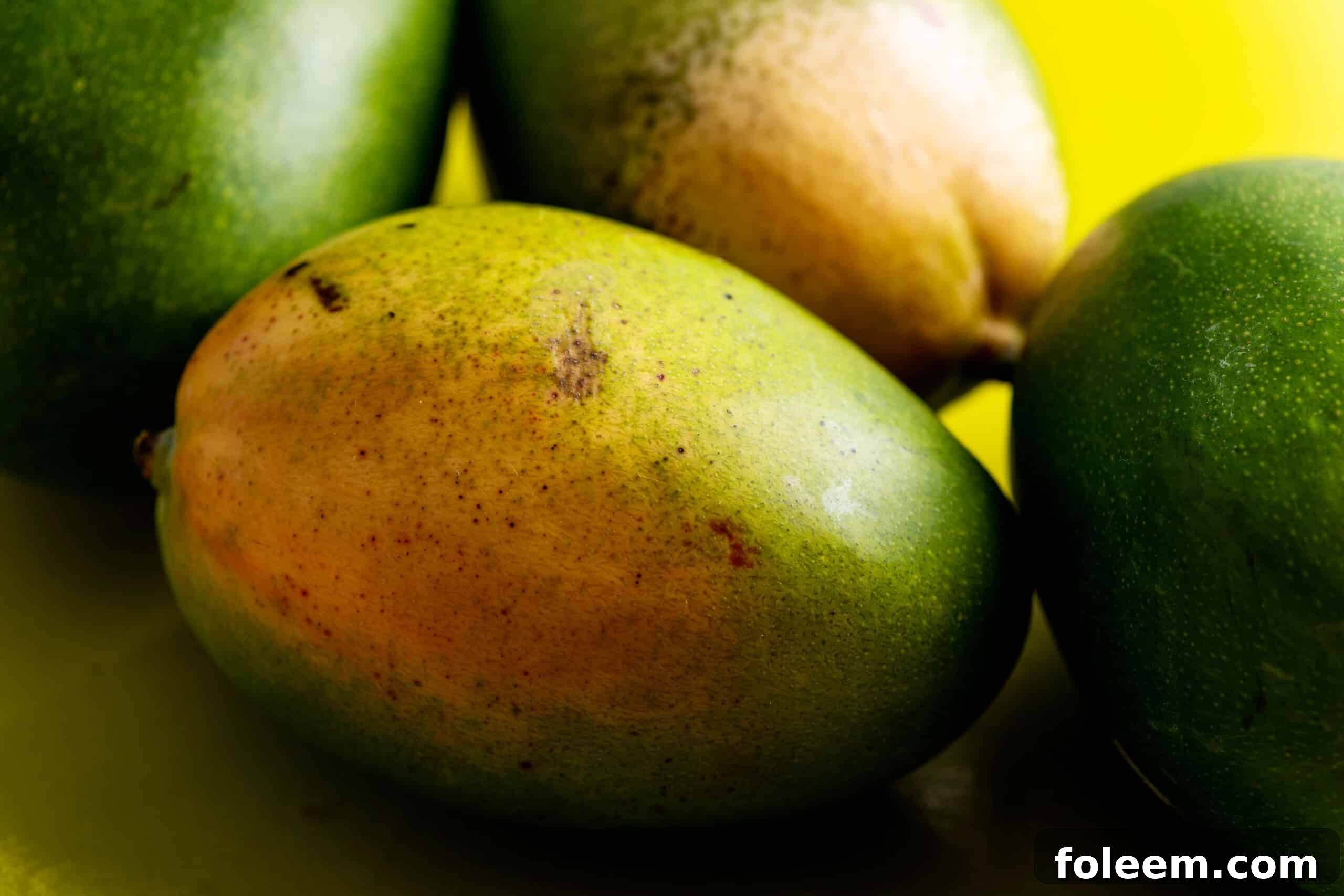
Is there anything better than a ripe mango in late summer? I don’t think so. I use mango in so many recipes, from Citrusy Mango Ginger Salsa to a simple fruit salad — and everywhere in between. This sweet tropical fruit is a staple in my kitchen. Once you learn how to cut a mango, it will likely become a staple in yours, too. If you’re feeling adventurous, try cutting a papaya as well for a full fruit spread.
- What Are Mangos?
- What Do Mangos Look Like?
- What Do Mangos Taste Like?
- Why Do Mangos Make Some People Itchy?
- How to Tell When Mangos are Ripe
- How to Store Mangos
- How to Cut a Mango
- How to Cube Mango Without Peeling It First
- Fun Fact About Mangos
- FAQs
- 3 Fresh Mango Recipes
- How to Cut A Mango Recipe
What Are Mangos?
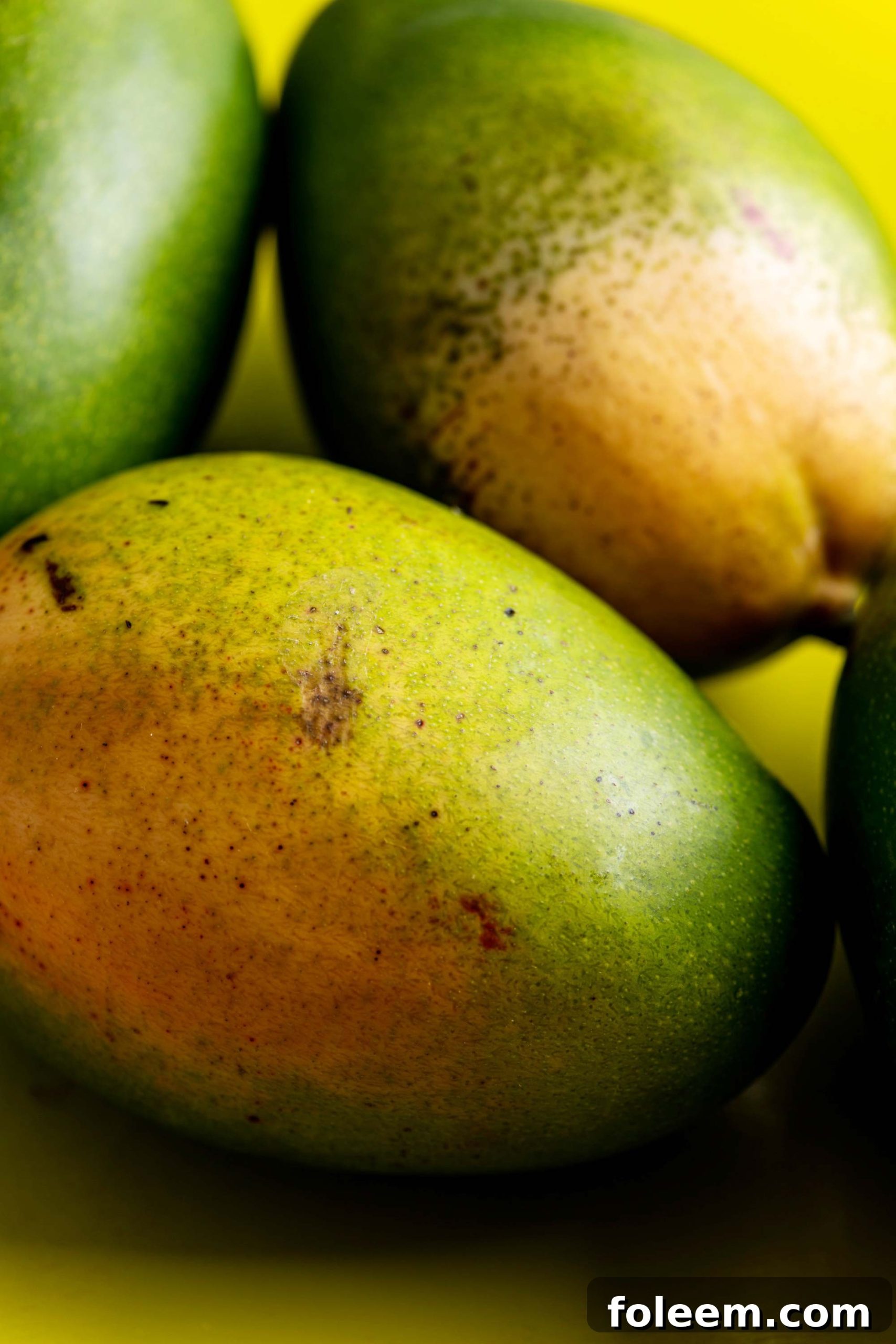
Mangos belong to the stone fruit family, alongside peaches, cherries, olives and even cashews. Like other stone fruits, mango flesh surrounds a single large pit. Originally from India, mangos arrived in the Americas in the late 1800s and are now cultivated across tropical and subtropical regions worldwide. India alone has nearly 300 varieties, though far fewer are commonly exported. The Alphonso mango, often called the King of Mangoes, is particularly prized there.
What Do Mangos Look Like?
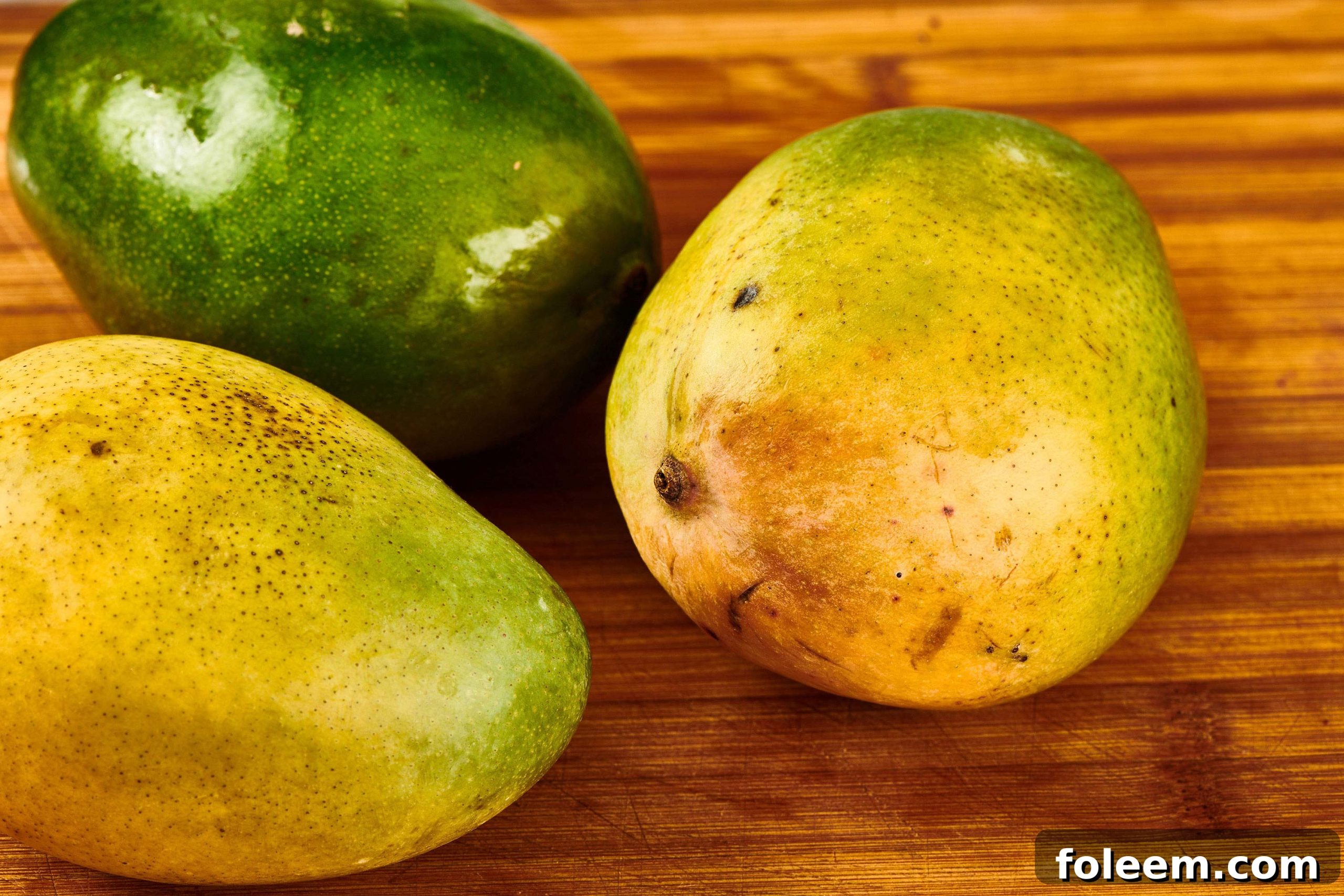
Mangos sold in American supermarkets typically come from South America, California or Florida. Their size, shape, sweetness, skin color and flesh color vary by variety. Skin tones range from red and orange to yellow and green, often in combinations. Flesh can be pale yellow, golden or deep orange. Common supermarket varieties include Haden and Tommy Atkins, which feature green, yellow and red skin and juicy yellow flesh.
What Do Mangos Taste Like?
Mangos offer a balance of sweet and tart flavors with a floral, tropical character. Many describe mango as a blend of pineapple, peach and orange. Unripe or green mangos are firmer and tarter and are commonly used in savory dishes across Southeast Asia. Though their skin is usually green when unripe, the inside can already show orange flesh. Green mangos are excellent in salads and pickles.
Why Do Mangos Make Some People Itchy?
The skin of a mango contains urushiol, the same oil found in poison ivy. People who are sensitive to poison ivy may experience skin irritation after touching mango skin. If you’re concerned, handle mangoes with a bag or gloves at the market and wash your hands after handling or peeling. Simple soap and water will remove urushiol if washed promptly; once the oil penetrates skin it cannot be removed. The flesh is usually safe to eat for most people with sensitivity, but if you know you react to poison ivy, start with a small amount and proceed cautiously. Regardless, avoid eating mango skin—any urushiol can cause uncomfortable itching in the mouth or throat.
How to Tell When Mangos are Ripe
Color isn’t the most reliable indicator of ripeness because it varies so much between varieties. Instead, rely on aroma and touch: a ripe mango should smell sweet and yield slightly to gentle pressure. Avoid overly soft fruits that feel mushy or have a sour smell.

How to Store Mangos
Keep unripe mangoes at room temperature until they soften, then move ripe fruit to the refrigerator. Cut mango will keep for up to three days in a sealed container in the fridge. You can also freeze mango whole or precut; frozen mango is perfect for purees and smoothies.
How to Cut a Mango
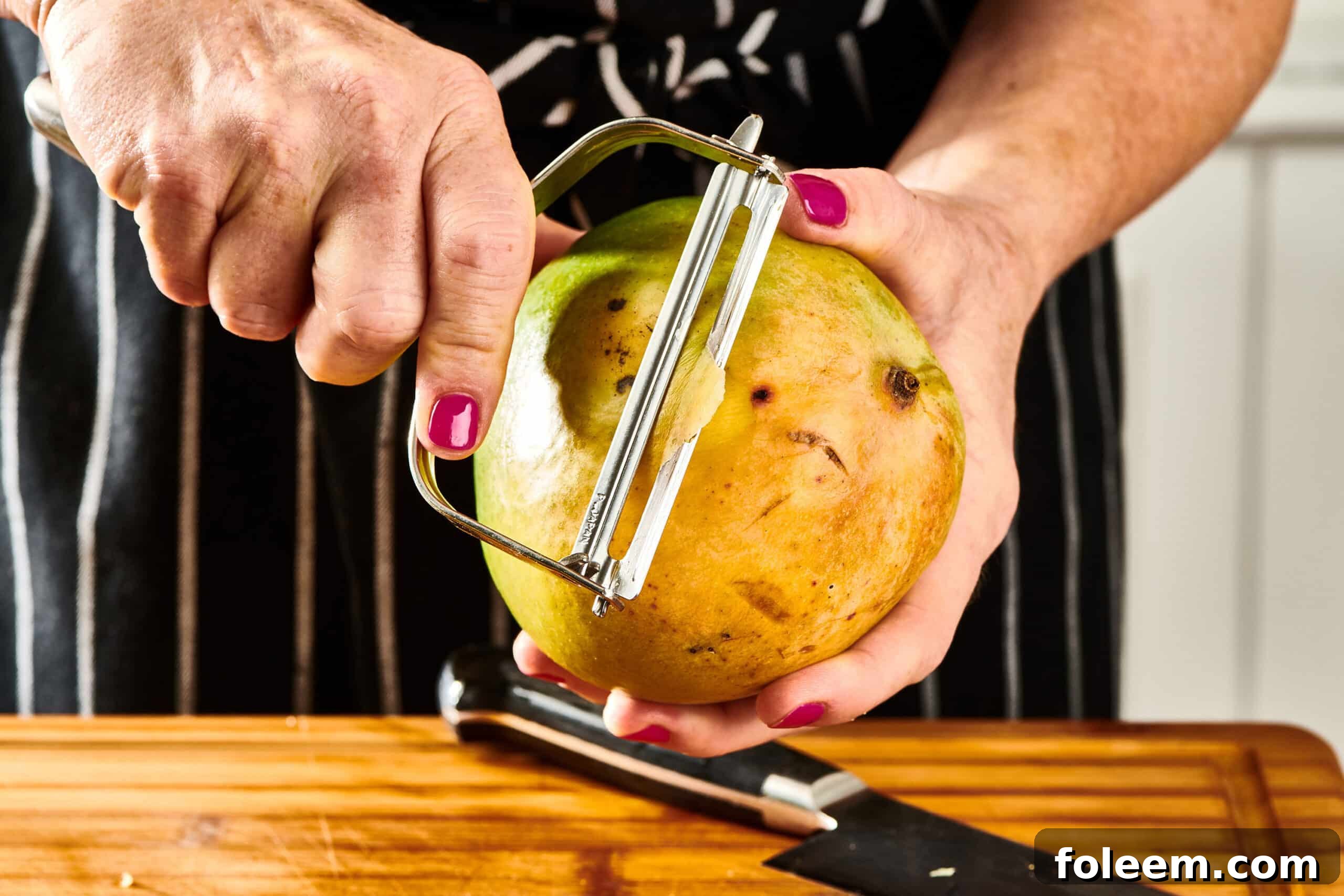
- Peel: Use a peeler to remove the skin and discard it.
- Cut around the pit: Stand the mango upright with the stem end up. Slice down each flat side of the pit — the pit itself is difficult to slice through. You’ll end up with two larger cheeks.

- Cut the cheeks: Trim the two large cheeks into slices or cubes as you prefer.
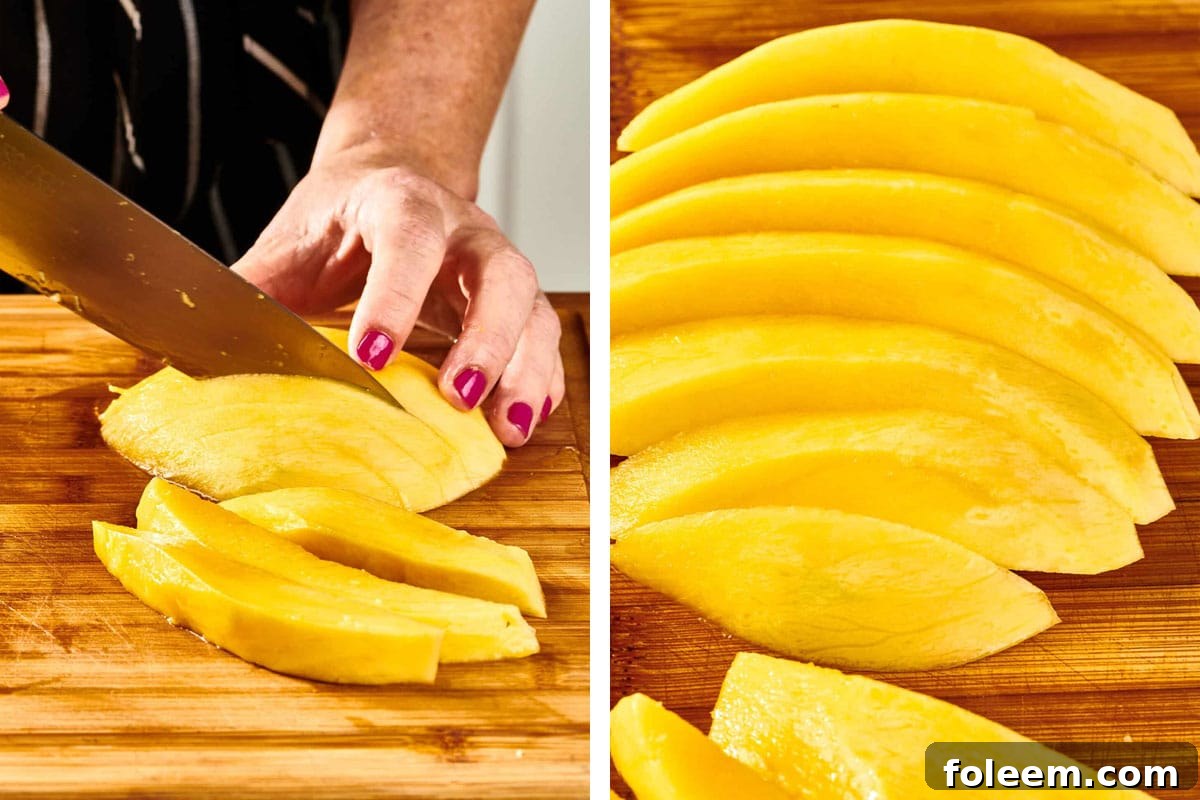
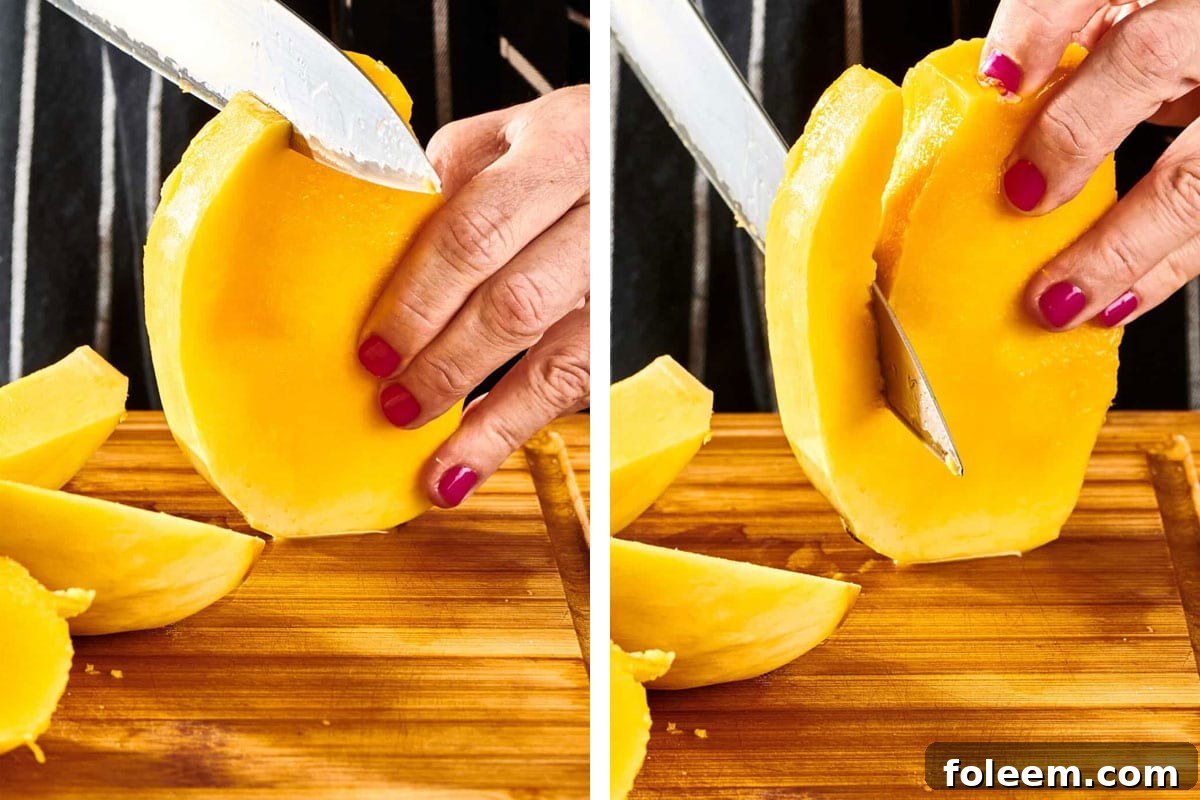
- Slice the remaining sides: Slice the two narrow sides left around the pit, cutting along the curve to capture as much flesh as possible.
- Remove flesh from the pit: There will still be fruit clinging to the pit; trim or slice these pieces away. These scraps are great for snacking or blending into smoothies.
How to Cut a Mango: Everything you need to know about buying, storing, peeling and cutting mangos.
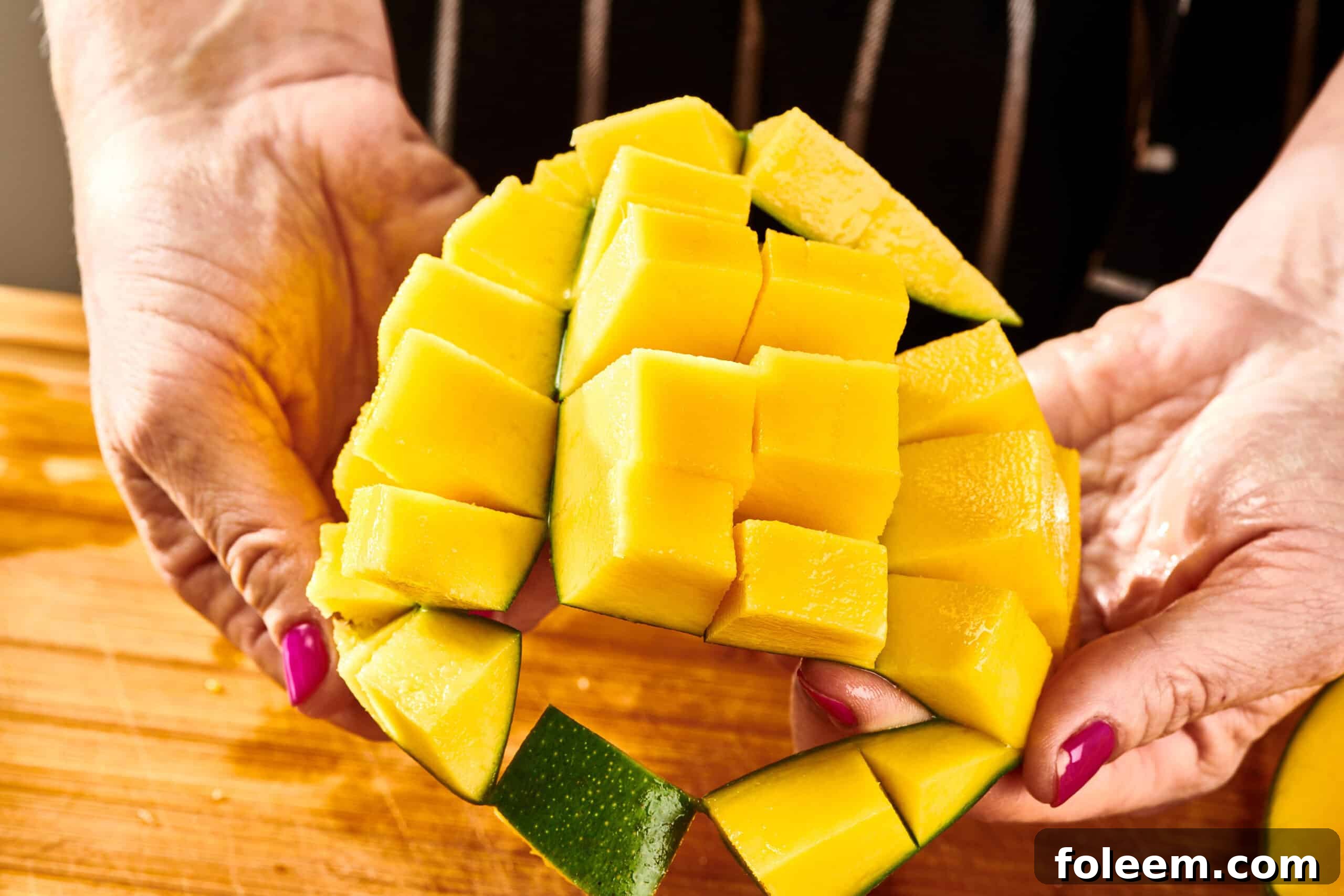
How to Cube Mango Without Peeling It First
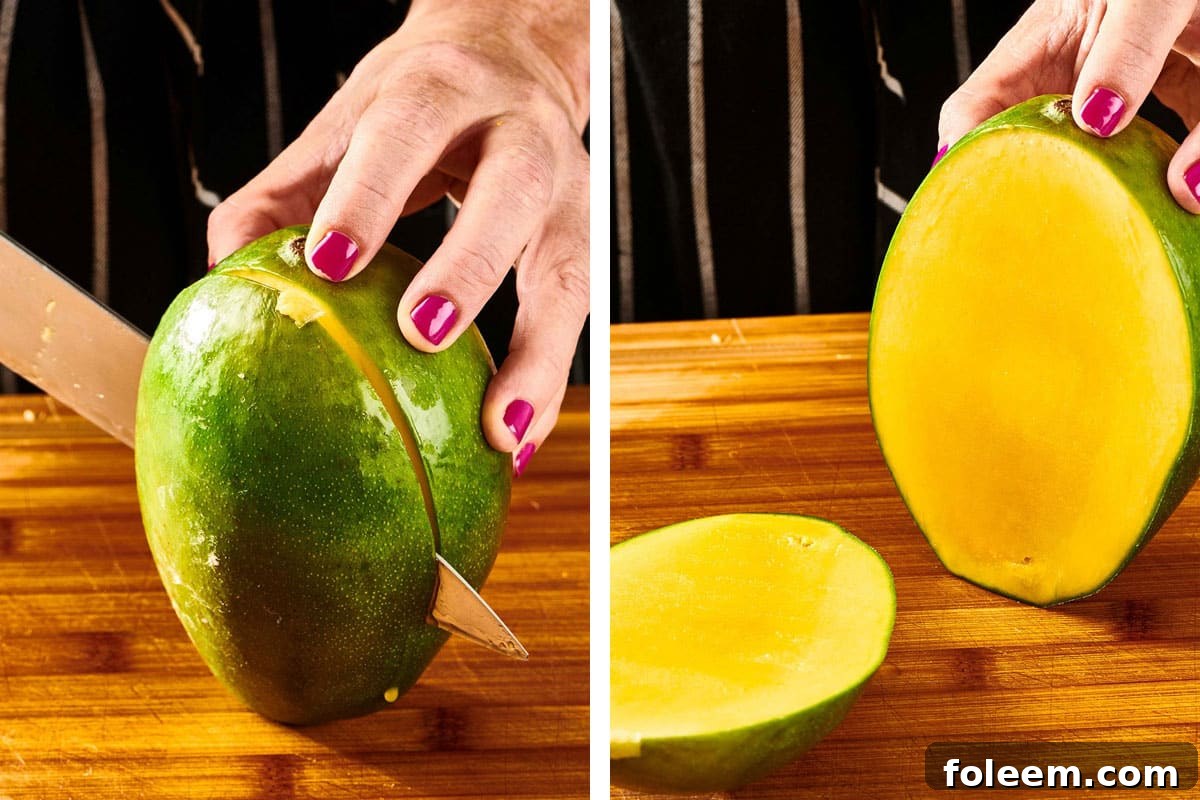
- Slice in half: Leave the skin on and cut the mango down each side of the pit as described above.
- Flip and score: Turn a half so the flesh faces up. Score the flesh in a grid pattern without cutting through the skin. Repeat with the other half.
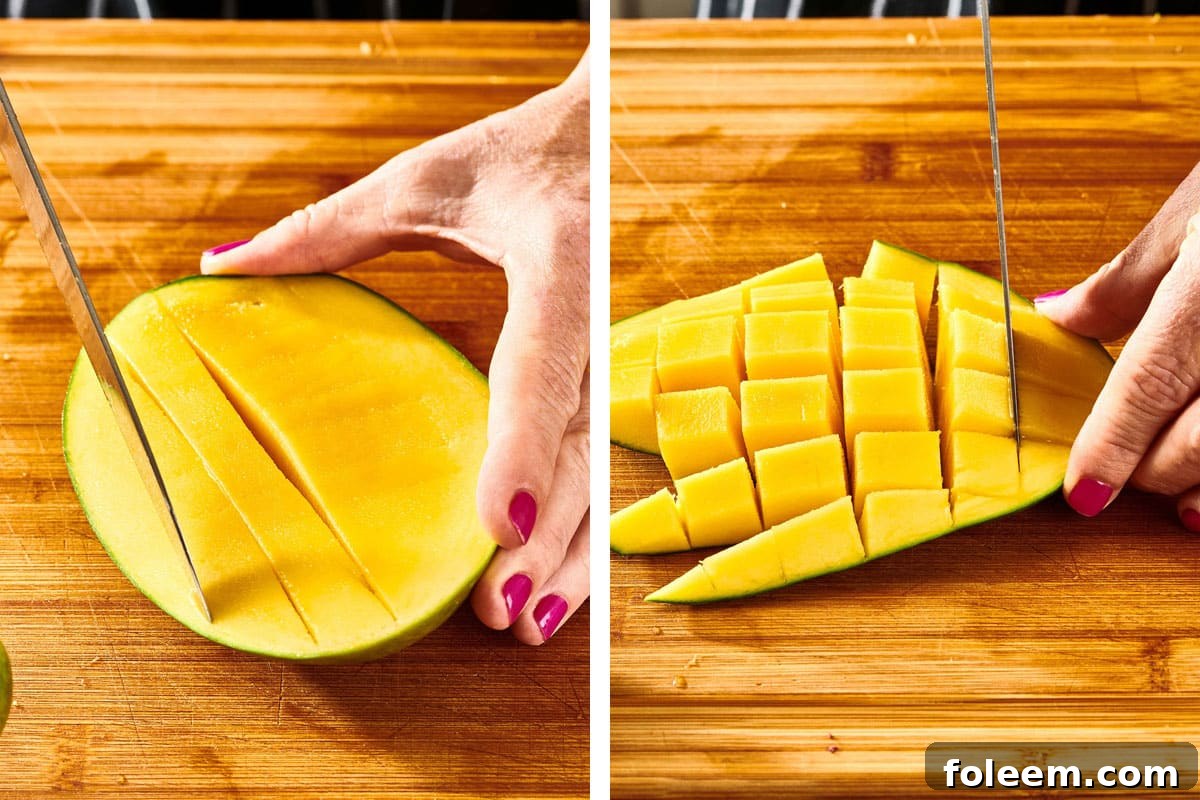
- Invert and remove: Press the skin side so the cubes pop outward and slice them off the peel, or simply eat the cubes directly from the skin as a fun snack.
Fun Fact About Mangos
You can’t make gelatin dessert with fresh mango (or fresh pineapple, papaya, guava or kiwi) because these fruits contain enzymes that break down the proteins needed for gelatin to set. Canned or cooked fruit works, however, since the heat used in canning deactivates those enzymes.
FAQs
Yes. Mangos are high in fiber and vitamin C and provide vitamin A and B6, as well as minerals like folate and copper. A typical serving (about 3/4 cup) has roughly 70 calories.
Peak mango season runs from May through September, but because mangos come from many countries, you can find them nearly year-round. Different varieties are available at different times.
Both spellings are acceptable. “Mangos” is more common in the U.S.; “mangoes” is often used in the U.K.
3 Fresh Mango Recipes
Here are three ways to enjoy mango:

Citrusy Mango Ginger Salsa

Best Fruit Salad

Tropical Fruit Salsa

How to Cut A Mango
Equipment
-
Knife
Ingredients
- 1 mango
Instructions
-
Use a peeler to remove the outer skin of the mango and discard it.
-
Stand the mango upright and, looking down on the stem end, cut down along each flat side of the pit. You’ll remove two large cheeks that can be cut into smaller pieces.
-
Slice the two remaining sides close to the pit, following its curve to get the most flesh. Trim any fruit left on the pit into usable pieces.