What Is Quince?
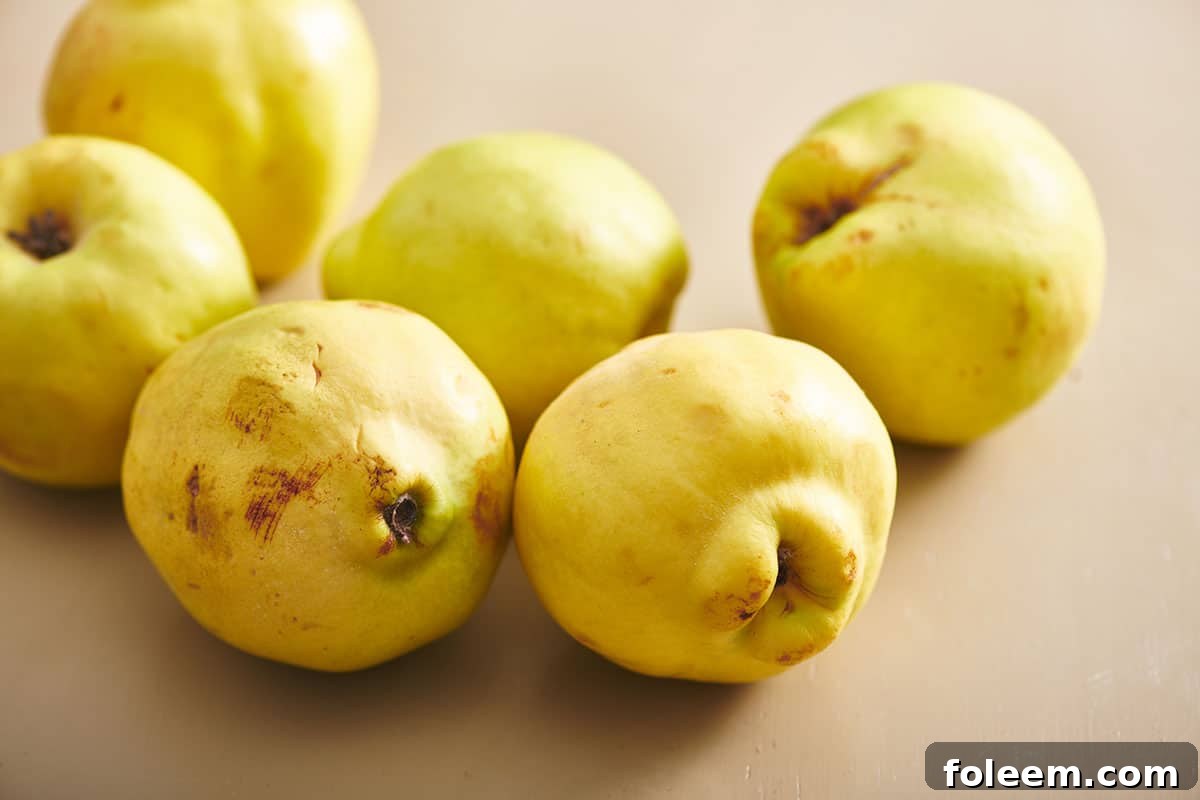
Quince (pronounced “kwins”) is a distinctive, lumpy fruit with bright yellow skin when ripe. Native to the Caucasus region between the Black Sea and the Caspian Sea, quince has spread around the world and appears in many regional cuisines, especially in Latin America.
The fruit resembles a bumpy pear in shape and size. Unripe quince is light green; as it ripens on the counter its skin turns golden yellow with small brown specks. Allow quince to ripen at room temperature until it develops a fragrant aroma—when it smells pleasantly sweet, it’s ready to cook and enjoy.
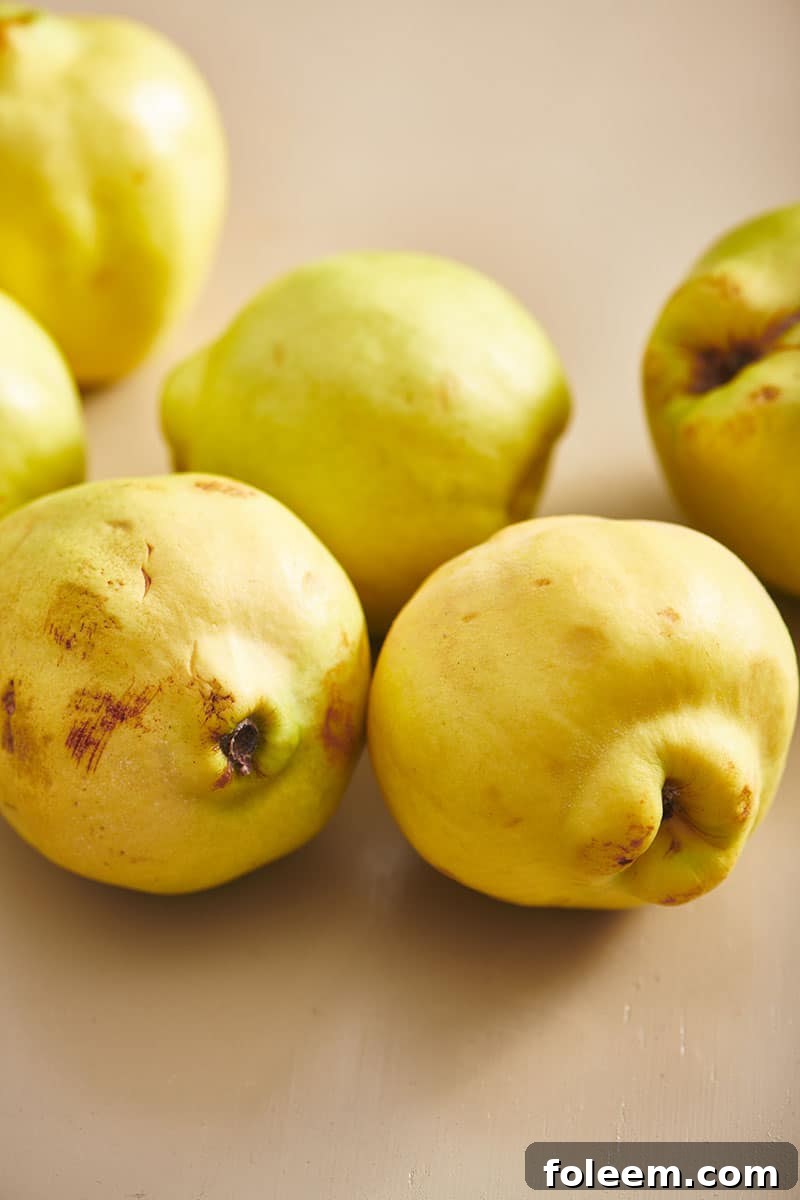
In the United States, quince is most commonly found in Southern states, though it can be grown in many regions. Quince season generally runs from late fall through early spring. Because it isn’t widely farmed everywhere, availability can be limited outside that window—visit farmers markets in season to find the freshest fruit.
What Does Quince Taste Like?
Raw quince is usually very firm and somewhat bitter due to natural tannins, so it’s rarely eaten fresh. When cooked, the flesh softens and becomes sweet, with a flavor often described as a blend between apple and pear. Ripe quince also gives off a notable, sweet fragrance that has contributed to its popularity for centuries.
Quince Nutrition
According to USDA data, a single quince contains roughly 52 calories. The fruit is low in calories and provides nutrients such as fiber, calcium, magnesium, potassium, and copper, making it a nutritious addition to a balanced diet.
How To Prepare and Cook With Quince
Because quince is tough and tart when raw, cooking is the usual way to enjoy it. Begin by peeling the quince, cutting it into quarters and removing the core and seeds with a paring knife. Trim any bruised or damaged areas. To prevent browning while you work, place prepared pieces in a bowl of room-temperature water.
Quince is often boiled until tender. Place the pieces in a pot of simmering water and cook for about 15–20 minutes, or until a knife slides in easily and the texture resembles a soft pear. The poaching liquid captures a lot of flavor and can be reduced into a syrup for drinks or desserts.
Cooked quince is versatile: it makes excellent jam, jelly, or marmalade, and is delicious in pies, tarts, and crostatas. It pairs well with oatmeal, yogurt, roasted meats such as pork, or can be blended into smoothies for natural sweetness.
Storage
After cooking, store leftover quince in an airtight container or resealable plastic bag and freeze for longer-term use. Frozen pieces are convenient to pull from the freezer for smoothies, baking, or as a ready snack.
Fun Facts About Quince
Quince has been valued since ancient times. In Ancient Greece, the fruit was associated with Aphrodite and symbolized love and fertility. It appears in myths and historical recipes, and has long been prized for its perfume-like aroma. Additional interesting notes:
- Some scholars believe the “golden apple” in Greek myth could have been a quince.
- Romans combined quince with honey and leeks in savory-sweet dishes.
- Greek brides historically ate quince before their wedding to perfume their lips.
Try Adding Quince to These Recipes
- Pear Tart Tatin
- Spicy Pear and Cilantro Salsa
- Thanksgiving Salad
- Blueberry and Peach Crostata