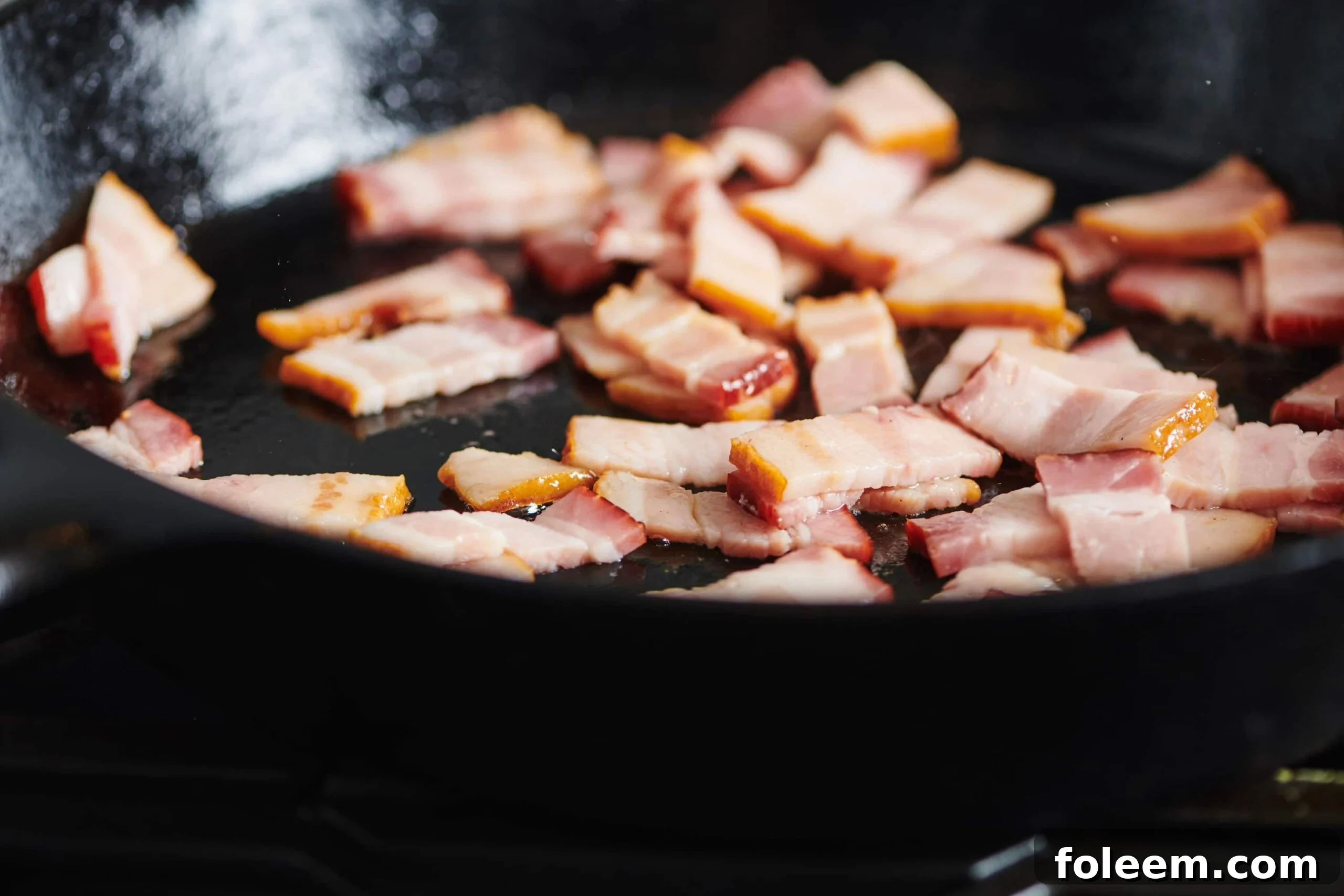
Lardons are a brilliant variation of an already excellent ingredient: bacon. Well-made bacon lardons strike a satisfying balance between crisp and chewy — substantial enough to notice the bite, yet still delivering the salty crackle you expect from bacon.
Typically, lardons are cross-sliced thick-cut slab bacon, each strip about 1/4 to 1/3 inch wide — think thick matchsticks: slim but toothsome. You can make lardons larger if you prefer a meatier bite, and pancetta works well as a substitute for smoked bacon when you want a more traditional French-style flavor.
Cutting bacon before cooking gives you precise control over the size and shape of the pieces. Cook lardons over moderate heat so the fat renders slowly and the interior remains tender while the edges crisp. Some butchers sell precut lardon-sized pieces; alternatively you can crumble cooked bacon, but pre-cut lardons keep a uniform, hearty texture that crumbled bits don’t.
- What Are Lardons?
- How to Make Bacon Lardons
- Make Ahead and Storage
- FAQs
- How To Use Bacon Lardons
- More Bacon Cooking Tips
- Bacon Lardons Recipe
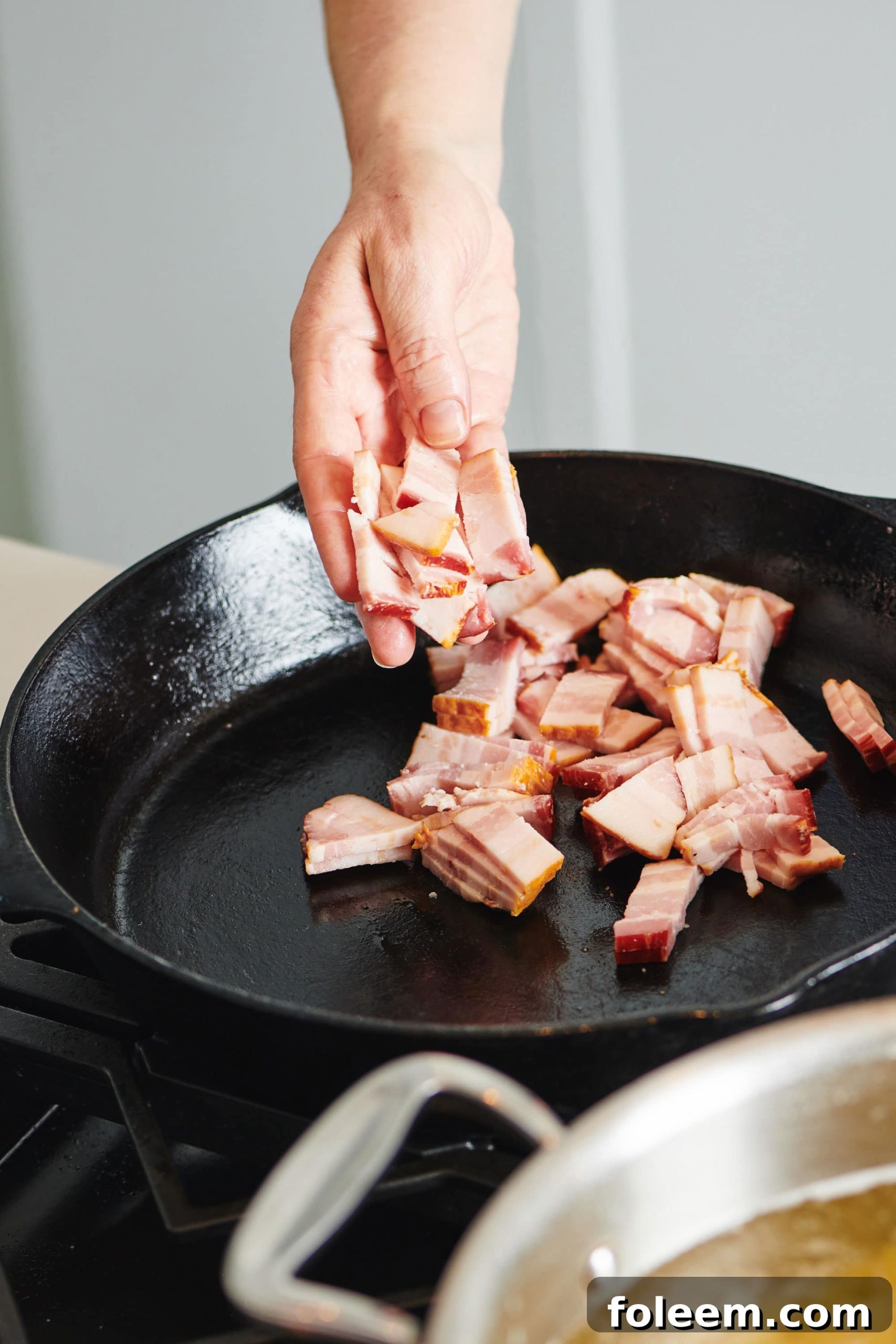
How to Make Bacon Lardons: Making chewy, crispy bacon lardons at home is both simple and potentially life changing.
What Are Lardons?
Lardons are sliced and fried pieces of bacon (larger and meatier than typical bacon bits). The term comes from French cuisine. Traditionally, lardons were made from salt-cured pork rather than smoked bacon, but you can use whatever cured pork you prefer. Many cuisines include small pieces of cooked pork in dishes, but the specific name “lardons” is French in origin.
How to Make Bacon Lardons
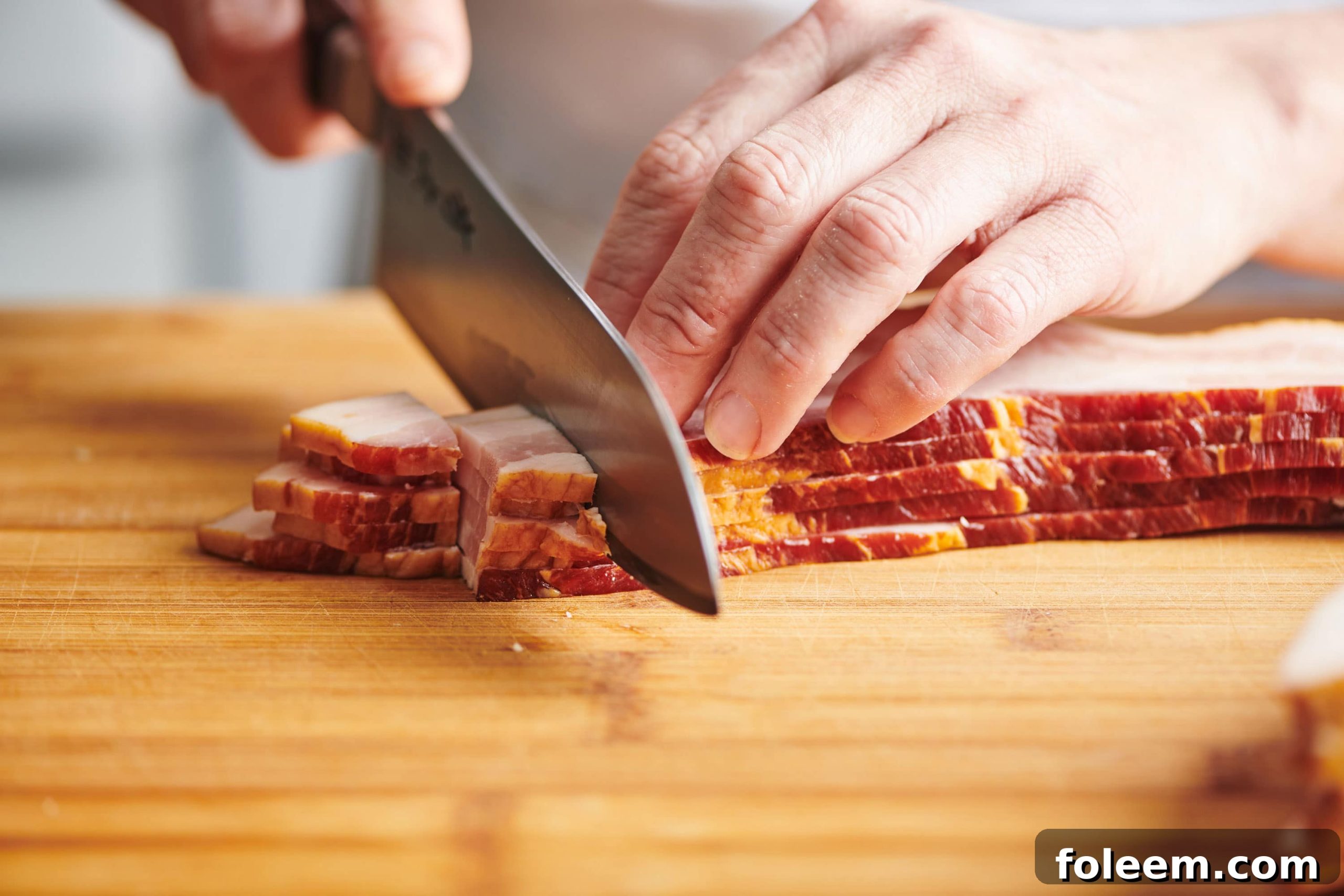
- Cut the bacon: Line a plate with paper towels for draining. Slice thick-cut bacon crosswise into 1/4- to 1/3-inch strips. For cubed lardons, cut into 1/3-inch dice.
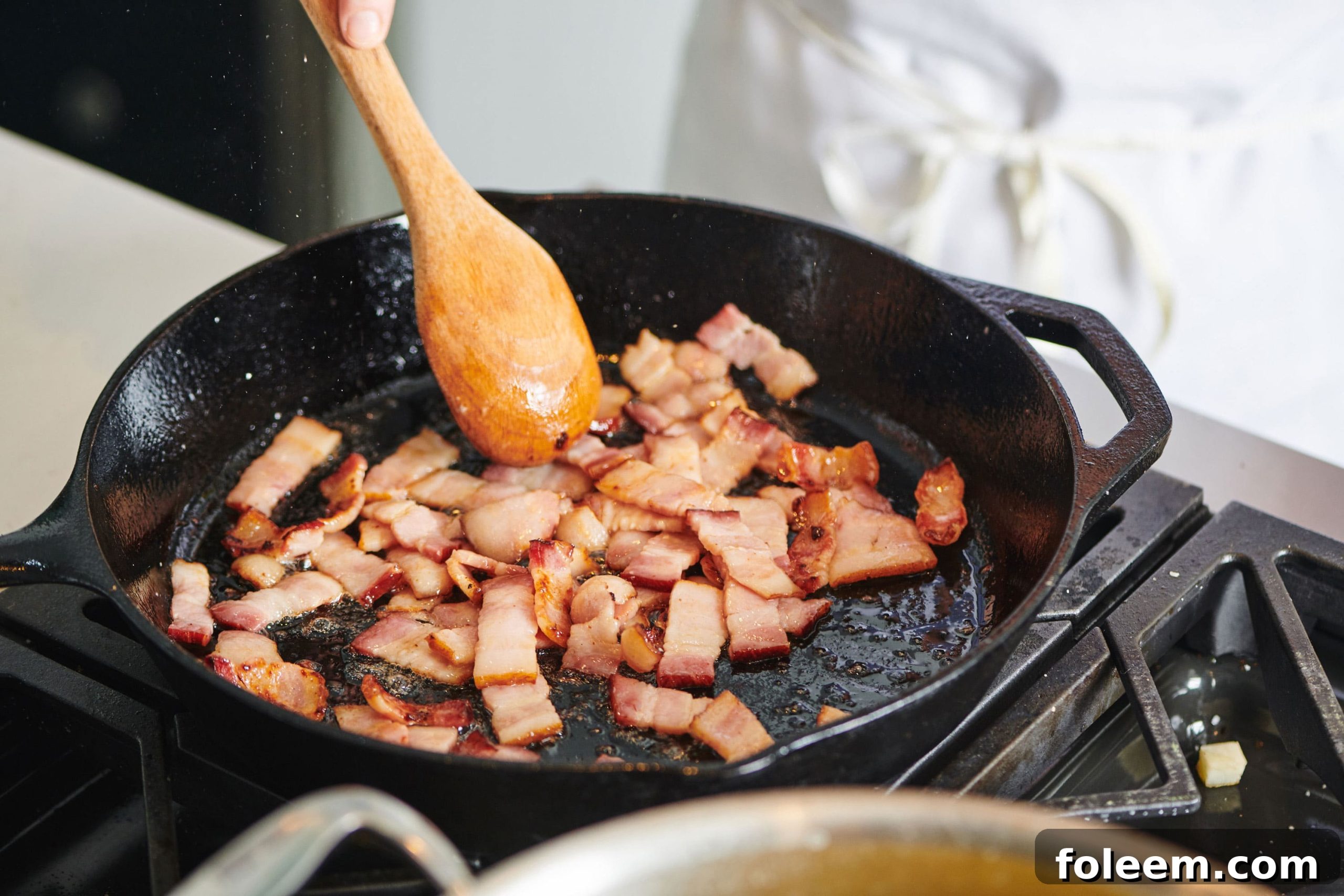
- Cook the lardons: Heat a large, heavy skillet over medium heat. Add the bacon pieces and cook, stirring occasionally, until the fat has rendered and the pieces are cooked and slightly crispy. They will crisp a little more as they cool. Keep the heat moderate — lardons should retain some chew so they differ from fully crisp bacon bits.
- Drain the lardons: Use a slotted spoon to transfer cooked lardons to the paper towel-lined plate. They’re excellent warm, but fine at room temperature for serving or adding to recipes.
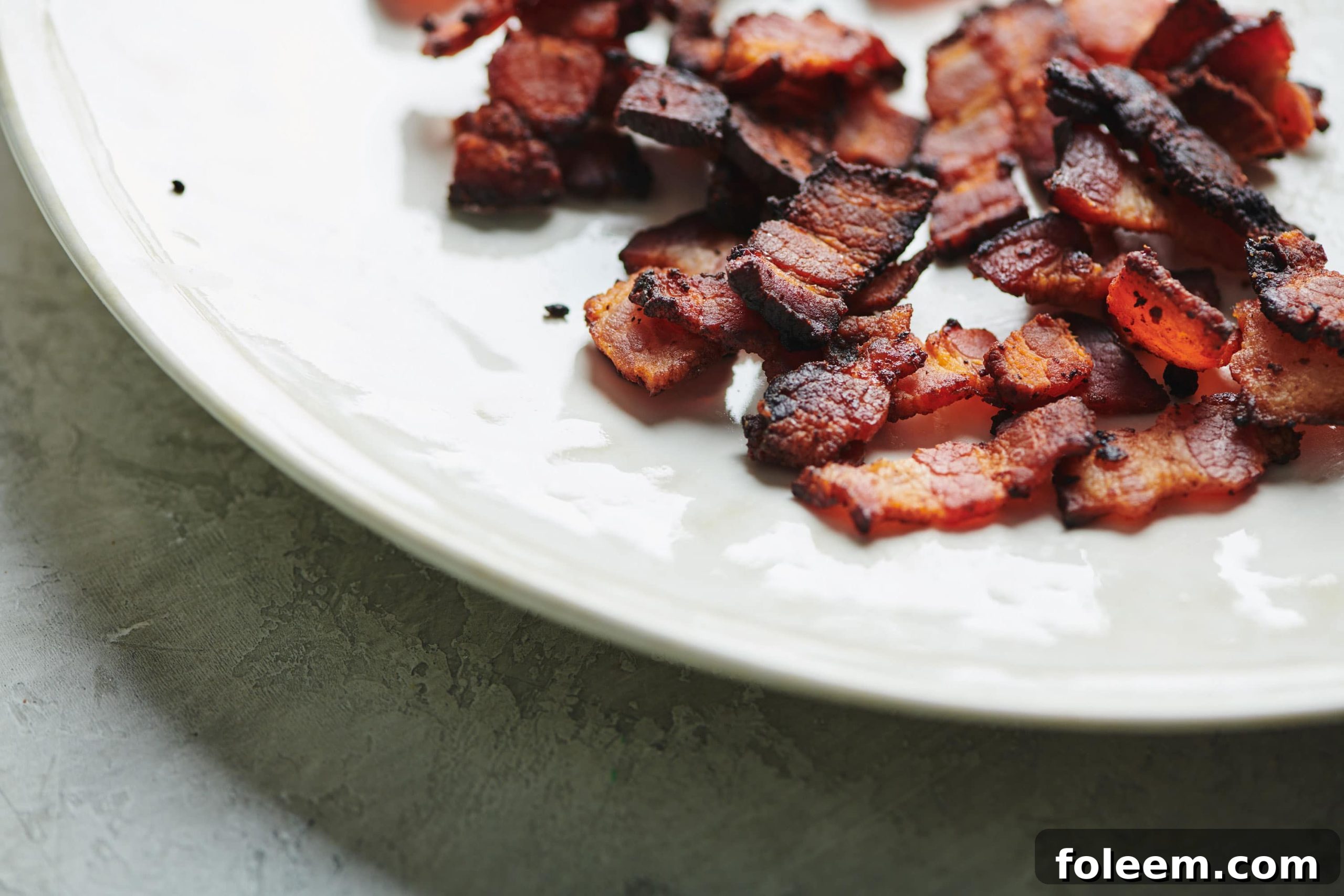
Make Ahead and Storage
You can make lardons ahead and store them in a tightly sealed container at room temperature for one day, or refrigerate for up to five days. Bring them to room temperature before using, or warm briefly in a low oven or over low heat in a pan.
FAQs
Cooking time varies with bacon thickness, burner heat, and batch size, but is typically 4–7 minutes. Keep the heat in the medium range for even cooking.
Thick-cut bacon is preferred for lardons because it keeps a contrast between a crisp exterior and a meaty interior. Regular-cut bacon can be used for thinner, crisper lardons if desired.
Yes — better bacon or traditional salt-cured pork will yield more flavorful lardons. That said, most bacon is tasty, so even modest options will work.
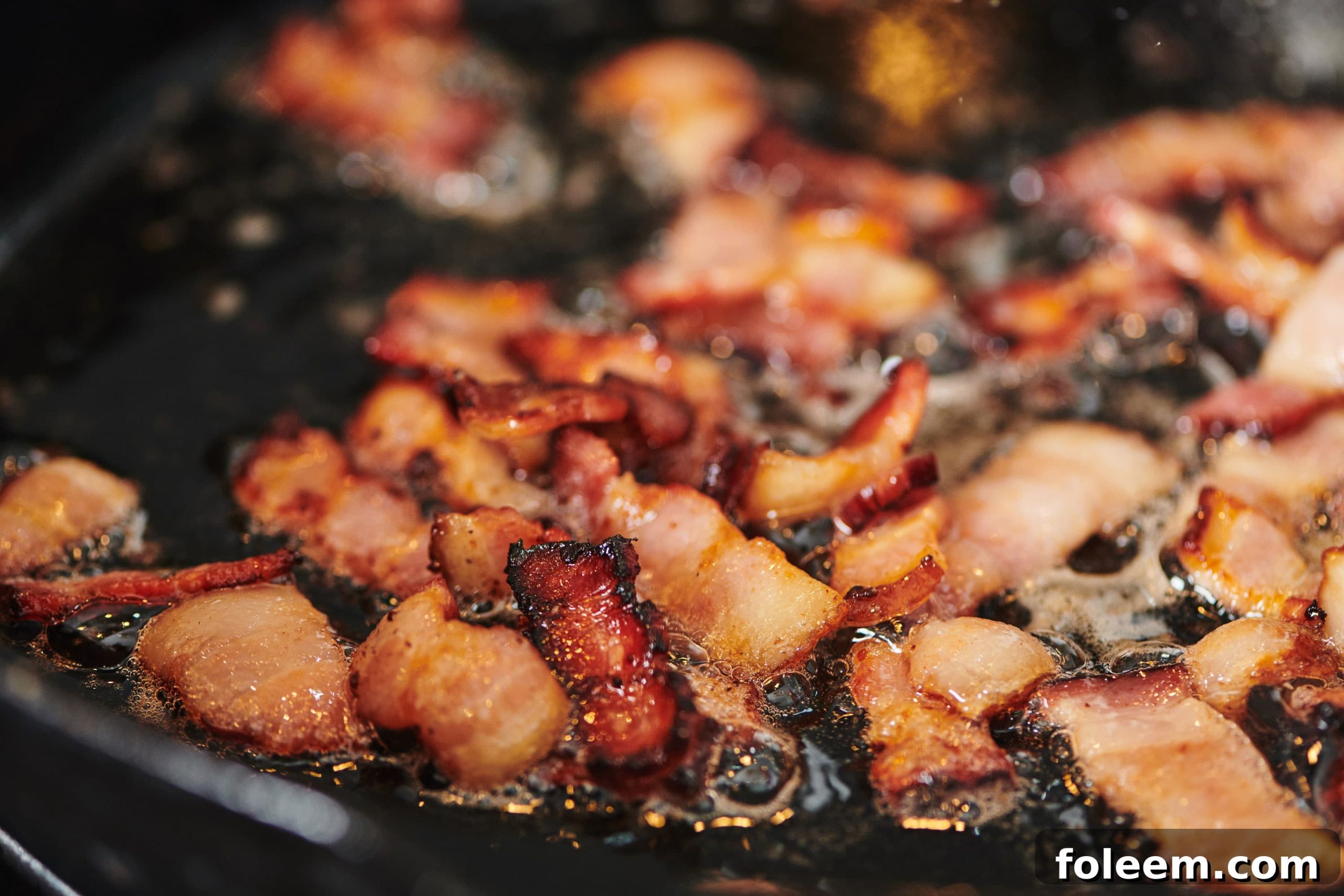
How To Use Bacon Lardons
Lardons are classic in salads such as frisée with a poached egg, and they’re common in French stews, omelets, quiches, tarts, and potato dishes. Make extra — they’re tempting to snack on while you cook.
They also work beautifully in sautéed greens, endive or radicchio salads, creamy coleslaw, on frittatas, or as a finishing topping for many savory dishes. Use lardons wherever you want concentrated bacon flavor and a pleasing texture.

More Bacon Cooking Tips
- How to cook bacon in the oven — for even, hands-off results.
- How to cook bacon in the air fryer — quick and tidy crisping.
- Candied bacon — for a sweet-savory treat.
Bacon Lardons
Ingredients
- 4 strips thick-cut bacon (or as much as needed)
Instructions
- Line a plate with paper towels. Slice about 6 pieces of thick-cut bacon crosswise into 1/4- to 1/3-inch strips, or dice into 1/3-inch cubes for cubed lardons.
- Heat a large, heavy skillet over medium heat. Add the bacon pieces and cook, stirring occasionally, until the fat renders and the pieces are cooked and slightly crispy. Keep the heat moderate so the pieces retain some chew.
- Transfer the cooked lardons to the paper towel-lined plate. Use in salads, frittatas, stews, or as a topping.