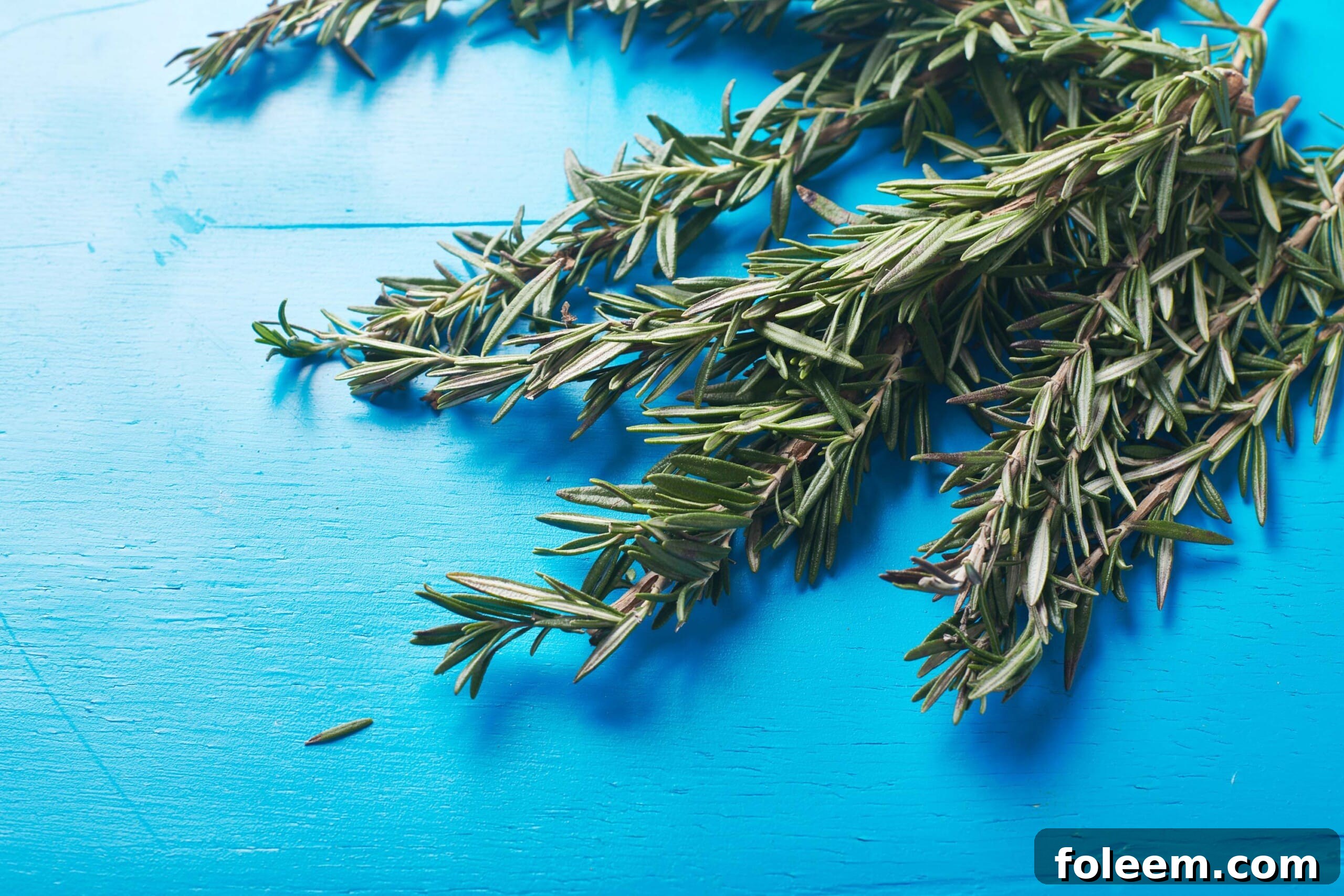
Rosemary is one of the most aromatic herbs, with a bold, piney-lemon flavor that some describe as slightly minty, sage-like, or peppery. Because its taste is strong, start with small amounts when cooking—a little goes a long way. It shines in braises and slow-cooked dishes, where the flavor has time to mellow and infuse.
Used medicinally for thousands of years, rosemary contains compounds such as rosmarinic acid and carnosic acid, which have antioxidant and anti-inflammatory effects. Modern research has also examined rosemary for its potential to support memory and concentration, which helps explain its long association with remembrance across cultures.
Rosemary elevates many dishes. It pairs well with fish and poultry and enriches breads, soups, stews, roasted vegetables, and meats. Try it in recipes like Rosemary Orange Cod Fillets or Lemon Rosemary Chicken Thighs for a bright, savory lift.
- Everything You Wanted to Know About Rosemary
- Substituting Dried Rosemary for Fresh Rosemary
- How to Choose Fresh Rosemary
- How to Prepare and Cook With Fresh Rosemary
- How to Strip Rosemary
- Pro Tips
- Storage
- Recipes With Rosemary
- How to Prepare Fresh Rosemary Recipe
- Cooking With Other Fresh Herbs

Everything You Wanted to Know About Rosemary
Rosemary has stiff, green, needlelike leaves that grow from woody stems. It’s easy to identify by both appearance and its strong, distinctive scent.
Rosemary’s flavor is distinctive and not easily replaced, but thyme and savory often complement the same ingredients. Sage works well with meats, eggs, and poultry. Marjoram can sometimes stand in because it has faint pine-like notes. Mint is another occasional option depending on the dish.
Rosemary is native to the Mediterranean and belongs to the mint family. Its Latin name, ros marinus, means “dew of the sea,” reflecting its coastal origins.
Use rosemary sprigs as skewers for kabobs, infuse olive oil with fresh rosemary for dressings and finishing oil, or add rosemary to simple syrups for cocktails. You can also dry or freeze excess rosemary for later use.
Yes. Cut fresh sprigs into 1–2 inch pieces, freeze them on a baking sheet until solid, then transfer to a freezer-safe bag. Frozen rosemary keeps well for several months.
Yes. Rosemary is a relatively easy indoor herb if it gets direct sun and well-drained soil. A sunny windowsill usually works well. It’s drought-tolerant and prefers not to be overwatered.
Substituting Dried Rosemary for Fresh Rosemary
Dried rosemary works well in cooked dishes. Use approximately 1 teaspoon dried for every 1 tablespoon fresh (a 1:3 ratio). Because dried rosemary is woody, allow it time to soften in the cooking process; it’s better suited to marinades, roasts, and long-simmered dishes than to uncooked salad dressings.

How to Choose Fresh Rosemary
Look for firm, green sprigs with intact leaves. Fresh rosemary is often sold in the produce section in small packages or as larger bunches at farmers markets during peak season. Avoid bunches with brown, shriveled, or soggy leaves.
Dried rosemary is available in the spice aisle and is convenient to keep on hand for cooking.
How to Prepare and Cook With Fresh Rosemary
Recipes may call for whole sprigs, whole leaves, or minced rosemary. Whole sprigs are often added to soups, stews, or roasts to infuse flavor and removed before serving. To use leaves, pluck them from the stem and either leave them whole or chop finely for marinades, breads, or dressings.
Rosemary is hardy and tolerates long cooking times, so it can be added early in the cooking process. Because its flavor intensifies with time, taste as you go to avoid overpowering the dish.

What NOT To Do When Chopping Rosemary

Avoid using a food processor for rosemary; the leaves tend to spin and not chop evenly. A sharp chef’s knife and a cutting board provide better control and a finer result.
How to Strip Rosemary
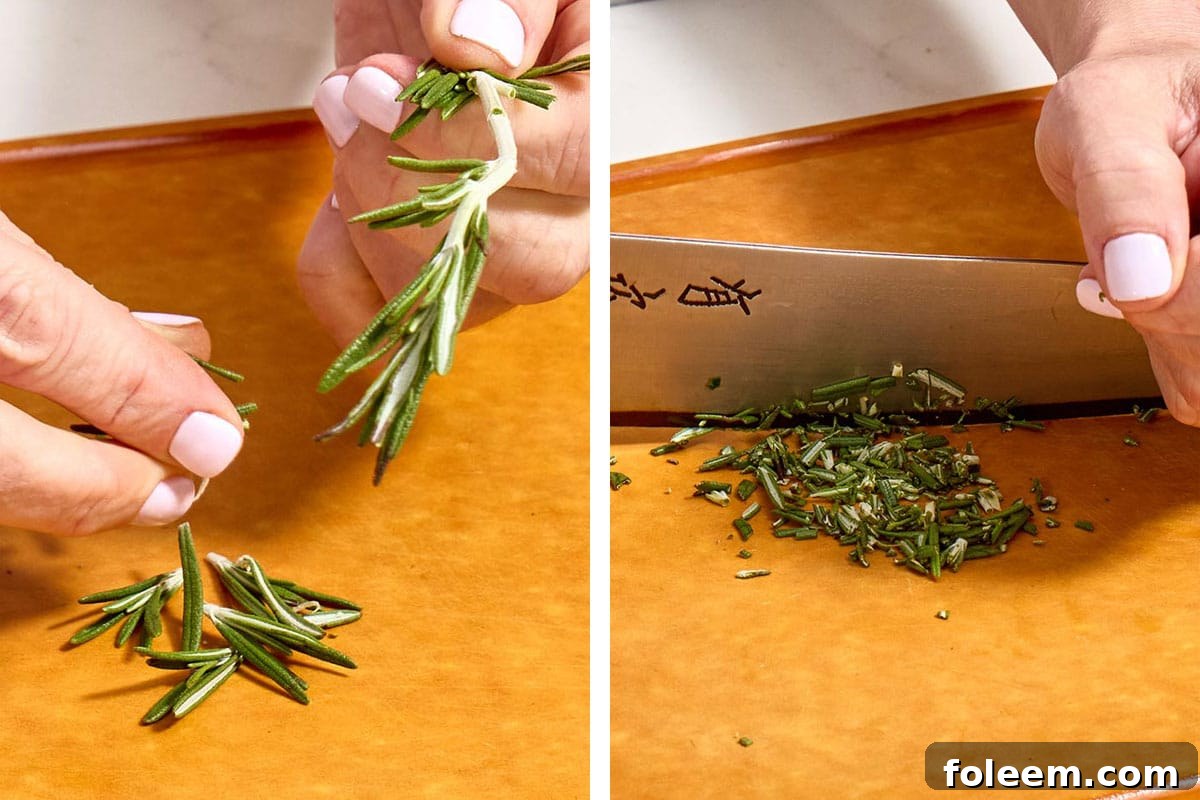
Method 1: Using Your Fingers
- Hold the tip – Grab the very top of the rosemary sprig with one hand.
- Pinch and pull – With the other hand, pinch the stem near the top and run your fingers down toward the base. The leaves will pop off easily.
- Chop if needed – Leave the leaves whole for some uses or chop them finely for marinades, breads, and dressings.
Method 2: Using an Herb Stripper
- Choose the hole size – Select the hole that matches the stem thickness on your herb stripper.
- Thread and pull – Insert the sprig tip into the hole and pull it through in one smooth motion.
- Gather your rosemary – The leaves will collect in a neat pile, ready to chop or add to your recipe.
Pro Tips
- Make sure rosemary is dry; wet leaves can stick to fingers or tools.
- Younger sprigs are softer and strip more easily than older, woodier stems.
- Save stripped stems for infusing soups or roasting under poultry, but remove them before serving.
Storage
To keep fresh rosemary for up to three weeks, wrap sprigs in a slightly damp paper towel, place them in a sealable bag or container, and store in the crisper drawer of the refrigerator. Store stripped leaves in an airtight container in the fridge for up to a week, or freeze them for several months.
Recipes With Rosemary
Fall-Apart Roasted Pork Shoulder with Rosemary, Mustard and Garlic
Eye of Round Roast
Mediterranean Braised Lamb Shoulder Chops

How to Prepare Fresh Rosemary
Equipment
-
Your fingers (free!)
-
Herb stripper (optional)
Ingredients
- Fresh rosemary sprigs (as many needed)
Instructions
Method 1: Using Your Fingers
-
Hold the tip – Grab the very top of the rosemary sprig with one hand.
-
Pinch and pull – With your other hand, pinch the stem near the top and run your fingers down toward the base. The leaves will pop off in a satisfying shower.
-
Chop if needed – Leave leaves whole for some recipes or chop for marinades, breads, and sauces.
Method 2: Using an Herb Stripper
-
Choose the hole size – Pick the hole that best matches the stem thickness on your herb stripper.
-
Thread and pull – Insert the tip of the sprig into the hole, then pull it through in one smooth motion.
-
Gather your rosemary – The leaves will collect in a tidy pile, ready for chopping or tossing into your dish.
Notes
- Rosemary doesn’t chop well in a food processor; the leaves tend to spin. Use a sharp chef’s knife and a cutting board for best results.
- Store stripped rosemary leaves in an airtight container in the fridge for up to a week, or freeze them for several months.
Cooking With Other Fresh Herbs
- Thyme
- Parsley
- Oregano
- Mint
- Rosemary