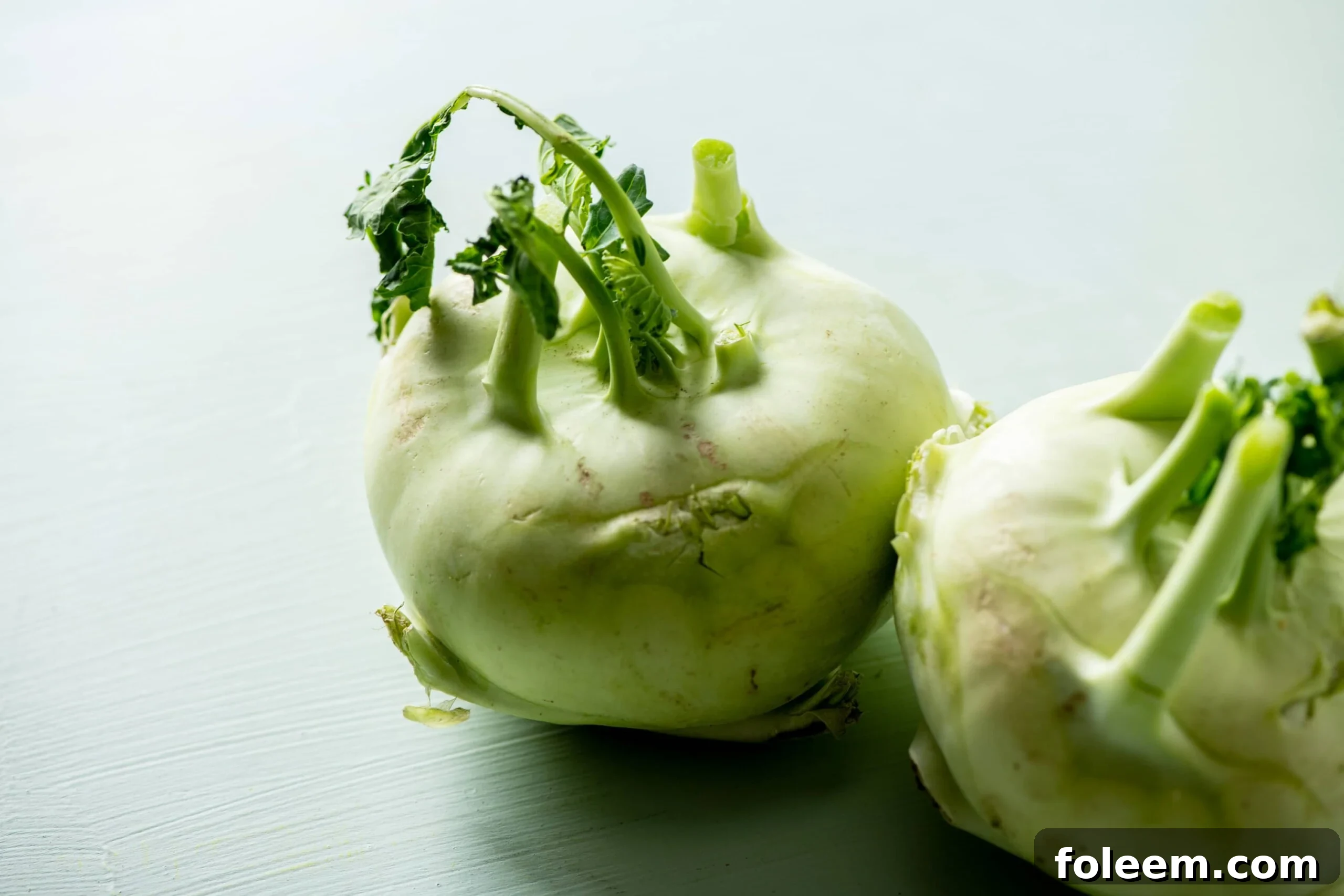
Kohlrabi is a member of the cruciferous (cabbage) family. Both the bulb and the leaves are edible. It can be enjoyed raw or cooked and adds a delightful crunch to many dishes. One favorite use is raw in slaws, such as Carrot, Cabbage, and Kohlrabi Slaw, or in salads like the Crunchy Green Salad below.
- What Does Kohlrabi Look Like?
- What Does Kohlrabi Taste Like?
- How Do I Prepare Kohlrabi?
- Storage
- When Is Kohlrabi in Season?
- Is Kohlrabi Nutritious?
- Recipes That Use Kohlrabi
- Crunchy Green Salad with Kohlrabi
What Does Kohlrabi Look Like?
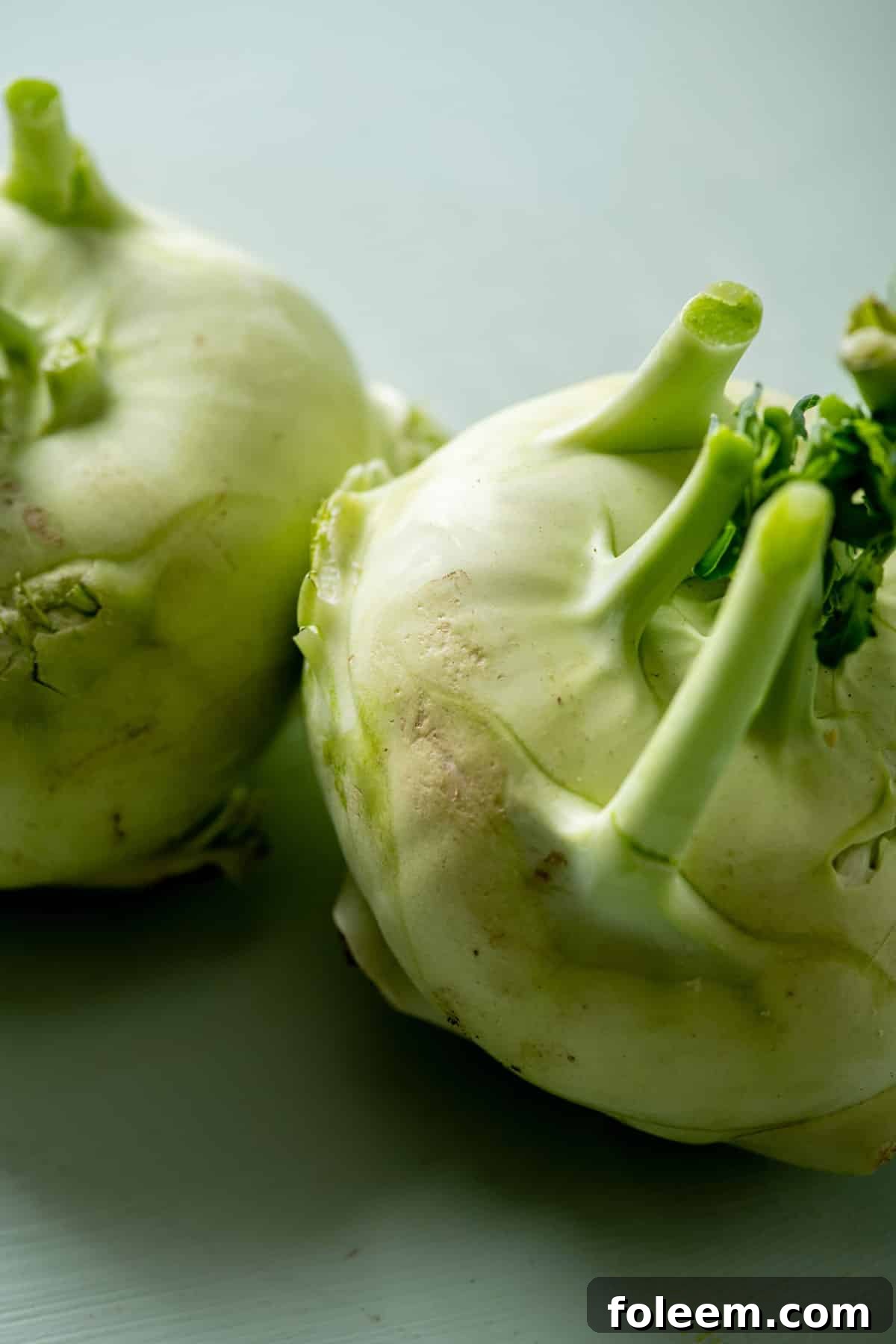
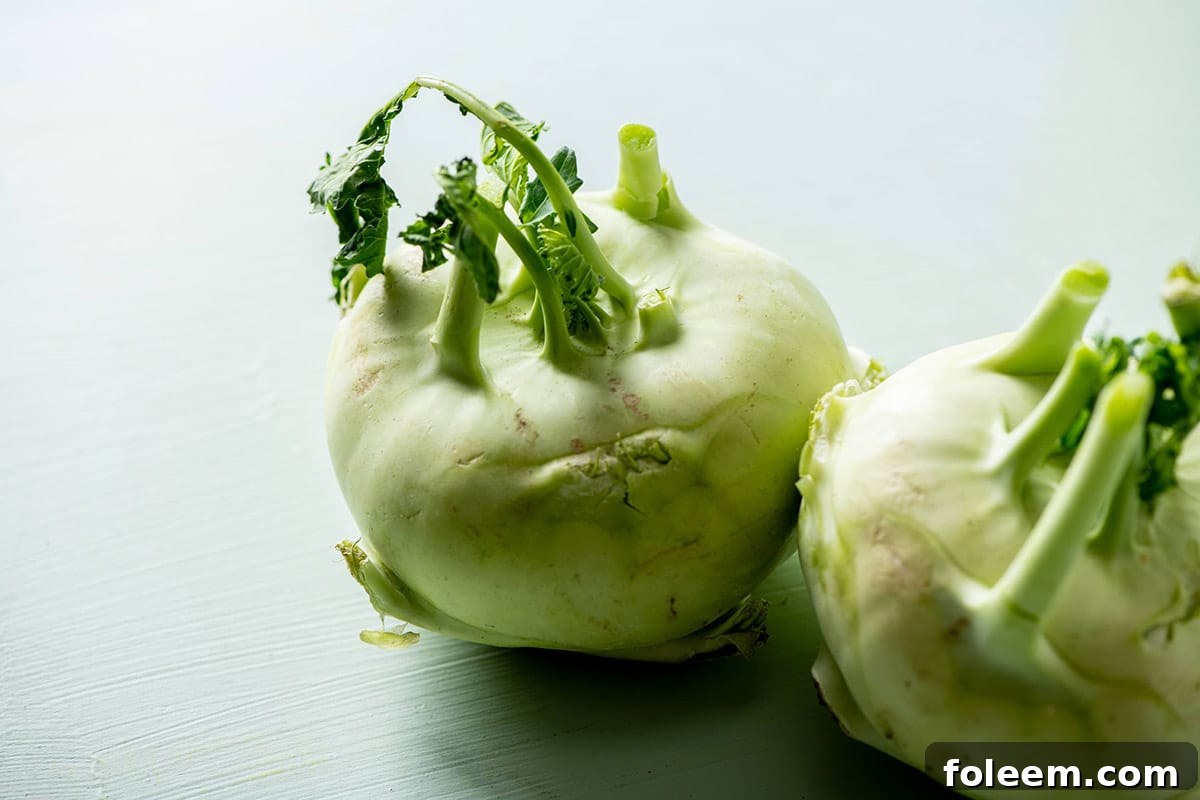
Kohlrabi has a distinctive, almost UFO-like shape. The bulb is about the size of an orange, dense for its size, with several stems that may stick out and, when left intact, green leaves that resemble collards or turnip greens. The skin can range from pale green to purplish, while the flesh inside is a very pale yellow.
Smaller bulbs are generally more tender and flavorful, but larger ones are fine for cooking. When selecting kohlrabi, choose small to medium, firm, unblemished bulbs that feel heavy for their size.
What Does Kohlrabi Taste Like?
The flavor and texture of kohlrabi are similar to peeled broccoli stems with a mild peppery note, somewhat like radish. The leaves are edible and can be used raw or cooked like other leafy greens.
How Do I Prepare Kohlrabi?
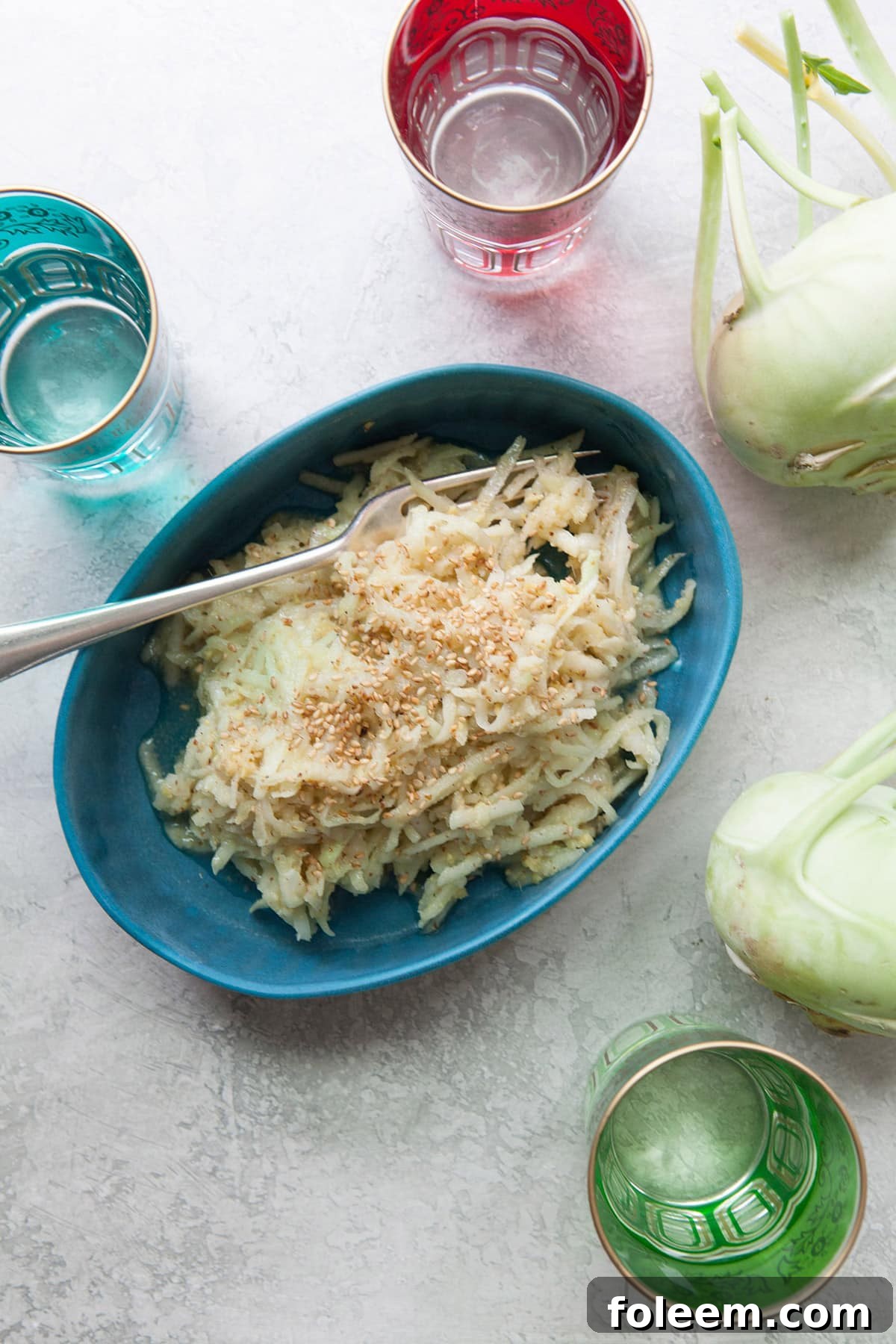
Peel the bulb thoroughly: the skin is tough and should be removed before eating. Use a sharp knife or a sturdy vegetable peeler to remove the outer layer. After peeling, you can cube, slice, julienne, or grate the kohlrabi depending on your recipe.
Kohlrabi can be cooked many ways—boiled or steamed (and then mashed), sautéed, roasted, or fried. It’s often used raw to showcase its crisp texture and mild, slightly spicy flavor. Try julienning or grating it into salads for added crunch.
What in the world is kohlrabi and what do I do with it? Here’s everything you need to know about how to buy, store, and cook kohlrabi!
Storage
If the bulbs have leaves attached, trim them off before storing. Keep bulbs and leaves separately in plastic bags in the refrigerator: leaves will keep up to a week, and unpeeled bulbs will last a couple of weeks. Storing them separately helps both stay fresher. Kohlrabi can also be stored in a cool, dry place if refrigeration is not available.
When Is Kohlrabi in Season?
Kohlrabi is typically in season in winter and spring, though it’s often available year-round. The bulb starts below ground but may push above the surface as the plant matures.
Is Kohlrabi Nutritious?
Kohlrabi is a good source of fiber and vitamin C and is low in calories—around 40 calories per cup—making it a healthy, crunchy addition to meals.
Recipes That Use Kohlrabi
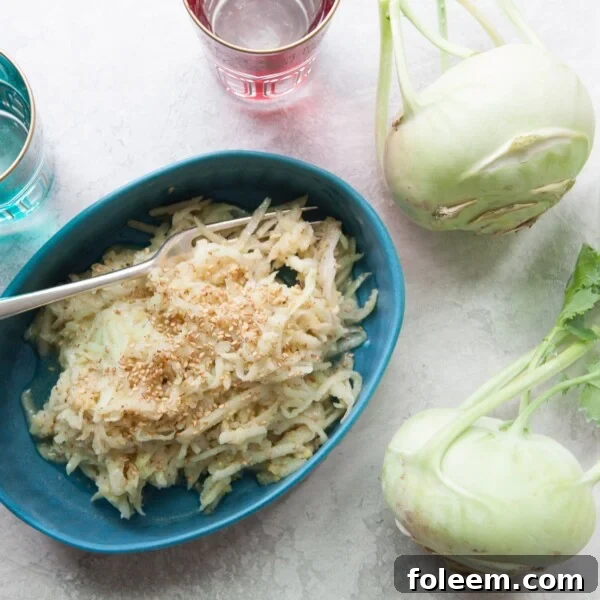
Asian Kohlrabi and Apple Slaw
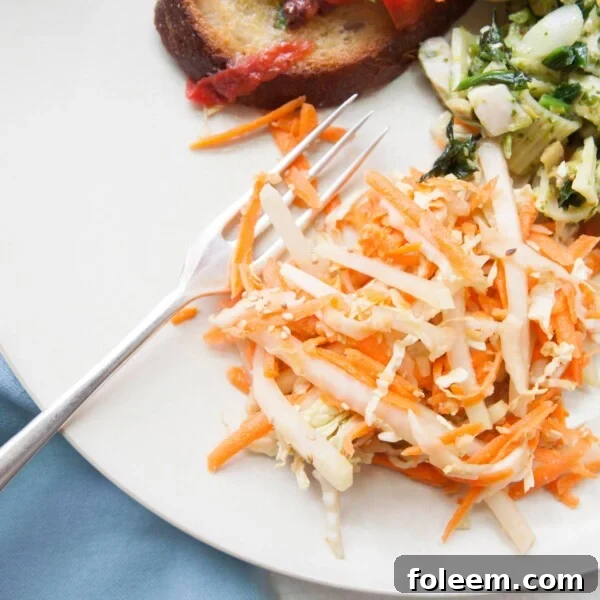
Slaw with Miso-Ginger Dressing
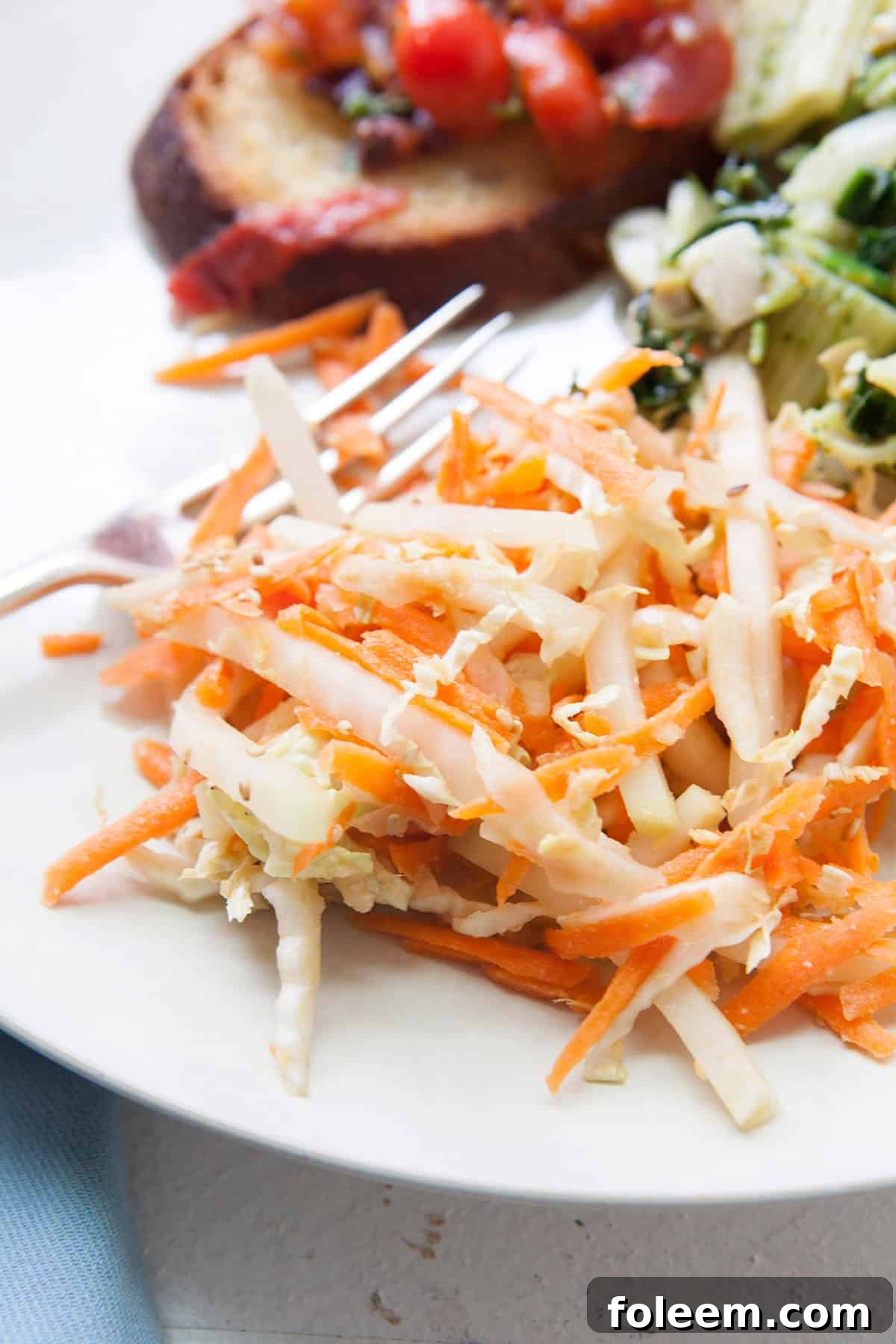
Crunchy Green Salad with Kohlrabi
This is a favorite go-to salad. It can be made ahead and chilled for an hour; the flavors will meld more over time, though the vegetables will lose some crunch the longer it sits. You can make the vinaigrette a couple of days ahead and slice the vegetables a day ahead, then toss just before serving.
Kohlrabi in Crunchy Green Salad
Ingredients
- 1 small kohlrabi (trimmed and peeled)
- 10 ribs celery
- 3 hearts romaine lettuce
- 3 tablespoons unseasoned rice vinegar
- 3 tablespoons extra-virgin olive oil
- 2 tablespoons Dijon mustard
- Kosher salt and freshly ground black pepper, to taste
- 1 cup pea shoots (optional)
Instructions
- Cut the kohlrabi into manageable chunks, slice those chunks into thin planks (about 1/4-inch), then cut the planks into 1/4-inch matchsticks (julienne). Don’t worry about perfect uniformity.
- Thinly slice the celery crosswise and the romaine into thin ribbons. Combine the vegetables in a serving bowl with the kohlrabi.
- Whisk together rice vinegar, olive oil, Dijon mustard, salt, and pepper in a small bowl or shake in a lidded container. Toss the vegetables with the dressing and top with pea shoots if desired.
Notes
- Peel kohlrabi thoroughly before using; the skin is tough and not pleasant to eat.
- The salad can be chilled for up to an hour before serving; flavors meld over time but the vegetables will become less crisp.
- You can make the vinaigrette a couple of days ahead and slice the vegetables a day ahead, then toss just before serving.