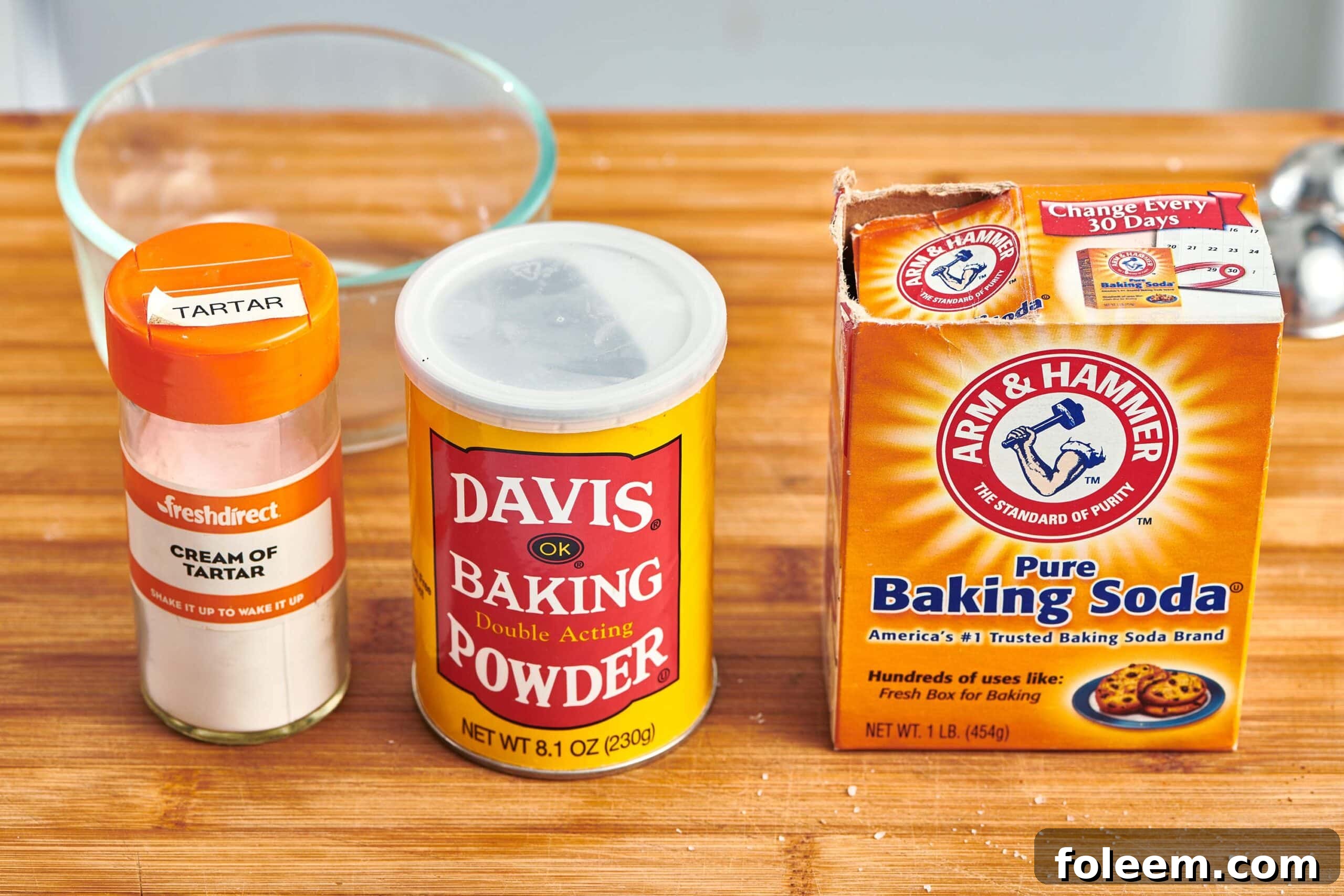
It happens to everyone: you’re ready to bake and discover you have baking soda when the recipe calls for baking powder, or vice versa. The good news is that with a few adjustments you can usually substitute one for the other and avoid an extra trip to the store.
- What Is a Leavener?
- What Is Baking Soda?
- What Is Baking Powder?
- FAQs
- How to Turn Baking Soda into Baking Powder
- Recipes With Baking Soda
- How to Substitute Baking Powder for Baking Soda
- Recipes With Baking Powder
- Baking Powder Substitute Recipe
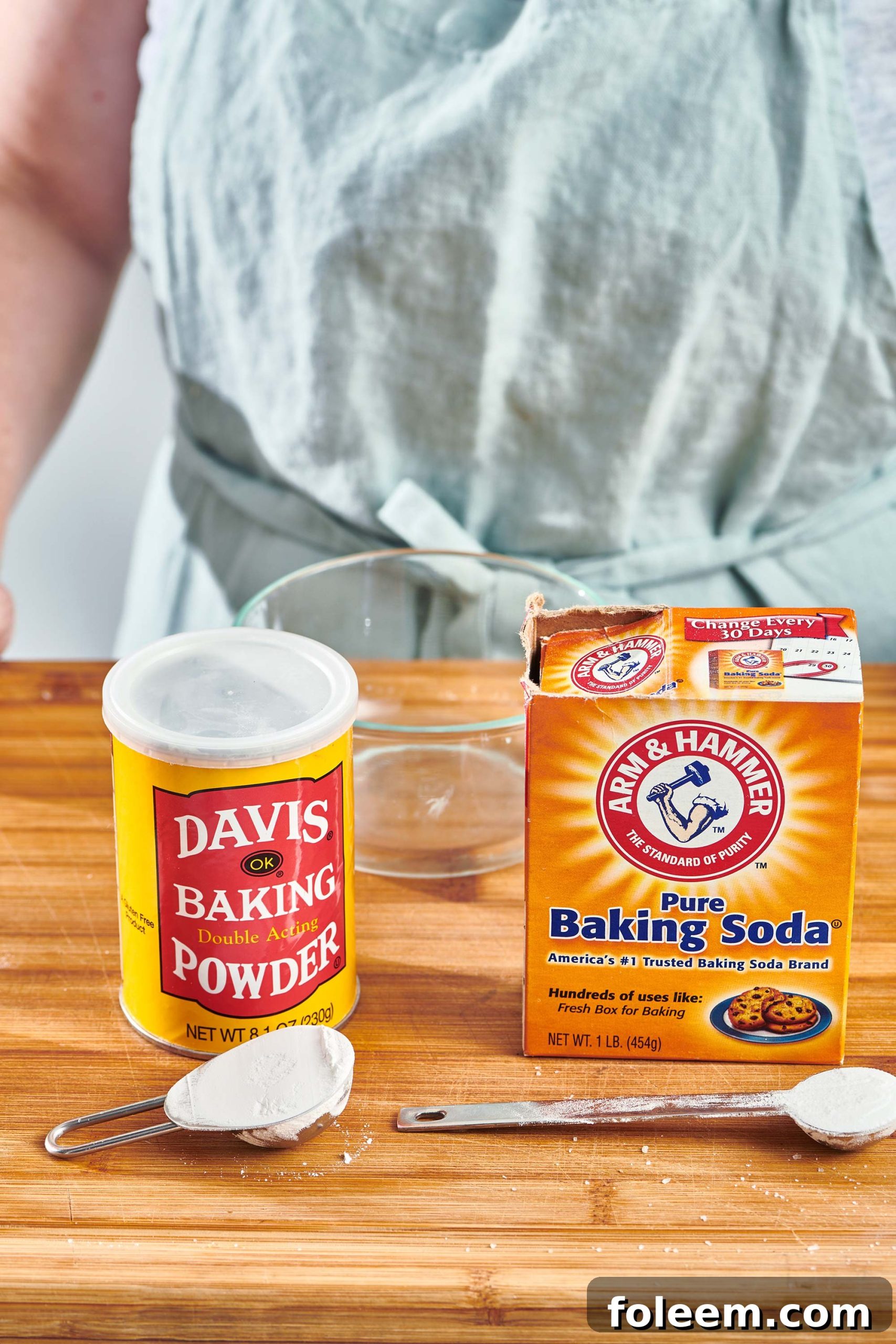
How to Substitute Baking Soda and Baking Powder: What to do when you’re ready to bake but don’t have the right leavener!
What Is a Leavener?
Leaveners, or leavening agents, are the chemical or biological ingredients that create the airy, porous structure in baked goods. They’re what make bread, cookies, bars, cakes, muffins and other treats rise and develop the desired texture.
Using the right amount is important: too little leavening prevents proper rise, while too much can make a baked item collapse or develop off flavors. Yeast is the primary biological leavener used for traditional breads, while baking soda and baking powder are common in quick breads, muffins, cookies, and cakes that are mixed and baked without a long rising time.
What Is Baking Soda?
Baking soda is sodium bicarbonate, a fast-acting alkaline leavener. When combined with an acid and liquid, it produces carbon dioxide gas that helps batter and dough rise. Common acidic partners include cocoa or chocolate, molasses, citrus juices, buttermilk, yogurt, sour cream, and brown sugar.
Because the reaction starts as soon as baking soda meets moisture and acid, recipes that use it should be mixed and moved to the oven promptly. If a recipe lacks acid, baking soda can leave a metallic or soapy taste. Baking soda is stronger than baking powder—roughly three times as potent by volume.
What Is Baking Powder?
Baking powder contains baking soda plus an acidifying agent (often cream of tartar) and a drying agent like cornstarch. It’s less potent than pure baking soda; baking powder delivers about one-third the leavening power of the same volume of baking soda.
Baking powder is useful in recipes without other acidic ingredients because the acid needed for the reaction is built into the powder. Many commercial varieties are double-acting: they react once when mixed with liquid and again when heated in the oven.
What Does Double-Acting Baking Powder Mean?
Double-acting baking powder contains components that react in two stages—first when moistened and again with oven heat—so it provides rise during mixing and while baking. Most store-bought baking powder is double-acting and labeled accordingly.
FAQs
Unopened baking soda will keep for nearly two years; an opened box is best used within six months for reliable leavening. Baking soda used for deodorizing refrigerators can pick up odors and shouldn’t be used for baking.
Baking powder is best used within six months of opening and about a year and a half unopened. Over time it loses strength and will produce less rise, so buy amounts you’ll use within a reasonable time and label the container with the purchase date.
Baking soda is pure sodium bicarbonate and needs an acid, liquid, and heat to produce lift. Baking powder already includes an acid, so it only requires liquid and heat. Use baking soda in recipes that include acidic ingredients; use baking powder when no other acid is present.
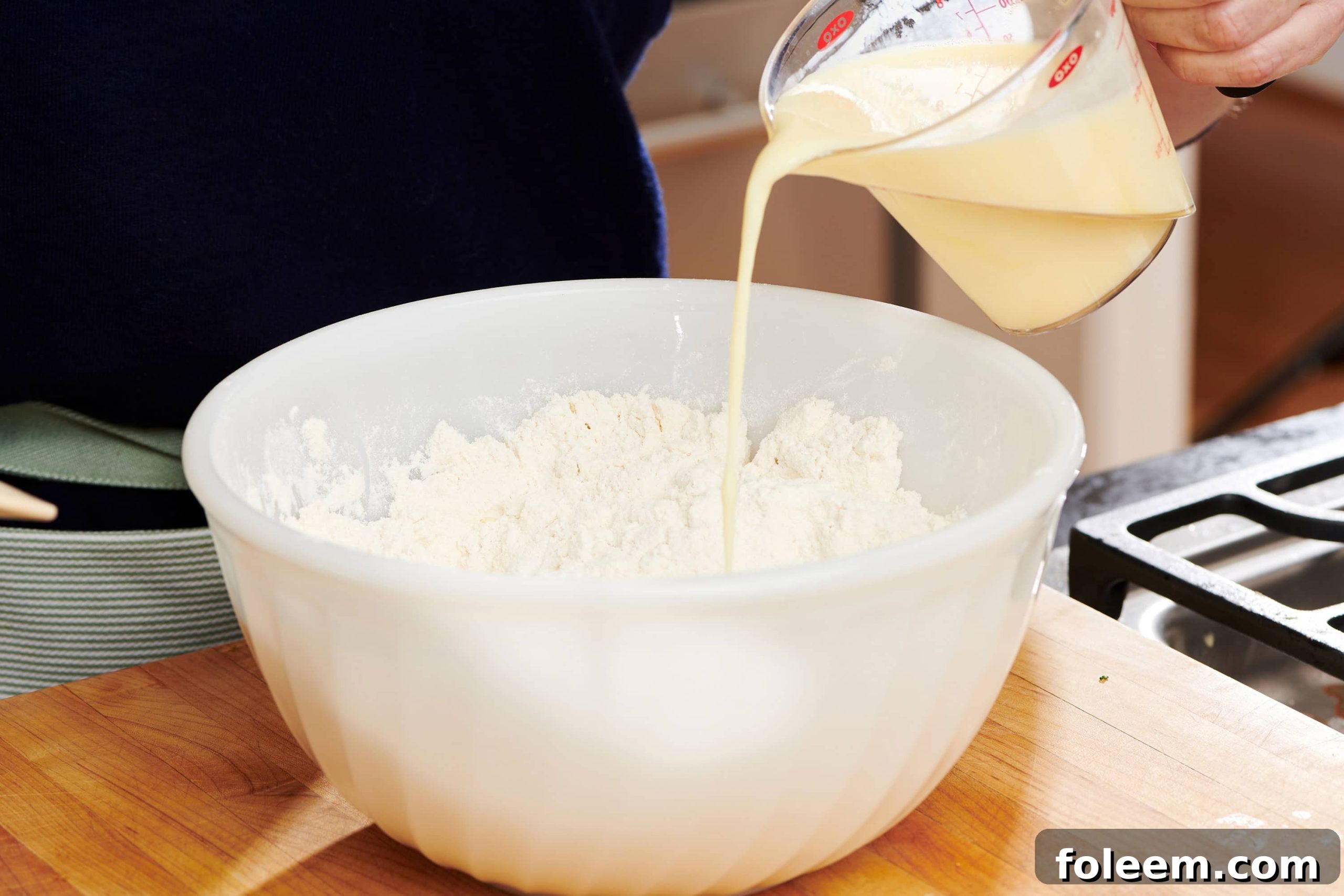
How to Turn Baking Soda into Baking Powder
You can make a simple baking powder substitute from baking soda. A general guideline is:
- Use 1/3 teaspoon baking soda to replace 1 teaspoon baking powder
- Use 2/3 teaspoon baking soda to replace 2 teaspoons baking powder
- Use 1 teaspoon baking soda to replace 1 tablespoon baking powder
If you have cream of tartar, mix it with baking soda to more closely mimic baking powder. Combine baking soda with twice the amount of cream of tartar:
- For 1 teaspoon baking powder: 1/3 teaspoon baking soda + 2/3 teaspoon cream of tartar
- For 2 teaspoons baking powder: 2/3 teaspoon baking soda + 1 1/3 teaspoons cream of tartar
- For 1 tablespoon baking powder: 1 teaspoon baking soda + 2 teaspoons cream of tartar
Recipes With Baking Soda
- Snickerdoodles
- Oatmeal cookies
- Mexican hot chocolate cookies
- Mini banana bread loaves
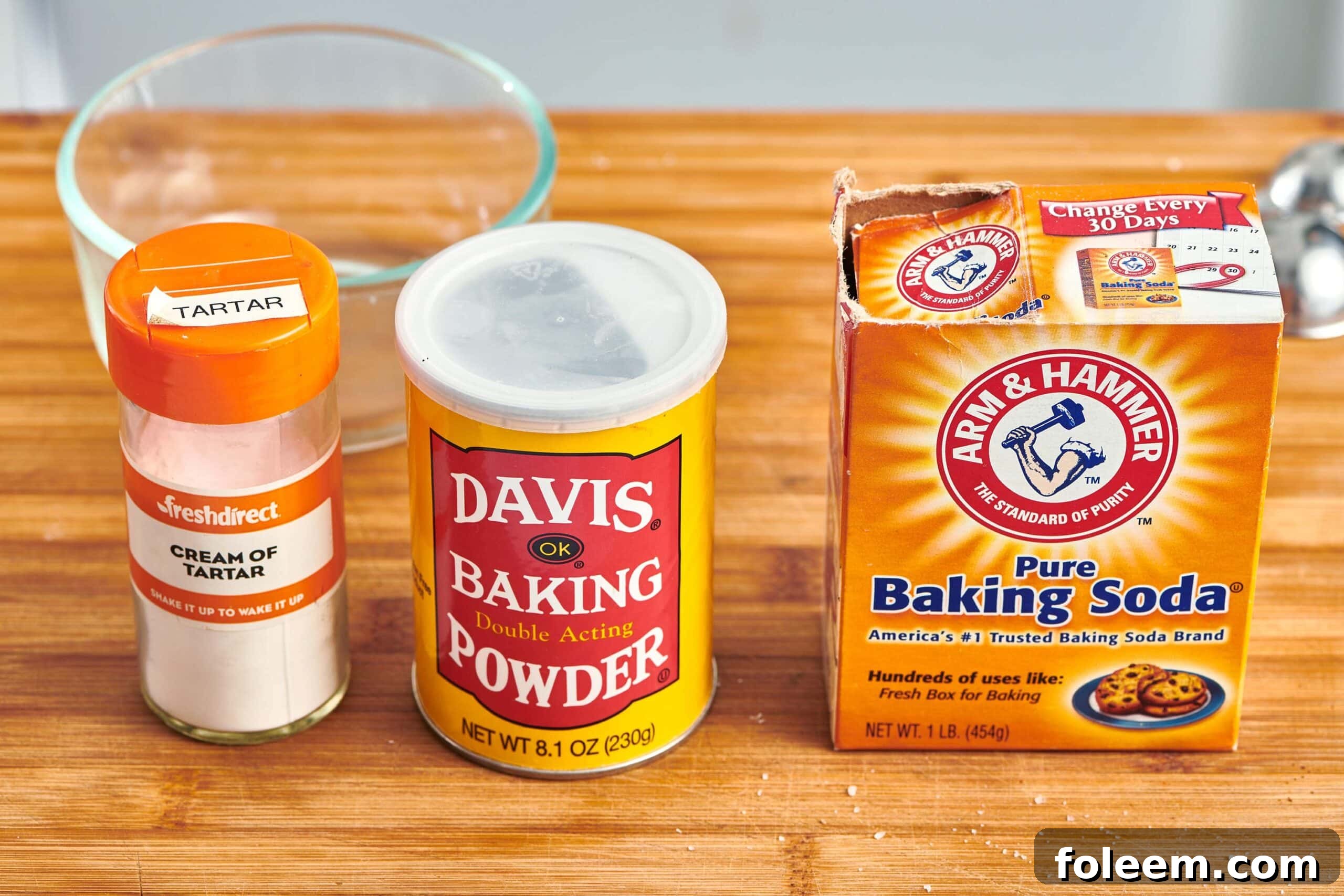
How to Substitute Baking Powder for Baking Soda
Substituting baking powder for baking soda is less straightforward because baking powder is much weaker by volume. You generally need about three times the amount of baking powder to equal the lift of baking soda, which can introduce off flavors if overused.
- If a recipe calls for 1 teaspoon baking soda, you can use 1 tablespoon baking powder instead.
- For recipes that require more than 1 teaspoon of baking soda, substituting with baking powder may not give reliable results; consider waiting to use the original ingredient.
Recipes With Baking Powder
- Beer bread
- Cheddar jalapeño cornbread
- Dried cherry scones
- Apple coffee cake
- Bubble waffles
Also see how to make self-rising flour for convenience when you don’t have baking powder on hand.
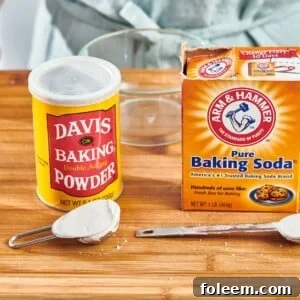
Baking Powder Substitute
Ingredients
- ⅓ teaspoon baking soda
- ⅔ teaspoon cream of tartar (optional)
Instructions
Easiest Baking Powder Substitute:
-
Use 1/3 teaspoon of baking soda for every 1 teaspoon of baking powder called for in the recipe.
Baking Powder Substitute With Cream of Tartar:
-
To make 1 teaspoon of baking powder substitute, combine 1/3 teaspoon baking soda and 2/3 teaspoon cream of tartar in a small bowl and mix thoroughly.
Notes
- For 2 teaspoons baking powder: 1/3 teaspoon baking soda + 1 1/3 teaspoons cream of tartar
- For 1 tablespoon baking powder: 1 teaspoon baking soda + 2 teaspoons cream of tartar
To substitute baking powder for baking soda:
Using baking powder instead of baking soda requires about three times the volume of baking powder to match the leavening. This can introduce a bitter or chemical taste, so use caution.
- If a recipe calls for 1 teaspoon baking soda, you can use 1 tablespoon baking powder instead.
- For recipes that require more than 1 teaspoon baking soda, substituting may not produce reliable results.