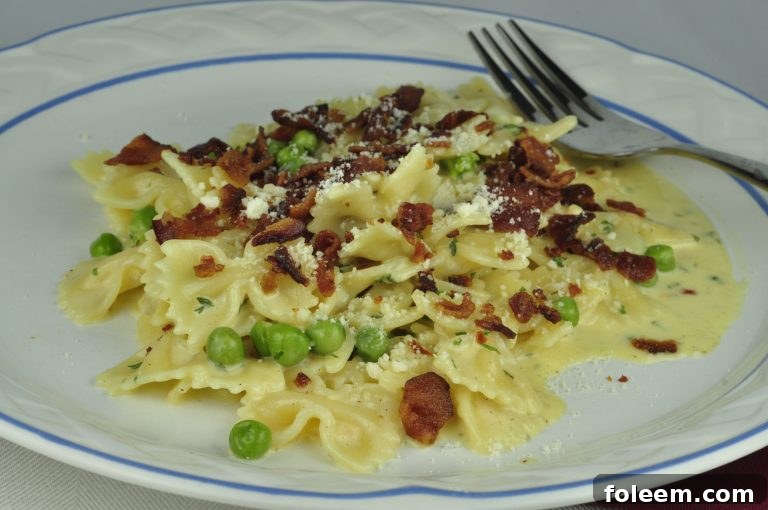
Indulge in the ultimate comfort food with this Classic Italian Creamy Pasta and Bacon Carbonara recipe – a rich, cheesy, and irresistibly flavorful dish that tastes like it came straight from a gourmet Italian kitchen!
Among the myriad of classic Italian dishes, Pasta Carbonara holds a special place in the hearts of food lovers worldwide. Its exquisite balance of savory bacon, rich eggs, and sharp cheese, all coating perfectly cooked pasta, is truly a culinary masterpiece. While purists often debate the “authentic” version, featuring guanciale, Pecorino Romano, and no cream, our variation embraces a wonderfully creamy texture that many adore, without sacrificing the quintessential Carbonara essence. This recipe for Creamy Pasta and Bacon Carbonara isn’t just easy to make; it’s a revelation, promising a restaurant-quality experience right in your home kitchen.
The journey to perfecting this Carbonara began with countless explorations. I’ve enjoyed various interpretations at different restaurants, each offering a unique twist on this beloved dish. No two Carbonaras are exactly alike, and that’s the beauty of it. This personal adaptation is a testament to those flavorful experiences, resulting in a dish that has quickly become a new favorite. Each forkful delivers a symphony of creamy, salty, and smoky flavors, with the satisfying crunch of bacon and the comforting embrace of pasta. Prepare your taste buds for an unforgettable explosion of flavor that will leave you craving more!
Stay connected for more culinary inspiration! Follow along on Pinterest for delicious recipes and food ideas!
The Intriguing History of Carbonara: A Tale of Post-War Innovation
The exact origins of Pasta Carbonara are a topic of lively discussion among culinary historians, but one of the most widely accepted theories points to its creation in the Lazio region, particularly around Rome, during the tumultuous period following World War II. It is believed that American soldiers stationed in Italy introduced their rations of bacon and eggs to local Italian cooks. Resourceful Italians, accustomed to incorporating available ingredients into their pasta dishes, ingeniously combined these new staples with traditional pasta, hard cheese, and black pepper. This clever fusion resulted in what we now know as Carbonara.
This fusion dish rapidly gained popularity and cemented its status as a classic Roman pasta, quickly becoming a standard offering on menus in Italian restaurants not just across Italy, but around the globe. Its simple yet profound flavor profile made it an instant hit. As with any dish that achieves such widespread adoration, numerous variations have emerged over time. Cooks and chefs, driven by creativity and local ingredient availability, have added their unique touches, leading to the diverse interpretations we see today. From variations in bacon (guanciale vs. pancetta vs. regular bacon) to the type of cheese (Pecorino Romano vs. Parmesan) and even the addition of cream or garlic, Carbonara continues to evolve while retaining its comforting essence.
Crafting the Perfect Creamy Carbonara: My Delicious Adaptation
I couldn’t be more thrilled with the outcome of my personal adaptation of this cherished dish! While some ingredients I’ve chosen might stray from what purists consider “traditional” for a classic Carbonara sauce, they are thoughtfully included to elevate the dish. Rather than detracting from the core flavors, these additions subtly complement them, creating a richer and more nuanced experience. This recipe aims for a delightful creamy texture that makes it incredibly satisfying and approachable for those who appreciate a slightly richer sauce.
The inherent beauty of Carbonara lies in its simplicity. You don’t need years of culinary training or a trip to Italy to master the basics. The fundamental components are straightforward: quality eggs, crispy bacon (or pancetta/guanciale), robust cheese, and your favorite pasta. Traditionally, spaghetti, linguine, or bucatini are preferred, as their long strands expertly cradle the luscious sauce. However, for this recipe, I chose Farfalle – also known as “bow-tie” pasta – primarily because it’s one of my personal favorites. Its unique shape offers an excellent texture and visual appeal, capturing the sauce in its folds beautifully.
Beyond the core ingredients, I’ve incorporated peas into this creamy Carbonara. This addition serves multiple purposes: it’s a fantastic way to sneak in a serving of vegetables, and it adds a vibrant pop of color that brightens the entire dish. I first encountered this idea in a restaurant and immediately fell in love with how the subtle sweetness of the peas balanced the savory richness of the bacon and cheese. It’s a simple change that makes a significant difference in both flavor and presentation, proving that sometimes, a little deviation from tradition can lead to a truly remarkable result.
Essential Ingredients for a Heavenly Carbonara
To truly appreciate the magic of this Creamy Pasta and Bacon Carbonara, understanding the role of each ingredient is key. While the recipe is simple, the quality of your ingredients directly impacts the final flavor. Let’s delve into the stars of this show:
- The Pasta: As mentioned, I opted for Farfalle, but feel free to use Spaghetti, Linguine, Bucatini, or even Penne. The goal is to cook the pasta al dente – firm to the bite – as it will continue to cook slightly when tossed with the hot sauce. This prevents mushiness and ensures a delightful texture.
- The Bacon: For this recipe, classic bacon delivers that familiar smoky, salty crunch that pairs so well with creamy pasta. If you want to lean closer to tradition, high-quality pancetta (Italian cured pork belly) or guanciale (Italian cured pork jowl) would be exceptional choices. The key is rendering the fat slowly to create crispy bits and flavorful grease, which is crucial for the sauce.
- The Eggs: Eggs are the heart of Carbonara sauce. They provide the creamy, emulsified texture when combined with cheese and hot pasta water. Using large, fresh eggs is best. The combination of yolks (for richness and color) and a bit of egg white (for structure) creates a perfect consistency.
- The Cheese: Pecorino Romano is the traditional choice for Carbonara, offering a sharp, salty, and tangy flavor profile. However, Parmesan (Parmigiano-Reggiano) is a fantastic alternative if Pecorino is unavailable or if you prefer a slightly milder, nuttier taste. A blend of both can also be sublime! Always grate your cheese fresh for the best flavor and melting quality.
- Heavy Cream (My Secret for Extra Creaminess): While not traditional, a touch of heavy cream in this recipe ensures a consistently luscious and velvety sauce that clings beautifully to the pasta. It provides a forgiving buffer against the eggs scrambling and adds an extra layer of richness that many find incredibly satisfying.
- Aromatics: Onion and Garlic: Though debated by purists, a small amount of finely chopped onion and garlic sautéed in bacon fat adds an incredible depth of flavor to the sauce, building a more complex base that complements the other ingredients without overpowering them.
- Peas (The Green Goodness): These tiny green pearls add a welcome burst of sweetness, a pop of color, and a subtle freshness that cuts through the richness of the dish. They’re an optional but highly recommended addition.
- Red Pepper Flakes: A hint of red pepper flakes introduces a subtle warmth and a gentle kick, elevating the savory notes of the bacon and cheese. Adjust to your spice preference!
Who would have thought that humble eggs and bacon could be transformed into such a refined and satisfying dish? With these carefully selected ingredients, you’re well on your way to creating a Carbonara that your taste buds will truly thank you for. If you’re passionate about creamy pasta dishes featuring bacon, you’ll also adore this Shells and Cheese with Bacon from my friend Angie or this hearty Penne Rustica from my friend Leigh Anne!
Tips for Perfecting Your Creamy Carbonara
Making Carbonara isn’t just about combining ingredients; it’s about technique. Here are some essential tips to ensure your dish turns out perfectly creamy and delicious every time:
- Prepare Everything in Advance (Mise en Place): Carbonara comes together quickly once the pasta is cooked. Have your egg mixture whisked, bacon cooked and crumbled, cheese grated, and aromatics chopped before you start cooking the pasta. This is crucial for smooth execution.
- Render Bacon Fat Properly: Start bacon in a cold skillet and cook it slowly over medium-low heat. This allows the fat to render out gradually, resulting in crispy bacon bits and plenty of flavorful fat to cook your aromatics. Don’t discard all the fat – it’s a key flavor component!
- Temper Your Eggs: The biggest fear when making Carbonara is scrambling the eggs. The trick is to remove the pasta from direct heat and work quickly. The residual heat from the pasta and a splash of hot pasta water will gently cook the eggs into a silky sauce, preventing them from coagulating into scrambled bits. Stir continuously!
- Reserve Pasta Water: This is a non-negotiable step for any great pasta dish. The starchy pasta water is liquid gold. It helps create a smooth, emulsified sauce, adjusting its consistency to perfection. If your sauce seems too thick, a tablespoon or two of pasta water will bring it to the ideal creaminess.
- Serve Immediately: Carbonara is best enjoyed fresh off the stove. The sauce is at its peak creaminess and temperature right after it’s made. Have your plates ready!
- Garnish Generously: A final sprinkle of fresh grated Parmesan or Pecorino Romano, along with a dash of freshly ground black pepper and chopped fresh parsley, adds both flavor and visual appeal.
Buon Appetito!
- 4 large eggs (2 whole eggs, 2 yolks recommended for extra richness, or 4 whole eggs for a lighter sauce)
- 1/2 cup heavy cream (optional, for a creamier sauce)
- 2/3 cup freshly grated Parmesan or Pecorino Romano cheese, plus more for serving
- 2 tablespoons fresh parsley, finely diced, or 1 teaspoon dried flakes
- 1/2 teaspoon fine sea salt (adjust to taste, considering bacon and cheese saltiness)
- 1/2 teaspoon red pepper flakes (optional, for a hint of warmth)
- 1/2 pound good quality bacon, cut into small pieces (pancetta or guanciale can be used for a more authentic flavor)
- 1 small yellow onion, finely chopped
- 2 cloves garlic, minced
- 1 pound pasta of your choice (Spaghetti, Linguine, Bucatini, or Farfalle work wonderfully)
- 1 cup frozen peas (optional, for color and sweetness)
- Freshly ground black pepper, to taste
- In a medium bowl, whisk together the eggs (or yolks and whole eggs), heavy cream (if using), grated Parmesan or Pecorino Romano cheese, diced parsley, salt, and red pepper flakes until well combined and smooth. Set aside.
- Cook the bacon pieces in a large skillet over medium heat until crisp and golden. Remove the crispy bacon with a slotted spoon and set aside on a paper towel-lined plate. Leave about 2 tablespoons of bacon grease in the skillet; drain any excess.
- Add the chopped onion to the skillet with the bacon grease and sauté over medium-low heat until the onions are translucent and softened, about 3-5 minutes. Add the minced garlic and cook for another minute until fragrant, being careful not to burn it.
- Meanwhile, cook the pasta according to package directions in a large pot of salted boiling water until al dente. Before draining, reserve about 1 to 1.5 cups of the starchy pasta water.
- Drain the pasta and immediately add it to the skillet with the sautéed onions and garlic. Stir well to coat the pasta.
- Remove the skillet from the heat. Pour the egg and cheese mixture over the warm pasta. Quickly and continuously toss the pasta using tongs or a large spoon, incorporating the egg mixture. The heat from the pasta will gently cook the eggs, creating a luscious, creamy sauce without scrambling them.
- If the sauce seems too thick, add a tablespoon or two of the reserved pasta water at a time, continuing to toss until the desired creamy consistency is achieved. Stir in the crispy bacon pieces and optional peas (if using) and toss to combine. Season with freshly ground black pepper to taste.
- Serve immediately with additional grated Parmesan or Pecorino Romano cheese, a loaf of crusty bread, and a fresh green salad for a complete Italian meal.