Mastering Accurate Flour Measurement for Perfect Baking Results
Achieving consistently delicious baked goods often hinges on one crucial, yet frequently overlooked, step: accurately measuring your flour. It’s a simple kitchen tip, one that I learned years ago and credit with profoundly transforming my baking. What might seem like a minor detail can dramatically alter the texture, taste, and overall success of your cakes, cookies, breads, and pastries. While many home bakers might instinctively scoop flour directly from the bag, this common practice is a silent saboteur, leading to dry, dense, and disappointing creations. Fortunately, perfecting this technique is straightforward, requiring either a trusty kitchen scale or a clever method involving just a spoon and a straight edge. Investing a few extra moments into proper measurement will undoubtedly pay dividends in the form of consistently exceptional results.
The Hidden Science Behind Baking Success: Why Precision Matters
Baking is often described as a science, and for good reason. Unlike cooking, where a pinch more or less of an ingredient might go unnoticed, baking relies on precise chemical reactions and ratios. Flour, being a primary structural component, plays a vital role. Its interaction with liquids, fats, and leavening agents determines the final texture, crumb, and rise of your baked goods. When you add too much flour, you introduce excess dry matter and gluten, which can lead to a host of problems.
Many a baker has faced the frustration of a recipe that yielded rave reviews for others but fell flat for them. More often than not, the culprit was an incorrect amount of flour. The most common mistake, and the easiest to remedy, is inadvertently packing too much flour into your measuring cup. This happens when you scoop flour directly from its container or bag using the measuring cup itself. The act of pressing the cup into the flour compacts it, effectively adding significantly more flour by weight than the recipe intended.
Consider this common scenario: if a recipe calls for 3 cups of all-purpose flour, it typically expects around 12.75 ounces (based on a standard of 4.25 ounces per cup). However, if you simply dip your measuring cup directly into a bag of flour, you could easily end up with 18 ounces or even more. That’s nearly an extra three-quarters of a cup of flour! Imagine the drastic impact of this excess: cookies become tough and crumbly, cakes turn out dry and dense, and pie crusts lose their delicate flakiness, becoming brittle and hard. This significant discrepancy can transform a potentially moist, tender crumb into an unpalatable, heavy texture, completely altering the intended outcome of your carefully chosen recipe.
Two Reliable Methods for Accurate Flour Measurement
Thankfully, there are two primary methods to ensure your flour measurements are spot-on, guaranteeing delicious results every time. Both are highly effective, though one offers ultimate precision while the other is a convenient, accessible alternative for home bakers.
1. The Gold Standard: Using a Kitchen Scale
For unparalleled accuracy and consistency in baking, a kitchen scale is the undeniable champion. Professional bakers and pastry chefs swear by them, and for good reason. When you weigh ingredients, you eliminate the variables of compaction, volume, and density. A gram is always a gram, regardless of whether it’s flour, sugar, or butter. This makes kitchen scales incredibly reliable and virtually fail-proof for measuring ingredients.
Beyond precision, scales offer several advantages:
- Consistency: Recipes measured by weight will consistently yield the same results, no matter who is baking or what climate they’re in.
- Reduced Cleanup: Often, you can measure multiple ingredients into the same bowl, taring the scale between additions, which means fewer measuring cups to wash.
- International Recipes: Many international recipes use metric measurements (grams and milliliters), making a scale indispensable for effortless conversions and accurate execution.
- Accuracy Across Flour Types: Different flours have different densities. While volume measurements can vary, a scale provides an exact weight.
While I highly advocate for kitchen scales – and they are perfect for serious baking endeavors – I must admit that I don’t always take the time to pull mine out for every single recipe. Sometimes convenience wins, especially for simpler, everyday baking projects. However, for those special occasion bakes or new, challenging recipes, the scale is always my first choice.
If you prefer to use a scale, here are some helpful approximate weight measurements for common flour types (note: slight variations may occur depending on brand and local humidity):
- All-Purpose Flour: 1 cup typically weighs 4 and 1/4 ounces (approximately 120 grams)
- Cake Flour: 1 cup typically weighs 4 ounces (approximately 113 grams)
- Bread Flour: 1 cup typically weighs 4 and 1/4 ounces (approximately 120 grams)
- Whole Wheat Flour: 1 cup typically weighs 4 and 1/4 ounces (approximately 120 grams)
- Pastry Flour: 1 cup typically weighs 3 and 3/4 to 4 ounces (approximately 106-113 grams)
2. The Accessible Method: Spoon and Level
Even without a kitchen scale, you can achieve highly accurate flour measurements using the simple “spoon and level” method. This technique is what I use most of the time for everyday baking and is a game-changer for avoiding dry baked goods. It counteracts the compaction issue inherent in direct scooping by aerating the flour before measurement. Just follow these easy steps:
- Fluff and Aerate the Flour: Before you even begin to measure, grab a whisk or a spoon and gently fluff up the flour within its container or bag. Flour settles over time, becoming compacted. This crucial first step breaks up any clumps and introduces air, ensuring a consistent, lighter density similar to how it was originally packaged. I store my flour in an airtight container, which helps keep it fresh and makes this step easier.
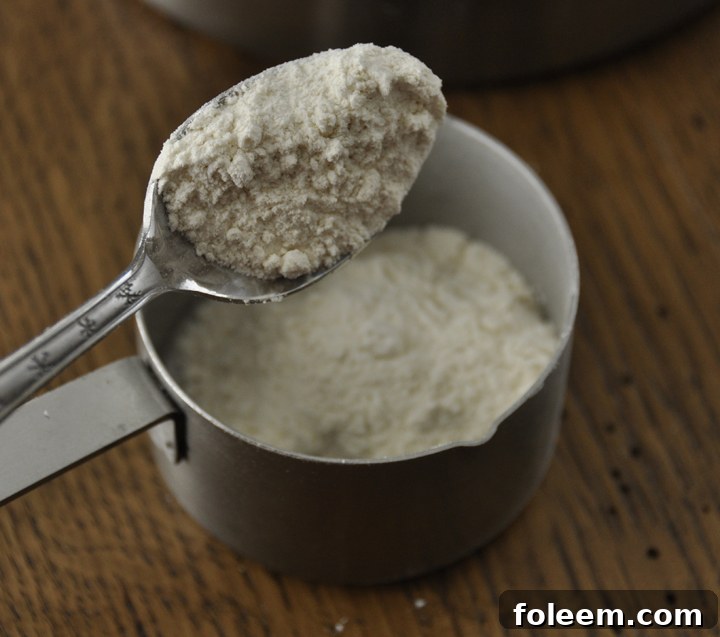
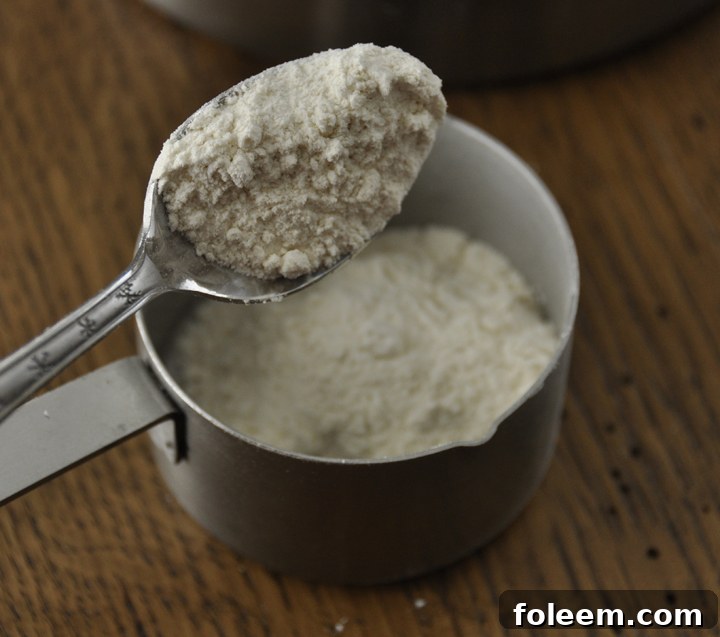
- Spoon the Flour into the Measuring Cup: Using a separate spoon (not the measuring cup itself), gently scoop the flour into your dry measuring cup. Carefully pile the flour into the cup until it is slightly overfilled. The key here is not to pack it down, tap the cup on the counter, or shake it to “settle” the flour. Any of these actions will compress the flour, negating the fluffing you just did and leading to excess. The goal is to let the flour fall lightly into the cup.
- Level the Flour Precisely: Once the cup is gently overfilled, take a knife or another straight-edged utensil (like the back of an offset spatula or a ruler) and sweep it across the top of the measuring cup. This will remove any excess flour, leaving you with a perfectly level and accurate measurement. Repeat this process for each cup of flour required by your recipe.
This method, while requiring a few extra seconds, is incredibly effective and makes a tangible difference in the quality of your baked goods. It’s a small habit with a huge payoff.
Common Measurement Mistakes to Avoid
Beyond incorrect flour measurement, there are a few other pitfalls to steer clear of for consistent baking success:
- Using Liquid Measuring Cups for Dry Ingredients: Liquid measuring cups (like those with a spout and markings) are designed for liquids, where you measure at eye level. Dry measuring cups are meant to be filled to the brim and leveled off. Using the wrong type can lead to inaccurate readings.
- Packing Brown Sugar Incorrectly: While flour should not be packed, brown sugar is an exception. Recipes typically call for “packed brown sugar,” meaning you should press it firmly into the cup until it holds its shape.
- Guessing or “Eyeballing”: Especially for leavening agents like baking powder or soda, even a slight over- or under-measurement can dramatically impact the rise and texture. Always measure precisely.
- Not Sifting When Required: Some older recipes or recipes calling for very fine flour (like cake flour) might specify sifting. If a recipe says “1 cup sifted flour,” you sift *before* measuring. If it says “1 cup flour, sifted,” you measure *then* sift. Pay attention to the wording!
The Sweet Reward: Consistent, Delicious Baking
The effort invested in accurately measuring flour, whether by scale or the spoon and level method, yields immediate and noticeable improvements in your baking. You’ll find your cakes are consistently moist and tender, your cookies have the perfect chewiness without being dry, your breads rise beautifully, and your pie crusts are wonderfully flaky. This simple change can elevate your home baking from good to truly exceptional, giving you the confidence to tackle any recipe.
I sincerely hope this detailed guide helps you on your baking journey. While some seasoned bakers might already know these tricks, it’s a fundamental principle I wish I had understood a long, long time ago. Sharing this knowledge is my way of cluing in anyone who might be struggling with inconsistent results or simply seeking to refine their baking skills. Embrace precision, and happy baking!