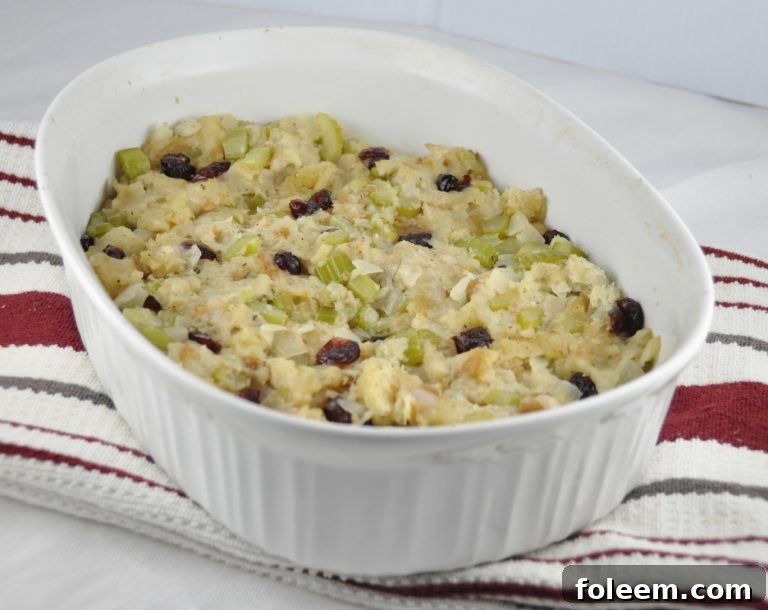
The Heart of the Holiday Plate: Crafting the Perfect Simple, Traditional Bread Stuffing
For many, Thanksgiving is synonymous with a magnificent turkey, glistening cranberry sauce, and creamy mashed potatoes. Yet, for a true stuffing connoisseur, the holiday simply isn’t complete without that deeply comforting, perfectly seasoned bread stuffing. I confess, I am one such purist. While I appreciate every element of the Thanksgiving spread, my plate invariably features a generous mountain of stuffing, perhaps alongside some sweet potatoes, with just a symbolic sliver of turkey. For me, Thanksgiving is unequivocally a celebration of the side dishes, and stuffing reigns supreme as the undisputed star.
This particular recipe, a testament to the beauty of simplicity, delivers an incredibly flavorful and moist bread stuffing. It’s seasoned with the classic trio of savory poultry seasoning, subtly sweet sautéed onion, and aromatic celery. What’s truly remarkable about this recipe is its versatility and fool-proof nature. For years, I harbored the misconception that truly moist and delicious stuffing could only be achieved by cooking it directly inside the turkey. I’m delighted to report that this belief was wonderfully mistaken! This recipe proves that an exceptional, perfectly moist stuffing is absolutely attainable when baked independently in a casserole dish, making it ideal for smaller gatherings, those who prefer not to stuff their bird, or simply want more of this beloved side to go around.
Unlocking the Secrets to Superior Homemade Stuffing
Creating the ultimate bread stuffing involves a few key considerations that elevate it from merely good to truly unforgettable. The foundation of any great stuffing is, of course, the bread itself. While the original recipe suggests specific types, let’s delve deeper into bread selection and preparation to ensure optimal texture and absorption, which are critical for that perfect moist-yet-never-soggy consistency.
The Bread: Foundation of Flavor and Texture
The choice and preparation of your bread are paramount to stuffing success. Forget fresh, soft bread; for stuffing, you need *stale* bread. Stale bread cubes are essential because they are porous and firm enough to absorb the flavorful liquids without disintegrating into a dense, gummy, or mushy mess. Fresh bread, with its high moisture content, will inevitably lead to a heavy, unappealing texture.
- Quality White Sandwich Bread: A high-quality white sandwich bread, often the kind found in grocery stores from brands like Pepperidge Farm, works exceptionally well. Its uniform texture and mild flavor allow the other seasonings to shine. There’s usually no need to remove the crusts with this type of bread, as they soften beautifully and blend seamlessly into the stuffing during cooking.
- Baguettes or Artisan Loaves: If you opt for leftover baguettes or other crusty artisan breads, a crucial preparatory step is to remove the tougher, denser parts of the crust. These thick crusts tend to absorb an excessive amount of liquid, potentially leaving the interior of the stuffing dry or unevenly moistened, leading to an inconsistent texture.
- Drying the Bread: Whether you’re using slightly stale bread or want to ensure maximum dryness and ideal texture, a quick drying process is highly beneficial. Begin by cutting or ripping your bread into uniform 1-inch cubes. You can then air-dry them naturally overnight by spreading them in a single layer on a large baking sheet. Alternatively, to expedite the process, you can dry them in a low oven (around 275°F / 135°C) for approximately 15-20 minutes, or until they feel distinctly dry and slightly firm to the touch. This step is absolutely critical; if your bread isn’t dry enough, you might need to slightly reduce the amount of liquid (chicken broth) in the recipe to prevent a “mushy” outcome.
The Aromatic Base: Butter, Onions, and Celery
The classic, comforting flavor profile of this traditional bread stuffing begins with a rich and carefully developed aromatic base. Butter isn’t just for greasing; it’s a key flavor enhancer and a medium for sautéing. Melting a generous amount of unsalted butter in a Dutch oven or large pot before sautéing the vegetables infuses the entire dish with a luscious richness and a foundational savory note.
- Butter: Provides a foundational richness, contributes to the overall moisture, and helps to tenderize the vegetables as they cook. Unsalted butter allows you to control the seasoning precisely.
- Onions: When cooked until soft and translucent, onions release their natural sugars, adding a subtle sweetness and depth of flavor without any harsh, raw bite. Finely chopping them ensures even distribution.
- Celery: Contributes a subtle, earthy crispness and an essential savory note that is characteristic of classic holiday stuffing. Its slight bitterness beautifully balances the richness of the butter and sweetness of the onions.
- Poultry Seasoning: This blend of herbs (most commonly sage, thyme, rosemary, marjoram, and a touch of black pepper) is the very heart of traditional stuffing flavor. It’s perfectly balanced to complement turkey and all the festive flavors of holiday meals. Remember to adjust additional salt and pepper to your personal preference, tasting as you go to achieve perfect seasoning.
The Moistening Agent: Chicken Broth
Chicken broth is the crucial liquid that brings all the ingredients together, transforming dry bread cubes into a tender, succulent stuffing. Using a good quality low-sodium chicken broth (or vegetable broth for a vegetarian option) is important for building robust flavor without over-salting. It should be added gradually, mixing thoroughly after each addition, until the bread cubes are evenly moistened but crucially, not saturated. The ultimate goal is a stuffing that is pleasantly damp and cohesive, not wet or mushy.
Customization: Making Your Stuffing Uniquely Yours
While this recipe offers a superb and satisfying traditional base, it’s also incredibly adaptable. This is where you can truly personalize your stuffing to suit your family’s preferences, accommodate dietary needs, or add exciting new dimensions of flavor and texture. Just remember, if you’re incorporating any ‘extras’ that might release moisture (like fresh fruit) or absorb it (like nuts), it’s often best to stir them in just before adding the chicken broth, or at the very least, integrate them thoroughly into the dry ingredients.
- Fruits:
- Craisins or Raisins: These are a wonderful, classic addition for a delightful touch of sweetness and vibrant color, as Mr. Wishes famously enjoys! They plump up beautifully during cooking, adding a pleasant chewiness and fruity burst.
- Diced Apples: Varieties like Granny Smith or Honeycrisp apples, diced finely, offer a fresh, tart counterpoint to the savory notes and contribute a lovely, slightly crisp texture.
- Dried Apricots or Cherries: For a more sophisticated or exotic fruit note, finely chopped dried apricots or cherries can provide a delightful tang and sweetness, adding complexity to the overall flavor profile.
- Nuts:
- Slivered Almonds: Offer a delicate crunch and a mild, buttery flavor that complements the bread and herbs.
- Pecans or Walnuts: Toasted and roughly chopped, these nuts add a richer, earthier flavor and a more substantial, satisfying texture. Toasting them briefly enhances their natural oils and aroma.
- Meats:
- Sausage: Cooked and crumbled breakfast sausage (especially a sage-flavored variety) or a mild Italian sausage introduces a hearty, savory, and incredibly satisfying element. Ensure it’s fully cooked and thoroughly drained of excess grease before adding it to the stuffing mixture to prevent sogginess.
- Bacon: Crumbled crispy bacon can add an irresistible smoky, salty depth and a delightful textural contrast. Cook it until very crisp, then drain and crumble.
- Herbs: Freshly chopped herbs like sage, thyme, or rosemary can significantly intensify the herbal notes, adding a truly gourmet touch. Add fresh herbs towards the end of the sautéing process or with the bread cubes to preserve their vibrant flavor and aroma.
- Mushrooms: Sautéed diced mushrooms (cremini or white button) can add a wonderful umami depth and earthy flavor that pairs exceptionally well with the traditional stuffing profile.
A Note on Quantity: Scaling Your Stuffing for Any Gathering
This recipe, as written, is generally perfect for a moderate family gathering, serving approximately 6-8 people generously, or for stuffing a smaller to medium-sized turkey, typically in the 10-12 pound range. For larger crowds, if you’re hosting a grand Thanksgiving feast, or if you’re preparing a larger turkey (15+ pounds) and intend to stuff it, it’s highly advisable to double the recipe. Remember, it’s always better to have a little extra stuffing for coveted leftovers than to run short of this beloved holiday staple!
Homemade Bread Stuffing Recipe: Step-by-Step Excellence
The following detailed recipe will guide you through creating a sublime homemade bread stuffing, ensuring it becomes a cherished highlight of your Thanksgiving celebration. Pay close attention to the details for optimal results.
INGREDIENTS:
- *Double this recipe for a large crowd or for stuffing a large turkey. This amount is ideal for a 10-12 pound turkey.
- 1 (1 pound) loaf stale, dry white bread (refer to notes above for optimal preparation)
- 3/4 cup unsalted butter
- 1 medium onion, finely chopped
- 4 stalks celery, finely chopped
- 2 teaspoons poultry seasoning
- Salt and freshly ground black pepper, to taste
- 1 cup low-sodium chicken broth (adjust as needed based on your bread’s dryness)
- 6 oz Craisins or raisins, optional (adds great color and a touch of sweetness)
- Optional additions: Consider adding 1/2 cup slivered almonds, 1/2 cup finely diced Granny Smith apples, or 1/2 pound cooked and crumbled sage sausage for enhanced flavor and texture.
DIRECTIONS:
- Prepare the Bread: Begin by cutting or artfully ripping your stale bread into uniform 1-inch cubes. This consistency is key for even moisture absorption. If your bread is not sufficiently dry, it’s highly recommended to spread the cubes evenly on a large baking sheet and dry them in a preheated oven at a very low temperature (around 275°F / 135°C) for approximately 15-20 minutes, or until they feel firm and crisp to the touch. This crucial step is what prevents a soggy stuffing. If you opt to skip this drying process and use less-stale bread, you will almost certainly need to reduce the amount of chicken broth slightly to achieve the perfect, non-mushy consistency.
- Sauté the Aromatics: In a spacious Dutch oven or a heavy-bottomed pot (large enough to hold all the stuffing), melt the 3/4 cup of butter over medium heat. Add the finely chopped onion and celery. Cook, stirring occasionally, until the vegetables have softened beautifully and become translucent, which typically takes about 8-10 minutes. It’s important to avoid browning them too much; we’re aiming for tenderness and sweetness, not caramelization, at this stage.
- Season the Base: Stir in the poultry seasoning, along with a generous pinch of salt and freshly ground black pepper to taste. Cook for another minute, allowing the dry spices to become wonderfully fragrant in the warm butter and vegetables. This brief cooking “blooms” the spices, intensifying their flavor.
- Combine with Bread: Add the prepared bread cubes to the Dutch oven, ensuring they are distributed evenly over the aromatic mixture. Toss gently but thoroughly, using tongs or a large spoon, until all the bread cubes are evenly coated with the butter and vegetable mixture. If you are adding any optional dry ingredients like nuts or dried fruits (Craisins/raisins), stir them in now to ensure they are well distributed before any liquid is introduced.
- Moisten the Stuffing: Gradually pour in the chicken broth, starting with about 3/4 cup and adding more, up to 1 cup, as needed. Mix well with a sturdy spoon or even your clean hands until the bread cubes are uniformly moistened. The stuffing should be damp and cohesive, but critically, it should not appear wet or feel mushy. When lightly squeezed, it should hold its shape slightly, indicating perfect moisture.
- Choose Your Cooking Method:
- For Stuffing a Turkey: If you plan to stuff your bird, ensure the prepared stuffing mixture has cooled completely to room temperature before loosely spooning it into the turkey cavity. Do not pack the stuffing tightly, as it needs ample room to expand and cook evenly. For food safety, it is imperative that the internal temperature of the stuffing reaches 165°F (74°C) as measured by a food thermometer inserted into the center.
- For Baking in a Casserole Dish (Side Dish): Lightly grease a 9×13 inch casserole dish. Transfer the entire stuffing mixture to the prepared dish, spreading it evenly. For the first part of baking, you can cover it loosely with aluminum foil to retain moisture. For the final 10-15 minutes, uncover it to achieve that desirable crispy, golden-brown crust.
- Bake (Casserole Method): Bake the stuffing in a preheated oven at 350°F (175°C) for 30 to 40 minutes, or until it is heated through completely and the top is beautifully golden and crisp. If it was covered with foil, remember to remove the foil for the last 10-15 minutes of baking to allow the crust to form.
- Serve: Allow the stuffing to rest for a few minutes after coming out of the oven. This helps it set slightly and makes for easier serving. Enjoy your truly delicious homemade bread stuffing, a guaranteed crowd-pleaser!
Make-Ahead and Storage Tips for Your Thanksgiving Stuffing
Thanksgiving preparations can often feel hectic, but your stuffing doesn’t have to add to the stress. This recipe is wonderfully accommodating for make-ahead options, allowing you to enjoy a more relaxed and joyful holiday with your loved ones.
- Prepare Ahead: You can prepare the entire stuffing mixture (following steps 1-5 of the directions) up to one day in advance of baking. Once mixed, store it covered tightly in the refrigerator. If you plan to bake it in a casserole dish, you can even assemble it fully in the dish, cover tightly with plastic wrap or aluminum foil, and refrigerate until baking day.
- Baking from Refrigerated: If baking the stuffing from a chilled state, you might need to add an extra 10-15 minutes to the overall baking time to ensure it heats through completely. Always use a food thermometer to check the internal temperature, especially if it contains meat or if you are stuffing it into a turkey.
- Freezing Cooked Stuffing: Fully cooked stuffing freezes exceptionally well. Allow it to cool completely to room temperature, then transfer it to a freezer-safe airtight container or heavy-duty freezer bag. It can be frozen for up to 2-3 months. To reheat, thaw overnight in the refrigerator, then bake in the oven (covered) at 300°F (150°C) until thoroughly warmed through. Uncover for the last few minutes to crisp up the top, if desired.
- Leftovers: Store any leftover stuffing in an airtight container in the refrigerator for up to 3-4 days. It reheats beautifully in the microwave or oven, making for delightful post-Thanksgiving meals.
Why This Simple Bread Stuffing Will Be Your New Holiday Tradition
There’s an undeniable charm and profound comfort inherent in traditional recipes, and this simple bread stuffing epitomizes that sentiment perfectly. It’s not merely a side dish; it’s a nostalgic journey to holidays past and a cornerstone for creating cherished future memories. The enduring beauty of this recipe lies in its straightforward ingredients and uncomplicated method, yet it consistently yields exquisitely delicious results that impress even the most discerning palates.
- Pure, Unadulterated Flavor: Without the distraction of overly complicated ingredients, the fundamental, comforting flavors of savory bread, sweet sautéed onion, crisp celery, and herbaceous poultry seasoning truly shine through, creating a symphony of classic holiday tastes.
- Perfect Texture Every Time: The careful balance achieved through properly dried bread and the judicious addition of broth ensures a stuffing that is wonderfully moist and tender on the inside, with a delightfully crisp, golden-brown crust when baked independently in a casserole dish.
- Incredible Versatility: This recipe serves as a fantastic blank canvas. You can easily adapt it with your favorite optional additions, confidently cook it either inside or outside the turkey, and effortlessly scale it up or down to suit any gathering size, from an intimate family dinner to a grand holiday feast.
- Guaranteed Crowd-Pleaser: The classic and universally loved flavor profile of this traditional stuffing makes it an absolute guaranteed hit at your Thanksgiving table, sure to receive rave reviews and requests for the recipe year after year.
So, as you gather with your loved ones this Thanksgiving, remember the humble yet mighty bread stuffing. It’s truly more than just a filler; it’s an essential, soulful part of the feast, embodying warmth, time-honored tradition, and pure, unadulterated comfort with every single bite. I genuinely hope this perfected recipe brings as much joy and deliciousness to your holiday table as it unfailingly does to mine. What are your personal must-have additions, or how do you prefer your stuffing cooked? Share your thoughts in the comments!
Happy Thanksgiving, and happy cooking!